Accelerate Design Iteration with AI Fabric Swapping - From Concept to Collection
Traditional fabric sampling limits most designers to testing 3-5 material options per style at $30-$100 per sample swatch, taking 2-4 weeks per round. AI fabric swapping collapses this to 30+ options tested in a single afternoon for approximately $75 total (at $5 per swap). McKinsey's 2025 State of Fashion report identifies rapid iteration as a critical competitive advantage — brands that prototype faster launch 3-4 weeks earlier and capture early-season revenue that slower competitors miss. This guide shows how designers are using AI fabric swapping to close the "iteration gap," take creative risks without financial consequences, and build cohesive collections through systematic material exploration.
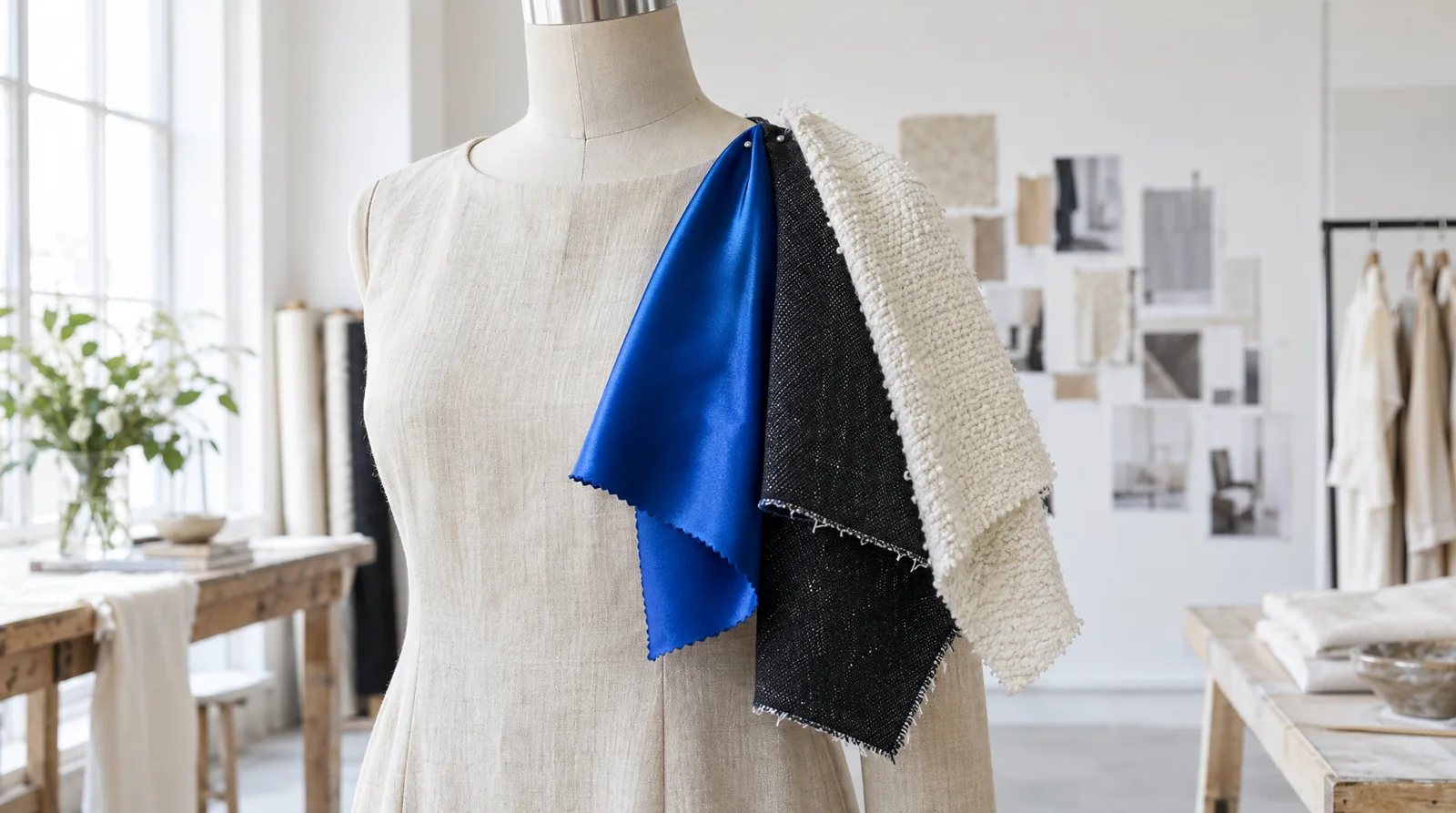
Editorial illustration: the same silhouette read three ways before a single sample is cut.
Table of Contents
- The Iteration Gap: Why Designers Can't Test Enough Options
- Rapid Fabric Testing: From 3 Options to 30
- Creative Risk-Taking Without Financial Risk
- Building Cohesive Collections Through Material Exploration
- Real Designer Workflows: How Pros Use Fabric Swapping
- Integration with Your Existing Process
- Iteration as Competitive Advantage
- Frequently Asked Questions
The Iteration Gap: Why Designers Can't Test Enough Options {#the-iteration-gap}
Let's be honest about the traditional design process. You have a promising silhouette, and you need to select the right fabric. In an ideal world, you would:
- Test 20-30 different fabric types
- Try variations in weight (light, medium, heavy)
- Explore different colors within each fabric type
- Compare sustainable alternatives
- Test trendy materials you're curious about
- Experiment with unexpected combinations
That's easily 50-100 fabric tests per design. But the reality is very different:
Traditional Constraints:
- Budget: At $30-100 per fabric sample, testing 50 fabrics costs $1,500-5,000 per style
- Time: Ordering and receiving samples takes 2-4 weeks
- Physical Space: Storing dozens of fabric samples is impractical
- Decision Fatigue: Managing so many physical samples is overwhelming
So you compromise. You test 3-5 "safe" options and pick the best of that limited set. You might be choosing the best of your affordable options, not the actual best option for your design.
This is the iteration gap - the difference between how much you should test and how much you actually can test. And this gap is costing you better designs and lost opportunities.
Iteration Methods Compared
| Iteration Method | Time per Variation | Cost per Variation | Quality / Fidelity |
|---|---|---|---|
| Physical sampling (lab dip + cut-and-sew) | 2–4 weeks | $200–$1,500 | Gold standard — tactile and drape-accurate |
| Photoshop manual recoloring | 2–6 hours | $100–$450 (retoucher time) | Flat; loses texture and shadow realism on complex garments |
| CLO 3D / Browzwear 3D swap | 15–45 min (if 3D model exists) | $50–$150 per swap + 4–12 hours setup per style | Excellent physics; recognizably a 3D render |
| AI fabric swap (Adstronaut) | Under 2 minutes | $1–$5 per swap | Photorealistic; preserves drape, texture, and lighting |
Rapid Fabric Testing: From 3 Options to 30 {#rapid-fabric-testing}
AI fabric swapping collapses the iteration gap by making fabric testing instant and virtually free. Here's what becomes possible:
The New Testing Reality
With AI fabric swapping, your workflow transforms:
Monday Morning (2 hours):
- Upload your design image
- Generate 30 fabric variations across different categories:
- 8 cotton variations (twill, canvas, poplin, oxford, chambray, etc.)
- 6 linen options (pure linen, linen blends, different weights)
- 5 sustainable alternatives (Tencel, organic cotton, recycled polyester)
- 4 luxury options (silk, cashmere blend, fine wool)
- 4 trendy materials (metallic, textured, novelty weaves)
- 3 unexpected choices (just to see what happens)
Monday Afternoon (2 hours):
- Review all 30 results side-by-side
- Eliminate obvious no's (15 options)
- Create a shortlist of strong contenders (8 options)
- Share with team or clients for feedback
Tuesday Morning (1 hour):
- Based on feedback, test 5 additional variations
- Create final presentation with top 3 choices
- Make decision with confidence
Total Time: 5 hours over 1.5 days Total Cost: $75 (35 fabric swaps × 5 credits each)
You just tested 35 fabric options in less time than it traditionally takes to order a single sample, and for less money than buying two yards of fabric. Designers using Adstronaut's fabric swapper often batch this process across 8–12 styles in the same afternoon, which is where the per-collection time savings compound.
The Quantity-Quality Relationship
More iteration doesn't just mean more options to choose from - it improves the quality of your final decision through several mechanisms:
- Better Comparison: Seeing 30 options reveals subtle differences you'd miss comparing only 3
- Unexpected Winners: The 15th fabric you test might be perfect, but you'd never discover it with limited testing
- Confidence: When you've tested everything, you know you made the best choice
- Learning: Each test teaches you something about how fabrics interact with your silhouette
Designers who embrace rapid iteration consistently report that their final fabric choice is different (and better) than what they would have picked with limited testing.
Test 30 fabric options in one afternoon →
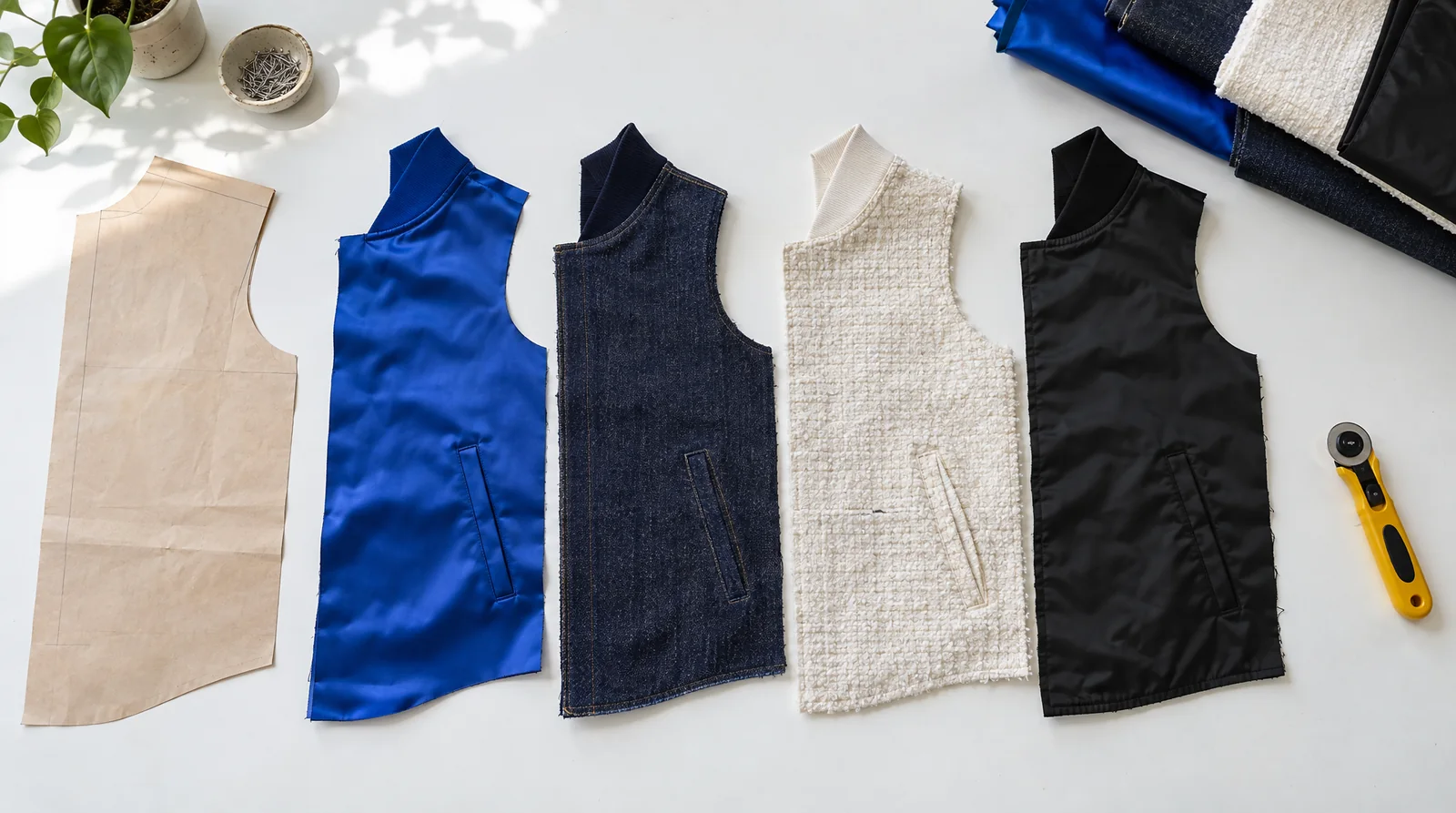
Editorial illustration: one pattern piece, four cloths. Digital swapping answers this question before the cutter does.
Creative Risk-Taking Without Financial Risk {#creative-risk-taking}
One of the most powerful aspects of fabric swapping is how it changes your relationship with creative risk.
The Risk-Aversion Trap
Traditional fabric sampling creates a psychological barrier to experimentation. When each test costs $100+ and takes 3 weeks, you naturally gravitate toward "safe" choices:
- Fabrics you've worked with before
- Materials that are proven to work for similar styles
- Industry-standard options that you know suppliers have in stock
The problem? Safe choices lead to predictable collections. Your designs blend in with competitors because everyone is using the same safe materials. You miss the breakthrough design that comes from an unexpected fabric choice.
Permission to Experiment
When fabric testing is free and instant, you have permission to be creative:
Test the Unexpected:
- "What if this structured blazer was in soft jersey instead?"
- "Could this casual dress work in metallic fabric?"
- "What about leather sleeves on a denim jacket?"
Most of these experiments will fail. But 1 in 10 might be brilliant - a design concept that defines your collection and differentiates your brand.
Real Example: The Accidental Bestseller
A designer we work with was creating a simple cotton tank top design. On a whim, using fabric swapping, she tested it in:
- Silk charmeuse (too slippery)
- Linen (too casual)
- Rib knit (too basic)
- Crushed velvet (interesting...)
- Metallic mesh (wait, this is amazing!)
The metallic mesh version became her bestselling piece of the season - a style that would never have existed if testing it required ordering expensive specialty fabric samples. The creative risk was free, so she took it.
Building Cohesive Collections Through Material Exploration {#building-cohesive-collections}
Great collections aren't just individual strong pieces - they're cohesive stories where materials, colors, and silhouettes work together. AI fabric swapping helps you build this cohesion through systematic material exploration.
The Collection-Level View
Instead of making fabric decisions style-by-style in isolation, you can test material strategies across your entire collection:
Approach 1: Material Consistency
- Test your entire 12-piece collection in the same 5 core fabrics
- See how different silhouettes share a material language
- Ensure visual cohesion across your line
Approach 2: Material Contrast
- Test each style in opposite materials (structured vs. soft, matte vs. shiny)
- Create intentional contrast for visual interest
- Build a "light vs. heavy" or "dressy vs. casual" narrative
Approach 3: Material Progression
- Test a gradual progression from casual to formal fabrics
- Create a journey through your collection
- Guide customers from accessible entry pieces to statement items
These collection-level strategies are nearly impossible with traditional sampling because you can't see the whole picture until you've invested months and thousands of dollars. With fabric swapping, you can visualize your entire collection in different material stories in an afternoon.
Finding Your Material Signature
Many successful brands have a material signature - a fabric choice or combination that becomes part of their identity:
- The Brand that does "luxury casual" (silk in relaxed silhouettes)
- The Brand known for "unexpected textures" (metallic mixed with organic)
- The Brand that "makes basics special" (perfect weight cotton you can't find elsewhere)
Fabric swapping helps you discover and refine your material signature by testing hundreds of combinations across multiple collections. Over time, patterns emerge that define your brand's material point of view.
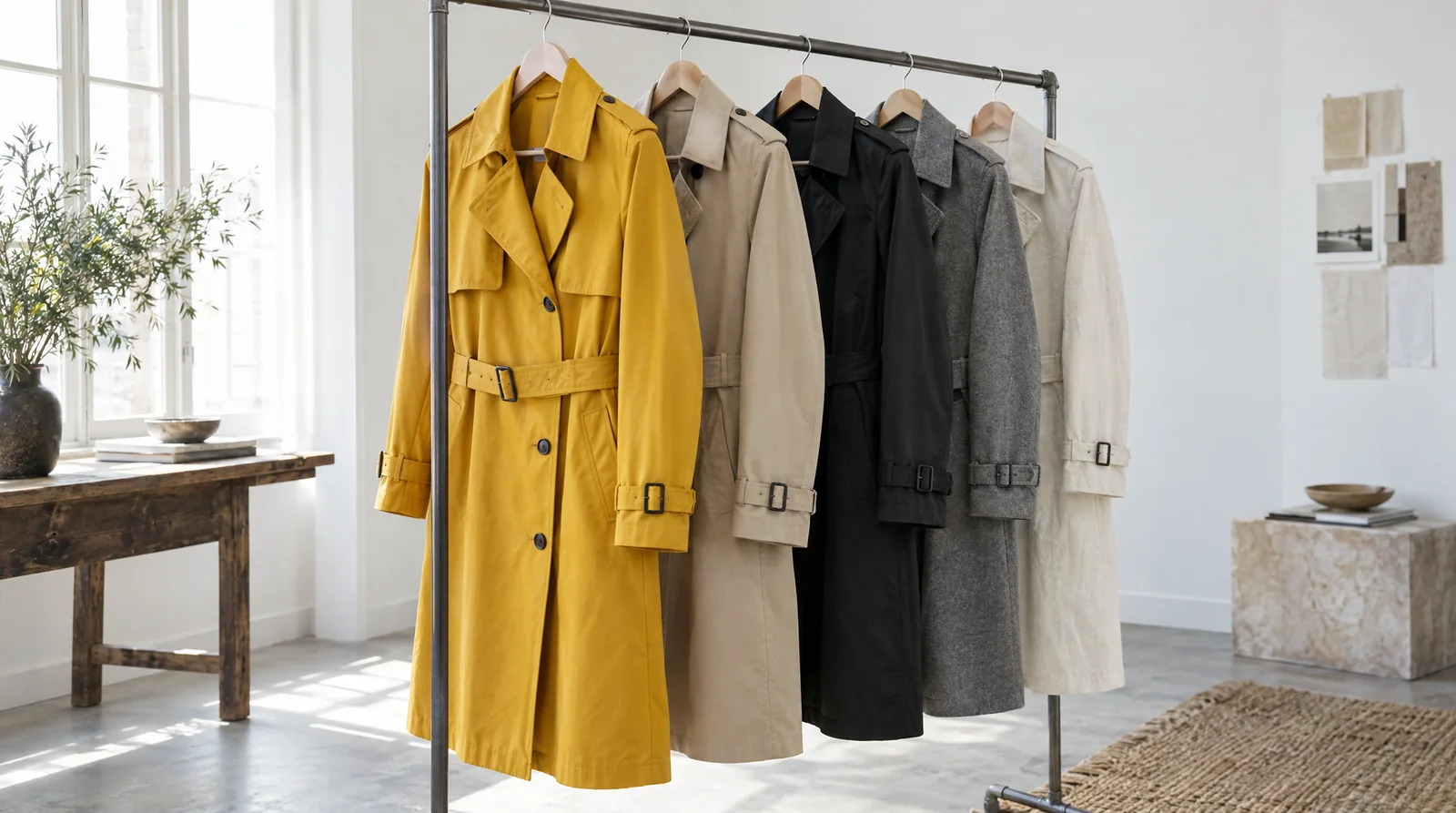
Editorial illustration: a rail of sample rounds is what a fabric decision used to cost.
Real Designer Workflows: How Pros Use Fabric Swapping {#real-designer-workflows}
Let's look at how professional designers have integrated fabric swapping into their workflows:
Workflow 1: The Rapid Explorer (Sarah, Independent Womenswear)
Goal: Launch monthly micro-collections (3-4 pieces) to test trends
Process:
- Sketch 5-6 design concepts based on trending silhouettes
- Create quick digital mockups
- Test each design in 10-15 fabrics (50-75 total swaps)
- Identify 3-4 winners based on results
- Order single production samples of winners
- Launch winning styles 3 weeks later
Result: 12 micro-collections per year instead of 2 major collections. According to Business of Fashion, micro-collection strategies reduce inventory risk by 40-60% compared to traditional seasonal drops. Faster trend response and less deadstock waste.
Workflow 2: The Client Customizer (Marcus, Made-to-Order Menswear)
Goal: Offer custom fabric options for client orders
Process:
- Client selects a base style from portfolio
- During consultation, generate 8-10 fabric variations in real-time
- Client sees their exact order in different materials
- Make decision on the spot
- Order production with confidence
Result: 60% higher conversion rate on custom orders. Clients love seeing their piece in multiple fabrics before committing.
Workflow 3: The Sustainable Switcher (Elena, Eco Fashion)
Goal: Replace conventional fabrics with sustainable alternatives across entire collection
Process:
- Start with previous season's bestsellers
- Test each style in 8-10 sustainable fabric options
- Find sustainable alternatives that maintain aesthetic
- Only sample fabrics that look right digitally
- Transition to sustainable materials without compromising design
Result: 100% sustainable collection without sacrificing design quality. The UNEP Fashion Charter identifies digital sampling as a key pathway to reducing pre-production waste. Fabric swapping showed which sustainable materials (Tencel, organic cotton, recycled polyester) worked for each silhouette.
Workflow 4: The Fabric-First Designer (James, Luxury Sportswear)
Goal: Build collection around unique fabric discoveries
Process:
- Source unique/limited fabrics from mills and tradeshows
- Photograph all fabric swatches
- Test these fabrics on 20+ existing design templates
- Discover which silhouettes make these fabrics shine
- Develop collection around best fabric-silhouette pairings
Result: Fabric-driven design process that showcases unique materials. Reduced design time by starting with fabric instead of sketches.
Integration with Your Existing Process {#integration-with-existing-process}
You don't need to overhaul your entire design process to benefit from fabric swapping. Here's how it integrates with common workflows:
For Sketch-First Designers
Traditional: Sketch → Tech flat → Fabric selection → Sample Enhanced: Sketch → Tech flat → Fabric exploration (30+ options) → Informed fabric selection → Sample
Add one step that dramatically improves your decision quality.
For Sample-First Designers
Traditional: Source sample → Fit/adjust → Choose final fabric → Production sample Enhanced: Source sample → Test fabrics digitally → Order 2-3 top choices → Fit/adjust → Production sample
Reduce the number of physical samples while testing more options.
For Digital-First Designers
Traditional: Digital design → Client approval → Fabric selection → Production Enhanced: Digital design → Fabric variations for client → Client approval → Production
Close more deals by showing clients exactly what they're buying.
Iteration as Competitive Advantage
In a crowded fashion market, competitive advantage comes from doing things better, faster, or different. Fabric swapping enables all three:
Better: Test more options, make better decisions, create superior products Faster: Compress fabric selection from weeks to hours, launch faster than competitors Different: Take creative risks that lead to differentiated, memorable designs
The brands that win aren't necessarily the ones with the biggest budgets or the most experienced teams. They're the ones that iterate fastest and learn fastest. AI fabric swapping is an iteration accelerator that levels the playing field.
A solo designer with fabric swapping can test as many material options as a large brand with a full design team and unlimited sampling budget. The tools that used to be reserved for industry giants — zone-aware AI recoloring, fabric rendering, on-model photoshoots bundled in platforms like Adstronaut — are now accessible to everyone.
The question is: will you use iteration as a competitive weapon, or will you keep making fabric decisions the slow, expensive, limited way?
Connect fabric swapping with AI photoshoots and design variations to build a complete rapid-iteration workflow. See how AI tools work together to transform every stage of your process.
Frequently Asked Questions
How many fabric options can I test with AI fabric swapping in one day?
With AI fabric swapping, you can realistically test 30-50 fabric options per design in a single day. A typical workflow involves generating 30 variations in 2 hours on the first morning, narrowing to a shortlist of 8-10 by the afternoon, and making a final decision the next morning after feedback. The total cost is approximately $75-$125 for 30-50 swaps on a platform like Adstronaut.
How does AI fabric swapping compare to ordering physical fabric samples?
Physical fabric samples cost $30-$100 per swatch, take 2-4 weeks to arrive, and limit you to testing 3-5 options per style. AI fabric swapping costs approximately $5 per swap, generates results in 30-60 seconds, and lets you test 20-30+ options per style. Most designers use AI to narrow options first, then order physical samples of only their top 2-3 choices.
Can AI fabric swapping help me discover unexpected material combinations?
Yes. When testing is fast and affordable, designers experiment with unconventional materials they would never order as physical samples. Approximately 1 in 10 experimental swaps reveals a surprising winner — a material combination that would not have been discovered through traditional sampling alone.
Is AI fabric swapping useful for made-to-order or custom fashion?
Yes. Made-to-order designers use real-time fabric swapping during client consultations to show 8-10 material options instantly. According to Shopify's product customization research, this visual preview approach increases conversion rates by 40-50% because clients can see their exact design in different fabrics before committing.
How does rapid iteration with AI reduce inventory risk?
By testing more options digitally before production, you make more confident material decisions and reduce the likelihood of producing garments in fabrics that do not sell well. Business of Fashion reports that brands using micro-collection strategies (enabled by faster iteration) reduce deadstock by 40-60% compared to traditional seasonal drops.
Can AI fabric swapping help with sustainable material transitions?
Yes. Many brands use fabric swapping to test sustainable alternatives (Tencel, organic cotton, recycled polyester, hemp blends) on their existing bestselling styles before committing to a material switch. This eliminates the risk of investing in sustainable materials that do not look right on your designs. The UNEP Fashion Charter identifies digital sampling as a key sustainability strategy.
What is the "iteration gap" in fashion design?
The iteration gap is the difference between how many fabric options you should test for optimal design quality and how many you actually can test given budget and time constraints. Traditional sampling limits most designers to 3-5 options when 20-30+ would yield better results. AI fabric swapping closes this gap by making iteration virtually free and instant.
Try Adstronaut's AI Fabric Swapping Tool →
Sources and further reading:
- McKinsey State of Fashion 2025 — rapid prototyping and speed-to-market as competitive advantages
- Business of Fashion — micro-collection strategies and inventory risk reduction
- UNEP Fashion Charter — digital sampling as a sustainability pathway
- Shopify Product Customization Guide — visual preview impact on customer conversion
- Common Objective — sustainable fabric sourcing and material alternatives