Transform Your Collection with AI Fabric Swapping - The Complete Guide
AI fabric swapping lets you visualize any garment design in 20+ different materials in under 2 hours, at approximately $5 per swap — compared to the traditional process of ordering 3-5 fabric samples at $50-$200 per yard, waiting 2-4 weeks for delivery, and spending $150-$500 per physical mockup. For a 10-piece collection, Adstronaut AI's fabric swapping tool saves $4,000-$5,000 and 3-4 weeks of calendar time while enabling designers to test 10x more material options. According to McKinsey's 2025 State of Fashion report, reducing sampling waste is one of the most impactful sustainability and cost-reduction strategies available to emerging brands.
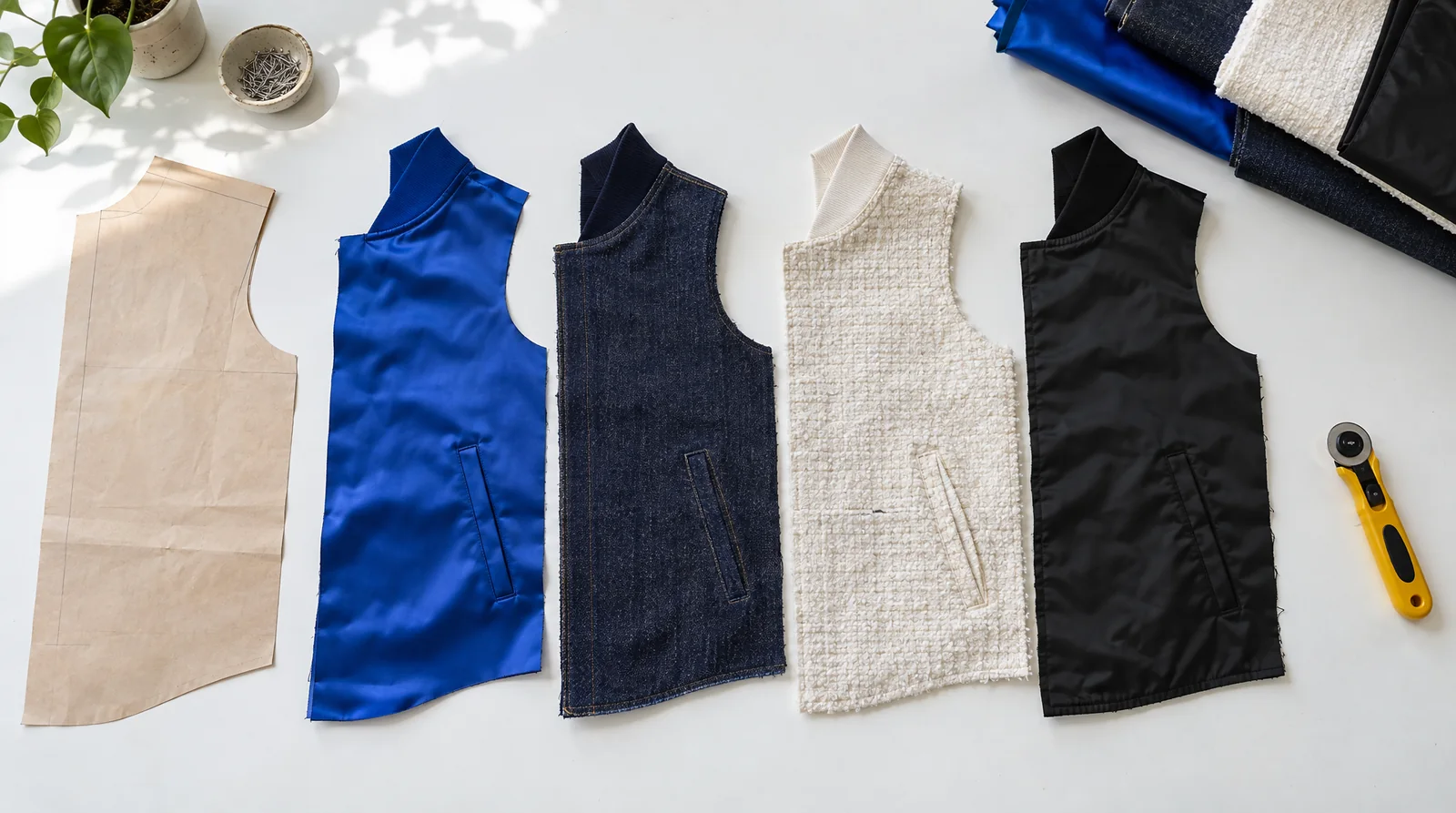
Editorial illustration: one pattern piece, four cloths. Digital swapping answers this question before the cutter does.
Table of Contents
- The Fabric Selection Problem Every Designer Faces
- What Is AI Fabric Swapping?
- How AI Fabric Swapping Works: The Technology Behind the Magic
- Real-World Applications: When to Use Fabric Swapping
- The Creative and Financial Benefits
- Getting Started: Your First Fabric Swap
- The Future of Fabric Selection Is Here
- Frequently Asked Questions
The Fabric Selection Problem Every Designer Faces
Let's be honest about the traditional fabric selection process. It's broken. Here's what it typically looks like:
- Initial Design: You sketch or digitally create your design concept
- Fabric Research: You browse supplier catalogs or fabric libraries
- Sample Ordering: You order 3-5 fabric options, paying $50-200 per yard
- Wait Time: 2-4 weeks for samples to arrive
- Physical Mockup: Create rough mockups or drape the fabric to visualize
- Decision: Pick one fabric and hope it's right
- Production Sample: Order a full production sample ($150-500)
- Revision: If the fabric doesn't work, start over
This process has several critical flaws:
- Time Consuming: Weeks or months just to test a few fabric options
- Expensive: Hundreds of dollars in fabric samples and mockup costs
- Limited Options: You can only afford to test 3-5 fabrics, missing better alternatives
- Uncertain Results: It's hard to visualize the final product from flat fabric swatches
- High Risk: Committing to production without seeing the real thing
For independent designers and small brands with limited budgets, these constraints can be crippling. You're forced to make expensive bets with incomplete information.
What Is AI Fabric Swapping?
AI fabric swapping is a technology that uses artificial intelligence to realistically transform the fabric or material of a garment in a digital image. Upload a photo of your design in one fabric, select a different fabric from a library or upload your own swatch, and the AI generates a photorealistic image showing how your design would look in the new material.
It's like having a magic wand that instantly shows you every fabric possibility without ordering a single sample or creating a single physical mockup.
The technology goes beyond simple color changes or pattern overlays. Advanced AI models understand:
- Fabric Drape: How different materials hang and flow on the body
- Texture: The visual appearance of weaves, knits, and surface treatments
- Light Interaction: How fabrics reflect, absorb, or transmit light
- Material Properties: The stiffness, stretch, and structure of different textiles
- Garment Construction: How fabric choice affects seams, gathers, and silhouette
The result is a realistic visualization that gives you genuine insight into how your design will perform in different materials.
Try AI fabric swapping on your own designs →
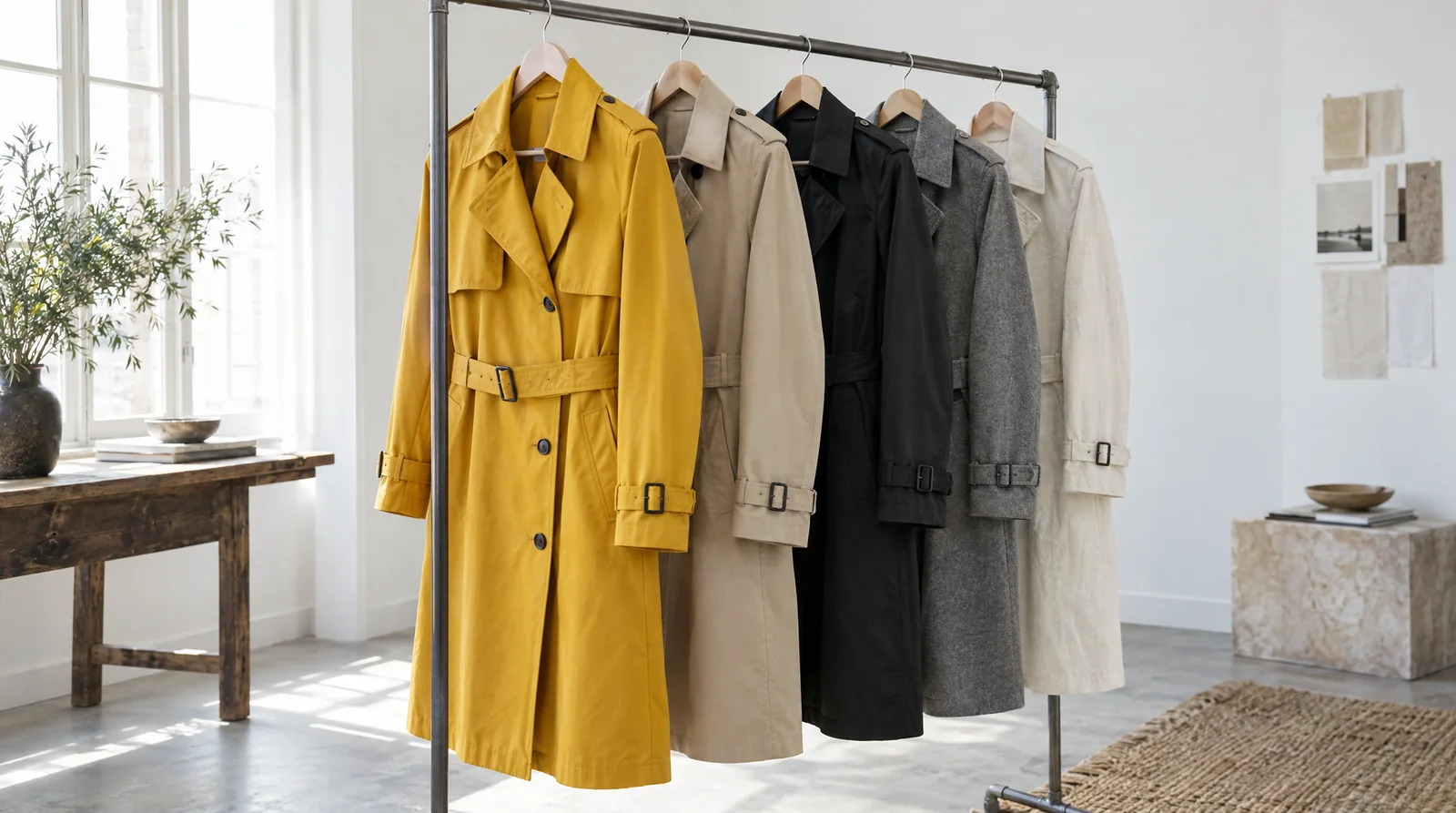
Editorial illustration: a rail of sample rounds is what a fabric decision used to cost.
How AI Fabric Swapping Works: The Technology Behind the Magic {#how-ai-fabric-swapping-works}
While you don't need to understand the technical details to use fabric swapping, knowing what happens behind the scenes builds confidence in the results.
Step 1: Intelligent Garment Analysis
When you upload an image, the AI doesn't just see pixels - it understands garment structure. The system:
- Identifies the garment type (dress, jacket, pants, etc.)
- Detects fabric regions (body, sleeves, collar, pockets, trim)
- Analyzes current fabric properties (texture, drape, sheen)
- Maps the 3D structure from the 2D image
This analysis allows the AI to make intelligent decisions about how new fabrics should behave on each part of the garment.
Step 2: Fabric Understanding
The AI has been trained on thousands of fabric types and understands their unique characteristics:
- Woven Fabrics: Cotton, linen, wool, silk, denim, twill
- Knit Fabrics: Jersey, rib knit, interlock, sweater knits
- Specialty Materials: Leather, suede, velvet, satin, organza
- Performance Fabrics: Technical knits, moisture-wicking, stretch materials
Each fabric type has unique visual properties that the AI must accurately replicate.
Step 3: Realistic Transformation
The magic happens when the AI combines garment understanding with fabric properties. The system:
- Preserves garment structure while changing material properties
- Maintains realistic drape and flow appropriate to the new fabric
- Adjusts lighting and shadows to reflect material characteristics
- Ensures natural transitions between different fabric regions
- Retains design details like seams, buttons, and construction
The goal is not to create a "good enough" approximation, but a realistic visualization you can trust for decision-making.
Real-World Applications: When to Use Fabric Swapping {#real-world-applications}
AI fabric swapping isn't just a cool technology - it solves real business problems. Here are the most powerful applications:
1. Pre-Production Material Testing
The Problem: You need to choose between 10+ fabric options but can only afford to sample 3.
The Solution: Test all 10+ options digitally first, then only order physical samples of your top 2-3 choices. This approach:
- Saves $500-1,000 in sample costs per style
- Reduces decision time from weeks to hours
- Eliminates the "what if" regret of untested options
2. Client Presentations and Custom Orders
The Problem: Custom clients want to see their design in multiple fabric options before committing.
The Solution: Generate fabric variations on the spot during client meetings. Show 5-10 material options immediately and close the sale faster. According to Shopify's guide on product customization, offering visual previews increases conversion rates by 40-50%. Designers using real-time fabric swapping during client consultations report similarly higher close rates when clients can see their custom design in multiple fabrics.
3. Seasonal Collection Planning
The Problem: You want to offer your bestselling style in new seasonal fabrics, but you're not sure which will work.
The Solution: Test your existing designs in 20+ seasonal fabric options in an afternoon. Identify winners before investing in sampling and production.
4. Sustainable Material Exploration
The Problem: You want to switch to sustainable fabrics but are unsure how they'll look on your designs.
The Solution: Upload photos of sustainable fabric swatches and test them on your entire collection digitally. Make eco-friendly decisions with confidence.
5. Trend Forecasting and Experimentation
The Problem: You see a trending fabric (metallic, sequins, new texture) but aren't sure if it fits your brand.
The Solution: Test trendy materials on your core styles without financial risk. Experiment freely and only invest in trends that work for your aesthetic.
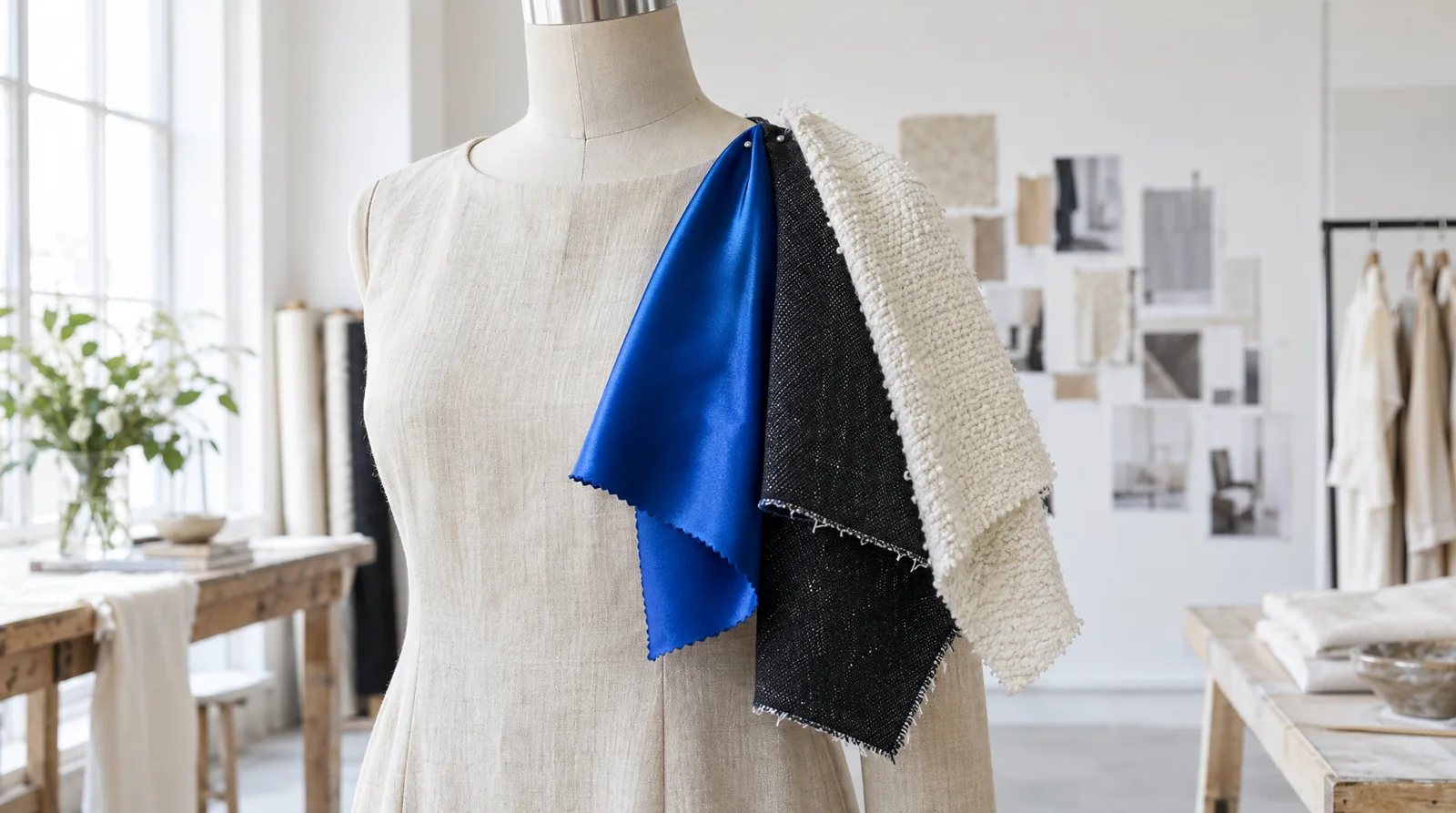
Editorial illustration: the same silhouette read three ways before a single sample is cut.
The Creative and Financial Benefits
The impact of fabric swapping goes beyond just saving time and money. It fundamentally changes how you design and make decisions.
Creative Freedom
When fabric testing is free and instant, you experiment more. Designers using fabric swapping report:
- Testing 10x more fabric options per design
- Discovering unexpected material combinations they never would have tried
- Taking creative risks without financial consequences
- Exploring new categories (activewear, outerwear) with confidence
This creative freedom leads to better products and differentiated collections.
Financial Impact
The ROI of fabric swapping is immediate and measurable:
| Traditional Process | With AI Fabric Swapping | Savings |
|---|---|---|
| $500 in fabric samples | $25 in credits (5 swaps) | $475 per style |
| 3 weeks to test fabrics | 2 hours | 19 days per style |
| Test 3 fabric options | Test 20+ options | Better decisions |
| 30% fabric mistakes | 5% fabric mistakes | Reduced waste |
For a designer launching a 10-piece collection, fabric swapping can save $4,000-5,000 and 3-4 weeks of calendar time.
Risk Reduction
Perhaps most importantly, fabric swapping reduces the single biggest risk in product development: choosing the wrong fabric and discovering it too late.
When you can test unlimited fabric options before committing to production, you:
- Avoid expensive production mistakes
- Reduce sample revision rounds
- Launch products you're confident will succeed
- Build a reputation for quality and thoughtful design
Getting Started: Your First Fabric Swap {#getting-started}
Ready to try fabric swapping? Here's a simple workflow to get started:
Step 1: Choose Your Source Image
Start with a clear, well-lit photo of your design:
- A sample garment you want to test in new fabrics
- A photo of a reference garment in your desired silhouette
- A digital mockup or rendering of your design concept
Pro Tip: Images on a neutral background with good lighting produce the best results.
Step 2: Select or Upload Fabrics
You have two options:
- Use the curated fabric library: Browse hundreds of pre-loaded fabric types
- Upload your own swatches: Take photos of actual fabric samples from suppliers
Pro Tip: When uploading custom fabrics, photograph them flat with even lighting. Include a close-up to capture texture detail.
Step 3: Choose Fabric Regions
The AI automatically detects different fabric regions in your garment (body, sleeves, collar, etc.). You can:
- Swap the entire garment to one fabric
- Mix and match fabrics on different regions
- Test colorblock and material combinations
Pro Tip: Start with a full swap, then experiment with mixed materials for more creative options.
Step 4: Generate and Compare
Click generate and in 30-60 seconds, you'll see your design in the new fabric. The AI preserves your garment's drape, fit, and construction while changing only the material properties.
Pro Tip: Generate multiple variations at once to do side-by-side comparisons. This makes decision-making easier.
Step 5: Refine and Iterate
Not quite right? Try a different fabric or adjust regions. The beauty of AI fabric swapping is that iteration is fast and free. Test 10-20 options to find the perfect material.
The Future of Fabric Selection Is Here {#the-future-of-fabric-selection}
AI fabric swapping represents a fundamental shift in how designers approach material selection. Instead of being constrained by time, budget, and logistics, you have unlimited creative freedom to explore every possibility.
The designers who embrace this technology are launching collections faster, making better decisions, and creating more innovative products than ever before. They're not replacing their creative judgment with AI - they're using AI to amplify their creativity and make it actionable.
The question isn't whether AI fabric swapping will become standard practice in fashion design. It's whether you'll adopt it early and gain a competitive advantage, or wait until your competitors have already passed you by.
Your next bestselling design might be hiding in a fabric you haven't tested yet. With AI fabric swapping, you can find it in minutes instead of months.
Combine fabric swapping with other AI design tools to create a complete digital workflow that accelerates every stage of your process. Learn about the ROI of AI tools and how they compound to transform your business.
Frequently Asked Questions
What is AI fabric swapping in fashion design?
AI fabric swapping uses computer vision and generative AI to realistically transform the material of a garment in a digital image. You upload a photo of your design, select a new fabric from a library or upload your own swatch, and the AI generates a photorealistic image showing how the garment would look in the new material — preserving drape, lighting, and construction details.
How accurate is AI fabric swapping compared to physical samples?
AI fabric swapping provides 85-90% visual accuracy for most fabric types including cotton, denim, silk, linen, leather, and knits. It accurately represents drape, texture, and light behavior. It is best used as a decision-narrowing tool — test 20+ options digitally, then order physical samples of your top 2-3 choices for final verification before production.
How much does AI fabric swapping cost?
Adstronaut AI charges approximately $5 per fabric swap. For a typical design exploration session (testing 10 fabrics on one style), that is $50 total. Compare this to ordering 10 physical fabric samples at $50-$200 per yard plus 2-4 weeks of wait time. The savings are $475+ per style in sampling costs alone.
Can I upload my own fabric swatches for AI fabric swapping?
Yes. Adstronaut AI supports both a curated fabric library and custom swatch uploads. For best results, photograph your fabric flat with even, natural lighting and include a close-up shot that captures the texture detail. The AI analyzes the visual properties of your swatch to generate an accurate transformation.
What garment types work best with AI fabric swapping?
AI fabric swapping works well for all garment categories — dresses, jackets, pants, shirts, activewear, and outerwear. Structured garments like blazers and coats show particularly dramatic differences between fabrics. Knits and draped garments also work well because the AI understands how different materials hang and flow differently.
How does AI fabric swapping help with sustainable fashion?
AI fabric swapping reduces physical waste by eliminating the need to order dozens of fabric samples that may never be used. The UNEP Fashion Charter identifies reducing pre-production sampling as a key sustainability strategy. By testing sustainable fabric alternatives (Tencel, organic cotton, recycled polyester) digitally first, you can switch to eco-friendly materials without guessing at how they will look.
Can I use AI fabric swapping for client presentations?
Yes. Many made-to-order and custom fashion businesses use AI fabric swapping during client consultations to generate 8-10 material options in real time. According to Shopify's product customization research, showing visual previews increases conversion rates by 40-50%.
Try Adstronaut's AI Fabric Swapping Tool →
Sources and further reading:
- McKinsey State of Fashion 2025 — digital sampling and sustainability impact in fashion
- UNEP Fashion Charter — pre-production waste reduction strategies
- Shopify Product Customization Guide — visual preview impact on conversion rates
- Common Objective Sustainable Sourcing — sustainable fabric alternatives and their applications