Is AI-Generated Fashion Art Copyrightable? A Simple Guide for Designers
Under current U.S. Copyright Office guidance (updated February 2023 and reaffirmed in 2025), purely AI-generated images cannot be copyrighted, but works involving "substantial human authorship" — such as curating prompts, selecting outputs, and modifying AI-generated designs — can qualify for copyright protection. For fashion designers, this means AI-assisted tech packs, design variations you refine, and collections you curate from AI outputs are protectable. Purely AI-generated photoshoot images are not copyrightable as photographs, but platforms like Adstronaut AI grant full commercial licenses for business use. The key legal principle: the more human creative control you exercise over the AI output, the stronger your copyright claim.
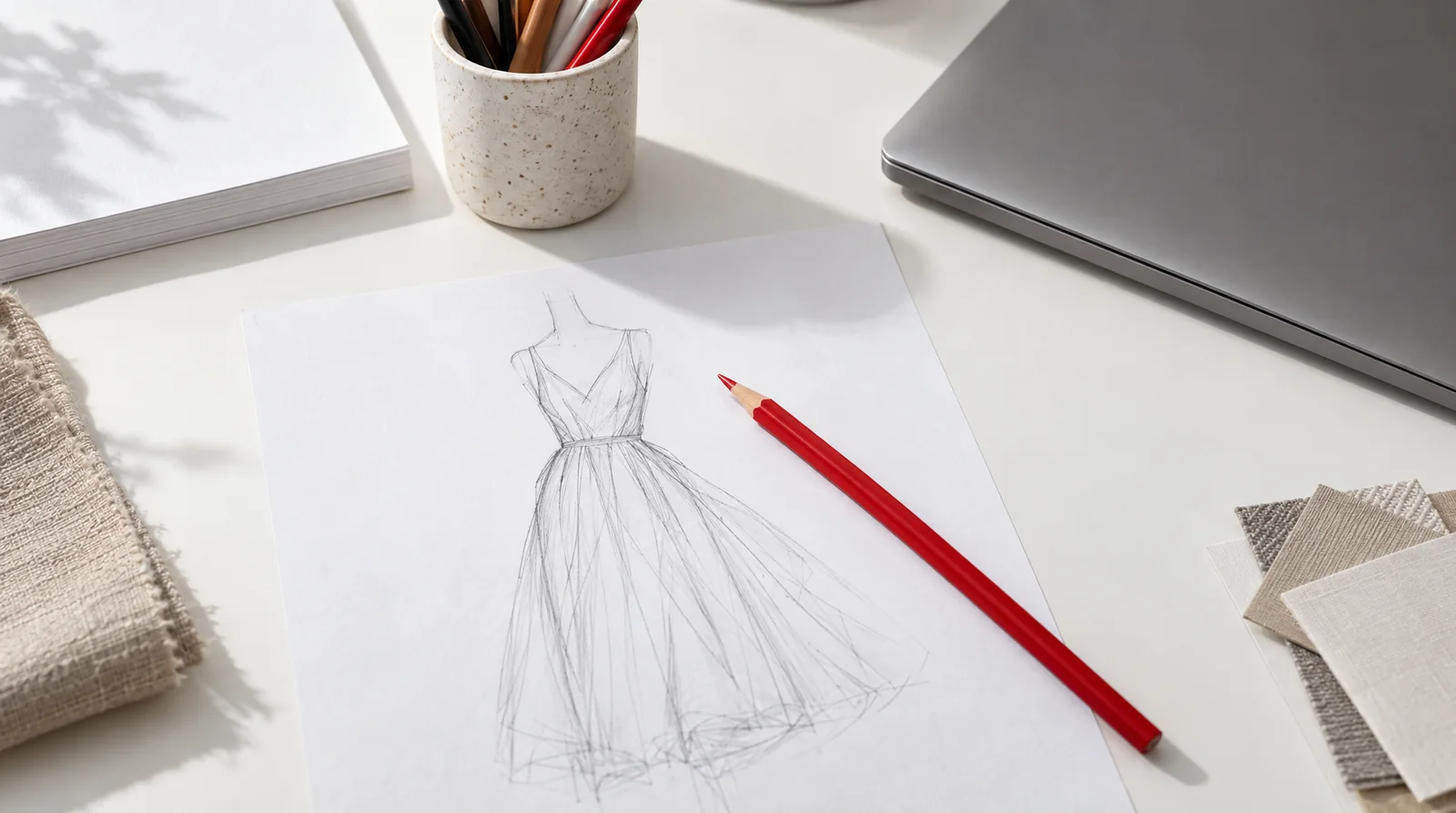
Editorial illustration: the human authorship the Copyright Office looks for starts on paper.
Table of Contents
- The Core Principle: Human Authorship is Key
- Scenario 1: AI-Generated Images (Like Photoshoots)
- Scenario 2: AI-Assisted Designs (Like Tech Packs & Variations)
- What About the Training Data?
- How Adstronaut AI is Built for Commercial Use
- Best Practices for Designers Using AI
- Designing with Confidence in the AI Era
- Frequently Asked Questions
The Core Principle: Human Authorship is Key
To understand AI copyright, you first need to understand the core principle of copyright law itself. In most jurisdictions, including the United States, copyright protection is granted only to works created by a human author.
The U.S. Copyright Office stated in its February 2023 guidance on AI-generated works (and reaffirmed in subsequent rulings including the Théâtre D'opéra Spatial and Zarya of the Dawn decisions) that they will not register a work that was "produced by a machine or mere mechanical process" without any creative input or intervention from a human author.
This single principle is the key to unlocking the whole debate. The question is not "Can AI art be copyrighted?" but rather, "How much human creativity and control was involved in the process?"
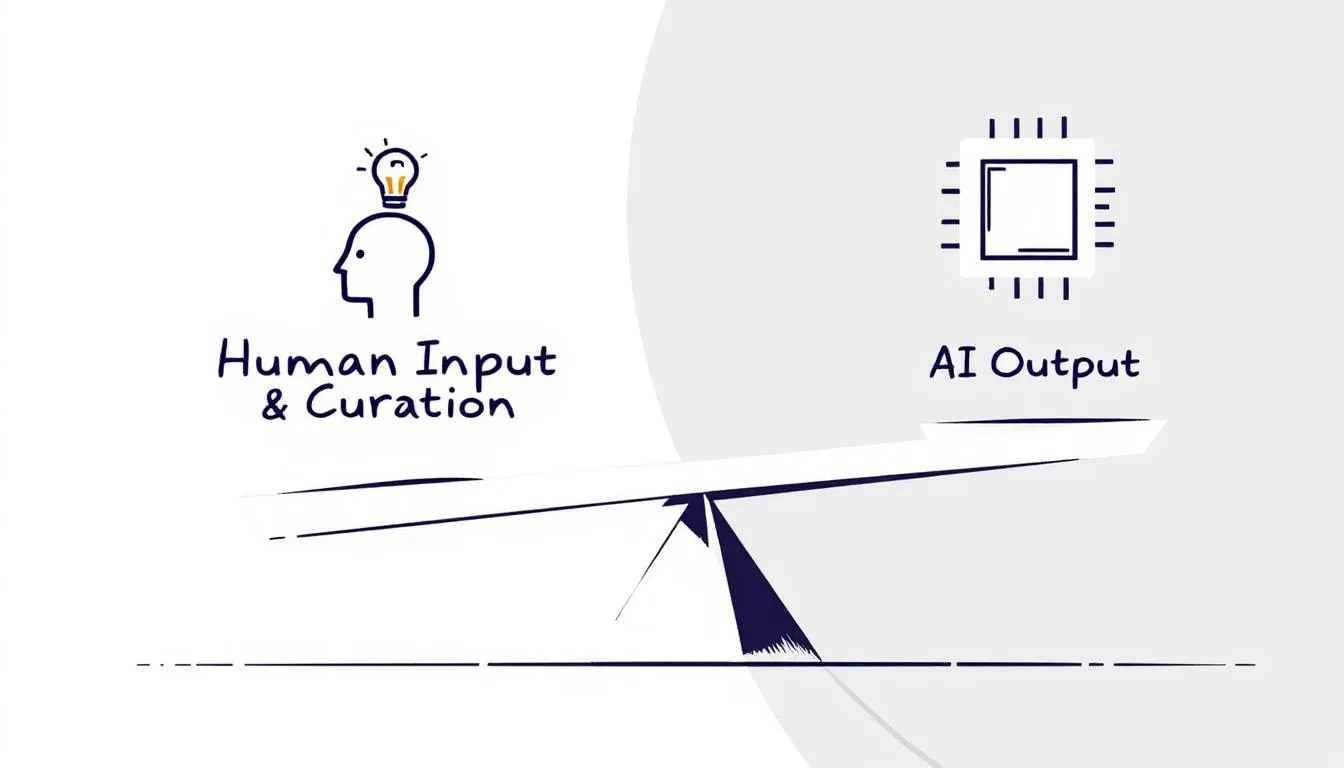 Copyright protection for AI-assisted work hinges on the degree of human creative input and control.
The more you direct, curate, and modify the AI's output, the stronger your claim to authorship becomes.
Scenario 1: AI-Generated Images (Like Photoshoots)
Let's look at a common use case: creating an on-model photoshoot with Adstronaut AI.
- Your Input: You upload your original product photo, you select a specific model, and you choose a specific background.
- AI's Role: The AI executes a technical process to combine these elements into a new, photorealistic image.
The Copyright Status: The final composite image itself, as a wholly new visual work, is generally considered to be AI-generated and likely cannot be copyrighted as a photograph. However, this is less of a concern than it seems.
The More Important Question: Commercial Use Rights For a fashion brand, the primary concern isn't copyrighting the marketing image; it's having the legal right to use it for commercial purposes. This is where the terms of service of your AI provider are critical.
Platforms like Adstronaut AI are built for commercial use. When you generate an image on our platform, you are granted a full commercial license to use that image for your business—on your website, in your social media, and in your paid advertising. The models are not real people, so there are no model release forms to worry about. The output is yours to use.
| Asset | Can you copyright it? | Can you use it commercially? |
|---|---|---|
| Your Original Product Photo | Yes. It's your original work. | Yes. |
| The AI-Generated Photoshoot Image | No. The final image is AI-generated. | Yes. Adstronaut AI grants you a full commercial license. |
Scenario 2: AI-Assisted Designs (Like Tech Packs & Variations)
This is where the concept of human authorship becomes even more important. When you use tools like our AI Designer or Variation Generator, you are engaging in a much deeper collaborative process.
Let's break down the workflow:
- You provide the vision: You upload a moodboard of your curated images and write a specific text prompt.
- The AI generates options: It creates several design concepts based on your direction.
- You provide creative curation: You review the options and select the one that best fits your vision.
- You refine the final output: You take the AI-generated concept and make it your own. You modify the sketch, specify the exact measurements in the tech pack, and make the final creative decisions.
This human-in-the-loop approach is central to maintaining authorship. Learn more about this creative process in our guide to the AI Designer.
In this scenario, the AI is acting as a sophisticated tool, much like a pen or a software program. You are the author, and the final design is a product of your creative choices, curation, and refinement.
The U.S. Copyright Office has stated that a work created with the assistance of AI is copyrightable if it is the result of "substantial human authorship." Your process of curating, selecting, and refining the AI's output is a strong argument for exactly that.
Create commercially safe tech packs with AI →
What About the Training Data?
Another common concern is the data used to train AI models. Are the outputs derivative of other artists' work? This is a valid and ongoing legal debate.
This is why it's crucial to use AI platforms that are built on ethically sourced and commercially licensed training data. Reputable AI providers, including the foundational models used by Adstronaut AI, have invested heavily in creating datasets that respect intellectual property rights, ensuring that the outputs are safe for you to use commercially.
How Adstronaut AI is Built for Commercial Use
We understand that for a fashion brand, legal clarity is non-negotiable. We've built our platform with this as a top priority.
- Full Commercial License: When you create on Adstronaut AI, you own the assets you create with your original content, and we grant you a comprehensive, worldwide, royalty-free license to use the AI-generated outputs for any commercial purpose.
- Ethical AI Models: We build upon foundational models from industry leaders who are committed to ethical AI development and a responsible approach to training data.
- No Third-Party IP: The AI models, virtual models, and backgrounds are all generated and owned in a way that ensures you are not infringing on any third-party copyrights or personality rights.
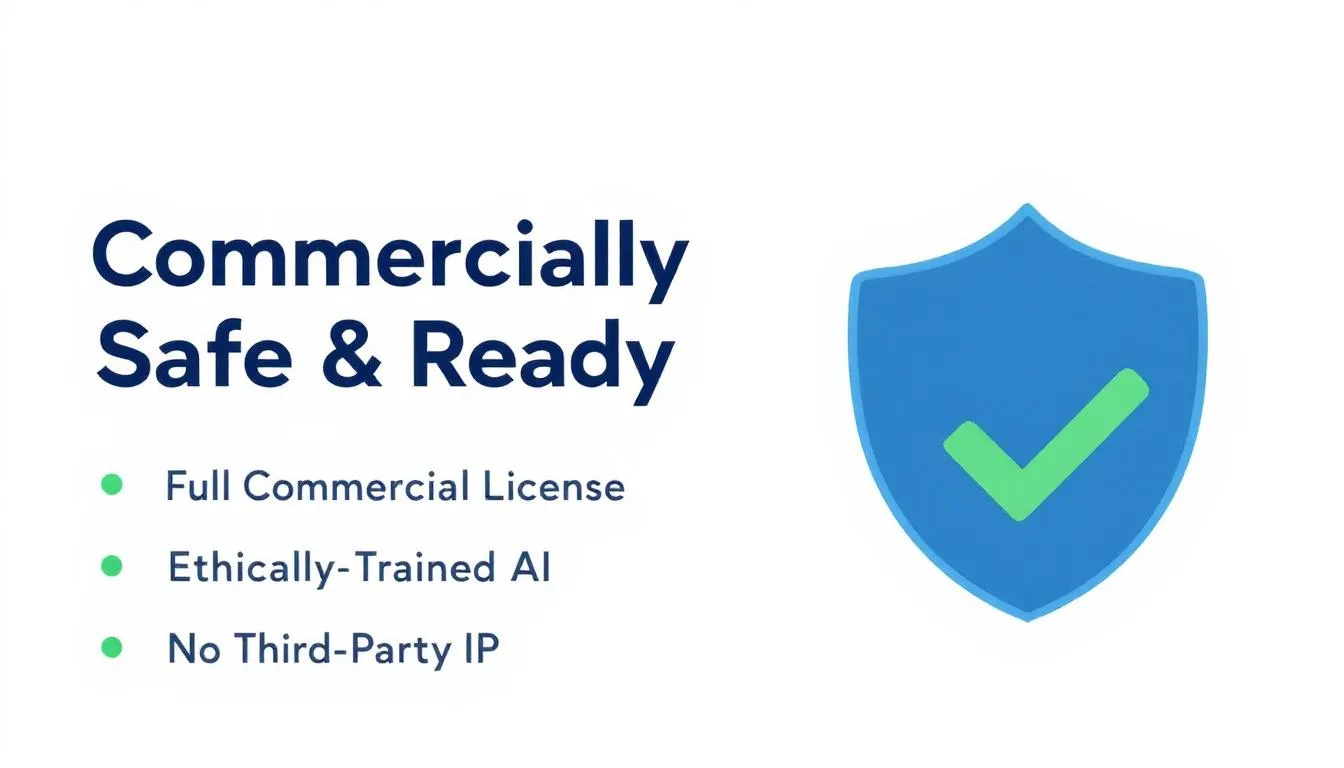 Adstronaut AI is built from the ground up to ensure the assets you create are legally safe for you to use in your business.
Best Practices for Designers Using AI
To strengthen your position and design with confidence, follow these simple best practices:
- Document Your Process: Keep a record of your prompts, your moodboard images, and the AI-generated options you didn't choose. This demonstrates your creative curation process.
- Modify and Refine: Always treat the AI output as a starting point. Make your own creative modifications to the design. The more you change and refine, the stronger your claim to authorship becomes. This is built into our tech pack creation process where you add your specifications.
- Use Reputable Platforms: Work with AI providers like Adstronaut AI that are transparent about their terms of service and explicitly grant you commercial use rights.
- Focus on the Final Product: Remember that the ultimate expression of your copyright is the physical garment. While the AI-generated sketch might be in a legal gray area, the finished product, created from your tech pack and your material choices, is unequivocally your original work.
Designing with Confidence in the AI Era
The legal landscape around AI is still evolving, but the path forward for designers is becoming clear. AI is a powerful tool for ideation and execution, but human creativity and vision remain the essential ingredients for creating protectable intellectual property.
By understanding the principles of human authorship and partnering with platforms that are built for commercial use, you can embrace the incredible power of AI without sacrificing your ownership or peace of mind.
Explore how this legal framework applies to specific tools like AI photoshoots, color changing, and product variations. For beginners, start with our guide to demystifying AI in fashion.
Frequently Asked Questions
Can I copyright AI-generated fashion designs?
It depends on the level of human creative input. Under U.S. Copyright Office guidance (February 2023), purely AI-generated images with minimal human direction are not copyrightable. However, if you substantially curate, select, and modify AI outputs — as you do when refining AI-generated design variations and adding your own specifications — the resulting work can qualify for "substantial human authorship" protection.
Can I use AI-generated photoshoot images commercially?
Yes. While AI-generated images may not be copyrightable as photographs, platforms like Adstronaut AI grant full commercial licenses for all outputs. You can use AI-generated product images on your website, social media, paid ads, and marketplaces like Shopify and Amazon without legal restrictions or model release concerns.
Who owns the copyright to an AI-assisted tech pack?
The designer who provides the creative direction, selects the AI output, adds specific measurements, and refines the final document has a strong claim to authorship. The AI-generated flat sketches serve as a starting point (similar to a tool), and your modifications and specifications constitute the creative authorship that copyright law protects.
Is it legal to sell clothing based on AI-generated designs?
Yes. Copyright law protects the expression of an idea, not the idea itself. Your finished physical garment — made from your fabric choices, your measurements, and your production decisions — is unequivocally your original product regardless of how the initial design concept was generated. The garment itself is protected by trade dress and design patent law, not just copyright.
Do I need to disclose that my designs were AI-assisted?
There is currently no legal requirement in the U.S. or EU to disclose AI assistance in fashion design or product photography. However, some brands choose voluntary disclosure for transparency. The EU AI Act (effective 2025-2026) requires labeling for certain AI-generated content, but fashion product images and design tools fall outside its high-risk categories.
What happens if an AI tool copies another designer's work?
Reputable AI platforms like Adstronaut AI use commercially licensed training data and generate unique outputs rather than copying existing works. If you suspect an AI output resembles an existing copyrighted design, you should modify it significantly before commercial use. Documenting your creative process provides additional legal protection.
Are AI-generated fabric prints and patterns copyrightable?
Textile prints and patterns created with AI follow the same "substantial human authorship" standard. If you direct the AI with specific prompts, select from multiple outputs, and modify the pattern (adjusting scale, colors, or repeat), your final textile design likely qualifies for copyright protection. The more creative decisions you make, the stronger your claim.
Try Adstronaut's AI Design Tools →
Disclaimer: This article provides general information and is not a substitute for legal advice from a qualified attorney.
Sources and further reading:
- U.S. Copyright Office AI Guidance (February 2023) — official guidance on copyright registration for AI-generated works
- McKinsey State of Fashion 2025 — AI adoption and intellectual property considerations in fashion
- Business of Fashion — ongoing coverage of AI and intellectual property in fashion
- Shopify Legal Guide for E-Commerce — commercial use of product imagery on e-commerce platforms