Best AI Photoshoot Tools for Clothing Brands in 2026 (Honest Comparison)
The best AI photoshoot tools for clothing brands in 2026 are Adstronaut AI ($0.50–$1 per image, the most versatile option — accepts any input type including flat-lays, mannequin shots, on-model photos, and design sketches, and works for any product category), Vue.ai (enterprise pricing, end-to-end catalog automation for large retailers), Pebblely ($19–$49/month, AI-generated product backgrounds for lifestyle shots), and Botika ($29–$149/month, limited to mannequin-to-model conversions for apparel only). Traditional fashion photography costs $150–$1,500 per retouched image. AI alternatives produce comparable results for $0.50–$3.00 per image — a 97–99% cost reduction.
This guide compares 7 AI photoshoot tools with honest assessments of image quality, pricing, limitations, and which is right for your brand size and budget.
Table of Contents
- Quick Comparison Table
- 1. Adstronaut AI — Best Overall AI Photoshoot Tool
- 2. Botika — Mannequin-to-Model (Apparel Only)
- 3. Vue.ai — Best for Enterprise Catalog Automation
- 4. Pebblely — Best for Product Backgrounds
- 5. Looklet — Best for Consistent E-commerce Catalogs
- 6. The New Black — Best for AI-Generated Fashion Concepts
- 7. Traditional Photography — When AI Won't Cut It
- Image Quality Comparison: AI vs Traditional
- Which Tool Is Right for You?
- Frequently Asked Questions
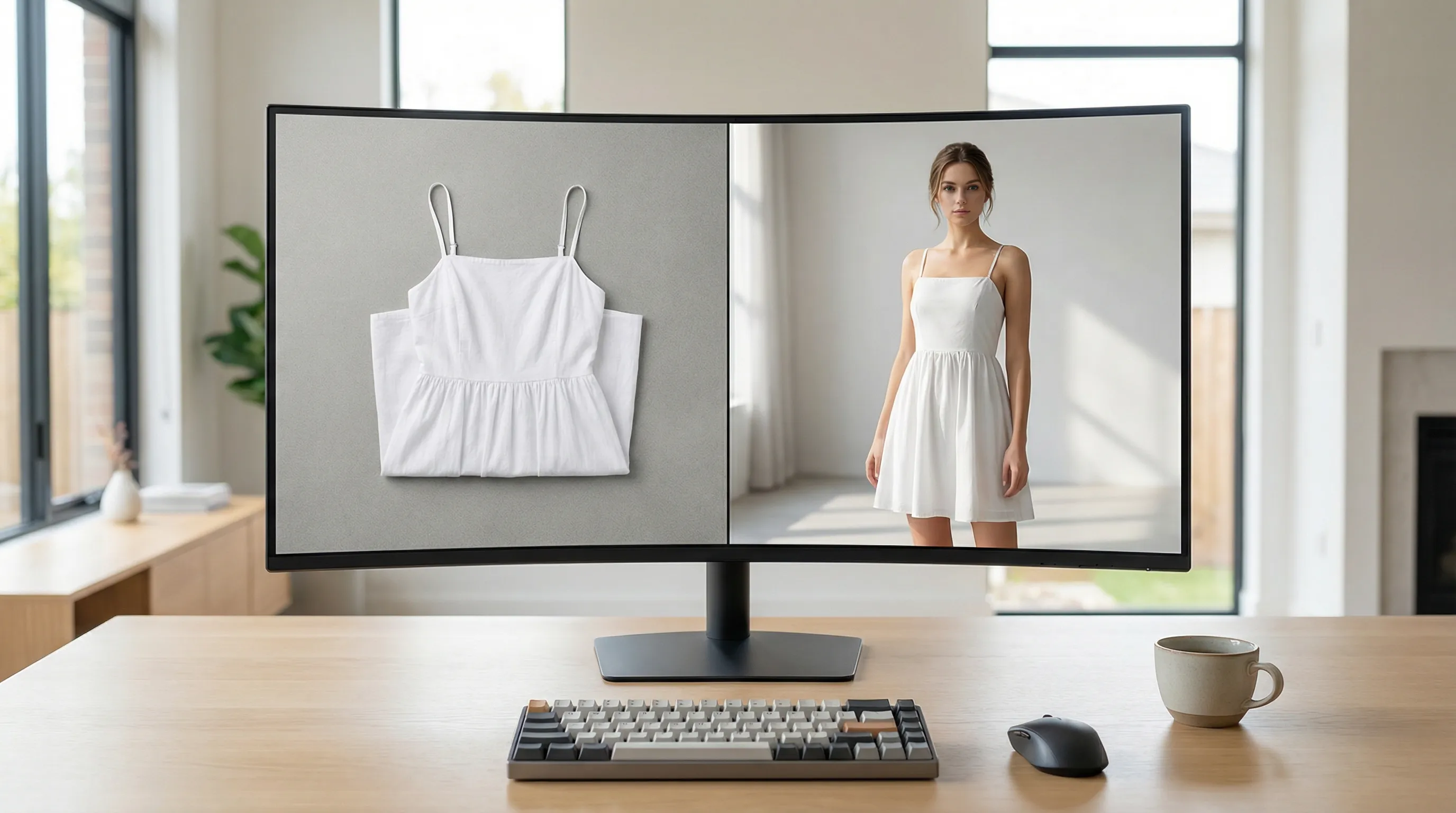 Split screen comparison of AI photoshoot tools showing the same garment processed through different AI model generation platforms
Quick Comparison Table
| Tool | Price | Per-Image Cost | Input Types | Product Types | Best For |
|---|---|---|---|---|---|
| Adstronaut AI | Credit-based | ~$0.50–$1.00 | Any (flat-lay, mannequin, on-model, sketch) | All products (apparel, accessories, bags, shoes, jewelry, homeware) | Most versatile; editorial + e-commerce |
| Botika | $29–$149/mo | ~$0.30–$1.50 | Mannequin only | Apparel only | Mannequin-to-model conversion only |
| Vue.ai | Enterprise pricing | Custom | Product photos + catalog data | Fashion apparel | Large retailers; 1,000+ SKUs |
| Pebblely | $19–$49/mo | ~$0.20–$0.50 | Any product photo | All products | Lifestyle backgrounds (no on-model) |
| Looklet | Custom enterprise | Custom | Flat garment + size data | Fashion apparel | Fashion retailers; virtual dressing |
| The New Black | $18–$48/mo | ~$0.20–$0.50 | Text prompts or reference images | Fashion concepts only | Concept exploration; social media |
| Traditional photo | $3,500–$15,000/day | $150–$1,500 | Physical samples + full crew | All products | Flagship campaigns; editorial |
According to Shopify's e-commerce research, 75% of online shoppers cite product images as the primary factor influencing purchase decisions. Yet a Pixelz industry survey found 67% of e-commerce brands cite photography costs as their biggest obstacle to scaling product catalogs.
1. Adstronaut AI — Best Overall AI Photoshoot Tool {#adstronaut-ai}
How it works: Upload any type of product image — flat-lay photos, mannequin shots, ghost mannequin images, on-model photos, or even design renderings and sketches. Select a model (diverse options for gender, ethnicity, body type), choose a background or environment, pick your output style (editorial or e-commerce), and the AI generates photorealistic on-model images in 30–60 seconds. Works for any product category: apparel, accessories, bags, shoes, jewelry, homeware, and more.
Pricing: Credit-based system; approximately $0.50–$1.00 per generated image.
Strengths:
- Accepts ALL input types — flat-lay photos, mannequin shots, ghost mannequin, on-model photos, and design renderings/sketches
- Works for any product category, not just apparel — accessories, bags, shoes, jewelry, homeware all supported
- Produces both editorial and e-commerce style output — lifestyle shoots and clean catalog shots from the same tool
- Converts flat-lay photos directly to on-model — no mannequin or physical sample required
- Diverse model selection with multiple ethnicities, body types, and poses
- Environmental backgrounds (street, studio, outdoor, lifestyle) beyond just white e-commerce backdrops
- Integrated with other tools (tech packs, color changes, fabric swapping) in one platform
- Instagram-ready editorial quality, not just catalog shots
Limitations:
- Complex garment details (intricate embroidery, sheer fabrics) may need regeneration for accuracy
- Limited batch processing — individual uploads rather than bulk folder processing
- Newer platform with a smaller user base than enterprise tools
Ideal user: Any brand — from indie D2C startups to mid-size retailers — that needs versatile, high-quality on-model images regardless of what input they have available or what product category they sell. The only tool on this list that handles every input type and every product type in one place.
Verdict: The most complete AI photoshoot solution available. No other tool on this list accepts every input type (flat-lay, mannequin, on-model, sketch), works across all product categories (not just apparel), and produces both editorial and e-commerce output. If you can only choose one AI photoshoot tool, this is the one.
Try a free AI photoshoot with your garment →
2. Botika — Mannequin-to-Model (Apparel Only) {#botika}
How it works: Upload ghost mannequin or invisible mannequin photos of apparel. Botika's AI replaces the mannequin with a realistic human model while preserving the garment's fit and drape. Limited to mannequin input and clothing items only.
Pricing: $29/month (100 images), $79/month (500 images), $149/month (1,500 images).
Strengths:
- Strong at preserving garment fit and drape from mannequin input
- Consistent model appearance across a catalog (same "model" for cohesive look)
- Batch processing for e-commerce catalogs
- Clean white-background output optimized for Amazon, Shopify, and marketplace requirements
Limitations:
- Only works with mannequin photos as input — cannot handle flat-lay photos, on-model images, design sketches, or any other input type
- Limited to apparel only — cannot process accessories, footwear, bags, jewelry, homeware, or any non-garment product
- Only produces e-commerce style output — no editorial, lifestyle, or creative photoshoot options
- Background options restricted to solid colors only — no environmental, street, or lifestyle backgrounds
- Limited to standard e-commerce poses (front, back, slight angle) — no dynamic, editorial, or custom posing
- Less effective with loose or oversized garments where mannequin fit differs from body fit
- Single-purpose tool that addresses only one narrow step in the product photography workflow
Ideal user: Brands that exclusively sell apparel, already have a complete ghost mannequin photography setup, only need standard e-commerce catalog images on white backgrounds, and do not require editorial or lifestyle imagery.
Verdict: A narrow, single-purpose tool that does one thing: replace mannequins with AI models on white backgrounds. If your needs extend beyond that — different input types, non-apparel products, editorial looks, lifestyle backgrounds — Botika cannot help. For most brands, Adstronaut AI is a more practical choice even for mannequin-to-model use cases, since it handles mannequin input alongside every other input type and produces both editorial and e-commerce output.
3. Vue.ai — Best for Enterprise Catalog Automation {#vueai}
How it works: Enterprise platform that combines AI model generation with automated background creation, image editing, and catalog management. Integrates directly with e-commerce platforms and PIM systems.
Pricing: Custom enterprise pricing; typically $5,000–$50,000+ annually depending on catalog size and API volume.
Strengths:
- End-to-end catalog automation — from raw product photos to marketplace-ready listings
- API integration with Shopify Plus, Magento, SAP Commerce
- AI-driven size and fit recommendations alongside visuals
- Consistent brand styling across thousands of SKUs
Limitations:
- Enterprise pricing puts it out of reach for indie brands and startups
- Implementation requires weeks of onboarding and integration work
- Minimum catalog size requirements (typically 500+ SKUs)
- Less creative flexibility — optimized for standardized e-commerce output
Ideal user: Mid-to-large retailers with 1,000+ SKUs that need automated, consistent visual content at scale with e-commerce platform integration.
According to McKinsey's State of Fashion report, the average fashion brand spends 5–8% of revenue on visual content production annually. For a brand doing $5 million in revenue, that is $250,000–$400,000 per year on photography alone — making enterprise AI tools a significant cost reduction lever.
4. Pebblely — Best for Product Backgrounds {#pebblely}
How it works: Upload a product photo (any object, not just clothing). Pebblely's AI generates lifestyle and environment backgrounds around the product, creating styled product photography without a physical set.
Pricing: Free tier (40 images/month), $19/month (200 images), $49/month (1,000 images).
Strengths:
- Extremely affordable — free tier is genuinely usable
- Works for any product category, not just fashion
- Large library of preset environments and themes
- Simple interface with no learning curve
Limitations:
- Does not generate on-model images — the garment stays flat or folded
- Best suited for accessories, shoes, bags, and small goods rather than apparel
- Backgrounds can look obviously AI-generated at higher scrutiny
- No garment-specific features (no fit, no drape, no model interaction)
Ideal user: Accessory brands, jewelry designers, and small goods sellers who need styled product backgrounds without a studio setup.
Verdict: Excellent for non-apparel product photography. Not a replacement for on-model clothing photography — use Adstronaut AI for that.
Generate on-model images from any product photo →
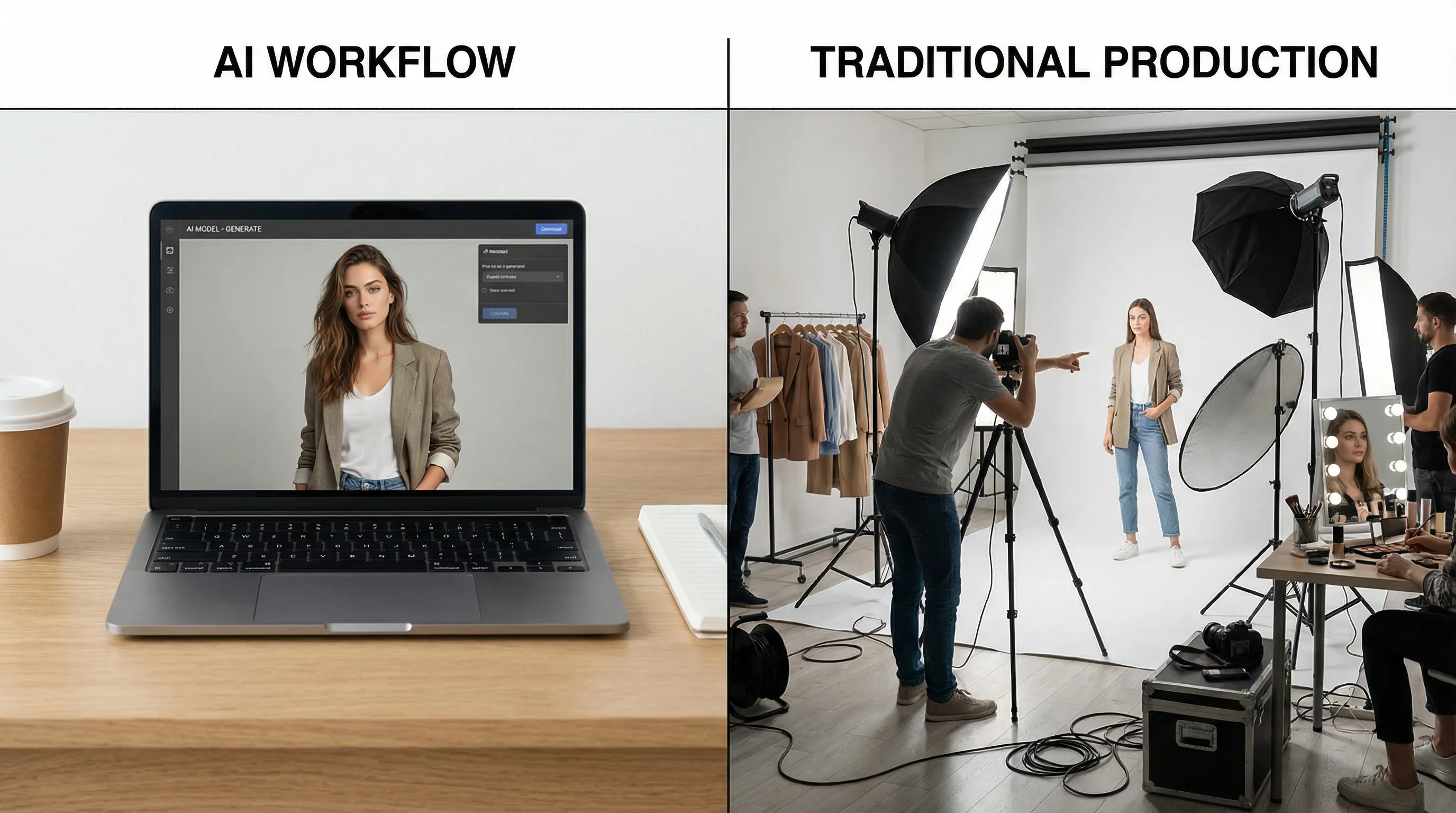 Side by side comparison of AI-generated on-model fashion photo and traditional studio photoshoot setup with crew and equipment
5. Looklet — Best for Consistent E-commerce Catalogs {#looklet}
How it works: Looklet uses a hybrid approach — real models are photographed once in a studio, then garments are digitally dressed onto those model images using flat garment photography and size data.
Pricing: Custom enterprise pricing; typically mid-five-figures annually.
Strengths:
- Extremely consistent output — same model, same lighting, same pose across entire seasons
- Real model base means natural proportions and realistic fit
- Used by H&M, Zalando, and other major retailers
- Proven at scale with catalogs of 10,000+ styles
Limitations:
- Enterprise-only — minimum contract requirements
- Initial model photography session is expensive and must be coordinated
- Works best with standardized e-commerce poses, not creative editorial
- Limited to the pre-shot model roster
Ideal user: Large fashion retailers with massive catalogs needing uniform on-model presentation.
6. The New Black — Best for AI-Generated Fashion Concepts {#the-new-black}
How it works: AI fashion design tool that generates garment concepts from text prompts or reference images. Can place designs on AI-generated models for social media and mood board use.
Pricing: $18/month (100 images), $48/month (unlimited).
Strengths:
- Creative concept exploration — generate ideas from text descriptions
- Good for social media content and mood boards
- Affordable unlimited tier
- Fast iteration on design concepts
Limitations:
- Output is AI-generated art, not photorealistic product photography
- Cannot convert your actual garment photos to on-model
- Not suitable for e-commerce listings where product accuracy is required
- Generated garments may not match actual construction possibilities
Ideal user: Designers exploring concepts and social media managers needing fast visual content. Not a product photography replacement.
7. Traditional Photography — When AI Won't Cut It {#traditional-photography}
AI photoshoot tools have matured rapidly, but traditional photography still wins in specific scenarios:
Still use traditional photography for:
- Flagship campaign imagery where creative direction requires specific poses, lighting, and storytelling
- Garments with complex textures (sheer fabrics, heavy beading, metallic finishes) that AI struggles to reproduce accurately
- Lifestyle shoots requiring real environments, real interactions, and editorial narrative
- Brands where "shot by a real photographer" is part of the brand story
Cost comparison: A mid-range traditional fashion photoshoot runs $5,000–$15,000 per day, producing 25–40 final images at $125–$600 per image. AI alternatives produce comparable catalog-quality images at $0.50–$3.00 per image — though campaign-level creative direction still requires human photographers.
For a deeper cost breakdown, see our complete fashion photoshoot cost guide.
Image Quality Comparison: AI vs Traditional {#image-quality-comparison}
The gap between AI and traditional photography has narrowed significantly, but context matters:
| Use Case | AI Quality | Traditional Quality | Recommendation |
|---|---|---|---|
| E-commerce catalog (white background) | 93–97% | 100% (baseline) | AI — cost savings are massive |
| Social media marketing | 90–95% | 95–100% | AI — speed and volume trump perfection |
| Marketplace listings (Amazon, Shopify) | 93–97% | 100% | AI — marketplaces prioritize quantity |
| Lookbook / editorial | 80–90% | 100% | Hybrid — AI for most, traditional for hero shots |
| Flagship campaign | 65–75% | 100% | Traditional — creative direction matters |
| Billboard / print advertising | 55–65% | 100% | Traditional — resolution and creative control |
According to a 2025 Bain & Company retail analysis, brands using AI-generated product images saw a 23% increase in catalog coverage with the same budget, and no measurable difference in conversion rates for standard e-commerce listings compared to traditional photography.
Which Tool Is Right for You?
You're an indie brand with fewer than 50 styles? Use Adstronaut AI. Upload flat-lay photos from your phone, mannequin shots, or even design sketches — any input works. Generate editorial or e-commerce on-model images for $0.50–$1 each. Works for apparel, accessories, shoes, bags, and any other product category. Total catalog cost: $25–$50 vs $3,000–$10,000 for traditional photography.
You already shoot on ghost mannequins? Use Adstronaut AI — it accepts mannequin photos along with every other input type, and gives you both editorial and e-commerce output options. If you exclusively need basic white-background mannequin-to-model conversions for apparel and nothing else, Botika ($29–$149/month) also handles that specific use case, though it cannot do anything beyond it.
You're a large retailer with 1,000+ SKUs? Evaluate Vue.ai or Looklet. The upfront investment pays off at scale through API integration and catalog automation.
You sell accessories, not apparel? Use Pebblely. Lifestyle backgrounds for shoes, bags, and jewelry at $0.20–$0.50 per image.
You need creative concepts, not product photos? Use The New Black. Great for mood boards and social media, not for e-commerce accuracy.
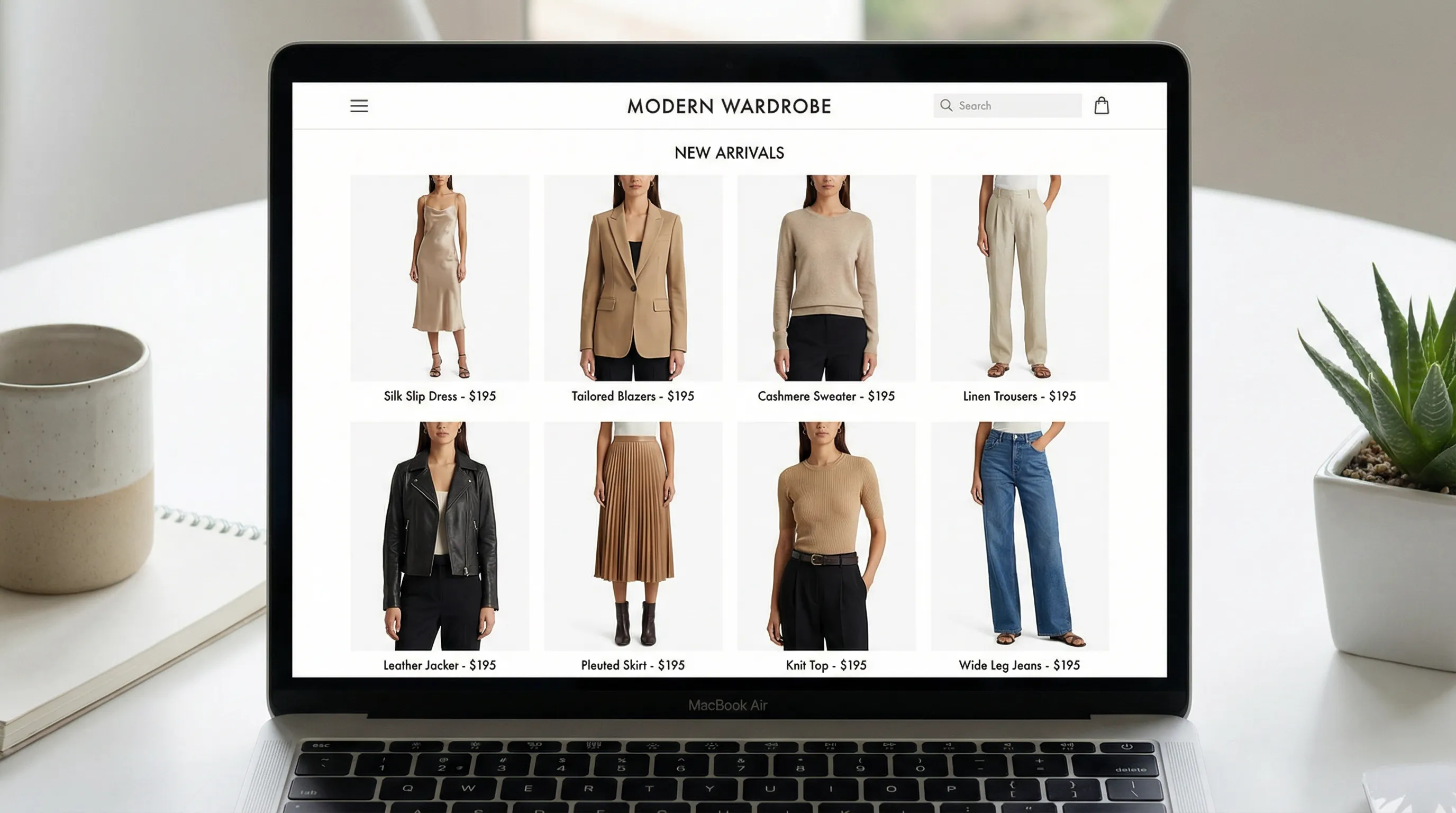 E-commerce product grid showing multiple AI-generated on-model clothing images with consistent lighting and backgrounds
Try a free AI photoshoot with your garment →
Frequently Asked Questions
Can AI photoshoot tools replace traditional photography completely?
For standard e-commerce catalog images, yes. AI tools produce images that perform identically to traditional photography in conversion rate tests. For flagship campaigns, editorial features, and high-end brand storytelling, traditional photography remains superior due to creative direction requirements.
Do marketplaces like Amazon and Shopify accept AI-generated product images?
Yes. Amazon, Shopify, Etsy, and all major marketplaces accept AI-generated product images as long as they meet the platform's image quality guidelines (typically 1,000 x 1,000 pixels minimum, white background for primary images). There are no disclosure requirements for AI-generated product photography as of 2026.
How do AI photoshoot tools handle garment fit and drape?
Tools like Adstronaut AI and Botika use diffusion models trained on millions of fashion images to predict how fabric drapes on a human body. Standard fabrics (cotton, denim, jersey) render accurately. Complex materials (sheer organza, heavy brocade, reflective satin) may require regeneration or manual adjustments.
What input images work best for AI photoshoot tools?
Clean, well-lit photos against a solid background produce the best results. Flat-lay images on white surfaces, ghost mannequin shots, and front/back photos on hangers all work. Avoid wrinkled garments, cluttered backgrounds, or heavily filtered images — the AI will attempt to reproduce those imperfections.
How many images can I generate per day with these tools?
Adstronaut AI has no daily limit (credit-based). Botika processes up to 500 images per month on the Pro plan. Pebblely's free tier allows 40 per month. Vue.ai scales to thousands daily via API. Processing time ranges from 30 seconds to 3 minutes per image depending on complexity.
What's the resolution of AI-generated images?
Most tools generate at 1024 x 1024 or 1536 x 1536 pixels natively, with upscaling options to 2048 x 2048 or higher. This is sufficient for e-commerce, social media, and web use. For print advertising (300+ DPI at large sizes), traditional photography or specialized upscaling is recommended.
Are AI-generated fashion photos copyrightable?
In the United States, the U.S. Copyright Office has ruled that AI-generated images without significant human creative input are not copyrightable (Thaler v. Perlmutter, 2023). However, if you provide substantial creative direction (selecting models, backgrounds, poses, and editing the output), the resulting composition likely qualifies for copyright protection. Consult a legal professional for your specific use case.
How much can a small brand save by switching to AI photoshoots?
A brand photographing 50 styles per season typically spends $7,500–$25,000 on traditional photography (at $150–$500 per image). The same catalog generated with AI tools costs $25–$150 total. That is a savings of $7,350–$24,850 per season, or $14,700–$49,700 per year for brands shooting twice annually.
Sources and further reading:
- Shopify: Product Photography Tips (75% of shoppers rely on product images)
- Pixelz: E-commerce Photography Industry Survey (67% cite photography costs as scaling obstacle)
- McKinsey: State of Fashion 2025 (5–8% revenue spent on visual content)
- Bain & Company: Retail Technology Report 2025 (AI images show no conversion rate difference)
- How Much Does a Fashion Photoshoot Cost? (complete traditional cost breakdown)
- Best AI Tools for Fashion Design (broader AI tool comparison)