Adstronaut AI
Harman Chawla
CEO, Adstronaut AI
LinkedIn ↗I'm Harman, the CEO of Adstronaut AI. I started my career as a data scientist, then shifted into product management, and now I run Adstronaut — handling product, marketing, and growth day-to-day.
I'm a builder at heart. I write frontend, ship features, and generally believe the fastest way to learn what customers want is to put a working version in front of them. Most of what I write here is from the trenches: real workflows we've shipped, real numbers we've seen, real mistakes we've made.
Before Adstronaut I was at Microsoft and Unbabel (Y Combinator alum). Texas A&M Aggie, class of '17 — Whoop! Currently spending most of my time on growth — which means writing more of these posts.
- CEO, Adstronaut AI
- Ex-Microsoft, Ex-Unbabel (Y Combinator)
- Texas A&M Aggie '17 — Whoop!
Posts by Harman
Best AI Tools for Fashion Product Photography and Color Visualization in 2026
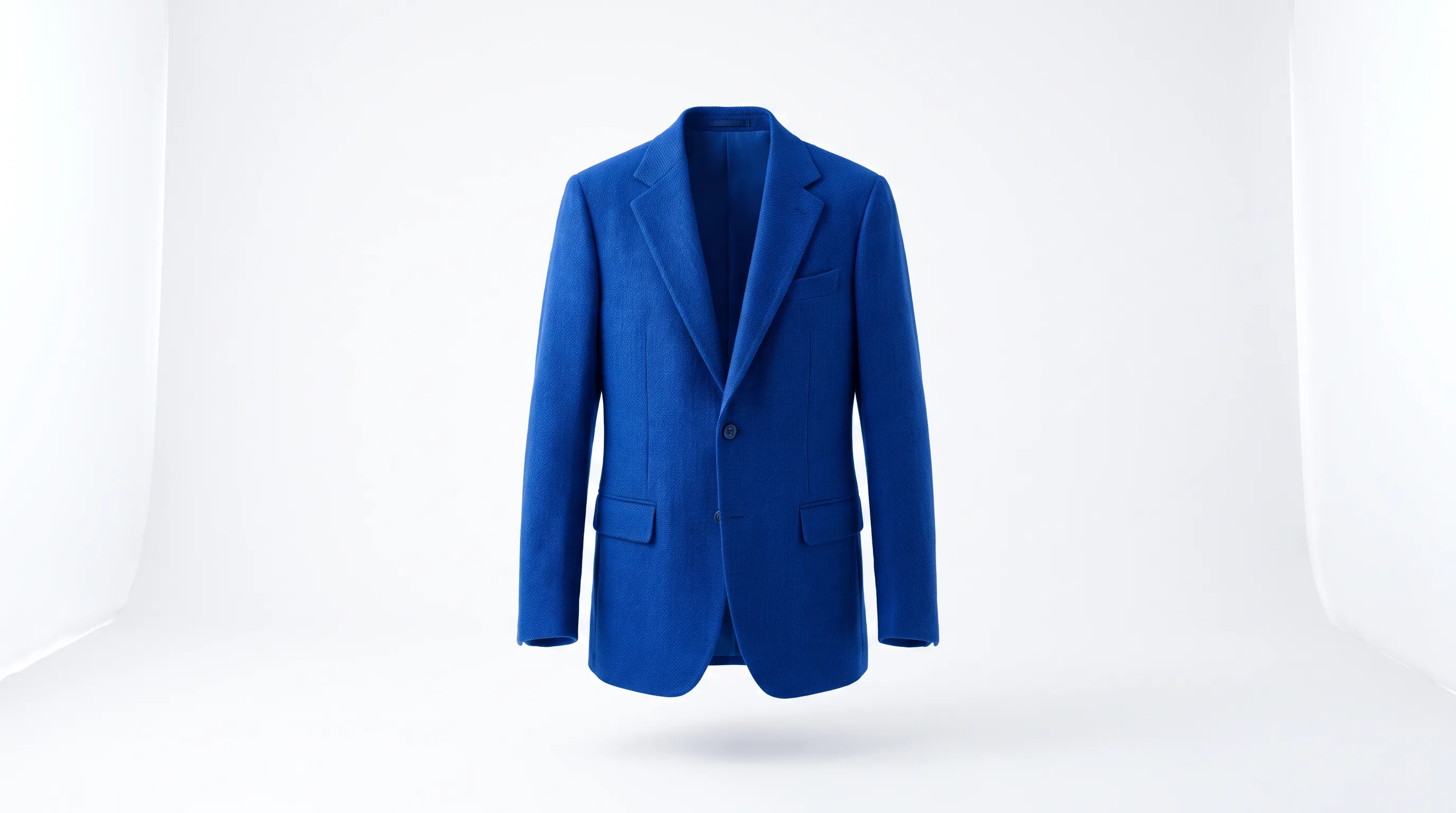
Fashion brands spend $50K–$500K annually on product photography and color sampling. AI visualization tools cut those costs by 60–90%. This guide compares 6 leading tools — Adstronaut AI, CLO 3D, Browzwear, Botika, Vue.ai, and Photoshop — with pricing tables, feature matrices, and cost breakdowns by brand size.
How to Present Multiple Colorways to Buyers and Retailers — Complete Visual Merchandising Guide
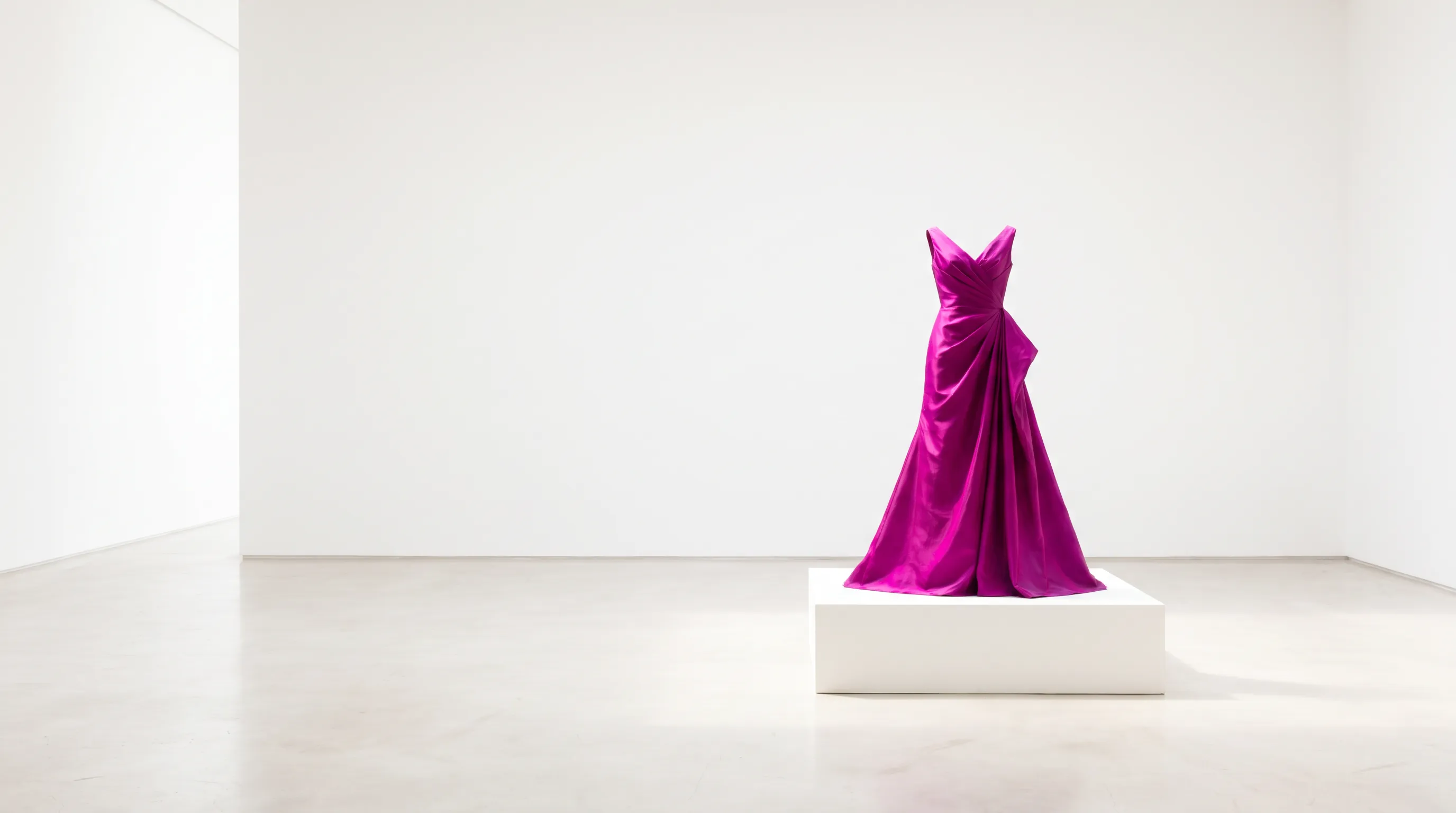
Presenting multiple colorways to buyers requires photorealistic digital renders, Pantone TCX references, and structured line sheet layouts. Buyers make 70% of purchase decisions based on color, yet traditional sampling costs $500–$1,500 per colorway with 3–6 weeks lead time. This guide covers line sheet layouts, color story grouping, seasonal palette alignment, and AI-powered workflows that generate buyer-ready presentations in minutes.
AI Tech Packs vs Manual Tech Packs — A Side-by-Side Quality Comparison
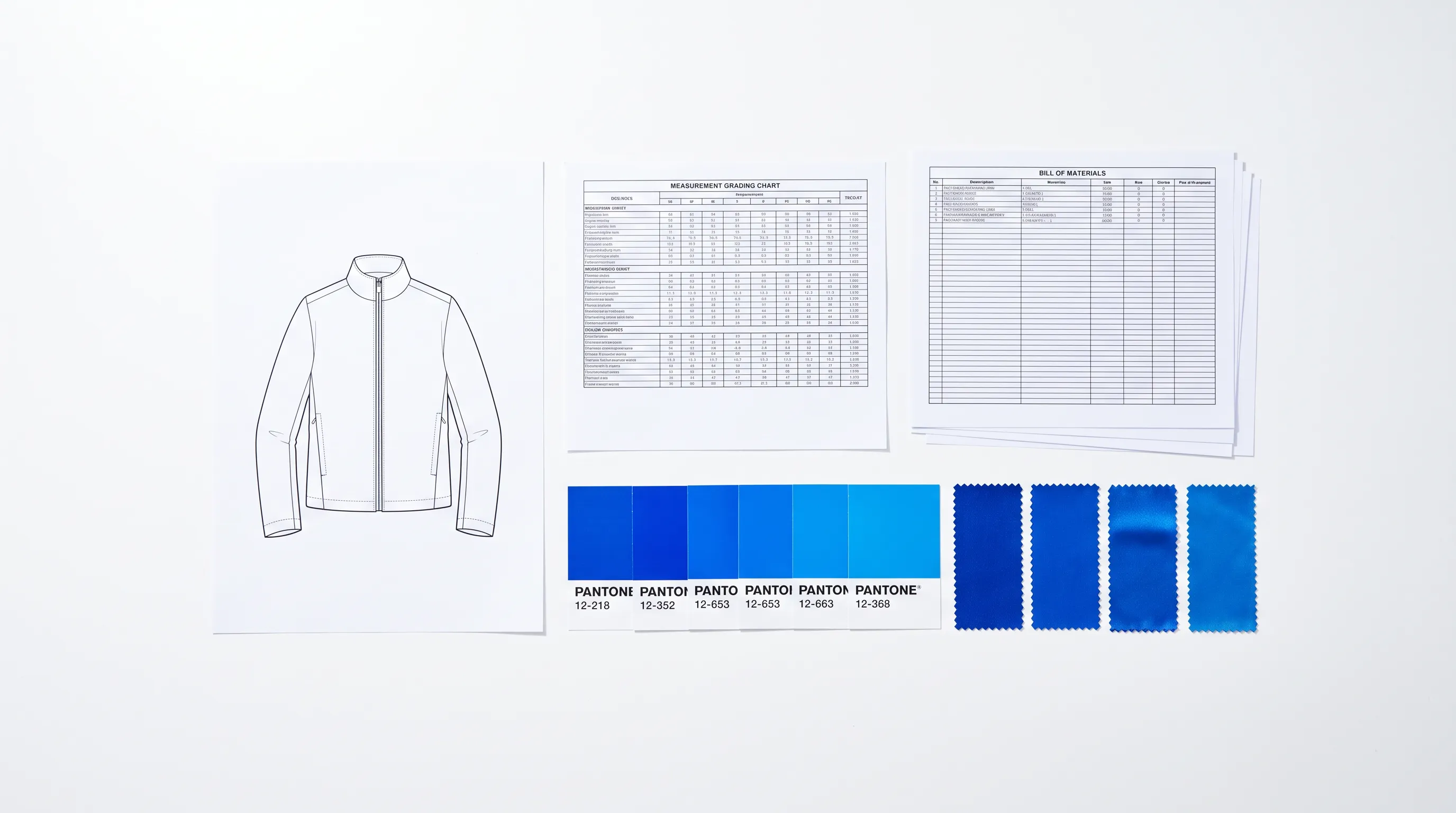
AI tech packs now match or exceed manual tech packs in 7 of 10 factory-required sections — flat sketches, measurements, BOM, colorways, construction details, sizing, and packaging — while completing in 3–5 minutes at $3–$25 versus 4–8 hours at $100–$2,000 for manual creation. This section-by-section comparison breaks down exactly where AI wins, where manual still leads, and what factories actually accept in 2026.
Knitwear Tech Pack — Complete Guide with Yarn, Gauge, and Finishing Specs
A knitwear tech pack requires 3 additional sections beyond standard apparel — yarn specification, gauge & knit structure, and finishing & processing — covering fiber composition, machine gauge (3GG–18GG), stitch density, shrinkage targets, and wash method. This guide covers every section with comparison tables, common mistakes, and how AI auto-detects flat-knit vs circular-knit construction.
How to Communicate with Your Manufacturer Using a Tech Pack — The Complete Guide
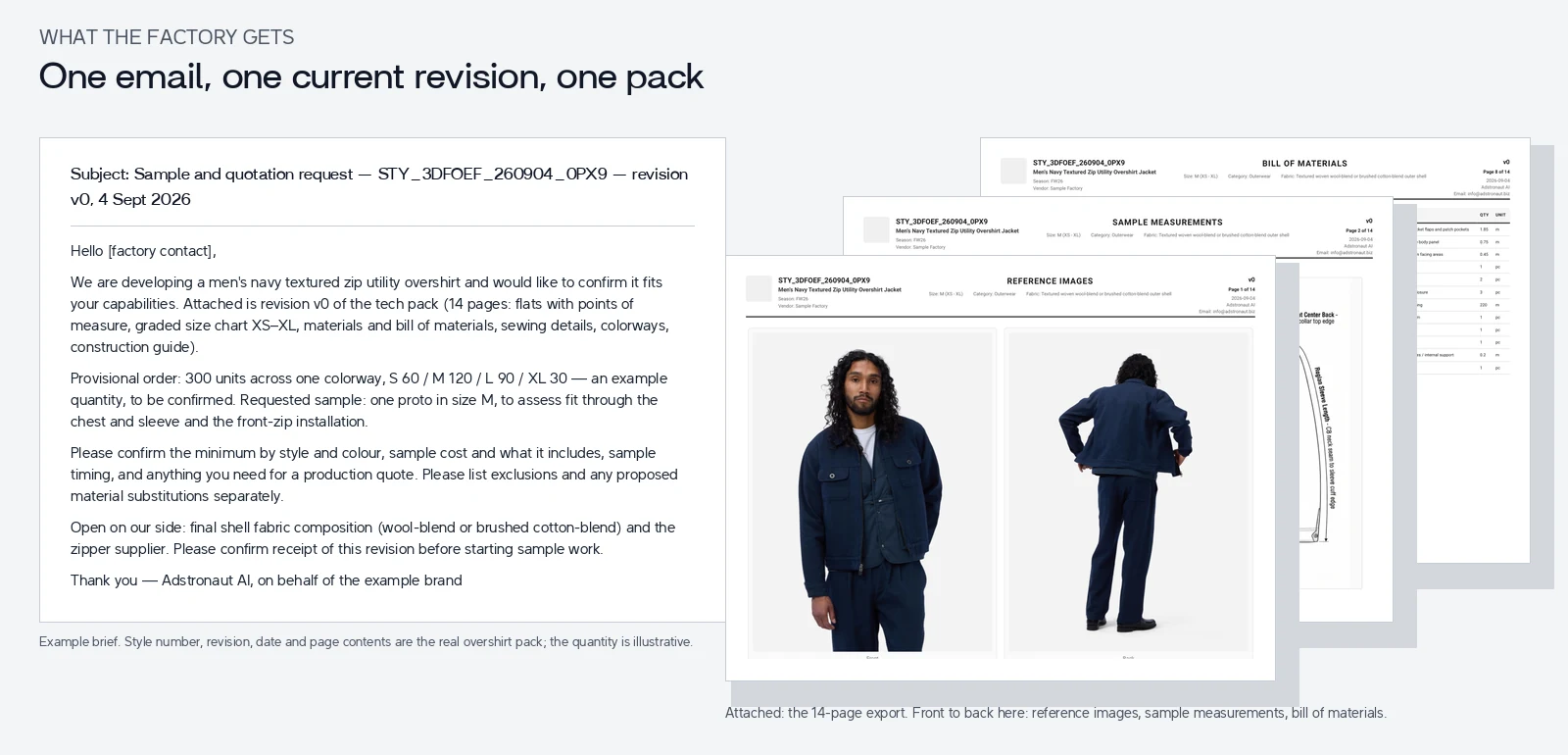
30-50% of first garment samples require revisions due to miscommunication between designers and factories. A complete tech pack eliminates ambiguity by providing manufacturers with exact specifications — style numbers, graded measurements with tolerances, approved materials, construction details, and Pantone color callouts — in a single document that serves as the universal language of garment production.
Tech Pack vs Spec Sheet — What's the Difference and Which Do You Need?
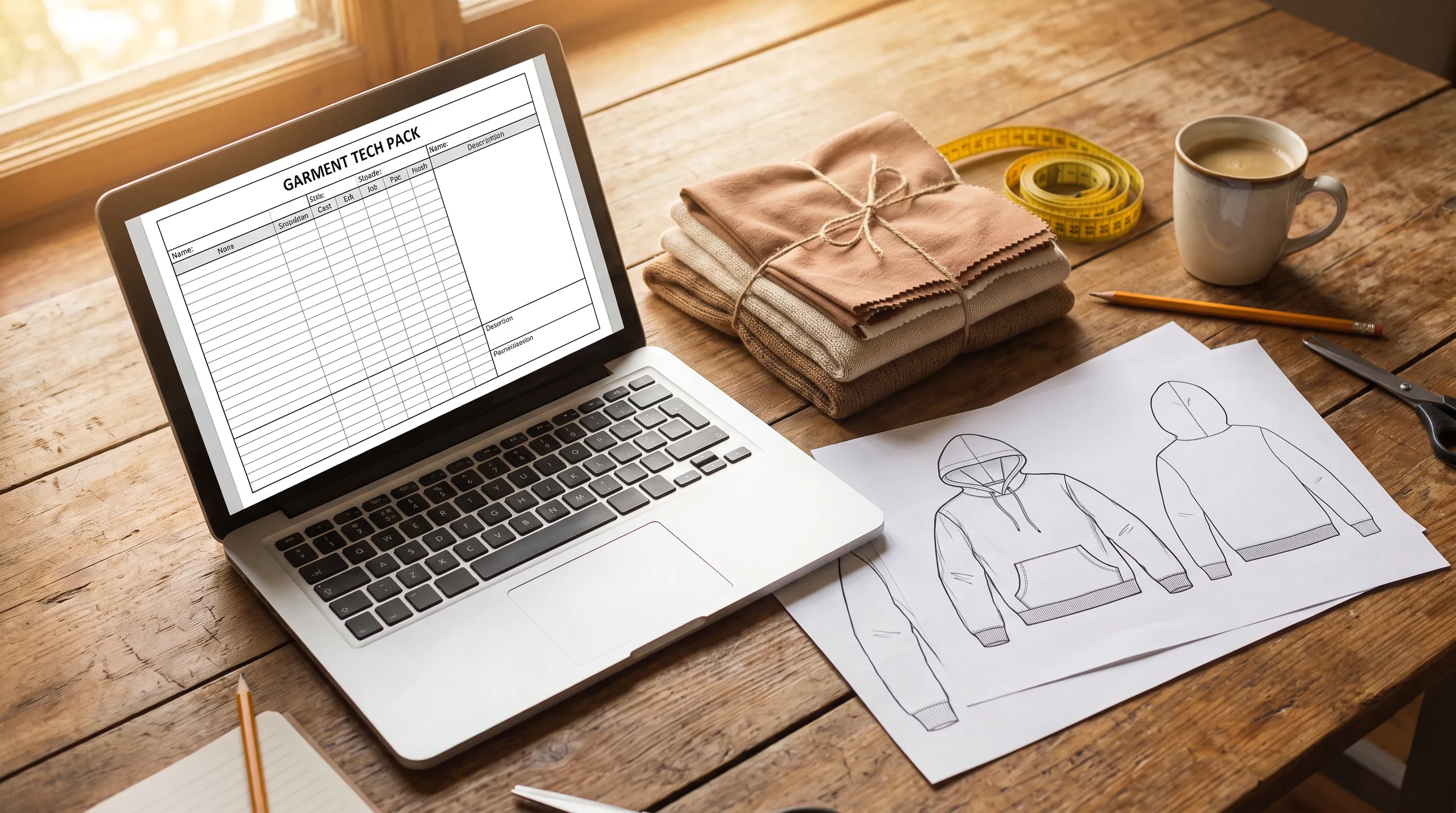
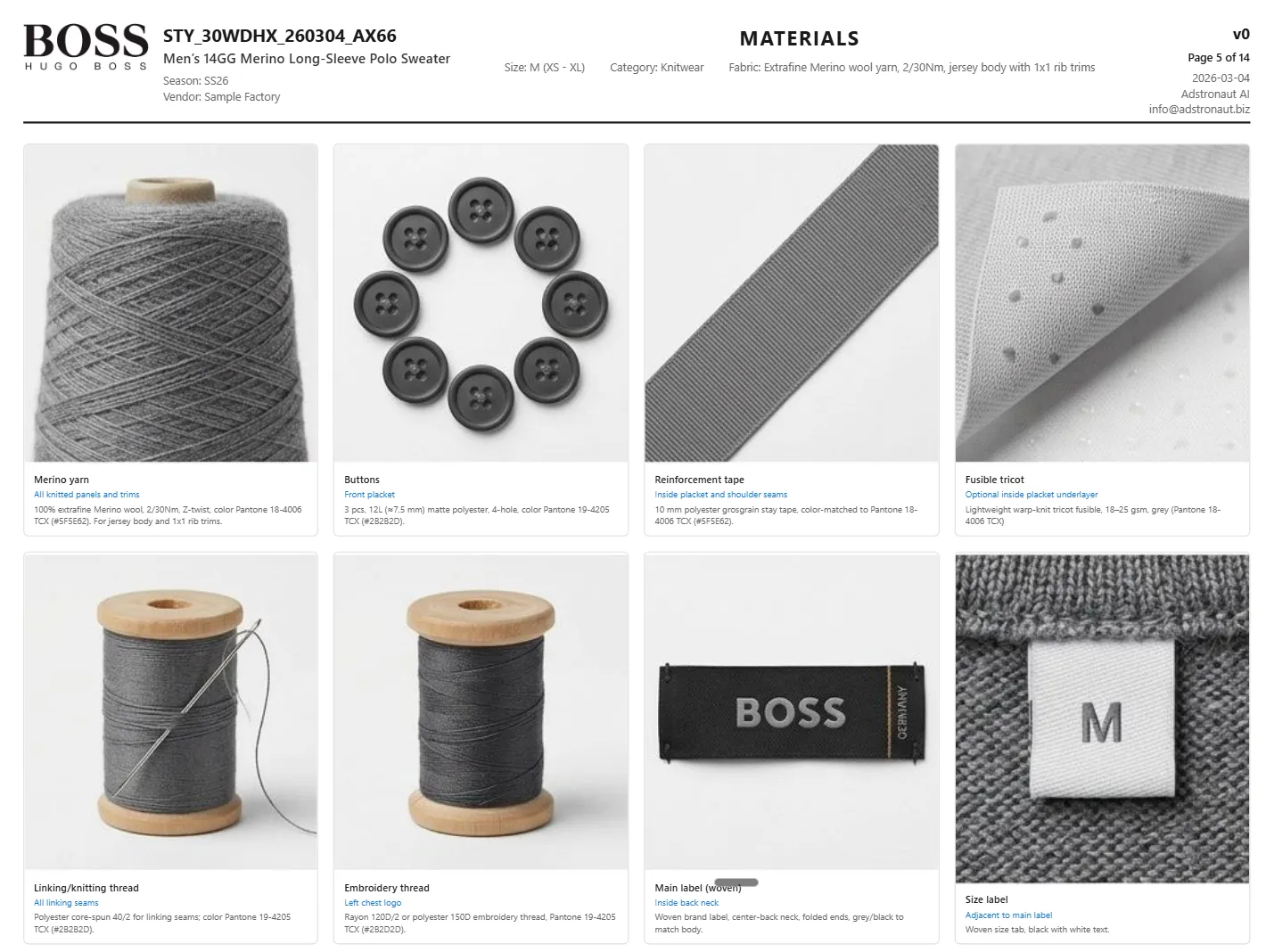
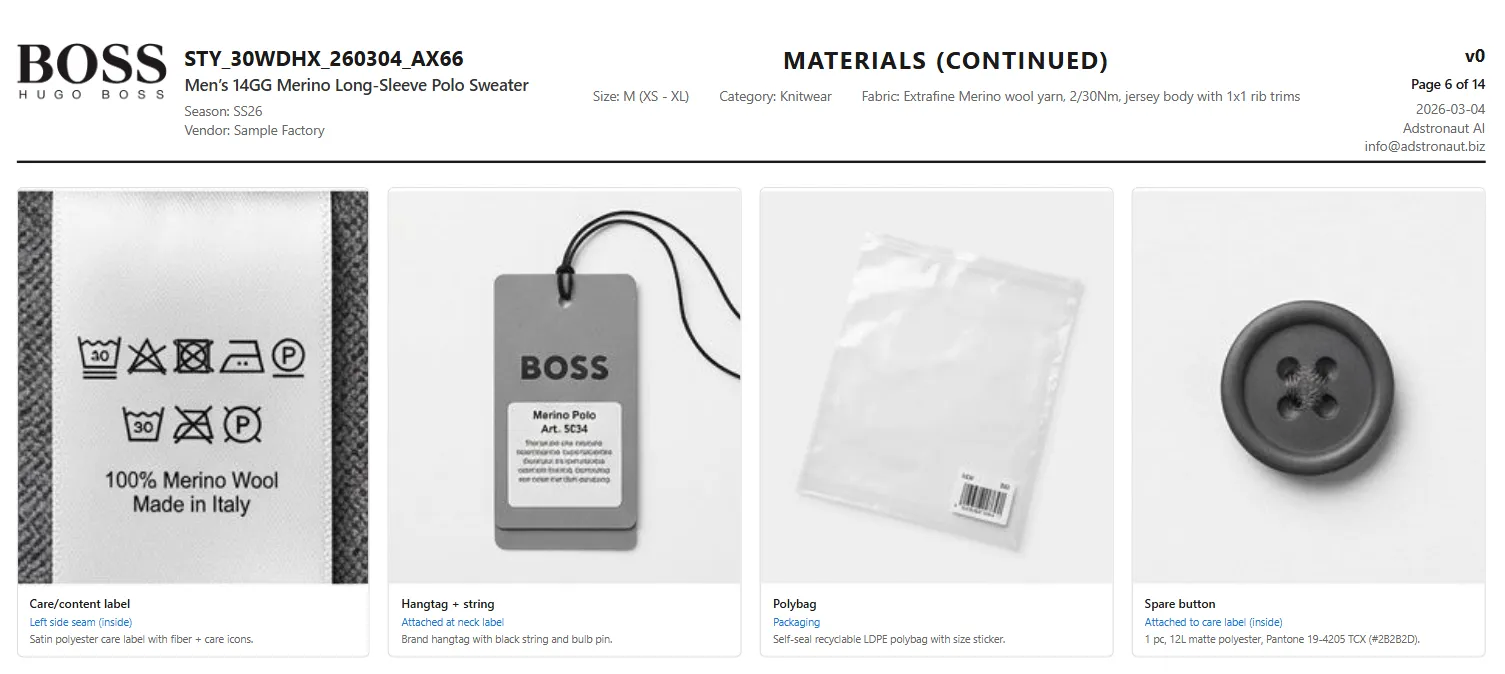
A spec sheet is a 1–3 page document listing garment measurements, tolerances, and grade rules. A tech pack is a 10–15 page manufacturing blueprint containing the spec sheet plus flat sketches, bill of materials, construction details, colorways, artwork placement, and packaging instructions. Most factories require a full tech pack to quote and produce — sending a spec sheet alone results in 3–5× more sample revisions.
Pantone Color Matching for Fashion — A Complete Guide to TCX Codes, Color Standards, and Digital Tools
Pantone TCX (Textile Cotton eXtended) is the global color standard for fashion, covering 2,800+ colors calibrated to match dyed fabric under controlled lighting. This guide covers TCX vs TPG vs C/U, the lab-dip approval process, Delta E tolerances, and how AI tools now auto-match Pantone codes from product photos.
How to Create Product Colorways Without Physical Samples
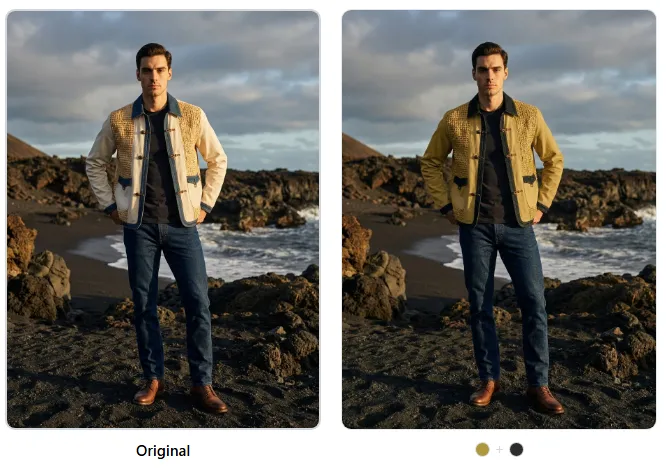
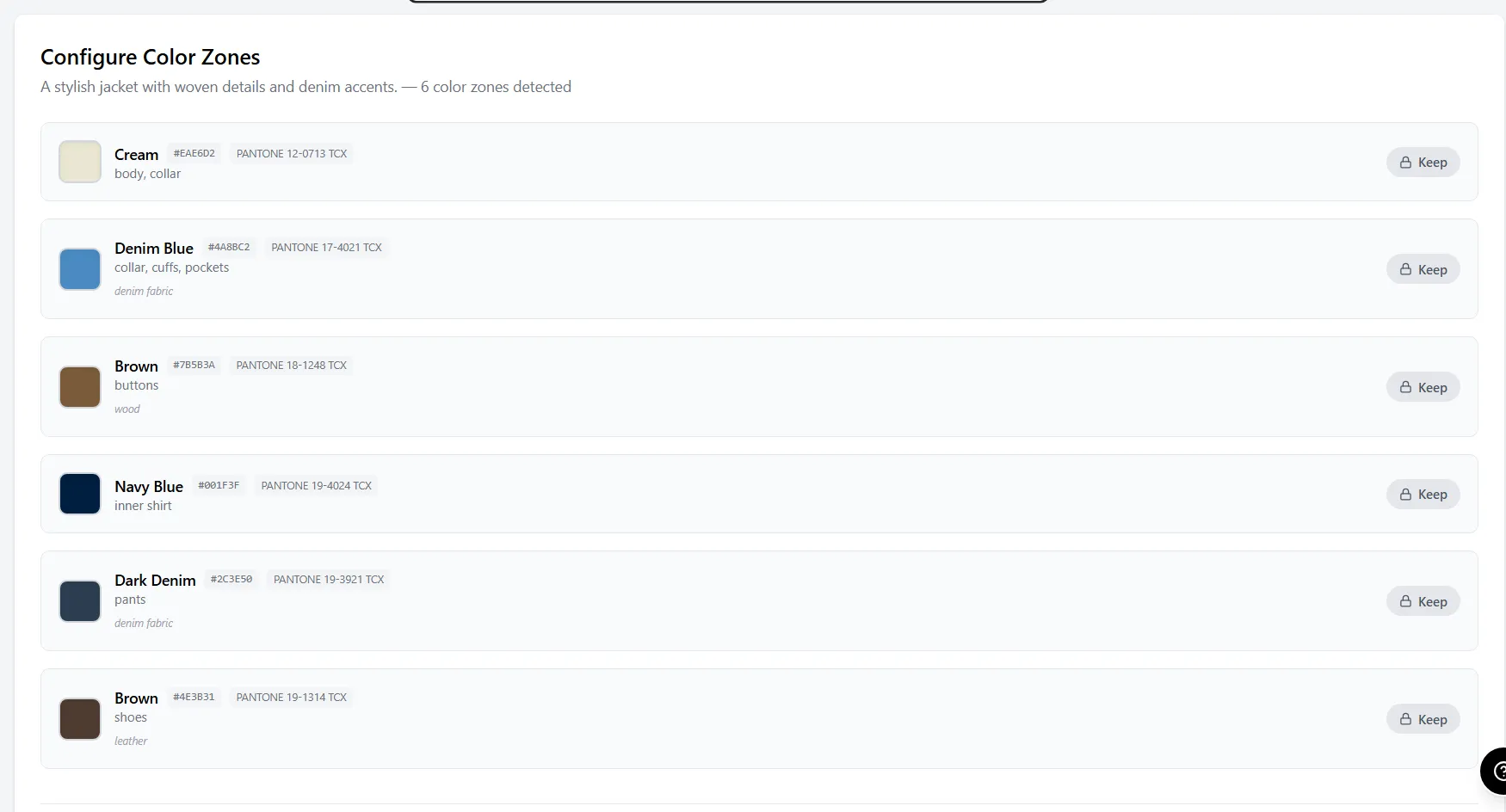
Creating product colorways without physical samples costs $0.50–$2 per variation using AI recoloring tools, compared to $500–$1,500 per physical color sample. AI semantic masking detects up to 8 color zones per product — body, trim, hardware, embroidery — and lets you independently control each zone with 2,400+ Pantone TCX codes, generating photorealistic results in under 60 seconds.
How to Create a Tech Pack for Leather Goods and Bags
A leather goods tech pack specifies leather type and thickness (0.8–2.0mm), tannery source, edge finishing method (painted, burnished, raw, or folded), hardware plating (gold, nickel, antique brass, gunmetal), closure systems, and graded measurements. Bags, wallets, and belts require 20–40+ BOM line items — making a dedicated tech pack essential for accurate factory pricing.
Footwear Tech Pack — Sneaker & Shoe Manufacturing Specs Guide
A footwear tech pack is an 8-15 page technical document specifying last dimensions, upper materials (15-30+ components), sole unit construction, closure hardware, size grading across EU 35-48, and colorway Pantone callouts. Shoes are the most component-dense products in fashion — a single sneaker can contain more individual parts than a three-piece suit.
What Is a Flat Sketch in Fashion Design? Types, Tools, and Examples
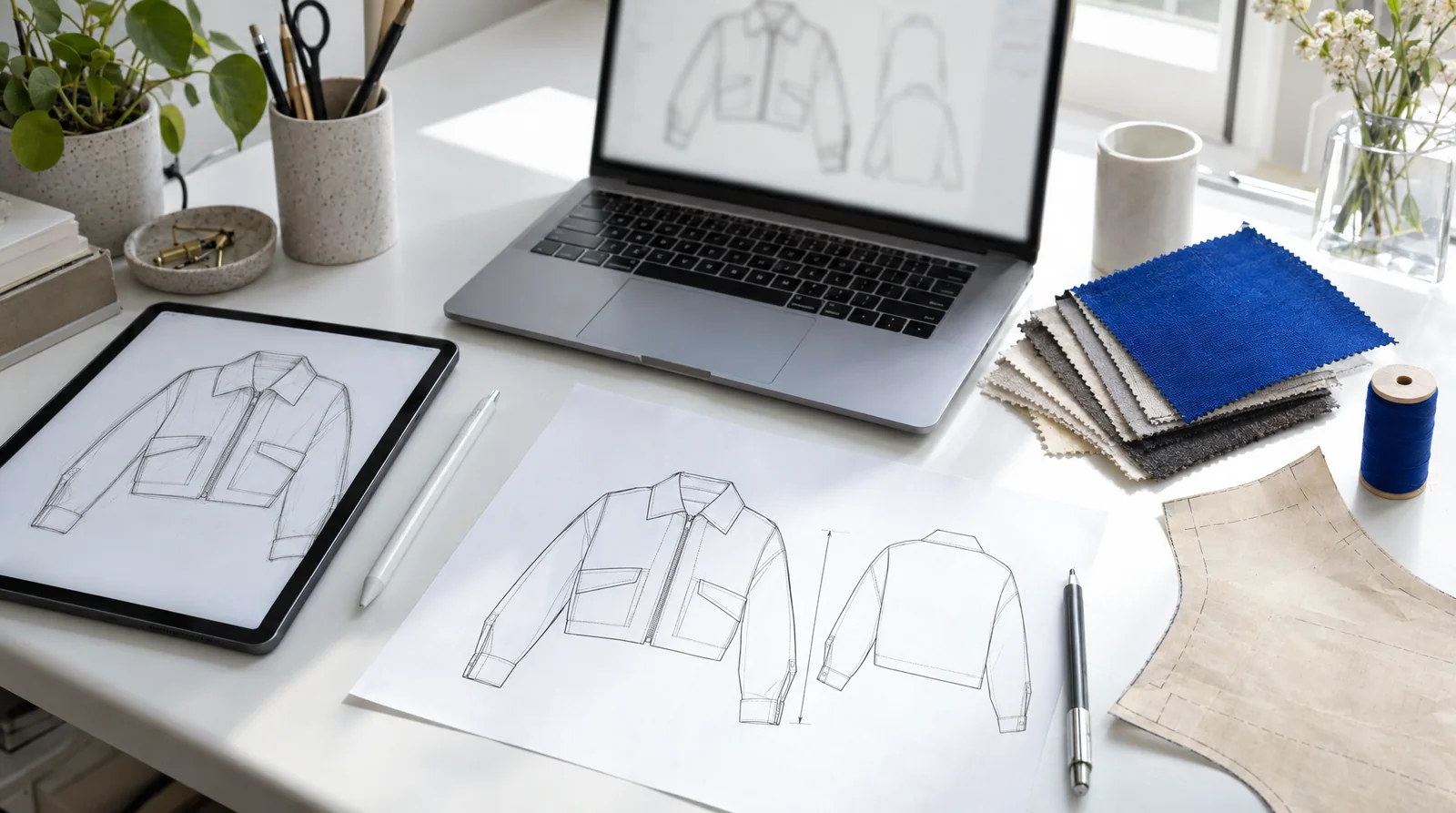
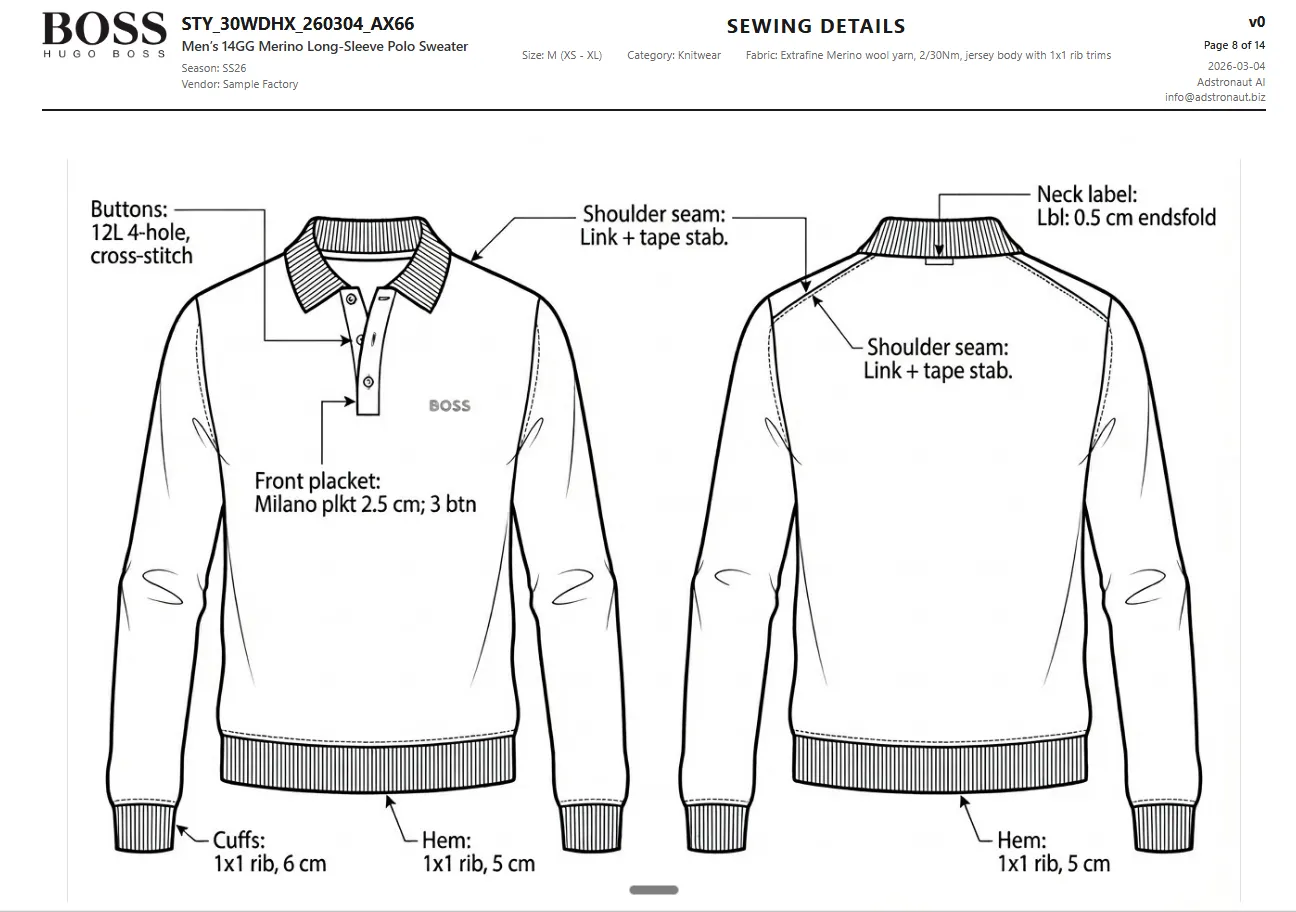
A flat sketch (also called a technical flat) is a 2D line drawing of a garment as it would appear laid flat on a surface, showing all construction details — seams, stitching, closures, pockets, and proportions — without any 3D perspective or shading. Flat sketches are the universal language between designers and manufacturers, and the single most important page in a tech pack.
How to Price a Clothing Line — Complete Pricing Formula, Markup & Margin Guide
The standard pricing formula for a clothing line is Wholesale Price = COGS x 2.0-2.5, and Retail Price = Wholesale x 2.0-2.5 (keystone markup). A t-shirt with $8 COGS wholesales at $16-$20 and retails at $32-$50. Target gross margin: 50-65% at wholesale, 55-70% at retail. Complete pricing framework with real examples by garment type.