AI Tech Packs vs Techpacker: Which Is More Factory-Ready in 2026?
AI tech pack generators and Techpacker solve different halves of the same problem. Adstronaut generates a factory-ready tech pack — vector flat, graded measurements, bill of materials, and Pantone TCX colorway — from a single photo or sketch in minutes for roughly $3–$6 per pack. Techpacker, from $35 per user per month per its pricing page as of 2026, is a mature PLM-style platform that manages, versions, and collaborates on specs your team already knows how to write. If your bottleneck is creating the pack, an AI generator wins; if it is coordinating a team across seasons, Techpacker still leads.
That distinction — creation versus coordination — is the whole comparison, and most "which is better" articles miss it because they treat both tools as if they do the same job. They do not. This guide sets them side by side honestly — and if you want the wider field, our roundup of the best tech pack software covers the rest: what "factory-ready" actually means, where each tool is genuinely stronger, what each costs in dollars and hours, and how an indie or DTC founder should decide. We name real prices, real standards, and the real limits of both.
Table of Contents
- What does "factory-ready" actually mean?
- AI Tech Packs vs Techpacker: the capability matrix
- How deep is the grading and spec detail on each?
- How do pricing and speed compare?
- How do collaboration and version control differ?
- When is Techpacker the better choice?
- How should you choose between them?
- Frequently Asked Questions
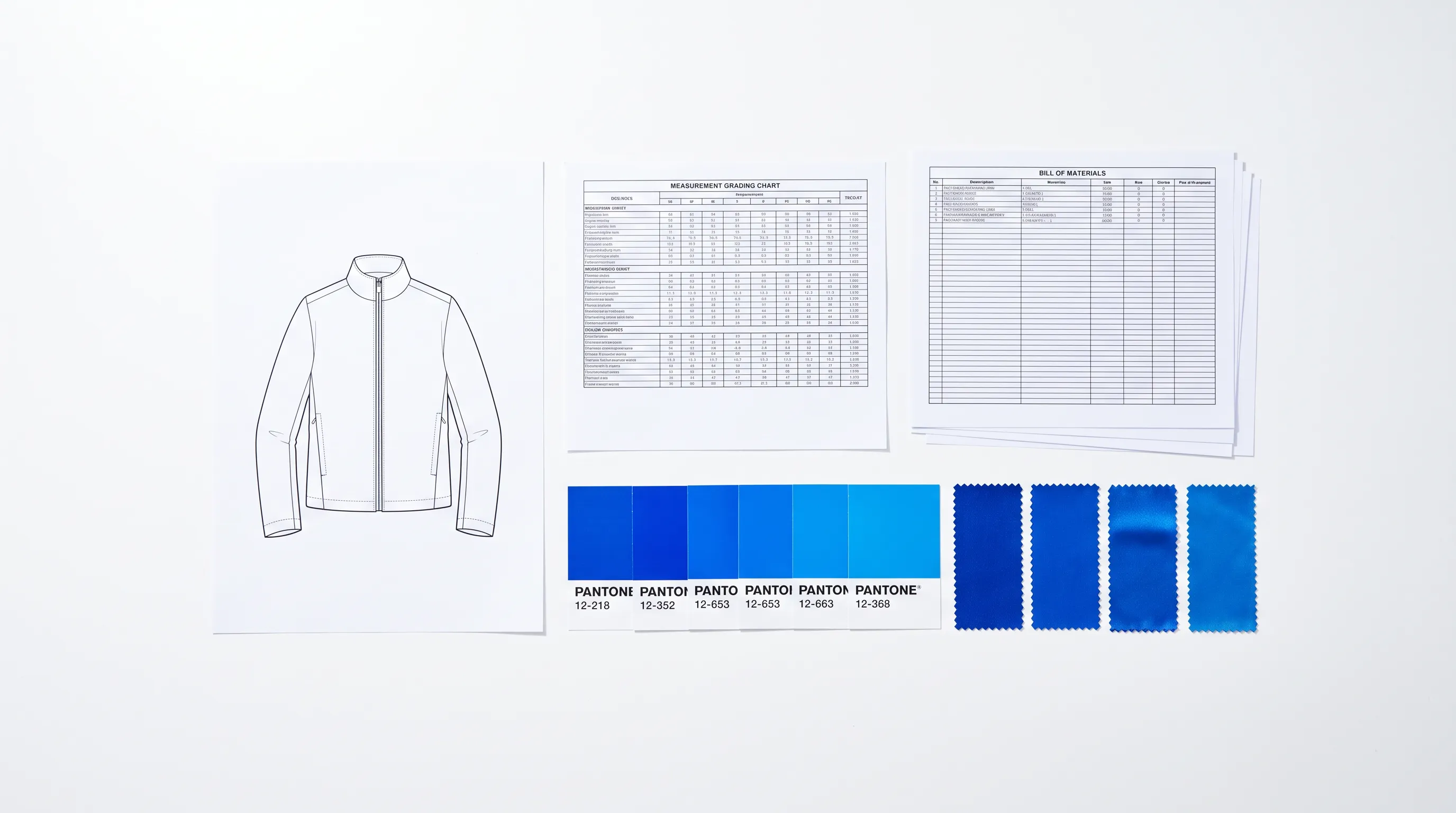 A factory-ready tech pack is one document a manufacturer can cut from without a follow-up email: vector flat, graded points of measure, bill of materials, and specified colorways.
What does "factory-ready" actually mean? {#factory-ready}
A factory-ready tech pack is a single document a manufacturer can price, sample, and cut from without a clarifying email. It contains four non-negotiable layers: a clean vector flat sketch (front and back at minimum), a graded points-of-measure chart with tolerances, a bill of materials naming every fabric, trim, and label, and a specified colorway — ideally in a shared standard like Pantone TCX so the dye house matches to a code, not a screenshot. Miss any one and the factory guesses, which is where sampling rounds and cost overruns come from.
The reason this definition matters for an AI-versus-Techpacker comparison is that the two tools sit on opposite sides of it. Techpacker gives you the container; you supply the contents. It is a place to organize flat sketches, measurements, and BOM lines into a professional, versioned document — but the flat sketch still has to be drawn in Adobe Illustrator or another vector editor and uploaded, and every measurement is typed in by hand. An AI generator like Adstronaut produces the contents themselves — the vector flat, the graded chart, the BOM — from a photo, and hands you a finished pack.
Neither approach is inherently more "factory-ready." A meticulously maintained Techpacker file is as production-solid as documentation gets; a hastily generated AI pack with a bad input photo is not. The honest question is which tool gets your brand, at your stage, to a clean handoff faster. A first-time founder without CAD skills and a 20-brand production team maintaining 400 SKUs a season will answer that very differently.
The manual baseline sets the stakes. A complete tech pack drawn in Illustrator plus Excel takes four to eight hours per style for an experienced technical designer, and a freelance technical designer charges $150–$500 (£120–£395 / €138–€460 / A$228–A$760) for a standard garment per Maker's Row 2026 rates. Any tool's value is measured against that number.
Generate a factory-ready tech pack from a photo →
AI Tech Packs vs Techpacker: the capability matrix {#capability-matrix}
The two products overlap on the output — a professional tech pack PDF — and diverge on almost everything else. Techpacker is a cloud collaboration and light-PLM platform "trusted by fashion teams" per its own marketing, built around modular Cards you fill in and reuse. Adstronaut is a generative pipeline: it reads a garment from an image and writes the spec. The table below maps where each tool actually delivers, based on Techpacker's published feature set and Adstronaut's shipping product.
| Capability | Adstronaut (AI generator) | Techpacker |
|---|---|---|
| Vector flat sketch generated from a photo/sketch | Yes — front and back, auto-produced | No — draw in Illustrator, then upload |
| Graded points-of-measure chart | Yes — auto-graded with tolerances | Yes — entered manually; automated grading rules on higher tiers |
| Bill of materials | Yes — auto-drafted with material visuals | Yes — manual, with reusable BOM libraries |
| Pantone TCX colorways embedded | Yes | Manual entry |
| Product classes with dedicated logic | 5 — apparel, footwear, leather goods, knitwear, bodywear | Generic templates across categories |
| Multi-user real-time collaboration | Limited | Excellent — comments per Card, permissions |
| Cross-season spec / component library | In development | Yes — core strength |
| Revision history with change highlighting | Basic | Yes — versioned, auto-highlighted diffs |
| Production stage / status tracking | No | Yes — Stages, Time & Action reports (Pro+) |
| Time from zero to first pack | Minutes | Hours to days (you author the content) |
| Illustrator required | No | Yes (for sketches) |
| Free tier without a card | Yes | No — 7-day trial only |
| Entry price | ~$3–$6 per pack | $35/user/month (annual) |
Read the matrix as a division of labor, not a scoreboard. The top rows — generation, category logic, speed — belong to Adstronaut. The middle rows — collaboration, libraries, revision diffs, stage tracking — belong to Techpacker, which per Capterra's 2026 listing is reviewed primarily as a product-development and team-management tool, not a design generator. A team that needs both often uses one to make the pack and the other to manage it.
One row deserves emphasis because it is the most common misconception: Techpacker does not draw your flat sketch. Its own documentation and every honest review confirm it is a management and formatting layer. If you cannot open Illustrator — and there are now ways to create a tech pack without Illustrator entirely — Techpacker alone does not get you a tech pack; it gets you a beautifully organized place to put one you made elsewhere. That single fact reroutes a large share of first-time founders toward AI generation.
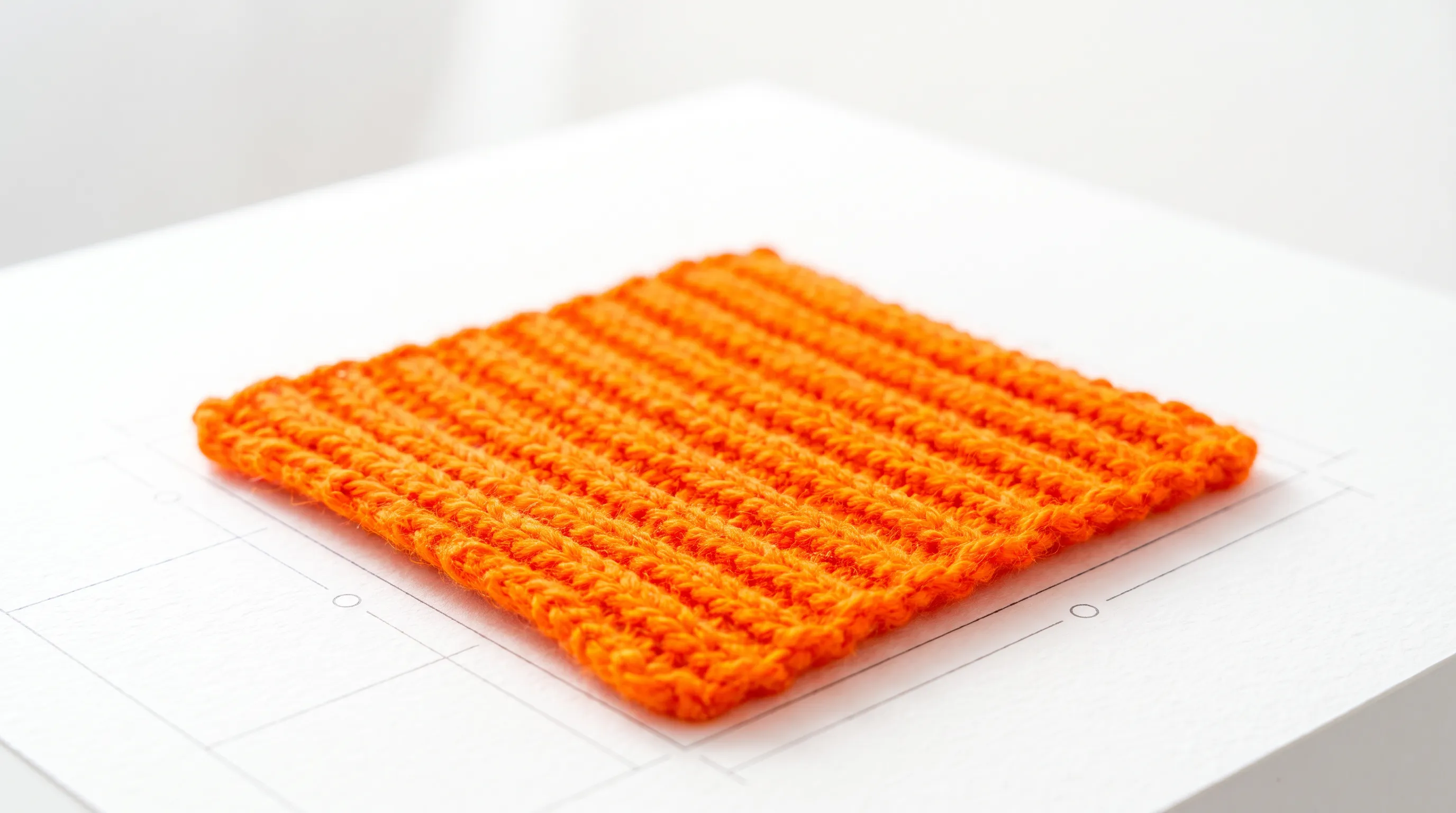 Category-specific spec depth — yarn count and gauge for knits, last and heel height for footwear — is where a generic template and a purpose-built pipeline diverge.
How deep is the grading and spec detail on each? {#grading-depth}
Grading depth is where a tech pack either survives contact with a factory or generates a fit sample that comes back wrong. Grading is the math that turns a base-size measurement into a full size run — a size 8 dress does not simply scale up uniformly to a size 16; each point of measure grades by its own increment, and the increments follow conventions codified by bodies like ASTM International (for example ASTM D5585 for women's misses figure dimensions). Get the grade rules wrong and every size but your sample is off.
Techpacker handles grading through manual grade rules, with automated grading rules available on its Professional tier and above per its pricing page. You define the increments; the platform applies them across the run and keeps the chart consistent. That is powerful and precise in the hands of someone who knows their grade rules — and a blank wall to someone who does not. The knowledge lives in your head, not the tool.
Adstronaut takes the opposite approach: differential grading with tolerances is applied automatically, and the system detects the sizing system — US women's, US men's, UK, EU, kids — from the garment classification, then produces the graded chart with per-measure tolerances built in. Each point of measure grades independently rather than by a flat scale factor, which is the difference between a chart a factory trusts and one it queries. For a founder without a technical-design background, this collapses the single hardest part of the document into an automated step.
Spec depth then compounds by category. This is Adstronaut's most concrete differentiator: it runs dedicated logic for five product classes — apparel, footwear, leather goods, knitwear, and bodywear — each with the fields that class actually needs. Knitwear packs carry yarn count, gauge, and finishing; footwear carries last reference, toe spring, and heel height; leather goods carry hardware and edge-finishing callouts. Techpacker's Cards are flexible enough to hold any of these fields, but you type them in against a generic template rather than receiving a category-correct spec. On a leather crossbody or a gauge-sensitive sweater, that gap is the difference between a pack a factory reads once and a pack it emails you about.
Neither tool removes the need for domain judgment entirely. A generated grade chart should still be sanity-checked against your fit block, and a Techpacker grade rule is only as good as the number you keyed. But the starting point differs sharply: Adstronaut hands a non-technical founder a defensible graded spec in minutes; Techpacker hands a technical team a clean surface on which to encode the grading they already know.
How do pricing and speed compare? {#pricing-speed}
Pricing and speed are where the two models are least alike, because they charge for different things. Techpacker charges per seat, per month, regardless of how many tech packs you make — a subscription to a workspace. Adstronaut charges per generation through a credit model — you pay for output, not access. For a seasonal brand that ships in bursts, that distinction alone can decide the tool.
Techpacker's published 2026 pricing, billed annually, runs three tiers: Techpack Builder at $35/user/month, PLM Professional at $95/user/month, and PLM Premium at $125/user/month, with a 7-day trial and a 60-day money-back guarantee on annual plans with onboarding. Note the model: a two-person brand on the Professional tier pays for two seats — $190/month, or $2,280/year — whether it produces four tech packs that year or four hundred.
Adstronaut lands each factory-ready pack in the $3–$6 (£2.40–£4.70 / €2.80–€5.50 / A$4.60–A$9.10) range depending on plan and garment complexity, generated in minutes from a photo, with a free tier that produces a watermarked pack with no card required. Against a freelance technical designer's $150–$500 per style (Maker's Row), a per-pack AI cost of a few dollars is a 50–150× reduction on the creation line item.
| Tool / method | Headline price (USD, with GBP / EUR / AUD) | What you pay for | Time to a finished pack | Skill required |
|---|---|---|---|---|
| Adstronaut | ~$3–$6 per pack (£2.40–£4.70 / €2.80–€5.50 / A$4.60–A$9.10) | Each generated pack (credit model); free tier available | Minutes | None |
| Techpacker — Builder | $35/user/mo (£28 / €32 / A$53) | A workspace seat, unlimited packs you author | Hours to days (you write the content) | Moderate + Illustrator |
| Techpacker — PLM Professional | $95/user/mo (£75 / €87 / A$144) | Seat + automated grading, BOM libraries, line sheets | Hours to days | Moderate–high |
| Techpacker — PLM Premium | $125/user/mo (£99 / €115 / A$190) | Seat + white-label, Gantt, live production updates | Hours to days | High |
| Freelance technical designer | $150–$500 per style (£120–£395 / €138–€460 / A$228–A$760) | A finished pack per style | 3–7 days | None (you outsource) |
| Adobe Illustrator + Excel | $23/mo (£18 / €21 / A$35) | Software only; your labor | 4–8 hours/style | High |
The honest reading is that these prices are not directly comparable because the deliverables are not. Techpacker's seat fee buys a durable system of record you keep filling for a season; Adstronaut's per-pack fee buys the pack itself, made for you. A brand generating six new styles for a single drop pays Adstronaut roughly $18–$36 and is done; the same brand on Techpacker pays a monthly seat and still owes the hours to draw and key every spec. A brand maintaining 400 living specs across four seasons gets far more from Techpacker's subscription than from paying per generation. Speed, meanwhile, is not close on the creation task: minutes versus the four-to-eight-hour manual authoring baseline that a Techpacker workflow still assumes.
Skip the four-hour authoring baseline — generate your first pack free →
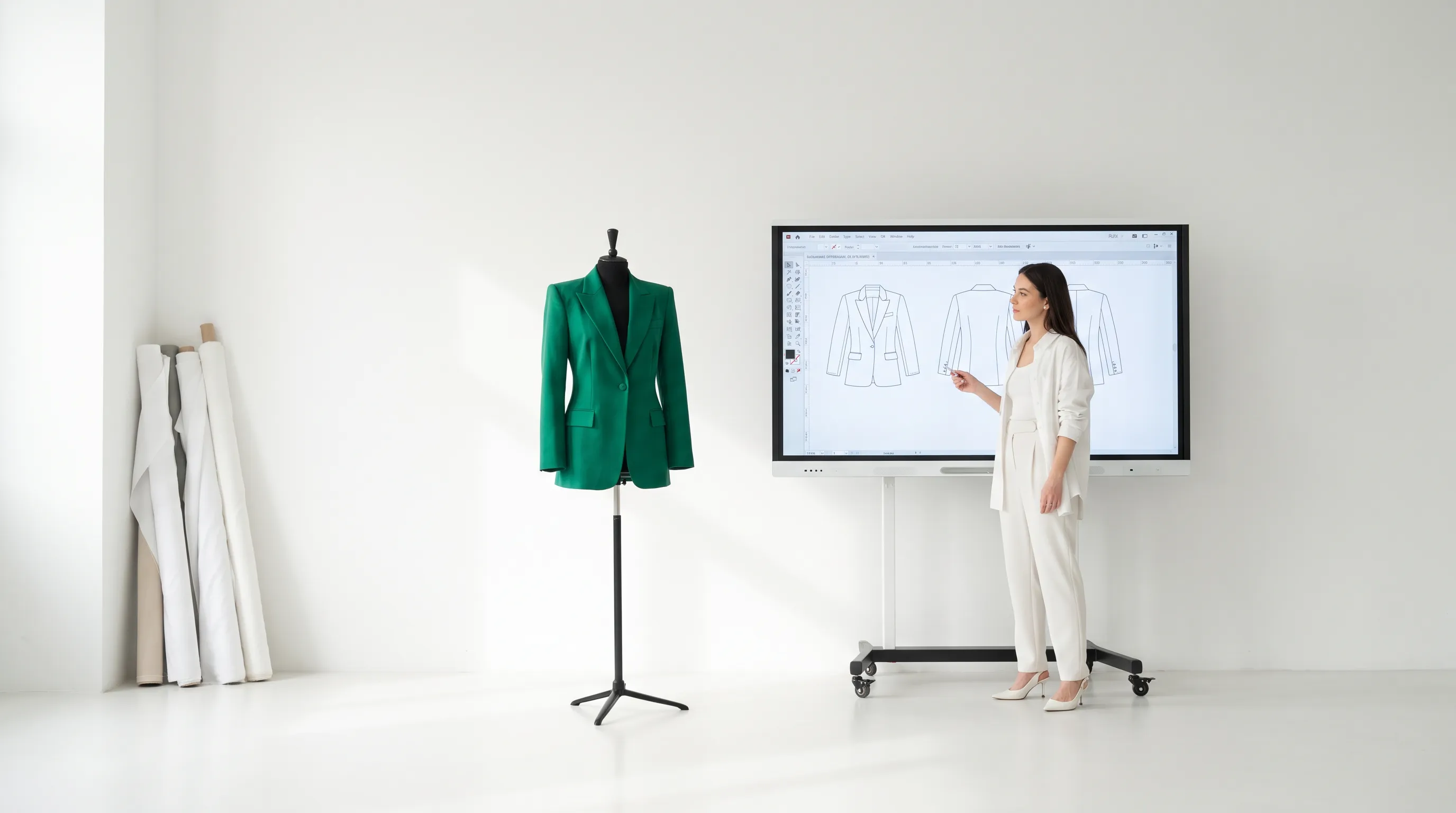 Version control and multi-user commenting are Techpacker's core strengths — the reason established production teams stay on it across seasons.
How do collaboration and version control differ? {#collaboration}
Collaboration and version control are Techpacker's home turf, and this section is deliberately in its favor. A tech pack is not a static file; a single style moves through three to five sample rounds — proto, fit, pre-production, and top-of-production — and each round generates measurement tweaks, BOM swaps, and construction corrections (Maker's Row). The failure mode of loose files is version drift: three "final_v2_FINAL" PDFs in one email thread and a factory cutting from the wrong one.
Techpacker was built to kill that failure mode. It offers timestamped revision history with auto-highlighted diffs between versions, per-Card commenting so a comment lives next to the exact spec it questions, role-based permissions, and a shared factory hub where the manufacturer sees the current record rather than an emailed attachment. On its Professional and Premium tiers it adds production-stage tracking, Time & Action reports, and live production updates — genuine mini-PLM territory that no AI generator replicates. For a team of three or more coordinating with an overseas factory, this is the whole value, and it is real.
Adstronaut is candid about the trade here. It is a single-user generation tool, not a collaboration platform: there is no built-in per-field commenting or multi-user approval workflow, and a cross-season spec library is in development rather than shipping today. The current workaround is to generate the pack, export the PDF, and share it for feedback — which is fine for a solo founder and inadequate for a distributed team running formal approval gates. Adstronaut gives you the content faster than anything else; Techpacker gives you the governance around content that a growing team needs.
This is why the two are frequently complementary rather than competitive. A common 2026 pattern for mid-size brands is to generate the tech pack in Adstronaut — collapsing the four-to-eight-hour authoring step into minutes — then house, version, and collaborate on it inside Techpacker or a full PLM. The AI tool removes the creation bottleneck; the collaboration platform removes the coordination bottleneck. Choosing "one or the other" is often the wrong frame once a brand has more than one person touching the spec.
When is Techpacker the better choice? {#techpacker-wins}
Techpacker is the better choice when your bottleneck is coordination, not creation — and for a meaningful set of brands, it clearly is. Choose Techpacker first in these situations, honestly assessed:
- You have a team of two or more touching the same specs. Real-time multi-user editing, per-Card comment threads, and permissioned roles are Techpacker's reason to exist. A solo founder does not need them; a three-person production team drowns without them.
- You maintain living specs across seasons. Techpacker's reusable BOM, trim, and component libraries — save a fabric or a graded block once, reuse it forever — keep a growing catalog consistent. If you are building a collection that evolves rather than one-off drops, that library is compounding value.
- You need auditable revision control. Timestamped, auto-highlighted diffs and a factory-facing hub give you a defensible record of who changed what and when. For brands where a wrong cut is expensive, that governance is worth the seat fee.
- You want light PLM without buying full PLM. Stages, Time & Action reports, and live production tracking on the Professional and Premium tiers deliver production visibility that sits between a spreadsheet and a $10,000-a-year enterprise system like Centric or Browzwear.
- Your team already draws flats in Illustrator. If flat-sketch creation is not your constraint — you have a technical designer, or the skill in-house — then Techpacker's not-a-design-tool limitation simply does not bite, and you get its collaboration strengths cleanly.
What Techpacker does not solve is the cold-start creation problem. It will not draw your flat, will not grade a chart you cannot specify, and will not know that a knit needs gauge or a shoe needs a last. For a founder whose actual blocker is "I have a product photo and no idea how to turn it into a spec," Techpacker's subscription buys a container for a document they still cannot produce. That is not a knock on the tool — it is a statement about which problem it was built to solve.
 Choose by your bottleneck: creation or coordination. The right tool is the one that removes the step your brand is actually stuck on.
How should you choose between them? {#how-to-choose}
Choose by naming your single hardest step, then picking the tool built to remove it. The decision is not "which is better" in the abstract; it is "which bottleneck is mine." The mapping below is deliberate and, where honest, points at Techpacker.
| Your situation | Start with | Why |
|---|---|---|
| Solo founder, no CAD skills, first tech packs | Adstronaut | Generates the flat, grade chart, and BOM you cannot draw; free tier, ~$3–$6/pack |
| Knitwear, footwear, or leather-goods specialist | Adstronaut | Category-specific spec logic across 5 product classes; generic templates miss gauge, last, hardware |
| Seasonal brand shipping in bursts | Adstronaut | Per-pack pricing beats per-seat subscription when volume is lumpy |
| Team of 3+ coordinating with a factory | Techpacker | Real-time collaboration, per-Card comments, permissions |
| Growing catalog maintained across seasons | Techpacker | Reusable spec/BOM libraries and revision history compound over time |
| Need production-stage tracking and audit trail | Techpacker (Pro/Premium) | Stages, Time & Action reports, live updates — light PLM |
| Have Illustrator skill, need governance | Techpacker | Its not-a-design-tool limit doesn't bite; you get the collaboration upside |
| Mid-size team that wants both speed and control | Adstronaut → Techpacker | Generate the pack in minutes, then version and collaborate on it |
The most future-proof answer for a growing brand is not a single tool but a sequence. Use an AI generator like Adstronaut to remove the creation bottleneck — the four-to-eight-hour authoring step that stalls most first collections — and, once more than one person is touching the spec, add a collaboration layer like Techpacker to remove the coordination bottleneck. The two are not rivals so much as the two halves of a modern tech pack workflow: one writes the document, the other governs it.
There is also a platform dimension worth weighing if you are a small brand doing everything yourself. Adstronaut sits inside a wider toolset — AI photoshoots, an AI color changer, fabric swapping, and design variations — so the same product photo that generated your tech pack also feeds your e-commerce imagery and colorway exploration without re-uploading. Techpacker is focused: it does product development documentation and does it deeply. Whether breadth or depth matters more is, again, a question about your bottleneck, not about which tool is objectively superior.
Compare it against your current workflow — generate a free tech pack →
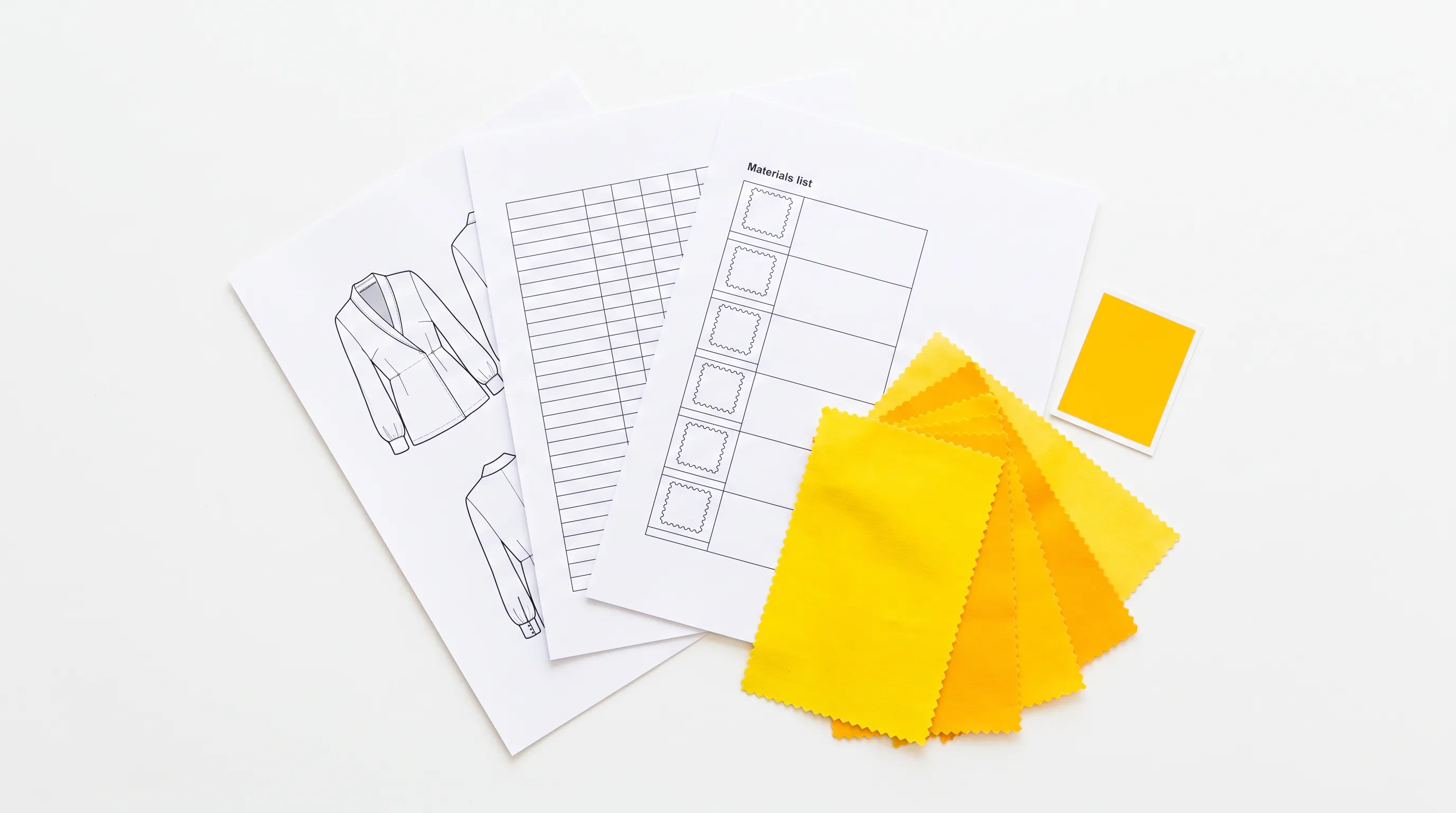 One photo in, a complete factory-ready pack out — the creation half of the workflow that Adstronaut automates.
Frequently Asked Questions {#frequently-asked-questions}
Is Adstronaut a Techpacker alternative or a complement?
Both, depending on your team size. For a solo founder or a seasonal brand shipping in bursts, Adstronaut is a full alternative — it creates the tech pack Techpacker only stores. For a team of three or more that needs revision control and per-Card collaboration, it is a complement: generate the pack in Adstronaut in minutes, then version and collaborate on it in Techpacker. The tools solve creation and coordination respectively.
How much does Techpacker cost in 2026?
Techpacker is priced per user, per month, billed annually, across three tiers per its pricing page: Techpack Builder at $35/user/month (£28 / €32 / A$53), PLM Professional at $95/user/month (£75 / €87 / A$144), and PLM Premium at $125/user/month (£99 / €115 / A$190). There is a 7-day free trial and a 60-day money-back guarantee on annual plans with onboarding, but no permanently free tier.
Can Techpacker generate a flat sketch from a photo?
No. Techpacker is a tech pack management and collaboration platform, not a design generator — you draw the flat sketch in Adobe Illustrator (or another vector editor) and upload it. This is the most common misunderstanding about the tool. Adstronaut, by contrast, generates the vector flat directly from a product photo or sketch, which is why founders without CAD skills reach a finished pack faster.
Which is faster for making a tech pack?
Adstronaut, by a wide margin, on the creation task. It produces a factory-ready pack in minutes from a single photo, versus the four-to-eight-hour manual authoring baseline that a Techpacker workflow assumes, since Techpacker requires you to draw the flat and key every measurement yourself (Maker's Row). On the coordination task — versioning and team review — Techpacker is faster because it is purpose-built for it.
Does either tool handle grading and size charts?
Both do, differently. Adstronaut applies differential grading with per-measure tolerances automatically and detects the sizing system (US, UK, EU, kids) from the garment. Techpacker supports manual grade rules, with automated grading rules on its Professional tier and above. The convention behind both traces to standards bodies like ASTM International. Adstronaut suits founders without grading expertise; Techpacker suits teams who already know their grade rules.
Does Techpacker have a free plan?
No. Techpacker offers a 7-day free trial and a 60-day money-back guarantee on annual plans, but no permanently free tier, per its pricing page. Adstronaut offers a free tier that generates a watermarked, factory-ready tech pack from a photo with no credit card required, which lets you validate AI generation against your current process before paying for anything.
Which is better for knitwear, footwear, or leather goods?
Adstronaut, because it runs dedicated logic for five product classes — apparel, footwear, leather goods, knitwear, and bodywear — each with the fields that category actually needs (yarn count and gauge for knits; last, toe spring, and heel height for footwear; hardware and edge finishing for leather). Techpacker's flexible Cards can hold those fields, but you enter them against a generic template rather than a category-correct spec.
Do factories care which tool made the tech pack?
No. Manufacturers care about the content, not the software — a clear vector flat, complete graded measurements, a detailed BOM, and specified colorways will be accepted whether the pack came from Adstronaut, Techpacker, or Illustrator. The tool is a means to a clean handoff, not a factory requirement. Ask your manufacturer whether they have a preferred layout, but any complete PDF works.
Sources and further reading:
- Techpacker — Official Pricing Page (2026 per-user plan tiers and trial terms)
- Capterra — Techpacker Software Profile (independent reviews and positioning)
- Maker's Row — Tech Pack and Manufacturing Resources (freelance rates, sample-round workflow)
- ASTM International — Standard Tables of Body Measurements (grading standards such as D5585)
- Pantone — Fashion, Home + Interiors TCX System (colorway specification standard)