How Much Does Clothing Product Photography Cost Per Image? (2026 Breakdown)
Clothing product photography costs roughly $12–$500 per finished image in 2026 (about £9–£395, €11–€460, or A$18–A$760), depending on the shot type. Flat-lays sit at the low end ($12–$75), ghost-mannequin runs $25–$80, on-model and lifestyle land at $100–$500, and editorial campaign frames start at $300. AI product photography tools like Adstronaut now produce comparable catalog images for about $1 each.
That single range hides most of the decisions that actually determine your budget. The per-image quote a studio gives you is rarely what you pay: styling, retouching, model licensing, reshoots, and shipping routinely push the effective cost two to three times higher. This guide breaks down the real per-image economics by shot type, works through what a 30-SKU drop costs end to end, and shows where AI photography changes the math. It is the per-image companion to our full breakdown of what a fashion photoshoot costs per day.
Generate on-model product photos from a flat lay for about $1 each →
Table of Contents
- What does clothing product photography cost per image in 2026?
- What actually drives the price of a product photo?
- The volume math: what a 30-SKU drop really costs
- What hidden costs does a per-image quote never include?
- How does AI product photography change the per-image economics?
- On-model AI and virtual try-on: the budget path to model imagery
- How do I choose what to shoot and what to generate?
- Frequently Asked Questions
What does clothing product photography cost per image in 2026? {#per-image-cost-by-shot-type}
Per-image pricing is the honest way to budget apparel photography, because the number that matters is cost per finished, retouched, catalog-ready frame — not a photographer's day rate divided by an optimistic image count. In 2026, that finished-image cost spans a wide band by shot type.
 The finished, retouched, catalog-ready frame — not a day rate divided by an optimistic image count — is the number that should anchor an apparel photography budget.
Flat-lay and still-life is the cheapest apparel format. Simple catalog flat-lays on a white background run $12–$75 per image, and styled multi-angle compositions with props reach $50–$150, according to Frameonce's 2026 pricing breakdown. Squareshot quotes a similar $15–$75 per shot for basic product-only work. The format is inexpensive because it needs only a surface, a camera, and steady overhead light — no model, no fitting.
Ghost-mannequin (the invisible-mannequin look where the garment holds its shape with no visible form) runs $25–$80 per image, with a single front-view garment often landing around $25–$30. The premium over a flat-lay pays for the mannequin fitting, the interior-neck composite, and the retouching that stitches multiple exposures into one clean cutout.
On-model and lifestyle photography is where cost climbs. Finished on-model e-commerce images run $100–$500 each, and standard on-model shoots work out to roughly $130–$830 per outfit once photographer, model, studio, and post-production are divided across the day's output. The variable is not the shutter — it is the crew.
Editorial and campaign frames — the hero shots with creative direction, location, and full styling — start around $300–$500 per image and rise from there. A "luxury editorial photoshoot cost" is a different animal from a catalog cutout, and the per-image figure reflects a full production apportioned across a handful of usable frames.
Marketplace studios sit in the middle and price transparently. soona, a widely used on-demand product studio, charges $39 per photo plus $9 per premium edit, with a $149 studio-pass booking fee for non-members — a clean reference point for a mid-tier styled product image.
Geography moves every one of these numbers. A ghost-mannequin image shot in New York or London carries a different labor cost than the same brief run through a Dhaka or Manila post-production house, where cutout and compositing work is priced a fraction of Western rates. Many brands already split the workflow — shoot in-market, retouch offshore — precisely to arbitrage that gap. The per-image figures above assume a U.S. or U.K. mid-market studio; if your quotes come in far below, offshore post-production is usually the reason, and if far above, you are paying for a premium market, a name photographer, or broad usage baked into the rate.
| Shot type | Per-image (USD) | Approx. £ / € / A$ | What's included |
|---|---|---|---|
| Flat-lay / still-life (white bg) | $12–$75 | £9–£59 / €11–€69 / A$18–A$114 | Surface, overhead light, basic clean-up; no model |
| Styled flat-lay (props, multi-angle) | $50–$150 | £39–£118 / €46–€138 / A$76–A$228 | Styling, prop set, several angles per SKU |
| Ghost-mannequin (invisible) | $25–$80 | £20–£63 / €23–€74 / A$38–A$122 | Mannequin fit, neck composite, cutout retouch |
| Marketplace studio (e.g. soona) | ~$39 + $9 edit | £38 / €44 / A$73 | Booked shot + premium edit, fixed menu pricing |
| On-model / lifestyle | $100–$500 | £79–£395 / €92–€460 / A$152–A$760 | Model, photographer, studio, styling apportioned |
| Editorial / campaign | $300–$500+ | £237+ / €276+ / A$456+ | Creative direction, location, full crew, usage |
| AI product photography (Adstronaut) | ~$1 | ~£0.79 / €0.92 / A$1.52 | On-model or catalog render from a flat lay |
Two numbers frame the whole guide. A flat-lay can cost a dollar or two to shoot yourself; a campaign frame can cost five hundred. Everything below explains what you buy as you move up that ladder — and where an AI render can substitute for the expensive rungs.
What actually drives the price of a product photo? {#what-drives-the-price}
Four cost drivers separate a $15 flat-lay from a $500 campaign frame: styling labor, retouching depth, model fees, and usage rights. Understanding them tells you which images are worth paying full price for and which are candidates for a cheaper method.
Styling and set is the first multiplier. A folded tee on seamless needs no styling; a five-look lifestyle story needs a wardrobe stylist, steamer, pins, and a set built and struck between looks. Styling is billed by the day ($500–$2,000) and spread across the frames it produces, so a slow, elaborate setup raises every image's share of the cost.
Retouching is billed per image and scales with ambition. Basic color correction and white-background clean-up runs $5–$20 per image; extensive fabric, skin, and background work reaches $50–$150, according to PathEdits' 2026 retouching guide. Standard apparel retouching — flat-lay clean-up, steaming touch-ups, and color match — commonly lands at $50–$75 per image. Region matters: overseas retouchers charge $0.50–$5 for basic edits, while top U.S. high-end retouchers charge $100–$300+ for the same brief.
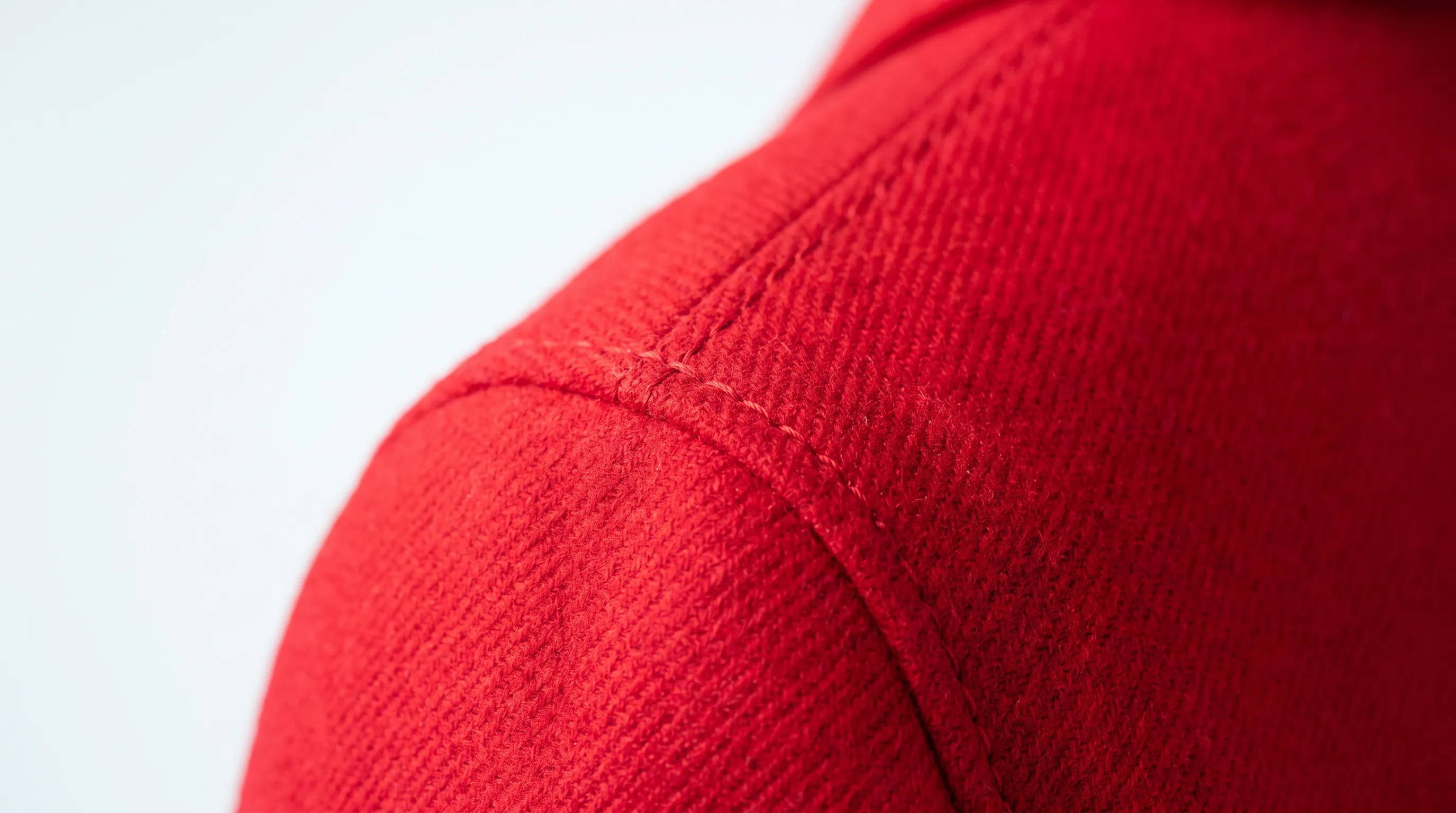 Retouching is billed per image and scales with ambition — fabric, stitch, and dye-edge work is where high-end apparel retouching earns its $50–$150 rate.
Model fees are the sharpest jump. A model's basic session fee is only the starting number, and it is separate from usage. Agency models command $1,500–$3,000+ per day and freelancers $500–$1,200, per our photoshoot cost breakdown. Every on-model image inherits a slice of that fee, which is why the same garment costs 5–10× more to shoot on a person than on a mannequin.
Usage rights are the driver most first-time brands miss entirely. A model's session fee covers their time on set — not the right to run their likeness in a paid ad, on a billboard, or across multiple markets. Commercial usage is licensed separately by purpose, territory, and duration; the broader the scope, the higher the fee. A photo you shot legally for your website can become a licensing liability the moment it runs as a Meta ad, unless the usage was bought up front.
A fifth, quieter driver is image count per SKU. Ecommerce best practice is three to eight images per product — a front, a back, a detail, and one or two on-model or lifestyle frames. Every one of those angles multiplies the per-SKU cost, and it is why a "cheap" $40 catalog image becomes a $160–$320 line once you shoot the full set a product page actually needs. When you compare methods, compare complete SKU coverage, not a single hero frame, or the traditional number will always look artificially low.
The pattern is consistent: the cheap formats (flat-lay, ghost-mannequin) are cheap because they carry no human labor or likeness rights. The expensive formats carry both. That is the seam where AI photography does its best work.
The volume math: what a 30-SKU drop really costs {#volume-math}
For a 30-SKU drop shot on-model at three images each — 90 finished frames — a realistic all-in budget in 2026 is $9,000–$18,000, or roughly $100–$200 per image after every line item is counted. That is the number brands underestimate, because they price the shoot and forget the drop.
Volume cuts the per-image rate, but not to zero. Studios discount at scale: a shop charging $50 per image for a 10-image order may charge $20 per image for a 100-image order, per Frameonce. The savings are real but bounded — retouching is still billed per frame, and every additional SKU adds fitting, styling, and handling time regardless of the discount.
Work the 30-SKU drop three ways:
- All flat-lay, in-house: 30 SKUs × 2 angles = 60 images. A DIY setup runs $200–$800 total for the shoot, plus outsourced retouching at ~$10 per image ($600). Effective cost: roughly $13–$23 per image. Cheap, but flat catalog-only imagery converts worse than on-model.
- Ghost-mannequin, studio: 60 images at ~$40 blended (shot + composite retouch) = ~$2,400. Clean, consistent, no model fees or usage.
- On-model, agency shoot: 30 SKUs × 3 looks = 90 images. Photographer, two agency models, studio, stylist, HMUA, and retouching land at $9,000–$18,000 all-in — before any ad usage is licensed.
The gap between the flat-lay floor and the on-model ceiling is roughly 10×. Most indie and DTC brands resolve it by mixing formats: ghost-mannequin or flat-lay for the catalog grid, a small number of expensive on-model hero frames for the homepage and ads. That mix is exactly where AI generation slots in — it produces on-model imagery at flat-lay prices, which collapses the 10× gap.
See what a full 30-SKU drop looks like generated on-model →
What hidden costs does a per-image quote never include? {#hidden-costs}
The quoted per-image rate is typically 40–60% of what a product-photography drop actually costs. The effective cost, once retouching, studio rental, shipping, coordination, and small reshoots are counted, lands two to three times the originally quoted per-image rate. Budgeting off the sticker number is the single most common way brands blow their photography line.
The costs a per-image quote leaves out:
- Sample logistics. Getting garments to the studio, tracking them, and returning them. For a 30-SKU drop this is real freight, insurance, and admin time, not a rounding error.
- Reshoots. A wrong color, a wrinkle missed in review, a sample that arrived late. Reshoots are billed at the original rate and are almost never in the first quote.
- Coordination. Someone books the studio, casts the model, negotiates usage, briefs the retoucher, and reviews proofs. That project-management time is a cost even when it is your own unpaid hours.
- Studio and gear rental when it is not bundled into a per-image rate — $300–$2,000 per day for the space alone.
- Usage upgrades. The likeness license you did not buy until the image outperformed and you wanted it in a paid campaign.
- Turnaround. Traditional shoots run one to three weeks from booking to delivered files. For a fast-moving drop, the schedule cost — a launch delayed while you wait on images — is a business cost even if it never appears on an invoice.
None of these vanish with AI, but most shrink dramatically. There are no samples to ship for a render generated from a single existing photo, no studio to rent, no model to license, and no multi-week turnaround. The hidden-cost tail is where AI's advantage compounds beyond the headline per-image price.
How does AI product photography change the per-image economics? {#ai-per-image-economics}
AI product photography produces catalog-ready apparel images for roughly $0.10–$2 per image in 2026, against $12–$500 for traditional work — a 95–99% reduction on comparable e-commerce frames. Adstronaut's AI Photoshoots sits at about $1 per generated image, turning a single flat-lay or product photo into on-model, ghost-mannequin, or lifestyle imagery without a studio, a model, or a shipping label.
The economics invert because AI removes the two most expensive line items — human labor and likeness rights — and replaces per-frame retouching with per-frame compute. The cost of the twentieth image is essentially the cost of the first. Traditional photography has the opposite curve: every additional frame carries its own fitting, styling, and retouching.
 AI removes the two most expensive line items — human labor and likeness rights — and replaces per-frame retouching with per-frame compute, so the twentieth image costs almost the same as the first.
Independent 2026 breakdowns put the contrast starkly: a traditional on-model e-commerce shoot producing 60 images costs $4,800–$12,000 all-in, while generating the same 60 on-model images with AI costs $30–$120. Brands adopting AI for catalog and ad-creative work report cutting photography costs 60–70% overall — not 99%, because the smart play keeps a few real shoots for hero campaigns.
Here is the 30-SKU drop from the volume section, priced traditional versus AI:
| Line item | Traditional on-model (90 images) | Adstronaut AI Photoshoots (90 images) |
|---|---|---|
| Photographer / studio | $2,000–$5,000/day | $0 |
| Models (2 agency) | $3,000–$6,000 | $0 |
| Stylist + HMUA | $1,250–$2,500 | $0 |
| Retouching ($50/image) | $4,500 | Included |
| Sample shipping + coordination | $500–$2,000 | ~$0 (works from existing photos) |
| Usage / likeness rights | $500–$5,000+ | Not applicable |
| Generation cost (~$1/image) | — | ~$90 |
| All-in total | $9,000–$18,000+ | ~$90–$300 |
| Effective cost per image | $100–$200 | ~$1–$3 |
| Turnaround | 1–3 weeks | Minutes to hours |
The comparison is not "AI replaces every photo." It is that the 90-image catalog grid — the frames a shopper scrolls past in two seconds each — no longer justifies a five-figure production. That budget moves to the two or three hero shots where a real shoot still earns its cost.
One caveat worth stating plainly: AI-generated imagery of a real, identifiable person still needs that person's consent, and AI does not erase the need for accurate representation of the actual garment. The saving is on production and generic model likeness, not on honesty about the product.
On-model AI and virtual try-on: the budget path to model imagery {#on-model-ai}
On-model imagery is the format shoppers convert on and the one traditional photography prices out of reach — which is exactly why AI on-model generation is the highest-leverage swap a small brand can make. Adstronaut generates a garment onto a diverse range of AI models, in consistent lighting and backgrounds, from a flat lay or a ghost-mannequin shot you already have, at roughly $1 per image.
The value is not only price — it is catalog consistency. A traditional shoot spread across two days, two studios, or two seasons drifts in light, skin tone, and framing, and stitching it into one coherent grid is a retouching cost of its own. Generated on-model imagery holds the same model treatment, background, and lighting across every SKU by default, which is the look a premium storefront depends on and the hardest thing to buy cheaply from a live shoot.
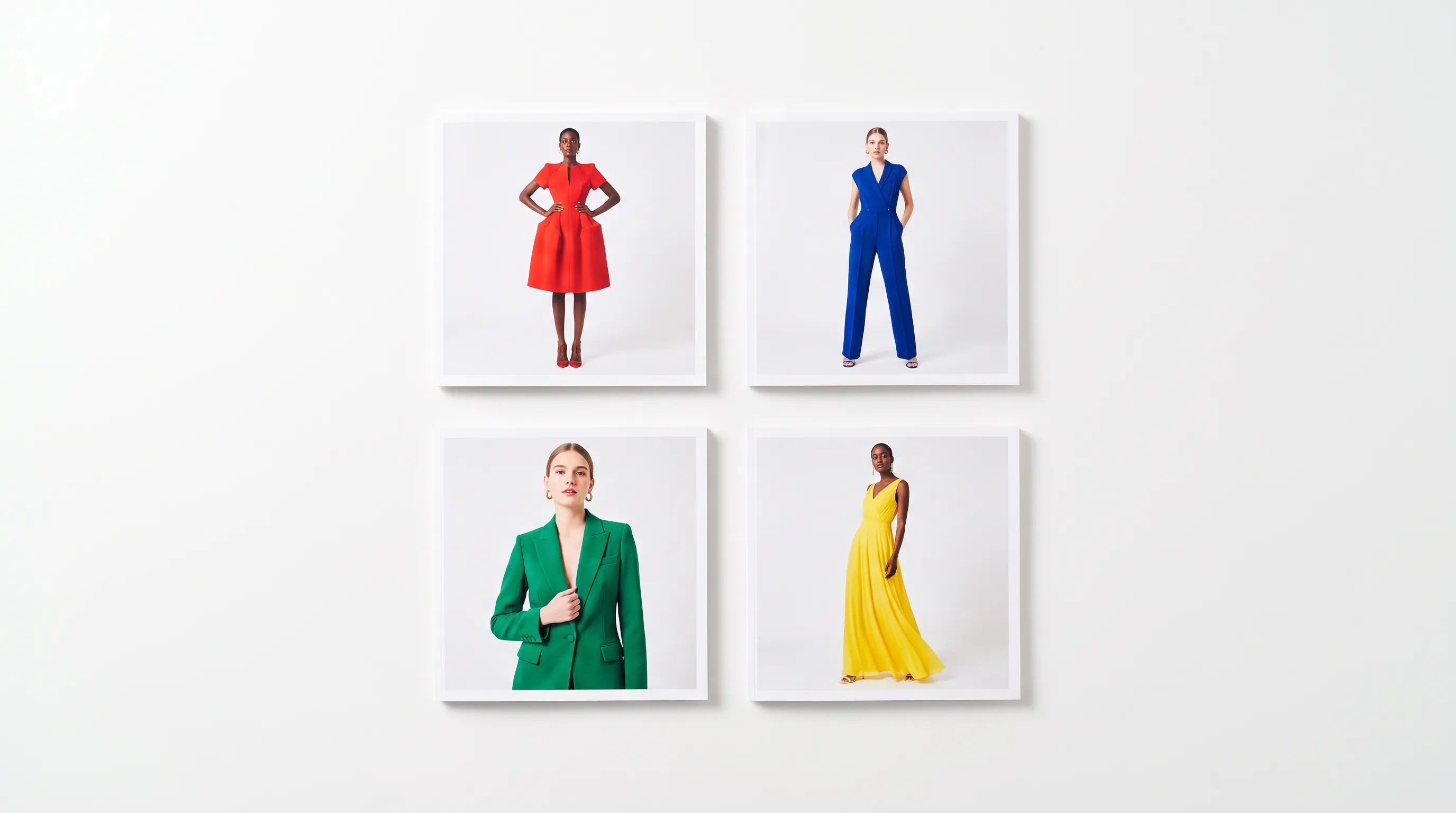 Catalog consistency — the same model treatment, background, and lighting across every SKU — is the hardest thing to buy cheaply from a live shoot and the default from a generated one.
Virtual try-on is the same technology pointed at a different problem. Rendering a garment onto a range of body types lets a brand show fit across sizes without booking a fitting model per size — a cost that scales brutally on a live shoot and barely at all in generation. It also feeds the size-and-fit confidence that reduces returns, which is a downstream saving most photography budgets never credit to the images that earned it.
The honest framing is a hybrid. Use AI on-model and try-on for the catalog, size range, ad cutdowns, seasonal refreshes, and rapid iteration; keep a live shoot for the one or two campaign moments a year where a specific location, a named model, or a directed narrative is the point. That split is what "cutting photography costs 60–70%" looks like in practice — not abolishing the photographer, but stopping the five-figure invoice for images a shopper never lingers on.
How do I choose what to shoot and what to generate? {#how-to-choose}
Choose by conversion weight and authenticity requirement: shoot what a customer scrutinizes and what must be provably real; generate what a customer skims and what only needs to look right. A frame's cost should track its job.
Shoot traditionally when:
- The image is a hero or campaign frame carrying brand narrative, a specific location, or a named model. This is where $300–$500 per image buys something AI cannot fake — intent.
- The garment has fine, distinctive detail — an unusual weave, complex hardware, a signature finish — that a shopper will zoom into and that must be shown exactly as made.
- You need provable authenticity — the actual product, on an actual person, with no ambiguity, for regulatory or trust-critical categories.
Generate with AI when:
- You need a large catalog grid of consistent on-model or ghost-mannequin frames fast and cheap — the bread-and-butter e-commerce shots at $1 each instead of $100–$200.
- You want to test looks, backgrounds, or model diversity before committing to a live shoot, or produce ad and social cutdowns in volume.
- You are showing a garment across a size and body range that would be prohibitively expensive to cast and fit on set.
The decision is rarely all-or-nothing. A well-run 2026 drop shoots a handful of hero frames, generates the catalog and size range with a tool like Adstronaut, and spends the difference on the two things photography money is actually for: the products and the marketing that moves them. For the full per-day production breakdown behind the shoot side of that equation, see our complete fashion photoshoot cost guide.
 A frame's cost should track its job: pay full production price for the hero the shopper scrutinizes, generate the catalog grid the shopper skims.
Turn your existing product photos into on-model imagery for about $1 each →
Frequently Asked Questions
How much does one product photo cost in 2026? A single finished clothing product photo costs $12–$500 depending on shot type: $12–$75 for a flat-lay, $25–$80 for ghost-mannequin, $100–$500 for on-model, and $300+ for editorial. Marketplace studios like soona charge about $39 per photo plus $9 per premium edit. AI tools such as Adstronaut generate comparable images for roughly $1 each.
How much does ghost-mannequin photography cost per image? Ghost-mannequin (invisible-mannequin) apparel photography runs $25–$80 per image in 2026, with a single front-view garment often around $25–$30. The price covers the mannequin fitting, the interior-neck composite, and the retouching that merges multiple exposures into one clean cutout. It is cheaper than on-model because it carries no model fee or likeness rights.
How much does on-model clothing photography cost per image? On-model e-commerce photography costs $100–$500 per finished image, working out to roughly $130–$830 per outfit once photographer, model, studio, styling, and retouching are apportioned across the day's output. Agency model fees ($1,500–$3,000+/day) and separately licensed usage rights are the main drivers. AI on-model generation produces comparable frames for about $1 each.
How much does photo retouching cost per image? Apparel retouching costs $5–$20 per image for basic color correction and background clean-up, and $50–$150 for extensive fabric, skin, and background work, per PathEdits' 2026 guide. Standard apparel retouching commonly lands at $50–$75. Offshore retouchers charge as little as $0.50–$5 for basic edits; top U.S. high-end retouchers charge $100–$300+.
Why is the effective cost higher than the per-image quote? Because the quote excludes sample shipping, coordination, studio rental, reshoots, usage upgrades, and turnaround time. The effective cost, once these are counted, typically lands two to three times the originally quoted per-image rate. Budgeting off the sticker number is the most common way brands overspend on a photography drop.
How much does AI product photography cost per image? AI product photography costs roughly $0.10–$2 per image in 2026 — a 95–99% reduction versus traditional work on comparable e-commerce frames. Adstronaut's AI Photoshoots runs about $1 per generated image and produces on-model, ghost-mannequin, or lifestyle imagery from a single existing product photo, with no studio, model, or sample shipping.
Is AI product photography good enough to replace a photoshoot? For catalog grids, ad creative, social cutdowns, and size-range imagery, AI is production-ready and brands report cutting photography costs 60–70% by using it there. For hero campaign frames tied to a specific location, named model, or brand narrative, a live shoot still earns its cost. The 2026 norm is a hybrid: generate the volume, shoot the heroes.
What is the cheapest way to photograph clothing? The cheapest traditional format is DIY flat-lay: a folded garment on seamless paper shot in even overhead light costs $0–$5 per image before retouching. The cheapest way to get on-model imagery — which converts better than flat-lays — is AI generation at about $1 per image, since it carries no model, studio, or usage cost.
Sources and further reading: