What Is Digital Sampling in Fashion? Costs & Tools (2026)
Digital sampling in fashion is the process of creating virtual representations of garments — including fabric textures, colorways, fit simulations, and on-model visualizations — using AI and 3D software instead of producing physical prototypes. The average fashion brand creates 15–25 physical samples per style before production, at $200–$1,500 each. Digital sampling can reduce this to 1–2 physical samples, cutting pre-production costs by 60–80% and development time from 12–16 weeks to 2–4 weeks.
Swap fabrics and test colorways on your garments digitally — free to try →
This guide covers every major digital sampling technology available today, compares costs and capabilities, and provides a practical framework for integrating virtual sampling into your design workflow.
Table of Contents
- Why Physical Sampling Is Broken
- The Five Types of Digital Sampling Technology
- Traditional vs Digital Sampling: Side-by-Side Comparison
- The Environmental Case for Digital Sampling
- Industry Adoption: Where We Are in 2026
- Limitations and Honest Trade-Offs
- How to Start Digital Sampling Today
- Frequently Asked Questions
Why Physical Sampling Is Broken
The traditional fashion sampling process was designed for an era of two seasons per year and 18-month development cycles. Today, fast fashion brands release 52 micro-seasons annually and even independent designers face pressure to launch 4–6 collections per year. The physical sampling process has not kept pace.
Here is what a typical physical sampling cycle looks like:
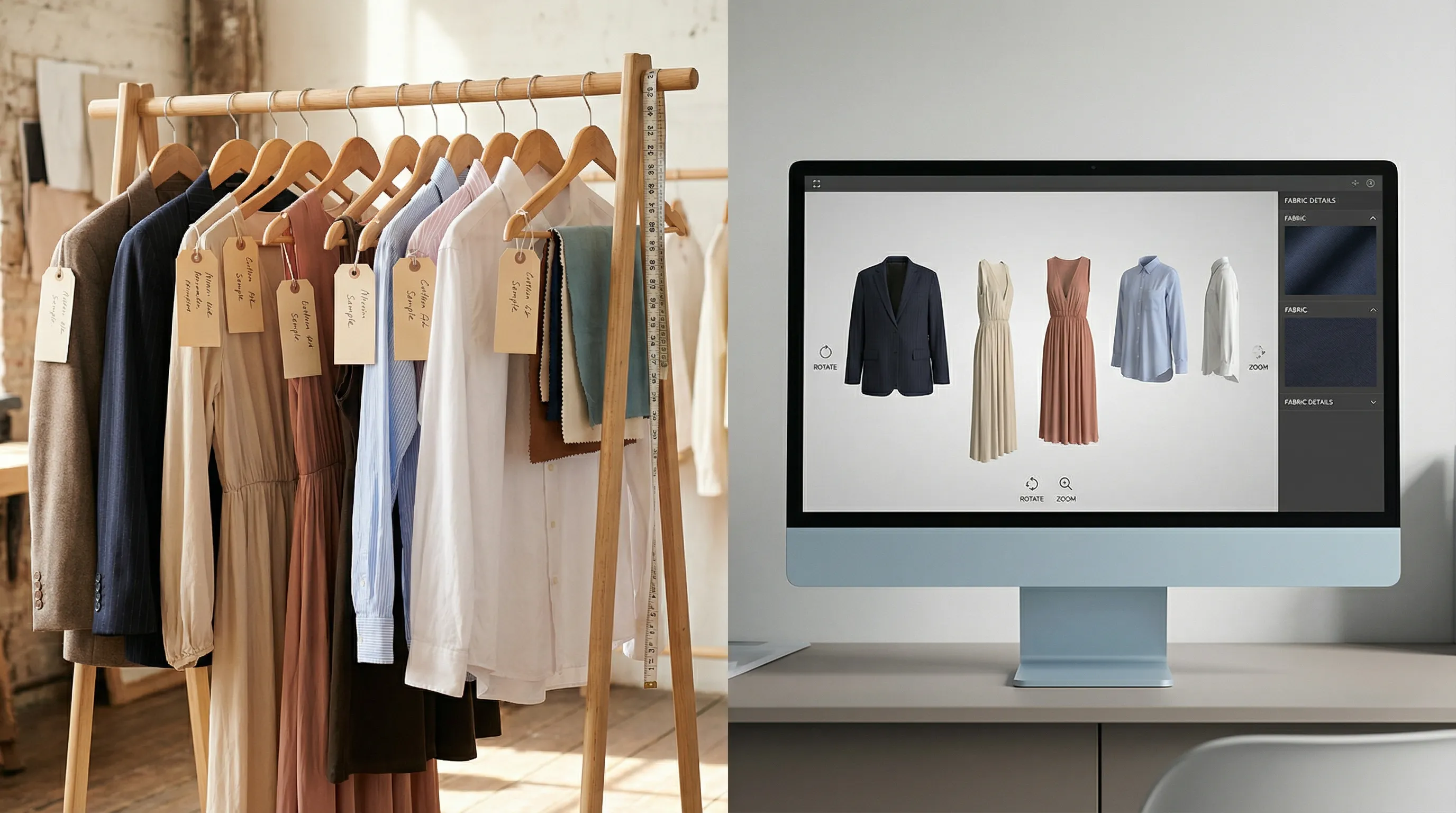 Split comparison of physical garment samples on a rack versus digital 3D garment renderings on a computer screen
| Step | Timeline | Cost Per Style |
|---|---|---|
| Source and order fabric swatches | 1–2 weeks | $50–$200 |
| First prototype sample | 2–4 weeks | $200–$800 |
| Fit review and revision notes | 1 week | $100–$300 (designer time) |
| Second sample (revised) | 2–3 weeks | $200–$600 |
| Third sample (if needed) | 2–3 weeks | $200–$600 |
| Color and fabric variation samples | 2–3 weeks | $150–$500 per variation |
| Pre-production sample (final approval) | 2–3 weeks | $200–$500 |
| Total | 12–16 weeks | $900–$3,500 |
McKinsey's State of Fashion report found that pre-production sampling accounts for 15–20% of total product development costs across the apparel industry, with the average brand spending $500,000–$2 million annually on physical samples alone. For small and mid-size brands producing 50–200 styles per year, physical sampling is often the single largest expense before production even begins.
The inefficiency compounds: if you test 5 colorways for each of 50 styles, you are producing 250 sample garments, the vast majority of which will never be sold. This is not just expensive — it is environmentally unsustainable.
The Five Types of Digital Sampling Technology
Digital sampling is not a single technology. It is an ecosystem of tools that address different stages of the product development process. Here are the five major categories, with honest assessments of each.
1. 3D Garment Simulation
What it does: Creates photorealistic 3D renderings of garments with accurate drape, fit, and fabric behavior simulations. Users build garments digitally from pattern pieces and assign fabric properties (weight, stretch, stiffness).
Key tools: CLO 3D, Browzwear VStitcher, Optitex, Gerber AccuMark 3D
Cost: $50–$500/month depending on license tier
Strengths:
- Most technically accurate digital sampling method
- Simulates fit on parameterized body models
- Can output production-ready patterns
- Full 360-degree garment visualization
Limitations:
- Steep learning curve (40–100+ hours to proficiency)
- Requires technical pattern-making knowledge
- Each garment takes 4–8 hours to build digitally (first time)
- Expensive for small brands and independent designers
According to Business of Fashion, CLO 3D alone had over 50,000 users across fashion brands by 2025, with major adopters including Adidas, Under Armour, and Target. However, the complexity and cost put full 3D simulation out of reach for most small and mid-size brands, where the average design team is 1–3 people.
2. AI Fabric Swapping
What it does: Takes a real photograph of a garment and realistically renders it in different fabric materials — denim, silk, linen, leather, knits — preserving accurate texture, drape, shadows, and light behavior.
Key tools: Adstronaut AI, Style3D
Cost: $0.50–$5 per swap
Strengths:
- No 3D modeling skills required
- Results in seconds, not hours
- Works with real product photos (no digital garment building needed)
- Affordable for any brand size
- Test 20–30 fabric options for the cost of 1 physical swatch order
Limitations:
- Cannot simulate fit or drape physics as precisely as 3D tools
- Works best with standard apparel fabrics; less reliable for highly textured novelty materials
- Requires a good-quality input photograph
AI fabric swapping is the fastest-growing segment of digital sampling. For brands that already have garment photos or flat-lay images, it offers the lowest barrier to entry of any digital sampling method. A designer can test a jacket in cotton twill, waxed canvas, and Italian wool in under five minutes, compared to 3–4 weeks for physical fabric samples. See the complete guide to AI fabric swapping for a detailed workflow breakdown.
3. AI Photoshoot and Virtual Try-On
What it does: Generates realistic on-model images of garments without a physical photoshoot. Upload a flat-lay or mannequin photo, select a model and background, and receive editorial-quality on-model imagery.
Key tools: Adstronaut AI Photoshoots, VModel, Zmo.ai
Cost: $0.50–$3 per image
Strengths:
- Eliminates the need for physical samples for marketing and sales imagery
- Generate on-model content before production samples exist
- Test diverse model representation without multiple shoots
- Enable pre-orders and market testing before manufacturing
Limitations:
- Cannot replace physical fit sessions for garment construction validation
- Complex garment details (intricate beading, hardware) may not render perfectly
- Not yet suitable for ultra-high-resolution print campaigns
McKinsey estimates that fashion brands allocating 5–8% of revenue to visual content production can reduce that figure by 60–75% with AI-generated imagery. For a brand doing $500,000 in annual revenue, that represents $15,000–$30,000 in annual savings on photography alone — before accounting for the time savings of eliminating shoot logistics.
4. AI Color Variation
What it does: Digitally recolors garments to test colorways, seasonal palettes, and trend colors without dyeing physical samples.
Key tools: Adstronaut AI Color Changer, Pixelcut, Canva (basic)
Cost: $0.50–$2 per variation
Strengths:
- Test 20+ colorways in minutes
- No dye lot costs or minimum order quantities
- Perfect for seasonal palette planning and buyer presentations
- Maintain accurate texture and material appearance across color changes
Limitations:
- Digital color does not perfectly match physical dye results (Pantone calibration still needed)
- Some color shifts affect perceived fabric texture (e.g., dark colors flatten texture detail)
Color variation testing is one of the highest-ROI digital sampling applications. Traditional color sampling requires dyeing physical swatches at $50–$200 per colorway with 2–4 week turnaround. Digital color testing costs under $2 per variation with instant results. For a brand testing 8 colorways across 20 styles, that is a reduction from $8,000–$32,000 in physical dye samples to under $320 in digital testing.
Try digital fabric and color sampling now →
5. Digital Twins
What it does: Creates a complete virtual replica of a physical garment, including accurate geometry, material properties, construction details, and behavioral simulation. The digital twin serves as a single source of truth across design, production, and marketing.
Key tools: CLO 3D (with Connected Fashion module), PlatformE, Resonai
Cost: $500–$5,000+ per garment (enterprise implementations)
Strengths:
- Complete virtual representation that serves every department
- Enables virtual showrooms and wholesale selling without physical samples
- Feeds directly into e-commerce, marketing, and production systems
- Supports metaverse and virtual fashion applications
Limitations:
- Requires significant upfront investment in 3D infrastructure
- Currently practical only for large brands and luxury houses
- Each digital twin takes 8–20+ hours to build from scratch
Digital twins represent the most advanced form of digital sampling, but they remain an enterprise-level investment. Brands like Tommy Hilfiger, which committed to 100% digital design by 2025, and Hugo Boss have invested millions in digital twin infrastructure. For most small and mid-size brands, the more accessible AI-powered approaches (fabric swapping, AI photoshoots, color variation) deliver 80% of the value at 5% of the cost.
Traditional vs Digital Sampling: Side-by-Side Comparison {#traditional-vs-digital-sampling}
| Factor | Traditional Physical Sampling | Digital Sampling (AI/3D) |
|---|---|---|
| Cost per style | $900–$3,500 (15–25 samples) | $50–$500 (1–2 physical samples + digital) |
| Timeline | 12–16 weeks | 2–4 weeks |
| Iterations per style | 3–5 (cost-limited) | 20–50+ (virtually unlimited) |
| Fabric options tested | 3–5 per style | 20–30+ per style |
| Colorways tested | 3–8 per style | Unlimited |
| Pre-production waste | 15–25 discarded samples per style | 1–2 discarded samples per style |
| On-model imagery | Requires finished sample + photoshoot | Generated from flat-lay or 3D model |
| Fit validation | Physical fitting (gold standard) | 3D simulation (good) or physical final sample |
| Tactile assessment | Yes (physical fabric in hand) | No (requires final physical sample) |
| Skill required | Pattern making, sewing, sourcing | Software proficiency (varies by tool) |
| Minimum viable setup | Sewing room, sourcing contacts | Computer + software subscription |
The data shows that digital sampling does not eliminate physical sampling entirely — it reduces the number of physical samples needed from 15–25 per style to 1–2 per style by front-loading the majority of design decisions into the digital phase. The hidden ROI of this approach extends well beyond direct cost savings.
The Environmental Case for Digital Sampling
The fashion industry's environmental footprint is staggering, and pre-production sampling is a significant contributor. UNEP's 2023 report on the fashion industry estimates that the sector produces 92 million tons of textile waste annually, making it responsible for 10% of global carbon emissions — more than international aviation and maritime shipping combined.
Physical sampling's contribution to this waste is substantial:
- 60% of physical samples never reach production (McKinsey, 2024). These samples are produced, shipped internationally, reviewed, and then discarded.
- The average garment sample travels 15,000+ miles through the supply chain — from fabric mill to sample room to brand headquarters and back.
- Sample rooms generate 5–15 tons of textile waste per year at mid-size brands (Common Objective supply chain research).
What Digital Sampling Changes
| Environmental Metric | Traditional Sampling | With Digital Sampling | Reduction |
|---|---|---|---|
| Physical samples per style | 15–25 | 1–2 | 88–95% |
| Textile waste per collection | 500–2,000 kg | 50–200 kg | 80–90% |
| International shipments per style | 4–8 | 1–2 | 75% |
| Carbon footprint per style (kg CO2) | 50–120 | 10–25 | 75–80% |
Brands that have adopted digital sampling report pre-production waste reductions of 80–90%. Adidas reported eliminating 40% of physical samples across its product lines through 3D sampling adoption, saving an estimated 160 tons of materials annually. PVH Corp (Calvin Klein, Tommy Hilfiger) reported a 60% reduction in samples produced after implementing digital design workflows.
For conscious brands — and increasingly, for consumers who demand sustainability — digital sampling is not just a cost optimization. It is a supply chain responsibility.
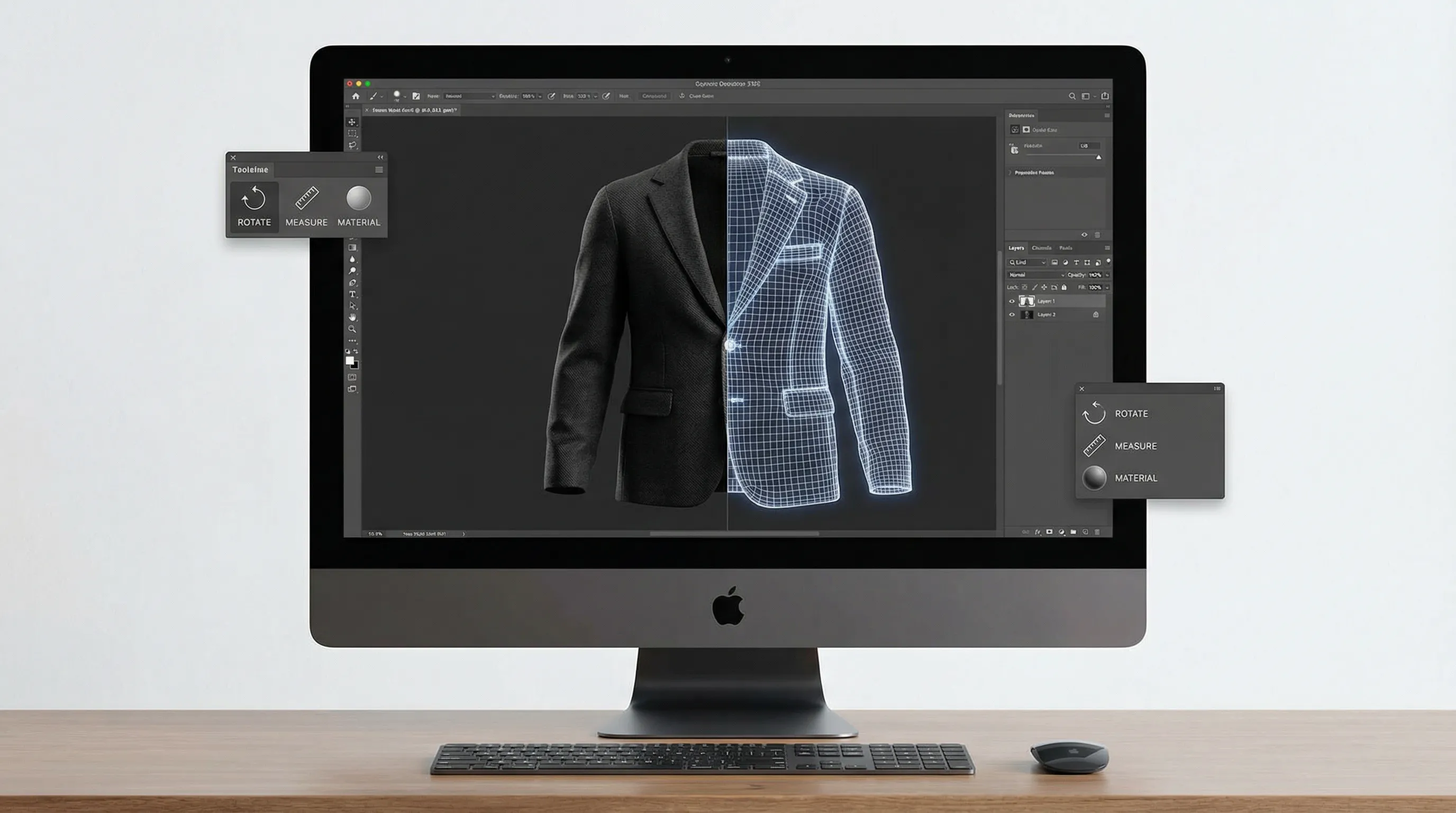 3D digital garment rendering of a jacket showing photorealistic fabric texture alongside wireframe mesh view
Industry Adoption: Where We Are in 2026 {#industry-adoption}
Digital sampling has crossed from early adoption to mainstream consideration. McKinsey's 2024 State of Fashion Technology report found that 60% of fashion companies planned to invest in digital sampling and 3D design by 2025, up from just 18% in 2020.
However, adoption is uneven across the industry:
Enterprise brands (revenue $100M+): 65–80% have adopted some form of digital sampling, primarily 3D tools (CLO 3D, Browzwear). These brands can afford the infrastructure investment and have dedicated technical design teams.
Mid-market brands (revenue $5M–$100M): 30–45% have adopted digital sampling, primarily AI-powered tools (fabric swapping, AI photoshoots, color variation) that do not require 3D modeling expertise.
Small/indie brands (revenue under $5M): 10–20% have adopted digital sampling tools, though adoption is accelerating rapidly as AI tools reduce the cost and skill barriers.
The gap between enterprise and small brand adoption represents the industry's biggest opportunity. The brands that adopt digital sampling earliest — regardless of their size — gain compounding advantages in speed, cost, and sustainability. According to Business of Fashion's 2025 Technology Index, brands using digital sampling brought products to market an average of 6 weeks faster than competitors relying on traditional processes.
Limitations and Honest Trade-Offs
Digital sampling is powerful, but it is not a complete replacement for physical prototyping. Here are the real limitations:
What Digital Sampling Cannot Do (Yet)
1. Replicate tactile feel. No screen can communicate the hand-feel of brushed cashmere versus raw silk. For premium and luxury brands where fabric hand is a core differentiator, a final physical sample remains essential. The industry standard is to use digital tools for all decision-making and then produce one physical confirmation sample before production.
2. Guarantee color accuracy to production standards. Digital displays vary in calibration, and even the best AI color rendering does not replace Pantone-calibrated physical color standards. Most brands still produce physical lab dips for final color approval, but digital color testing eliminates 80–90% of the experimental color rounds.
3. Replace fit testing for complex construction. 3D simulation tools (CLO 3D, Browzwear) can approximate fit, but they cannot replicate the full complexity of how a garment behaves on a moving human body across different body types. Physical fit sessions remain the standard for final fit approval, especially for tailored, structured, or technical performance garments.
4. Handle all fabric types equally. AI-powered tools work exceptionally well for standard woven and knit fabrics — cotton, denim, linen, silk, polyester, wool. They are less reliable for highly textured or three-dimensional materials: heavy cable knits, sequined fabrics, shearling, and fabrics with significant pile or nap. 3D tools handle these better but require expert modeling.
5. Eliminate the learning curve entirely. While AI tools have dramatically lowered the skill barrier compared to 3D software, there is still a learning curve. 3D garment simulation tools require 40–100+ hours of training. AI-powered tools require significantly less (most designers are productive within 1–2 hours), but understanding how to get the best results still takes practice.
The Practical Approach: Hybrid Sampling
The most effective digital sampling strategy is hybrid — using digital tools for the exploration and decision-making phases, and physical samples only for final validation. A practical hybrid workflow looks like this:
- Concept phase: Use AI fabric swapping to test 20–30 material options per style
- Colorway development: Use AI color variation to test full seasonal palettes digitally
- Sales and marketing: Use AI photoshoots to generate on-model imagery for pre-orders and buyer presentations
- Final validation: Produce 1–2 physical samples per style for fit confirmation and tactile approval
- Production: Hand the factory a complete spec — an AI tech pack generator turns your final digital sample into a factory-ready tech pack — and proceed to manufacturing with confidence
This hybrid approach captures 80–90% of the cost and time savings while preserving the tactile verification that ensures product quality.
How to Start Digital Sampling Today
You do not need to overhaul your entire workflow at once. Here is a phased approach ranked by ease of implementation and immediate ROI:
Phase 1: AI Color and Fabric Testing (Day 1) Start with AI fabric swapping and color variation. Upload photos of your existing designs and test material and color options digitally. This requires zero technical knowledge and delivers immediate savings on fabric swatch orders and dye samples. Expected savings: $500–$5,000 per collection depending on brand size.
Phase 2: AI Photoshoots (Week 1) Replace 60–80% of your product photography with AI-generated on-model images. Upload flat-lay or mannequin shots and generate editorial-quality on-model imagery in minutes. Expected savings: $5,000–$25,000 per season depending on catalog size.
Phase 3: Digital-First Design Presentations (Month 1) Use digitally sampled imagery for buyer presentations, e-commerce pre-orders, and social media marketing — before physical samples exist. This accelerates your go-to-market timeline by 4–8 weeks.
Phase 4: 3D Simulation (Optional, Month 3+) If your brand requires advanced fit simulation or you want to build full digital twins, invest in 3D tools like CLO 3D. Budget $50–$500/month for software plus 40–100 hours of training time.
Most brands find that Phases 1–3 deliver the overwhelming majority of digital sampling value without the investment required for full 3D workflows.
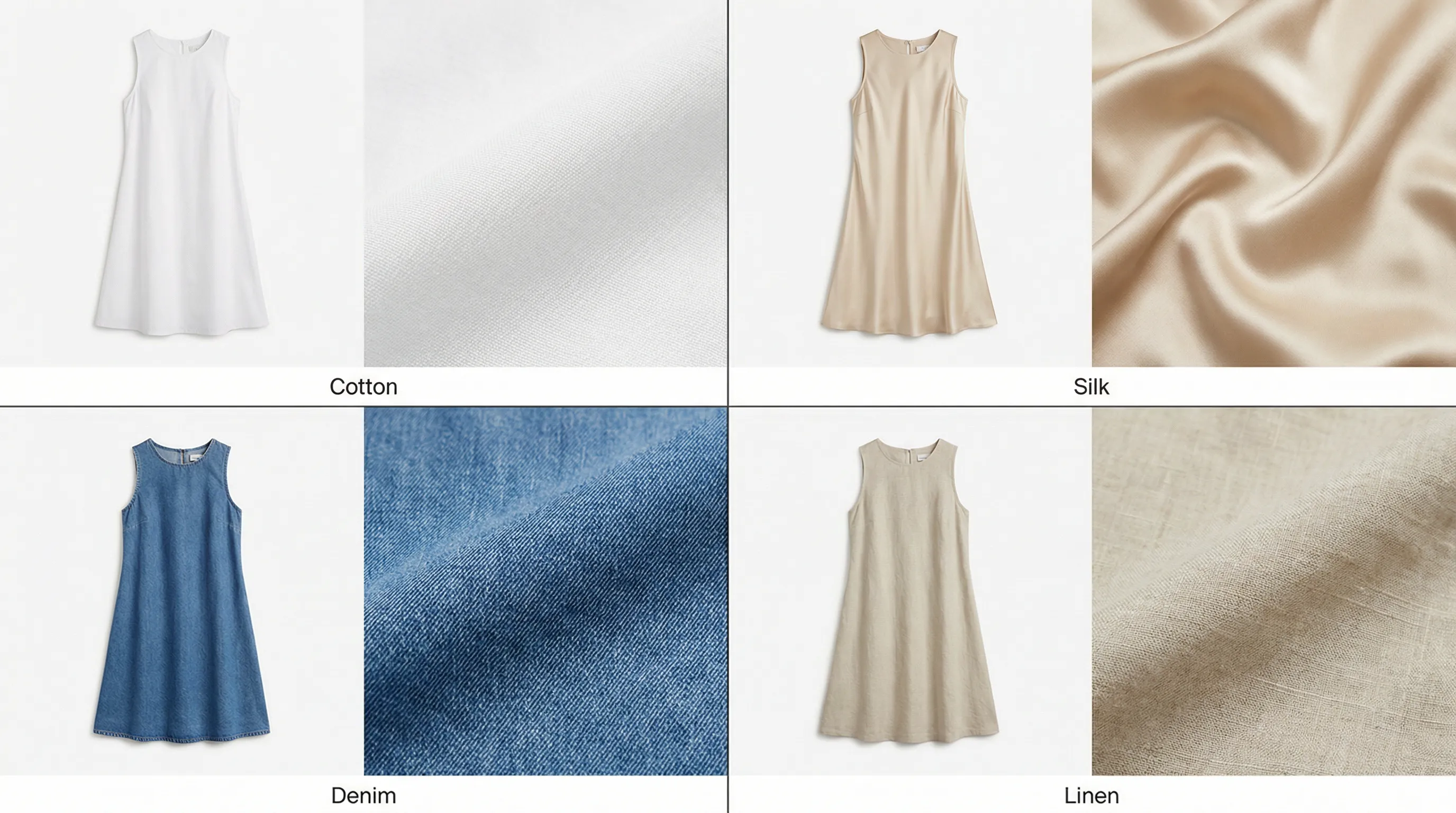 Digital fabric swapping interface showing the same dress design rendered in four different fabrics: cotton, silk, denim, and linen
Frequently Asked Questions
How much does digital sampling cost?
Digital sampling costs range from $0.50 per variation (AI fabric swapping and color testing) to $50–$500/month (3D simulation software like CLO 3D and Browzwear). For a small brand using AI-powered tools, the total cost to digitally sample an entire 20-style collection is $200–$800, compared to $18,000–$70,000 for traditional physical sampling of the same collection. Enterprise-level 3D digital twin programs can cost $50,000–$500,000+ annually including software, training, and infrastructure.
Can digital samples replace physical samples completely?
Not entirely — but they can reduce physical samples by 88–95%. Digital sampling handles the exploration, iteration, and decision-making phases exceptionally well: testing fabrics, colorways, and marketing imagery. Physical samples are still needed for final fit confirmation and tactile fabric approval before production. The industry-standard hybrid approach produces 1–2 physical samples per style instead of 15–25, using digital tools for everything else.
What software is used for digital sampling in fashion?
The major categories are: (1) 3D garment simulation — CLO 3D, Browzwear VStitcher, Optitex, Gerber AccuMark 3D; (2) AI fabric swapping — Adstronaut AI, Style3D; (3) AI photoshoots — Adstronaut AI, VModel, Zmo.ai; (4) AI color variation — Adstronaut AI, Pixelcut; (5) Digital twin platforms — PlatformE, Resonai, CLO Connected Fashion. The right tool depends on your budget, technical skill level, and specific sampling needs.
How accurate are digital fabric simulations?
AI fabric swapping achieves 85–95% visual accuracy for standard apparel fabrics (cotton, denim, linen, silk, polyester, wool), accurately representing texture, color, drape, and light behavior. Full 3D simulation tools like CLO 3D achieve higher physical accuracy — including stretch, weight, and drape physics — but require significantly more time and expertise. Both methods are less accurate for highly textured novelty fabrics (sequins, heavy cable knit, shearling). For production decisions, most brands use digital tools for initial selection and produce one physical confirmation sample for final approval.
What is the ROI of digital sampling?
ROI varies by brand size and adoption level. A small brand producing two 12-piece collections annually can expect $83,000–$117,000 in total annual value from digital sampling — including direct sampling cost savings ($12,000–$28,000), faster time-to-market ($18,750), reduced production errors ($8,000–$12,000), better material decisions ($8,000–$20,000), increased creative output ($33,600), and improved cash flow ($3,000–$5,000). At $600–$1,200/year in tool costs, this represents a 7,000–19,500% return on investment. See the complete ROI breakdown for detailed financial modeling.
How long does it take to create a digital sample?
It depends on the technology. AI fabric swapping produces results in 10–30 seconds per variation. AI photoshoot generation takes 1–3 minutes per image. AI color variation produces results in 10–30 seconds per colorway. Full 3D garment simulation takes 4–8 hours to build a garment digitally the first time, with subsequent variations taking 30–60 minutes each. For comparison, a physical sample takes 2–4 weeks from request to delivery, plus shipping time.
Which fashion brands use digital sampling?
Major brands using 3D digital sampling include Adidas, Nike, Under Armour, Tommy Hilfiger, Calvin Klein, Hugo Boss, Target, and Walmart. PVH Corp (parent of Calvin Klein and Tommy Hilfiger) committed to 100% digital design and reduced physical samples by 60%. Adidas eliminated 40% of physical samples through 3D tool adoption. Thousands of small and mid-size brands use AI-powered digital sampling tools like Adstronaut AI for fabric testing, color exploration, and photoshoot generation without the enterprise-level infrastructure investment.
What is the difference between 3D sampling and AI sampling?
3D sampling (CLO 3D, Browzwear) builds garments from digital pattern pieces and simulates their physical behavior — including drape, stretch, fit, and movement — on virtual body models. It is highly accurate but expensive ($50–$500/month), requires pattern-making expertise, and takes 4–8 hours per garment. AI sampling (fabric swapping, color variation, AI photoshoots) works with real garment photographs and uses machine learning to realistically modify materials, colors, and presentation. It is faster (seconds to minutes), cheaper ($0.50–$5 per result), and requires no technical expertise — but it cannot simulate fit or physical garment behavior. Most brands benefit from AI sampling for speed and accessibility; brands with dedicated technical design teams may also invest in 3D tools for fit-critical applications.
Start digital sampling — test fabrics and colors →
Sources and further reading:
- McKinsey & Company — The State of Fashion Technology (data on digital sampling adoption rates, pre-production cost benchmarks, and brand investment trends)
- UNEP — Fashion and the Environment (data on 92 million tons of annual textile waste and fashion's carbon footprint)
- Business of Fashion — The Year Ahead: Technology (digital sampling market analysis and brand adoption coverage)
- CLO Virtual Fashion — CLO 3D (3D garment simulation platform and enterprise adoption data)
- Common Objective — The True Cost of Fashion Sampling (supply chain research on sampling waste and production error rates)
- Browzwear — VStitcher (3D fashion design and virtual prototyping platform)
- Adstronaut AI — AI Fabric Swapping Guide and Hidden ROI Analysis (detailed workflow and financial modeling for AI-powered digital sampling)