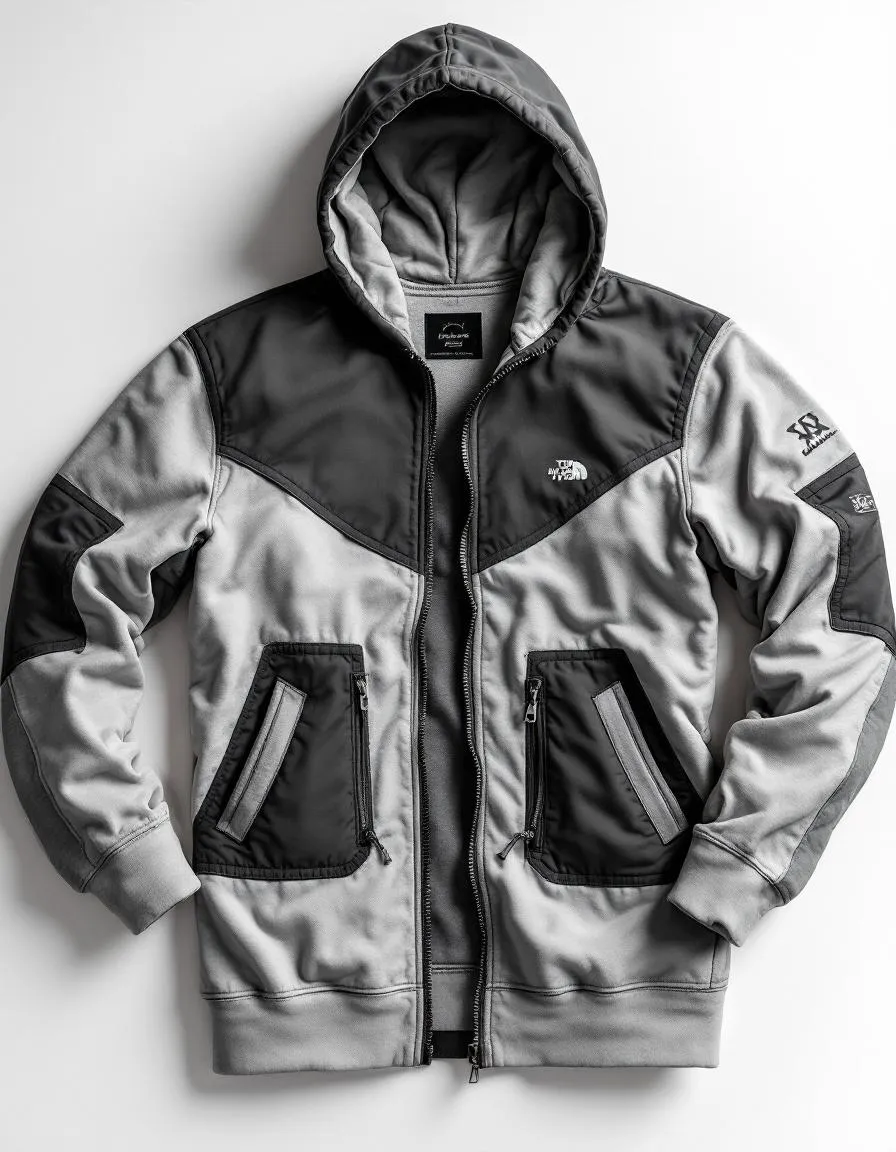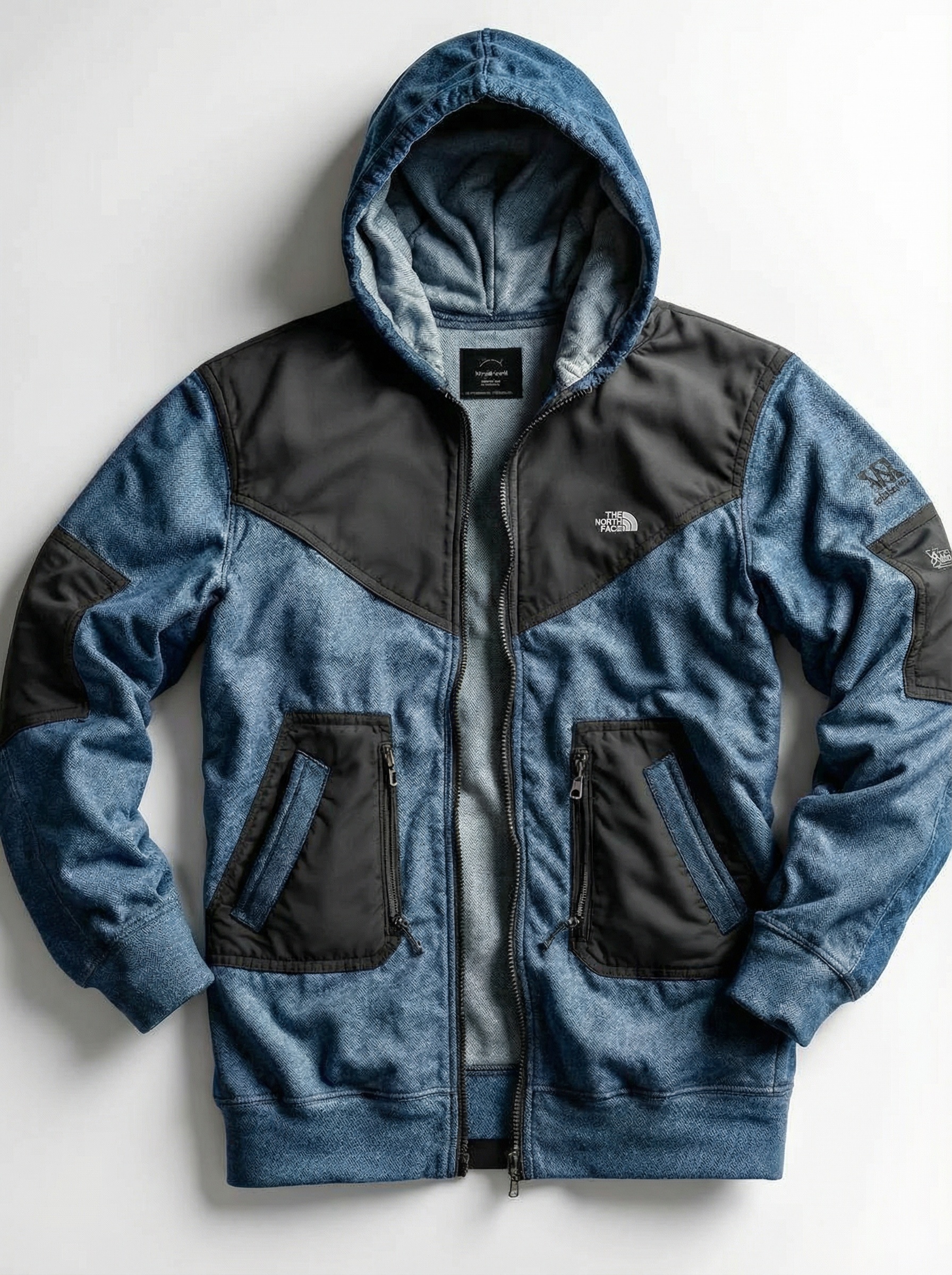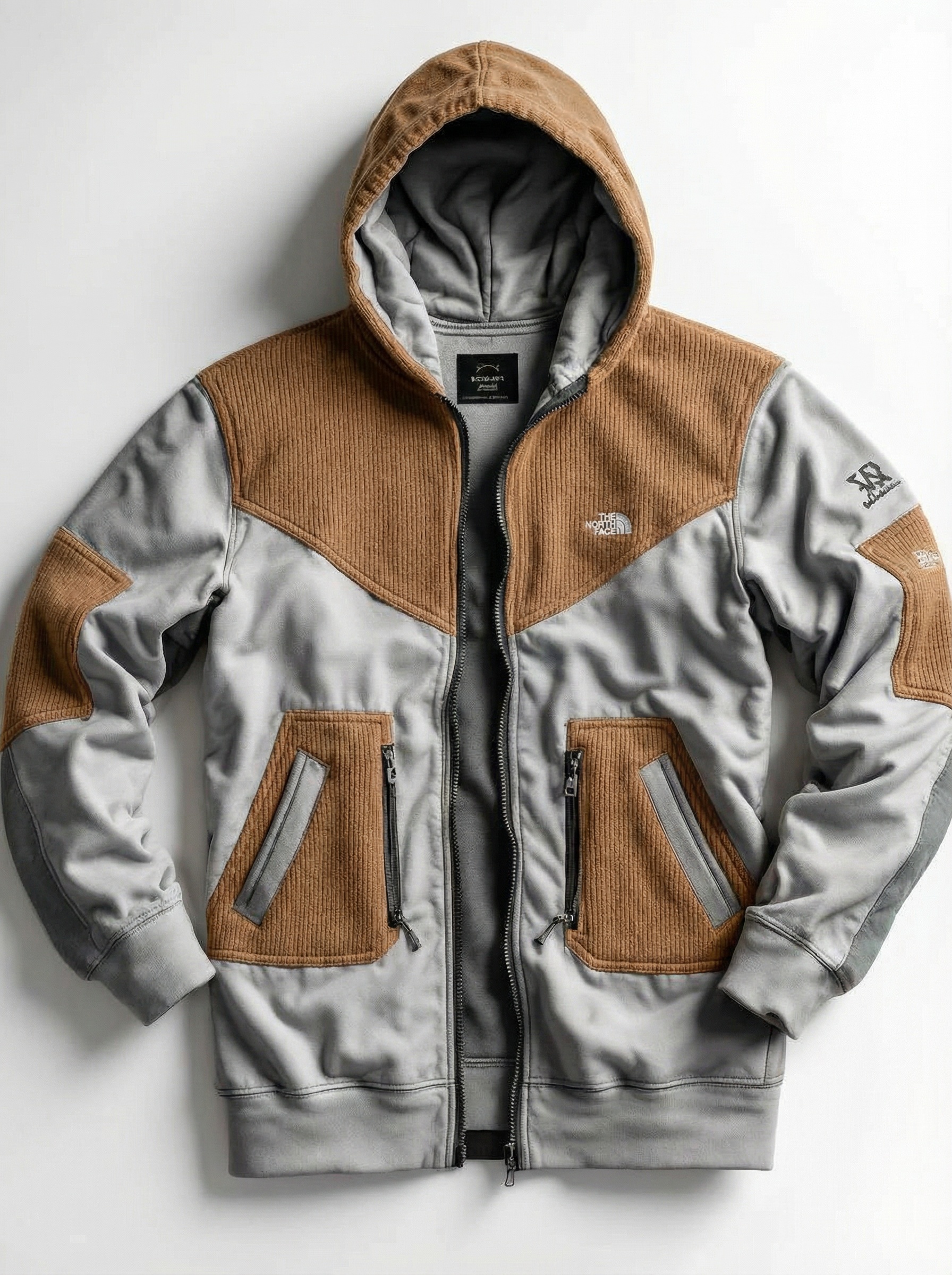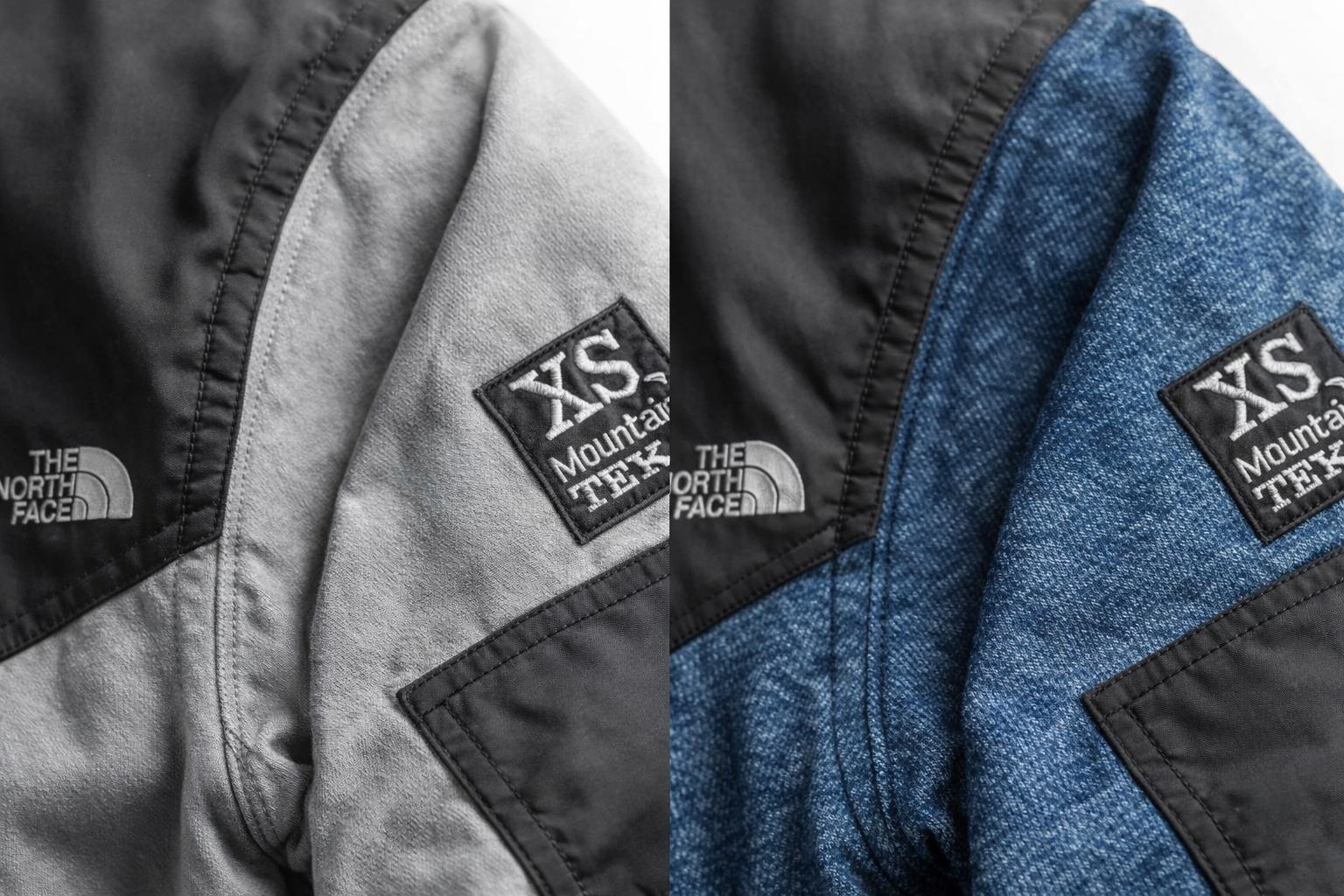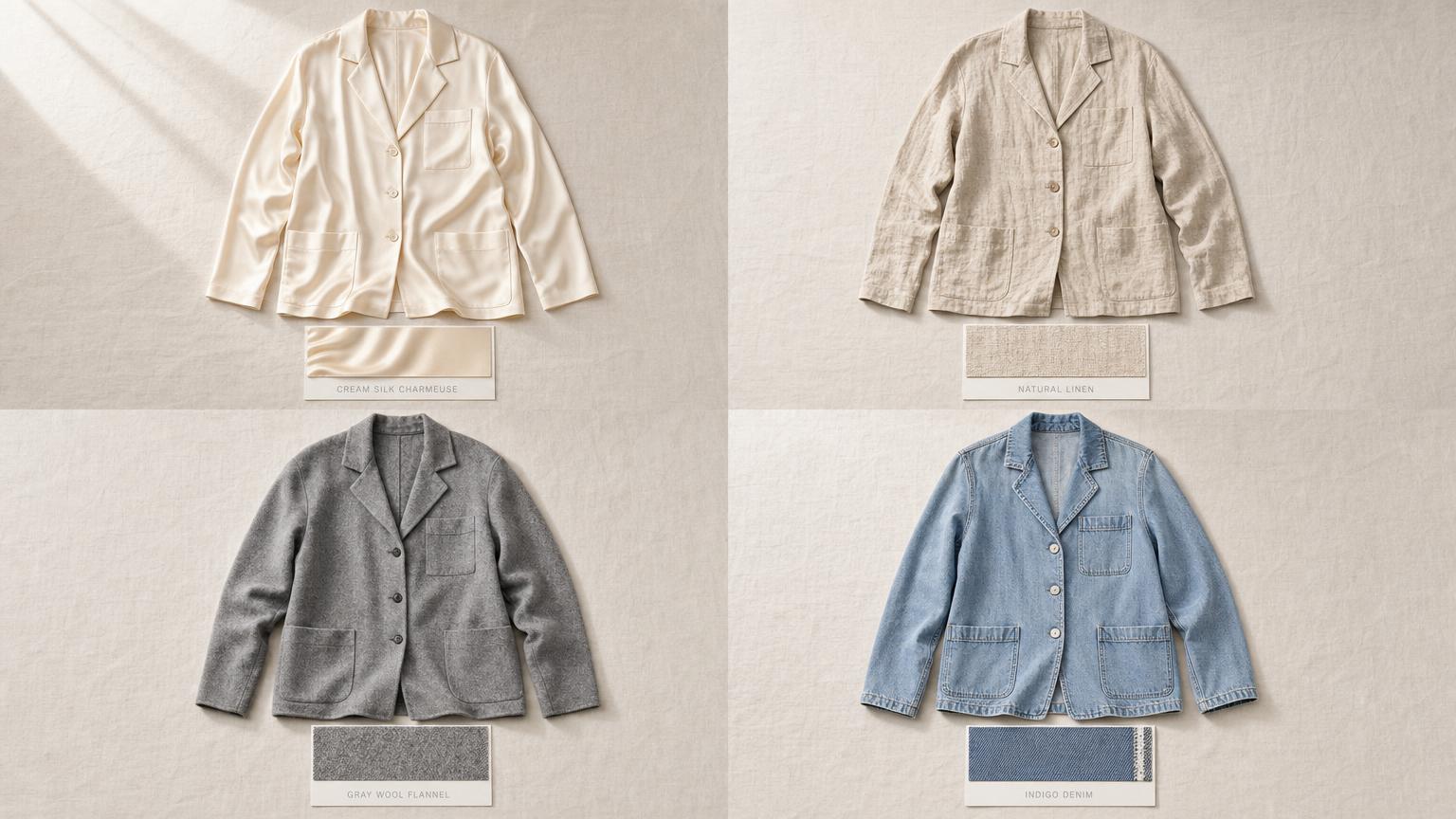
One garment. Every fabric story.
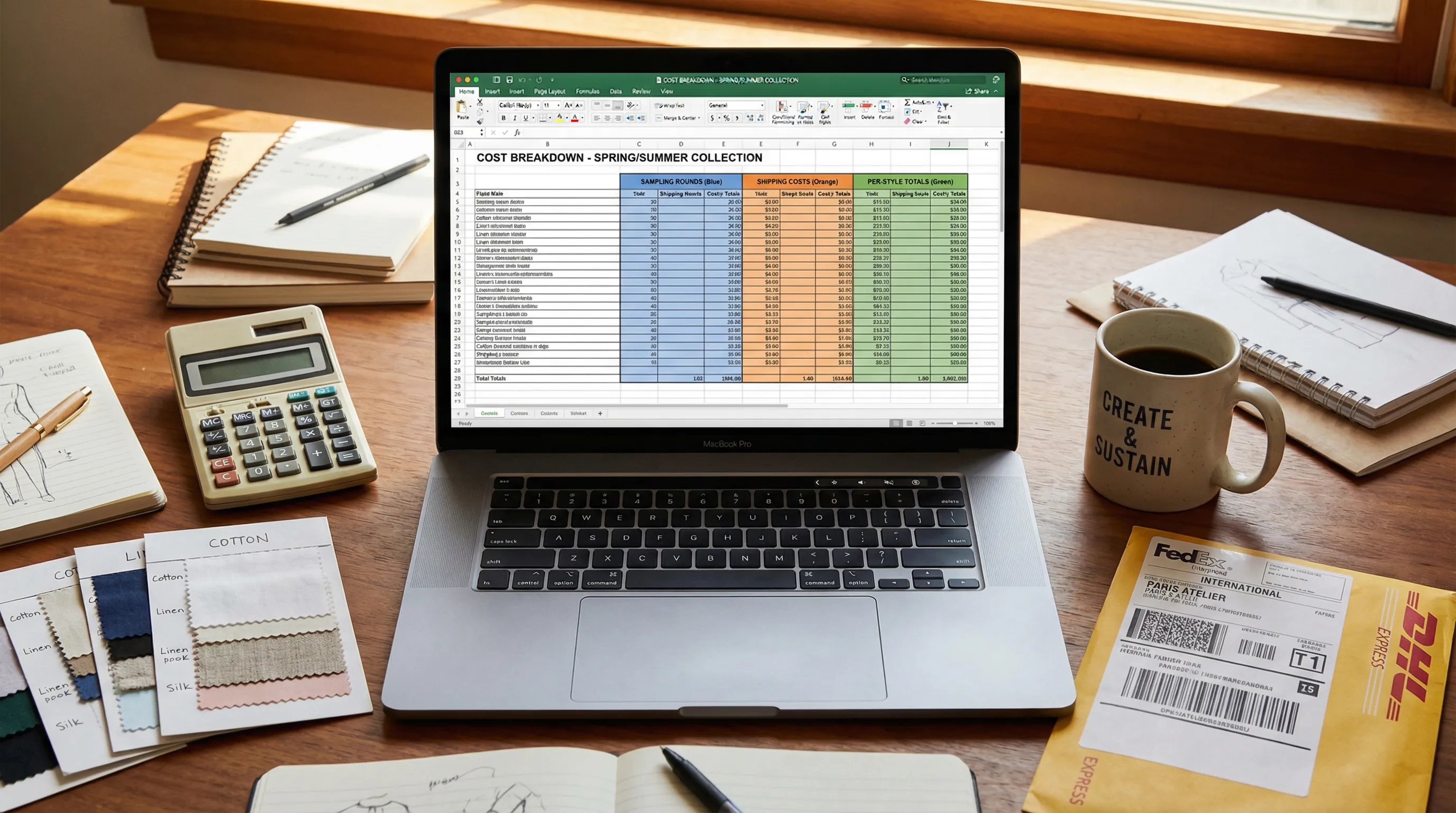
A single fabric swatch order from a mill in Como or Tiruppur costs $50–$200 and takes one to three weeks to arrive.
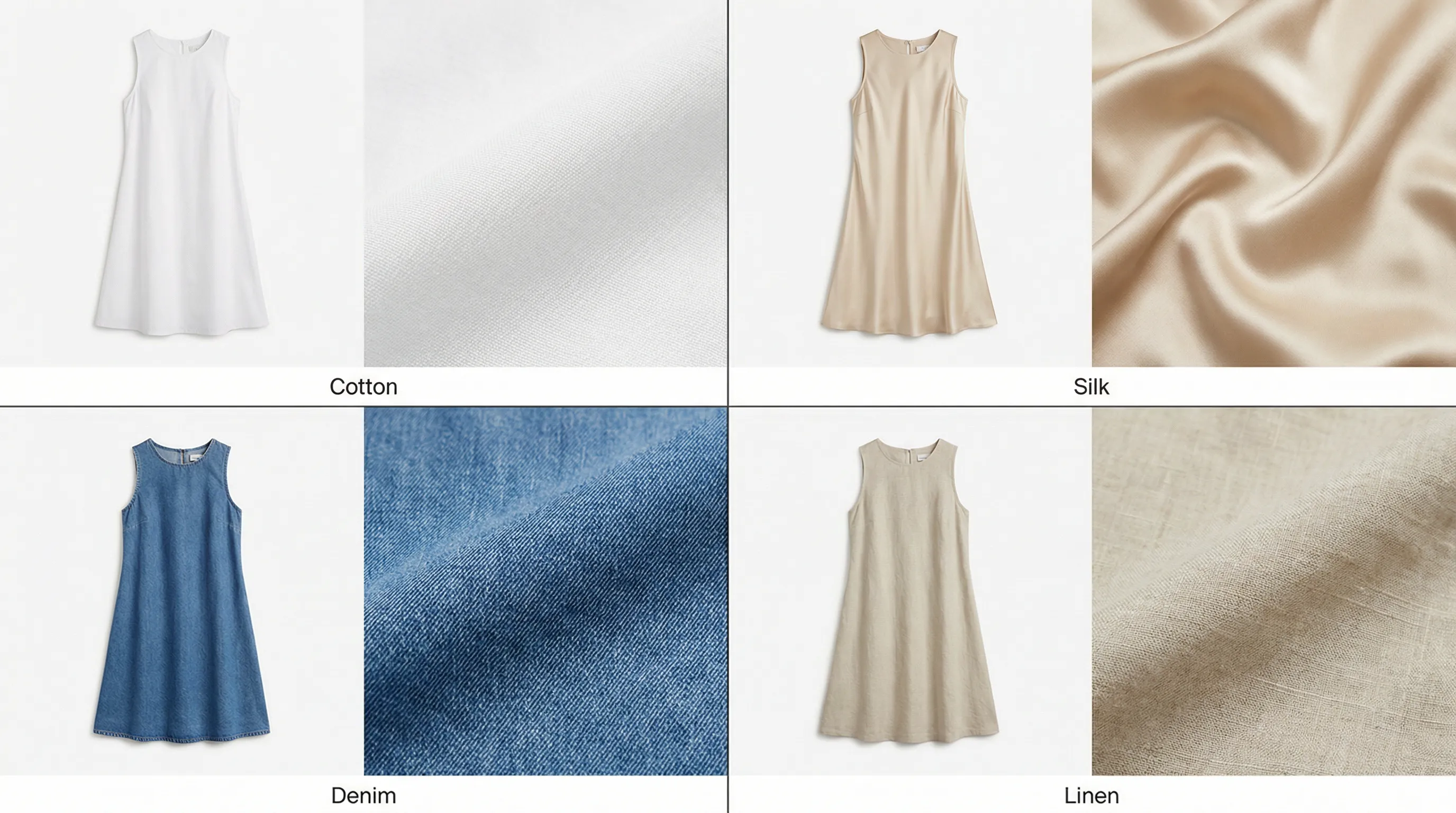
Adstronaut takes a single product photo and shows you the same silhouette in cotton, silk, denim, wool, leather, or any custom fabric you upload — drape, texture, and sheen rendered photoreal.
Indie designers test material directions before committing to MOQs. Design studios pitch clients live with three or four fabric options on the call. Sustainable brands swap virgin polyester for recycled alternatives across an entire collection without ordering a single new swatch.
Used by founders who'd rather spend their fabric budget on the winning material, not on the losers.
Start a Free Fabric Swap
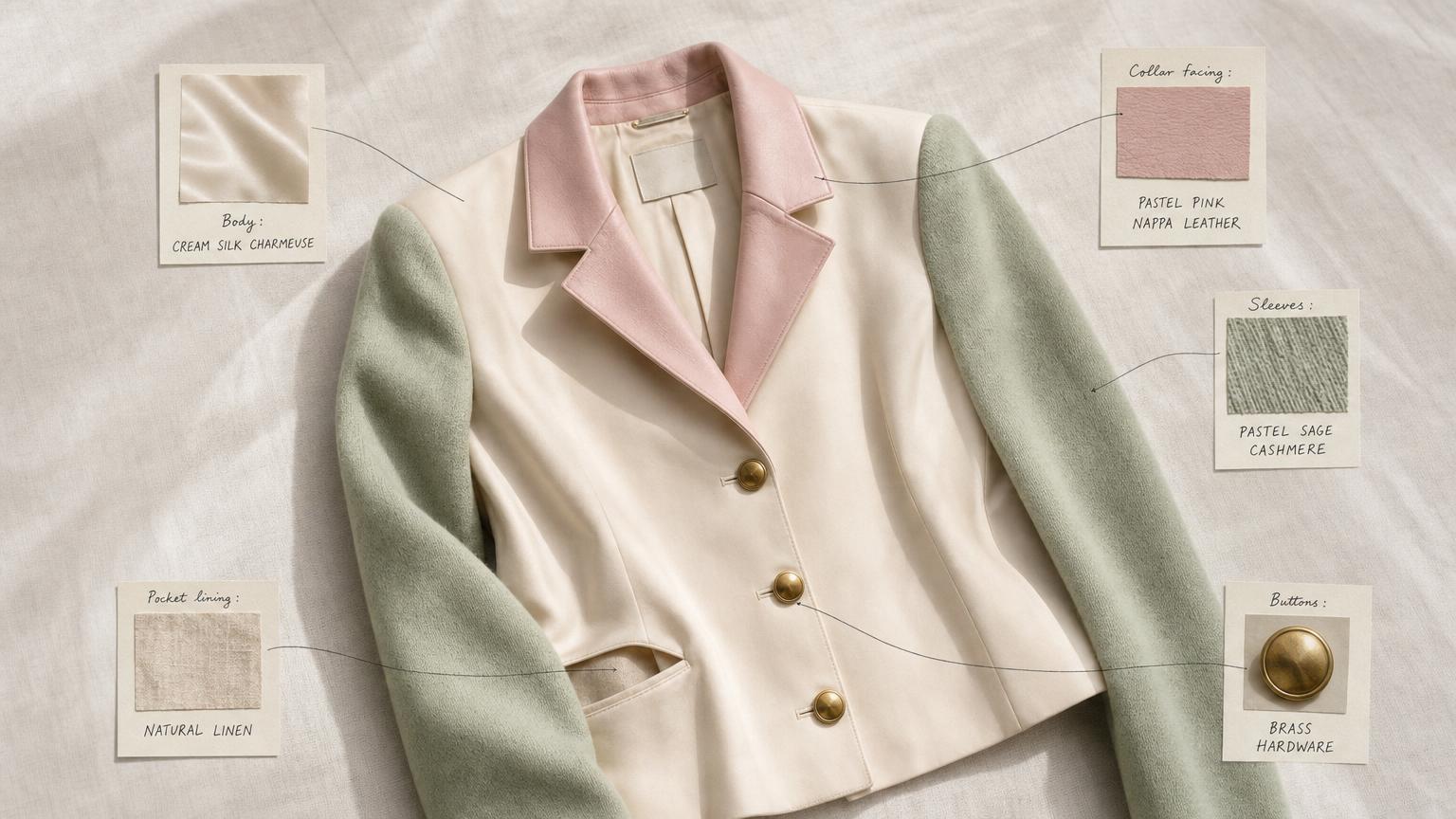
Different fabric on every part of the garment.
Real garments are never made from one fabric — they're a body fabric, a lining, a contrast panel, a collar interfacing, hardware, and trims.
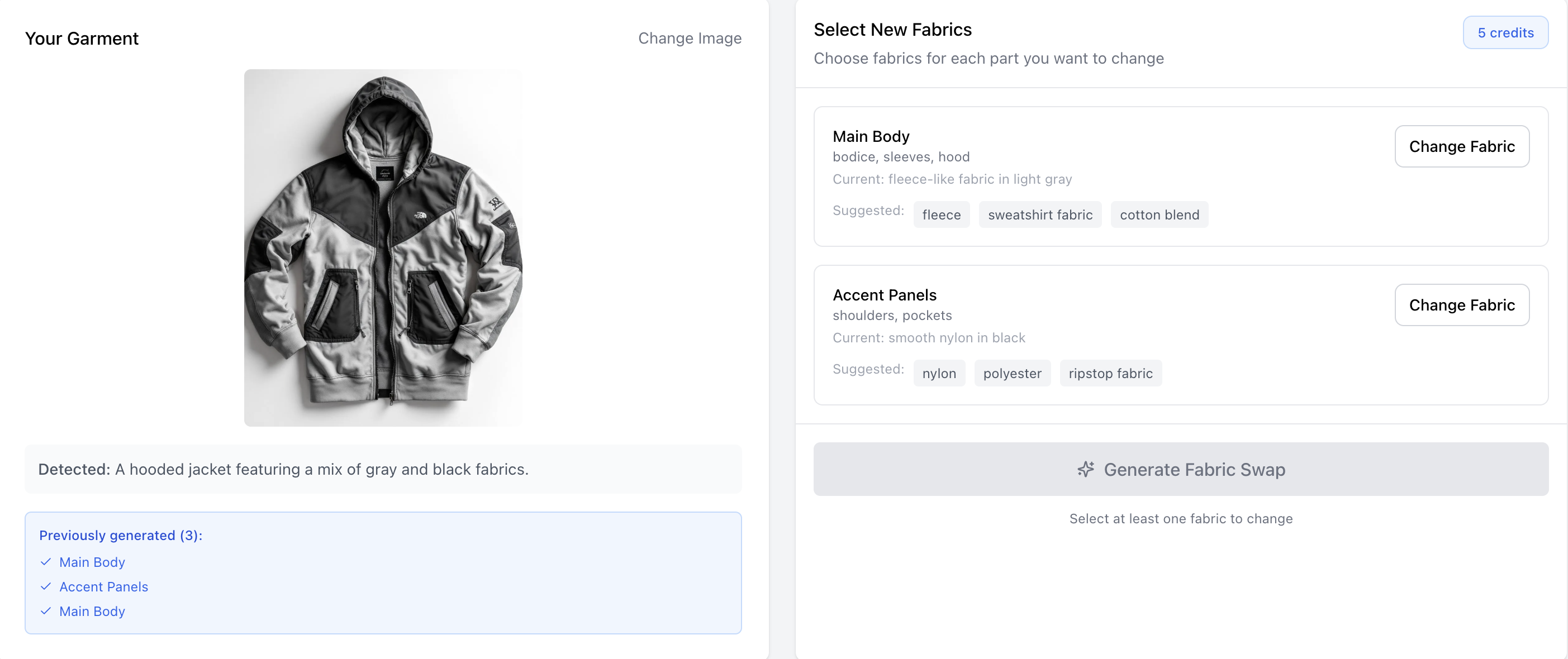
Generic AI fabric tools treat the whole garment as one material and swap it as a single block. Adstronaut auto-detects every distinct fabric region on your upload and lets you pick a different material for each one.
Silk body with cotton lining. Wool flannel sleeves on a leather body. Denim panels on a canvas backpack. The region boundaries stay clean — no bleed between sections, no texture confusion, no AI-flatness.
For per-region color changes instead of material, the Color Changer uses the same detection on a different lever.
Try Per-Region Swapping
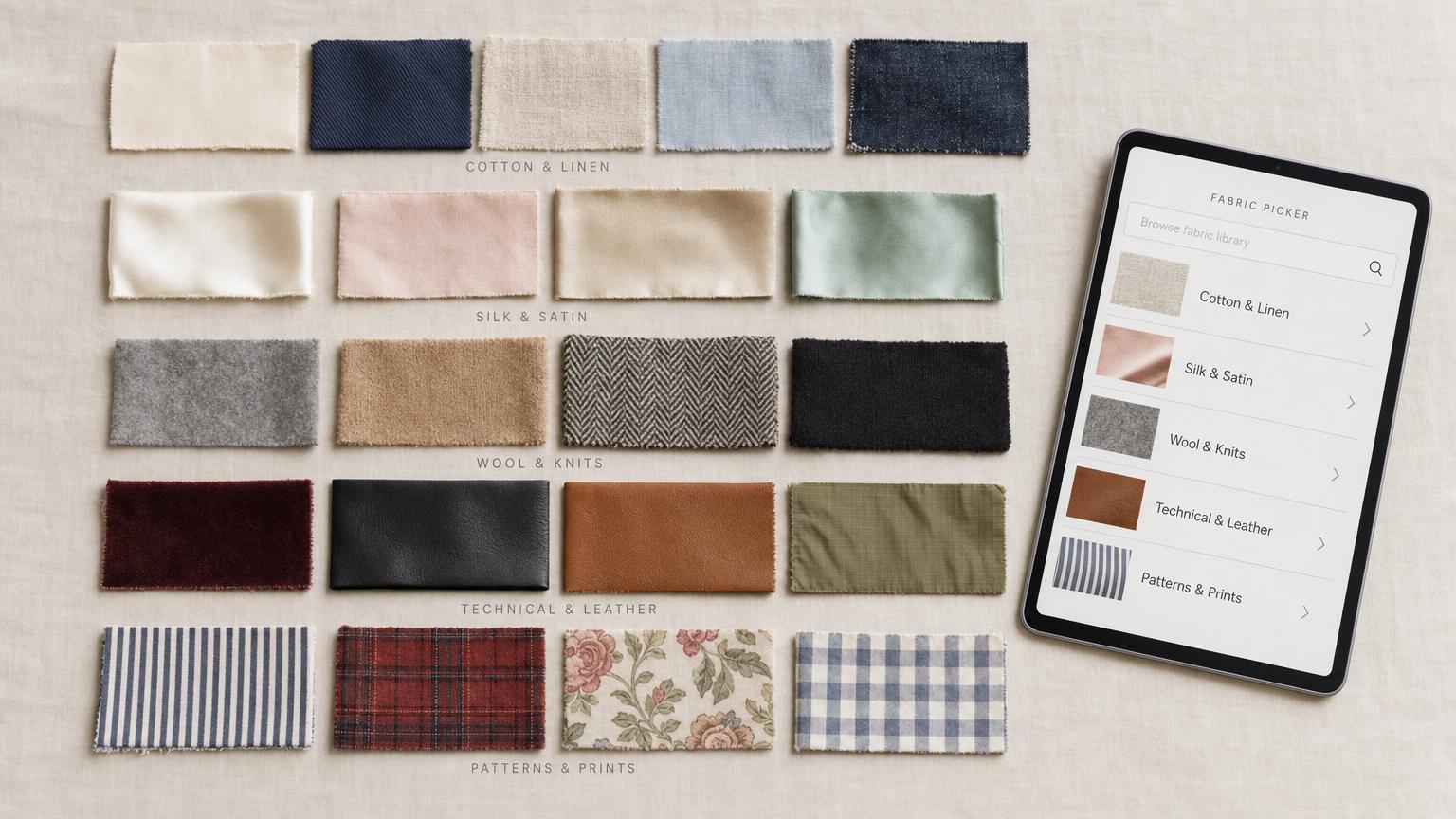
A curated fabric library — plus your own mill swatches.
Adstronaut ships with 21 hand-curated fabric presets across five families.
Cotton & Linen — white poplin, navy twill, natural linen, light blue chambray, indigo denim. Silk & Satin — cream charmeuse, black dupioni, champagne satin, emerald silk. Wool & Knits — gray flannel, camel cashmere, herringbone tweed, black merino. Technical & Leather — burgundy velvet, black leather, cognac leather, ripstop nylon. Patterns & Prints — navy & white stripe, red tartan, botanical print, gingham.
Need something else? Upload any mill swatch, supplier lookbook scan, vintage piece, or moodboard tear and the AI applies that exact texture to your garment.
Browse the Fabric Library
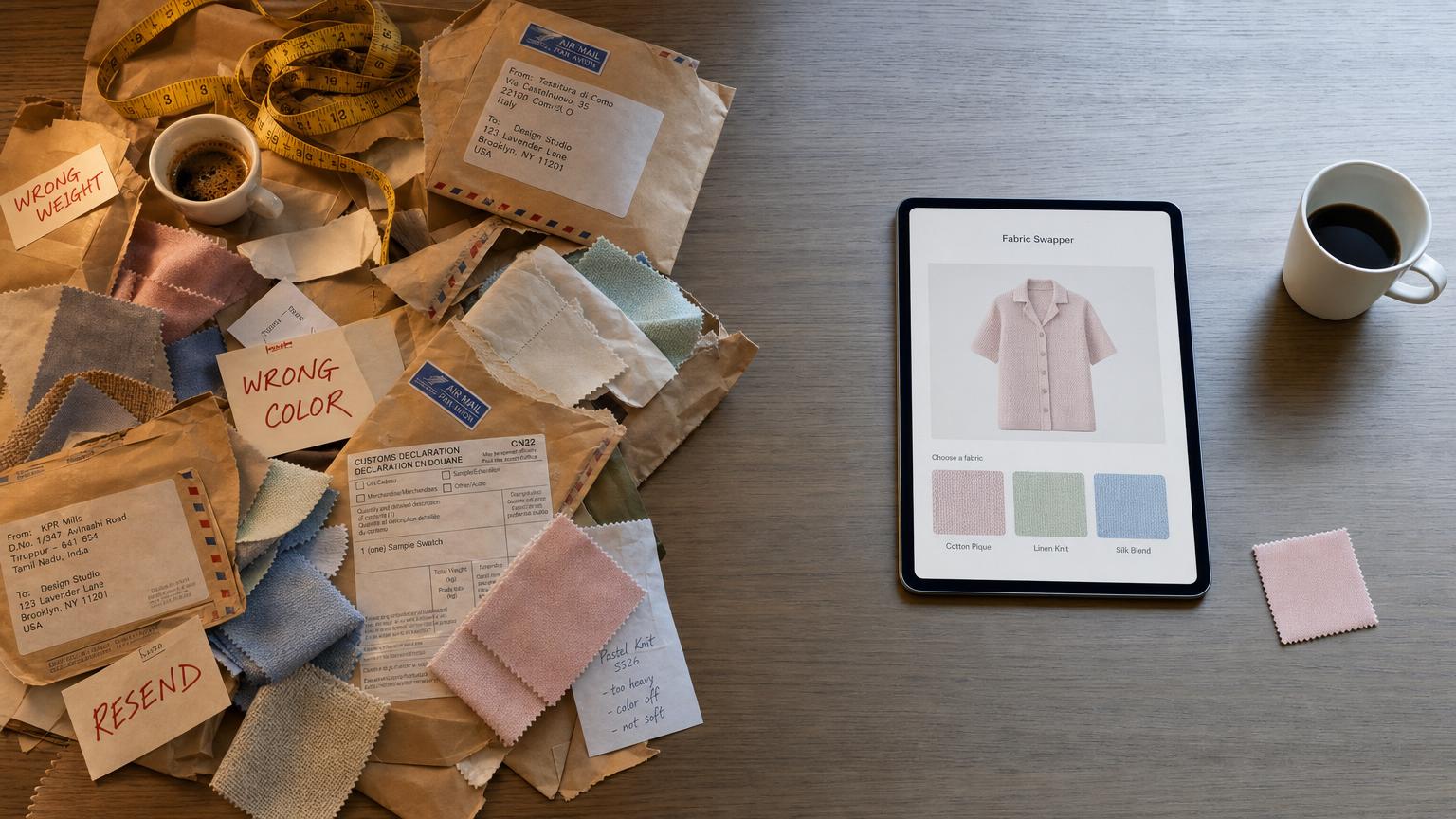
Replaces fabric orders, swatch envelopes, and material guesswork.
The old workflow: email the mill, wait a week for swatches to ship, hold them against the original photo, squint, order a second round when the first batch came in the wrong weight, eat the shipping cost.
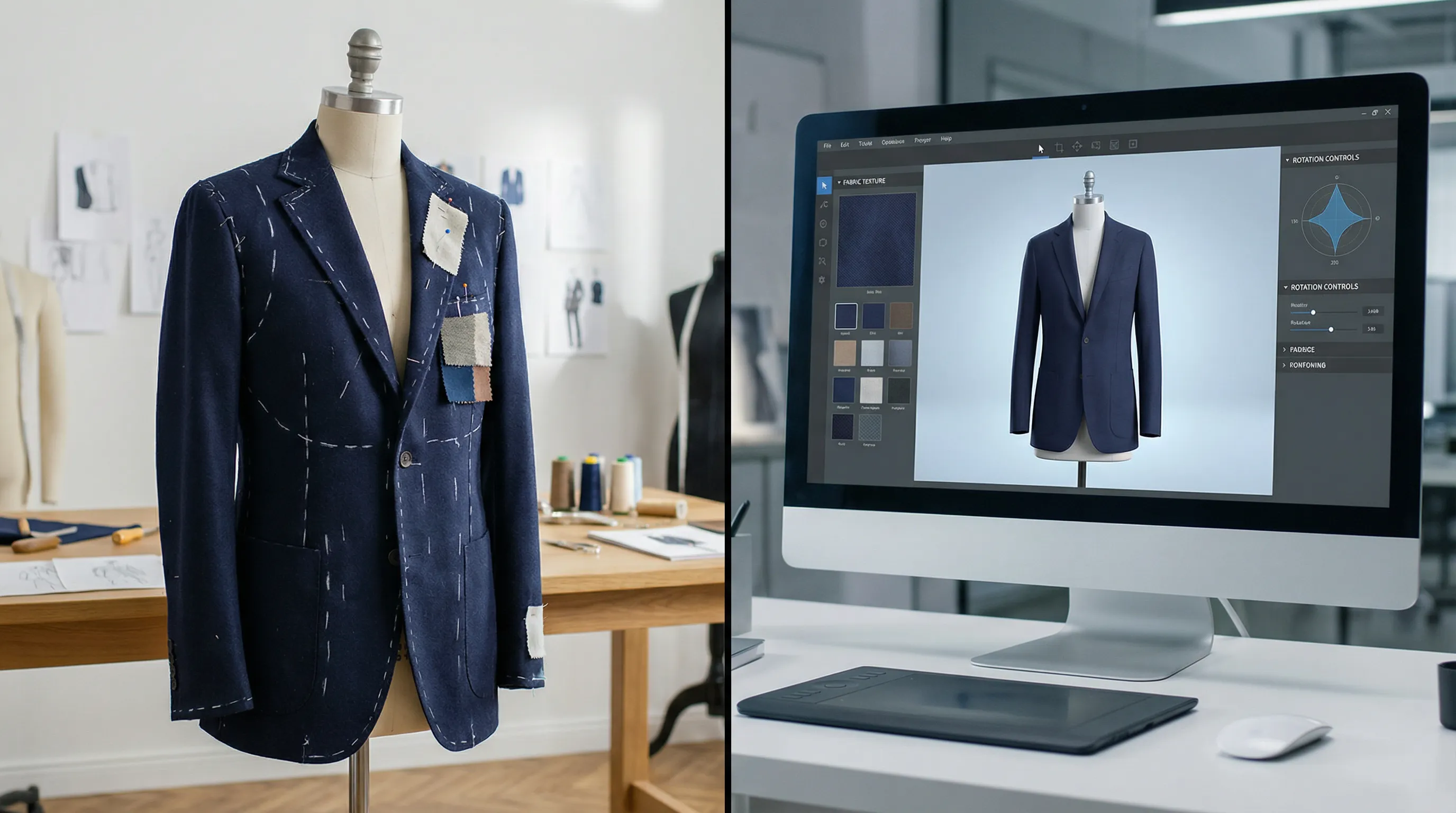
Or open Photoshop, mask the garment by hand, paste a fabric texture on top, and call it a moodboard.
Adstronaut absorbs both. Two credits per swap versus $50–$200 per physical swatch order. Real drape and texture rendered, not pasted. Per-region precision instead of a hand-traced mask.
Once a fabric direction wins, the spec carries over to the tech pack bill of materials — your factory can quote and order from there.
Best for indie founders pre-validating material direction, design studios closing client deals on the first pitch, and production leads testing fabric alternatives before MOQs lock in.
Read the Honest Comparison
Fabric Swapper questions, answered straight.
Real questions from indie designers, design studio owners, and sustainability leads who've replaced their swatch courier with virtual testing.
How is this different from a Photoshop fabric texture overlay?
A Photoshop overlay pastes a flat 2D texture on top of the garment, ignoring how the original fabric drapes, folds, and catches light. Adstronaut analyzes the garment's silhouette, lighting, and seam structure first, then renders the new fabric as if the garment was actually cut and sewn from it — drape direction, weight, sheen, and texture all respond to the underlying geometry. Velvet looks velvety. Linen looks linen. Leather looks leather.
Can I apply different fabrics to different parts of the same garment?
Yes — this is the core workflow. Adstronaut auto-detects every distinct fabric region on your garment (typically 3 to 6 regions: body, sleeves, lining, collar, contrast panels, hardware) and you pick a separate material for each. Silk body + cotton lining + leather collar is a single render, not three. The region boundaries stay clean — no texture bleed between sections.
What fabrics can I choose from?
Adstronaut ships with 21 curated presets across five families: Cotton & Linen (poplin, twill, linen, chambray, denim), Silk & Satin (charmeuse, dupioni, satin, emerald silk), Wool & Knits (flannel, cashmere, tweed, merino), Technical & Leather (velvet, leather, ripstop nylon), and Patterns & Prints (stripe, tartan, botanical, gingham). Plus unlimited custom uploads — drop in any mill swatch, vintage piece, or moodboard tear and the AI uses it as the fabric reference.
Can I upload a fabric from my own supplier or mill?
Yes. Custom uploads are unlimited. Photograph or scan a swatch from your supplier's lookbook, drop in a vintage piece you want to reference, or use a moodboard tear from WGSN. The AI extracts the texture, weave, drape behavior, and color from your image and applies it to your garment. No metadata fields required — just the image.
Does the swap preserve the original garment's silhouette?
Yes. The flat sketch, seam lines, hardware placement, hem, collar shape, and pocket geometry stay identical. Only the fabric surface is replaced. Critical for technical designers — a fabric swap shouldn't change the garment's shape or proportions, just the material it's made from.
How much does a fabric swap cost compared to ordering a physical swatch?
Two credits per swap with Adstronaut. A single fabric swatch order from a mill typically runs $50–$200 (depending on swatch size, mill region, and shipping). A four-fabric comparison runs about 8 credits in Adstronaut and $200–$800 in physical sampling — plus you save one to three weeks of shipping per round.
What kind of garment photos work best for fabric swapping?
Clear, well-lit product photos with the garment in a recognizable shape — on-model, mannequin, dress-form, or clean flat-lay. JPG, PNG, or WEBP up to 10MB. Photos where the garment is heavily wrinkled, partially obscured, or shot in low contrast produce lower-fidelity swaps. Higher resolution input always produces higher-fidelity output.
Can I use the swapped images on Shopify, Amazon, or my e-commerce store?
Yes. Every render is high-resolution and commercially licensed for product pages, marketing, social, line sheets, lookbooks, and technical specifications. No royalty fees, no usage caps.
Is this useful for sustainable fashion or material substitution?
Yes — one of the most common use cases. Brands testing virgin polyester → recycled polyester, conventional cotton → organic cotton, leather → vegan alternatives, or any material switch can compare the visual outcome across an entire collection in minutes instead of ordering full re-sampling rounds. Used by sustainability leads at multiple D2C brands.
How long does Adstronaut take to render a fabric swap?
Under one minute per image for a single-region swap. Multi-region swaps (e.g., changing four fabrics on the same garment) take a bit longer but stay under two minutes. A full four-fabric comparison set is typically rendered and ready to download in under five minutes.