What Is a Spec Sheet? (And How It's Different from a Tech Pack)

Adstronaut Team · 2026-03-03 · 10 min read

A spec sheet (specification sheet) is a focused technical document that lists every point of measure (POM) for a garment across all sizes, paired with measurement tolerances and grading rules. It is one component within a broader tech pack — the measurement backbone that factories use to cut, sew, and quality-check every unit. According to ASTM International standards D5585 and D6240, standardized body measurements form the foundation of all garment specification. Without a properly formatted spec sheet, a factory cannot grade your pattern, verify sample accuracy, or pass final quality inspection.

This guide covers what a spec sheet includes, how it differs from a full tech pack, the four types of spec sheets used in production, and the most common mistakes that cause sample rejections. If you need background on tech packs themselves, start with our complete guide to fashion tech packs.

Table of Contents


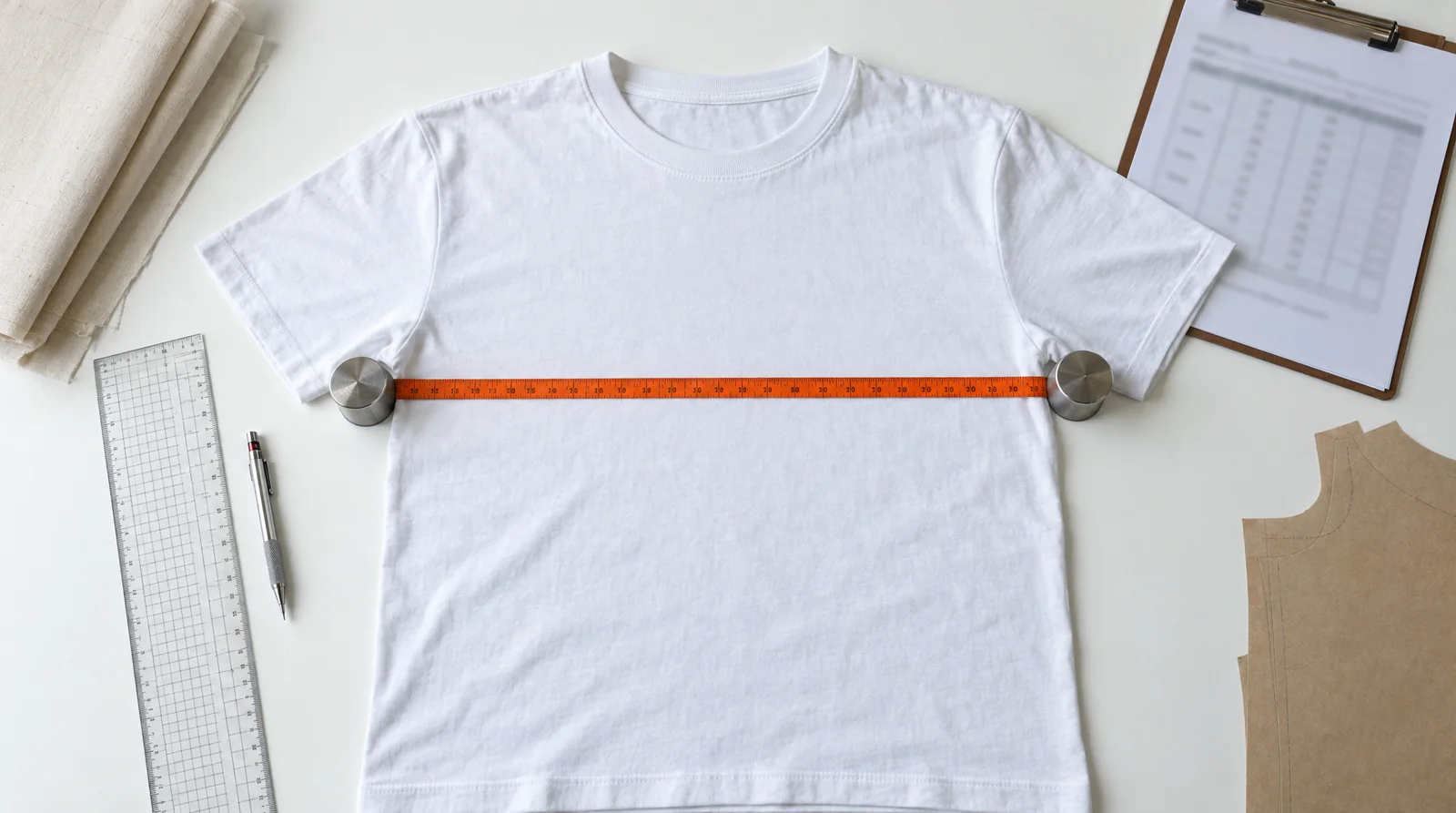
Fashion spec sheet document on a desk with measuring tape, garment laid flat, ruler, and Pantone cards Fashion spec sheet document on a desk with measuring tape, garment laid flat, ruler, and Pantone cards

What Is a Spec Sheet?

A spec sheet — short for specification sheet — is a technical document that defines the exact measurements a finished garment must meet. It answers one question: "What should this garment measure at every critical point, in every size?"

Every spec sheet contains three core elements:

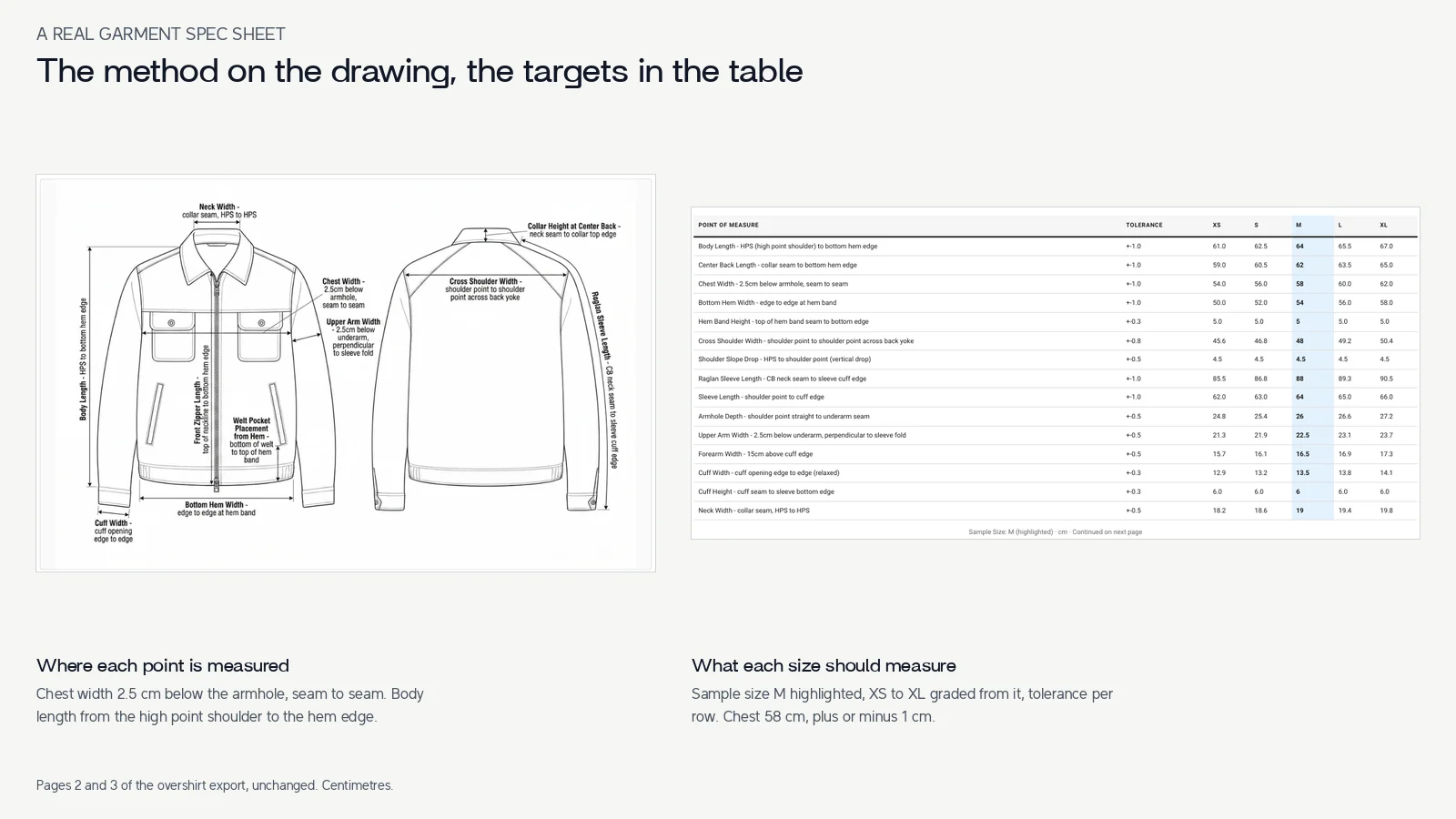
  1. Points of Measure (POMs): The specific locations on the garment where measurements are taken (e.g., chest width measured 1 inch below armhole).
  2. Graded measurements: The numeric values for each POM across the full size range (XS through 3XL or custom).
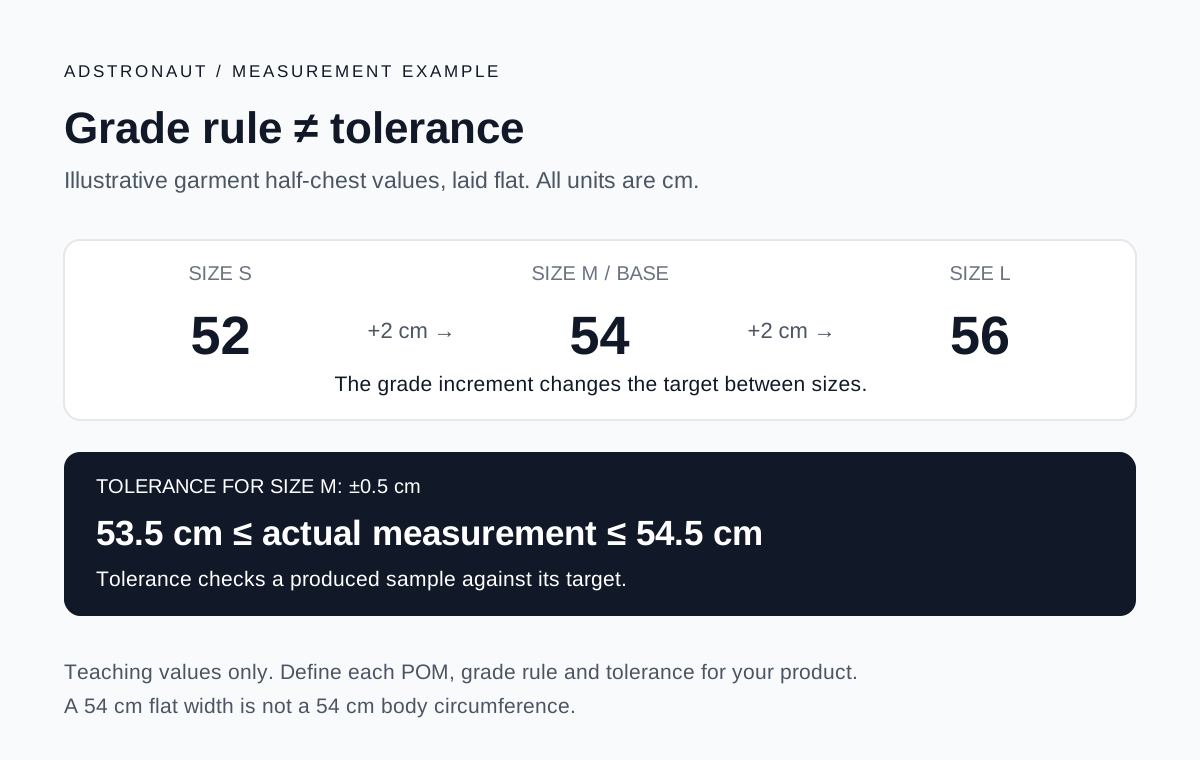
  3. Tolerances: The acceptable deviation range (e.g., +/- 0.5 inches) that a finished garment can vary from the target measurement and still pass quality control.

The term "spec sheet" is sometimes used loosely to mean an entire tech pack, but in professional manufacturing, it refers specifically to the measurement specification pages. A survey by Maker's Row found that 72% of first-sample rejections involve measurement errors — either wrong POMs, missing tolerances, or inconsistent grading. The spec sheet exists to prevent exactly these failures.

Spec sheets follow standardized measurement methods defined by ASTM International. The two most relevant standards are:

  • ASTM D5585 — Standard Table of Body Measurements for Adult Female Misses Figure Type, Sizes 2–20
  • ASTM D6240 — Standard Table of Body Measurements for Men, Sizes 34–60

These standards ensure that when a factory in Vietnam reads "chest width," they measure at the same anatomical point as a factory in Portugal.


What a Spec Sheet Includes

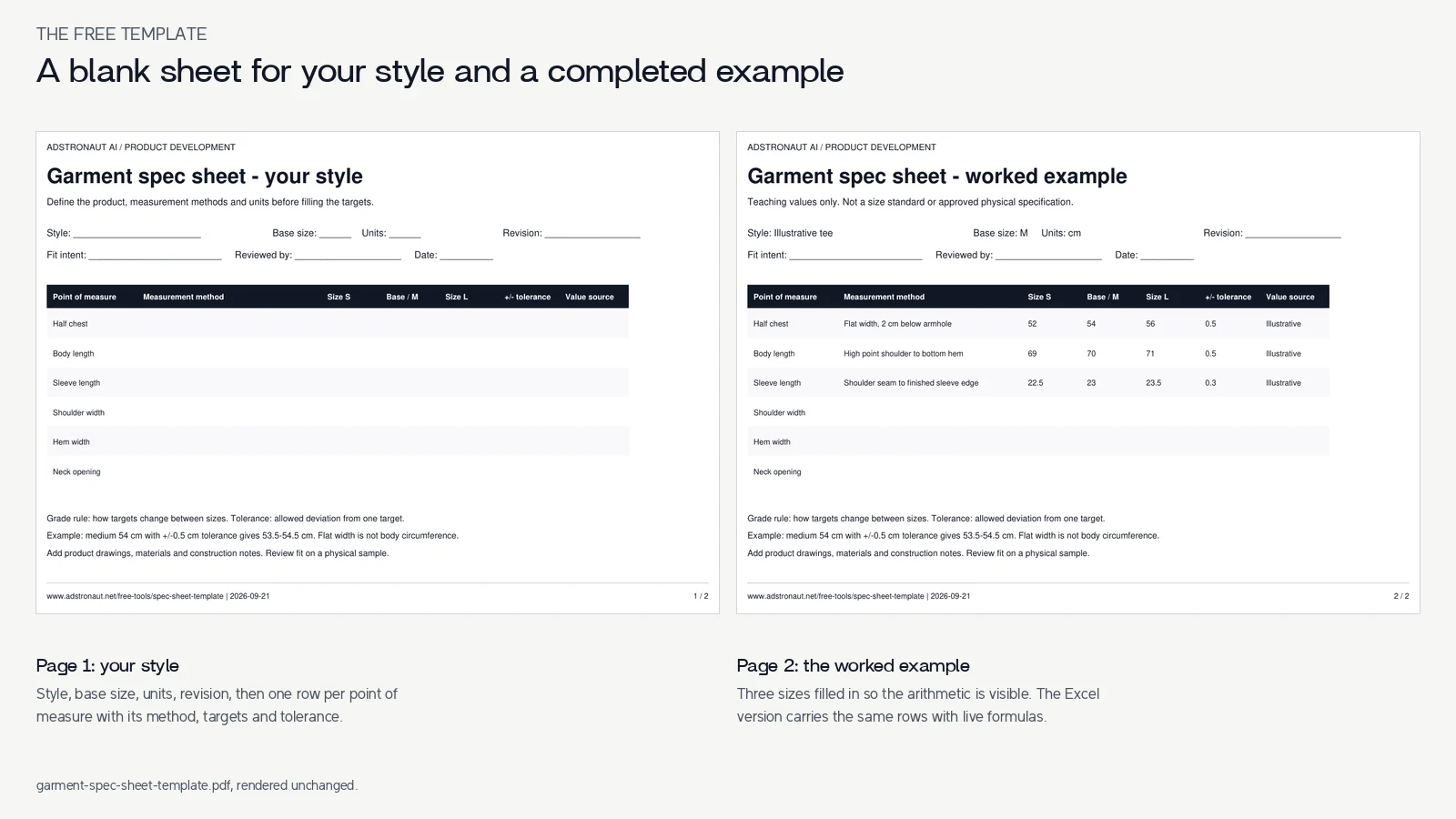
A complete garment spec sheet contains the following sections:

Header Information:

  • Style number / Style name
  • Season and delivery date
  • Base size (the size used to create the original sample)
  • Measurement unit (inches or centimeters)
  • Date and revision number

Measurement Table:

  • POM code (alphabetical or numerical identifier, e.g., "A" or "POM-01")
  • Point of measure name (e.g., "Chest Width")
  • How to measure (description of measurement method)
  • Measurements for each size in the range
  • Tolerance for each POM (+/- value)

Annotated Sketch:

  • A flat technical drawing with labeled measurement lines corresponding to each POM code

Grade Rule Summary:

  • The incremental change between each size (e.g., chest grows 1.5 inches per size)

Industry data from Techpacker indicates that the average womenswear spec sheet contains 18–25 POMs, while menswear averages 14–20 POMs. Simpler garments like t-shirts require 10–15 POMs; complex outerwear can exceed 35.


Full Example: T-Shirt Spec Sheet

Below is a complete spec sheet for a men's crew-neck t-shirt. Base size is Medium. All measurements in inches, measured flat (half-body where applicable).

POM Point of Measure How to Measure S M L XL Tol +/-
A Chest Width 1" below armhole, seam to seam 20.0 21.0 22.0 23.0 0.50
B Body Length (Front) HPS to bottom hem 27.0 28.0 29.0 30.0 0.50
C Body Length (Back) HPS to bottom hem (back) 27.5 28.5 29.5 30.5 0.50
D Shoulder Width Shoulder seam to shoulder seam 17.0 18.0 19.0 20.0 0.375
E Sleeve Length Shoulder seam to sleeve hem 8.0 8.5 9.0 9.5 0.375
F Sleeve Opening Circumference at sleeve hem 15.0 16.0 17.0 18.0 0.50
G Neck Width Seam to seam at neck base 6.75 7.0 7.25 7.50 0.25
H Neck Drop (Front) HPS to center front neck seam 3.0 3.25 3.50 3.75 0.25
I Neck Drop (Back) HPS to center back neck seam 0.75 0.75 1.0 1.0 0.25
J Bottom Hem Width Straight across bottom opening 20.0 21.0 22.0 23.0 0.50
K Armhole Depth HPS to underarm seam 9.0 9.5 10.0 10.5 0.375
L Across Front 5" below HPS, armhole to armhole 15.5 16.5 17.5 18.5 0.50
M Across Back 5" below HPS (back), armhole to armhole 16.0 17.0 18.0 19.0 0.50
N Neckband Width Width of finished neckband 0.75 0.75 0.75 0.75 0.125

Grade Rule Summary:

POM Grade Rule (per size)
Chest Width +1.0"
Body Length +1.0"
Shoulder Width +1.0"
Sleeve Length +0.5"
Sleeve Opening +1.0"
Neck Width +0.25"
Armhole Depth +0.5"

This table is the single most important page in your tech pack. A factory's quality control team will use it to measure every garment off the production line. If a finished unit falls outside the tolerance range on any POM, it is flagged as a defect. According to industry benchmarks, garments with clearly defined tolerances experience 40–60% fewer QC rejections than those without.


Spec Sheet vs Tech Pack

The most common source of confusion: are spec sheets and tech packs the same thing? No. A spec sheet is one section within a tech pack. Here is a direct comparison.

Spec Sheet Tech Pack
Definition Measurement specification document Complete manufacturing blueprint
Page count 1–3 pages 6–15+ pages
Contains measurements Yes — all POMs, grades, tolerances Yes — includes spec sheet within it
Contains flat sketch Annotated with POM lines only Full front/back/detail sketches
Bill of Materials No Yes — fabrics, trims, hardware
Construction details No Yes — stitch types, seam allowances
Colorway specs No Yes — Pantone codes, placement
Label/packaging info No Yes — tag type, folding, poly bag
Who uses it Pattern makers, QC inspectors Entire factory (cutting, sewing, QC, packaging)
When you need it For fit sessions, QC checks, grading For full production from scratch
Can you send it alone to a factory? Only for fit corrections on existing styles Yes — it is the complete production document
Typical cost (freelancer) $30–$75 $100–$2,000+

In practice, approximately 85% of factories will not begin production from a spec sheet alone. They need the full tech pack — including BOM, construction notes, and sketches — to cut a first sample. The spec sheet becomes critical after the first sample arrives, when you compare actual garment measurements against spec to approve or reject the sample.

For a deeper look at full tech pack creation, see our guide on how to create a tech pack.


Technical fashion designer measuring a garment on an adjustable dress form while recording data on a spec sheet clipboard Technical fashion designer measuring a garment on an adjustable dress form while recording data on a spec sheet clipboard

Types of Spec Sheets

Spec sheets evolve throughout the product development lifecycle. Each version serves a different purpose.

1. Initial Spec (Design Spec)

Created during the design phase using target measurements based on your fit model or size chart. This is your "ideal" before any physical sample exists. It typically uses measurements from ASTM standard tables or your brand's proprietary size chart. Approximately 60% of initial specs require revision after the first sample fitting.

2. Revised Spec (Fit Spec)

Updated after the first sample fitting. You compare the initial spec against the actual sample, note discrepancies, and issue a revised spec with corrected measurements. Most styles go through 2–3 revisions before approval. Each revision round costs $200–$500 in sample shipping and delays production by 1–2 weeks — a key reason measurement accuracy matters from the start.

3. Pre-Production Spec (PP Spec)

The final approved spec sheet that the factory uses to begin bulk production. This version is signed off by both the brand and the factory. It includes any last adjustments from the final fit sample and is the legal measurement standard for the production run.

4. Production Spec (QC Spec)

The reference document used on the factory floor during quality control. QC inspectors measure finished garments against this spec at random during the production run. It is identical to the PP spec but often includes additional notes on measurement method (e.g., "measure garment laid flat, smoothed without stretching") and defect classification (critical, major, minor).


How to Create a Spec Sheet

There are three primary methods, each with tradeoffs in cost, speed, and accuracy.

Method 1: Spreadsheet (Excel / Google Sheets)

The most common approach for independent brands. You build a measurement table manually, typing each POM, grade rule, and tolerance. Industry surveys indicate that 65% of small brands still use spreadsheets for spec sheets.

Pros: Free, fully customizable, universally shareable. Cons: No sketch integration, high error rate from manual data entry, no automatic grading calculations. A typical spec sheet takes 45–90 minutes to build from scratch and requires manual updates for every revision.

Method 2: Dedicated Tech Pack Software

Tools like Techpacker, Techpack.co, and CLO 3D offer built-in spec sheet templates with linked sketches and automated grading. Pricing ranges from $49–$500/month.

Pros: Integrated sketch annotations, version control, factory-sharing features. Cons: Learning curve, monthly subscription cost, overkill if you only need spec sheets. See our best tech pack software comparison for a detailed breakdown.

Method 3: AI-Powered Tools

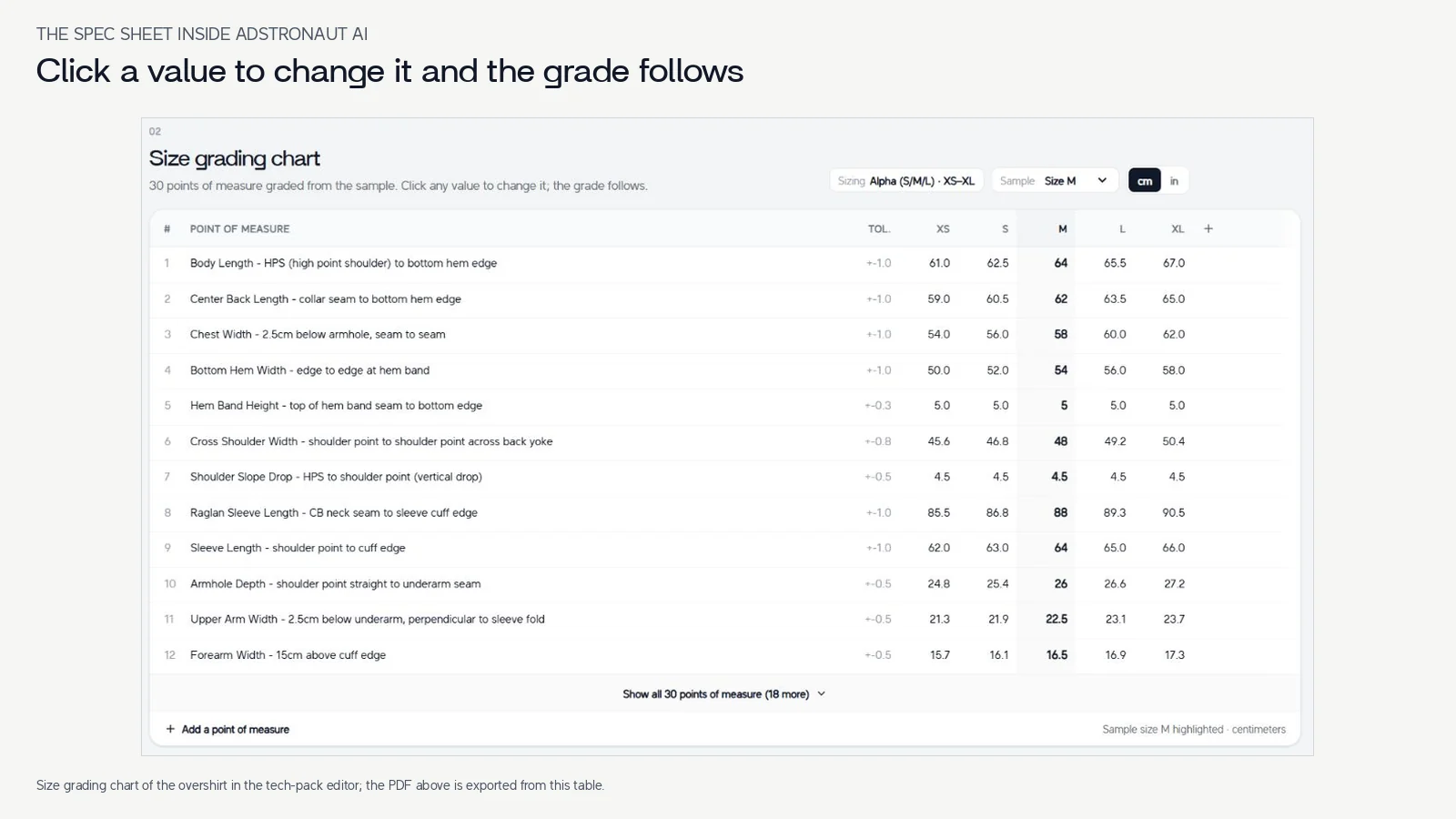
AI tools like Adstronaut AI generate spec sheets automatically from a garment photo. The system identifies the garment type, suggests appropriate POMs based on category, applies standard grade rules, and outputs a formatted spec sheet integrated with the full tech pack — typically in under 5 minutes.

Pros: Fastest method (minutes vs hours), automatic POM selection, integrated grading, no manual data entry. Cons: Requires review and adjustment of AI-suggested measurements to match your exact fit intent.

Method Cost Time per Spec Accuracy Risk Sketch Integration
Excel / Sheets Free 45–90 min High (manual entry) None
Tech Pack Software $49–$500/mo 20–40 min Medium Yes
AI (Adstronaut) $29–$99/mo 3–5 min Low (auto-generated) Yes (auto-annotated)

Common Spec Sheet Mistakes

These six errors account for the majority of spec-sheet-related production failures. Avoiding them can save thousands of dollars per style.

1. Wrong or Missing Points of Measure

Listing "body length" without specifying the start point (HPS? center back neck? natural shoulder?) forces the factory to guess. ASTM D5585 defines over 40 standardized body measurement points for women alone. Every POM must include a "how to measure" description.

2. No Tolerances

A spec sheet without tolerances is unenforceable. If your target chest width is 21 inches but you do not specify a tolerance, is 21.75 inches acceptable? The factory has no way to pass or fail the garment. Standard tolerances range from +/- 0.25 inches for small measurements (neck width) to +/- 0.50 inches for large measurements (chest, body length).

3. Missing Grade Rules

Providing only one size and expecting the factory to "figure out" the rest is a recipe for inconsistent sizing. Grade rules must be explicit for every POM. If chest width grades 1 inch per size but sleeve length grades 0.5 inches, both rules must be documented.

4. Inconsistent Measurement Methods

Mixing circumference and half-body measurements without labeling them is one of the most common errors. If your spec says "chest width: 42 inches," does that mean full circumference or half-body (21 inches flat)? Always state "measured flat" or "full circumference" for every POM.

5. Not Accounting for Shrinkage

Cotton fabrics shrink 3–5% in length after the first wash. If your spec sheet lists finished-garment measurements but the fabric has not been pre-washed, every measurement will be wrong after the customer's first laundry cycle. Specify whether measurements are pre-wash or post-wash, and include shrinkage allowances if pre-wash.

6. Skipping the Annotated Sketch

A table of measurements without a corresponding labeled sketch is ambiguous. POM "A" in your table must correspond to a labeled line "A" on the flat sketch. Without this visual reference, measurement points are open to interpretation — especially across language barriers with overseas factories.


Stack of different types of fashion spec sheets organized with colored tabs: initial spec, revised spec, and production spec Stack of different types of fashion spec sheets organized with colored tabs: initial spec, revised spec, and production spec

Frequently Asked Questions

Can I send just a spec sheet to a factory?

Only in limited situations. If the factory has already produced your style in a previous season and you are only updating fit measurements, a revised spec sheet may suffice. For new styles, factories require the full tech pack — including BOM, construction details, and sketches — to cut the first sample. Approximately 85% of manufacturers will not begin work from a spec sheet alone.

How many points of measure does a spec sheet need?

It depends on garment complexity. T-shirts typically require 10–15 POMs. Dresses and pants need 15–22. Jackets and outerwear may require 25–35+. The rule of thumb: if a factory could misinterpret a measurement location, add a POM for it. Under-specifying is always riskier than over-specifying.

What tolerance should I use on my spec sheet?

Standard industry tolerances are: +/- 0.25 inches for measurements under 5 inches (neckband width, placket width), +/- 0.375 inches for measurements 5–15 inches (sleeve length, neck width), and +/- 0.50 inches for measurements over 15 inches (chest, body length, hem width). Premium or performance brands often tighten these to +/- 0.25 inches across the board.

What is the difference between a spec sheet and a size chart?

A spec sheet lists garment measurements — the dimensions of the actual finished product. A size chart lists body measurements — the dimensions of the person who should wear each size. They are related but not interchangeable. Garment measurements include ease (extra room beyond body measurements for comfort and fit). For example, a Medium body chest might be 38 inches, but the garment chest specification could be 42 inches (4 inches of ease).

Should spec sheet measurements be in inches or centimeters?

Use whichever unit your factory expects. Most US-based factories work in inches. Most factories in Asia and Europe work in centimeters. Never mix units within a single spec sheet. If you need to provide both, create a clearly labeled dual-unit table. The ASTM standards provide measurements in both systems.

What does "HPS" mean on a spec sheet?

HPS stands for High Point Shoulder — the point where the shoulder seam meets the neckline. It is the most common starting reference point for vertical measurements on tops, dresses, and jackets. Body length, neck drop, and armhole depth are typically measured from HPS. It is defined in ASTM D5585 as a standard anatomical landmark.

How often should a spec sheet be updated?

A spec sheet should be updated after every fit sample review. The typical development cycle includes 2–3 spec revisions before the pre-production spec is finalized. After that, the production spec should only change if the factory requests a tolerance adjustment or a fabric change affects measurements. Always increment the revision number and date with each update.

Is a flat sketch required on a spec sheet?

Technically, a measurement table can stand alone. Practically, it should never be sent without an annotated flat sketch. A sketch with labeled POM lines eliminates ambiguity about where each measurement is taken. This is especially critical when working with factories where English is not the primary language — visual references transcend language barriers.


Generate your spec sheet and full tech pack in minutes — try it free.


Sources and further reading: