What to Send a Clothing Manufacturer Before a Quote
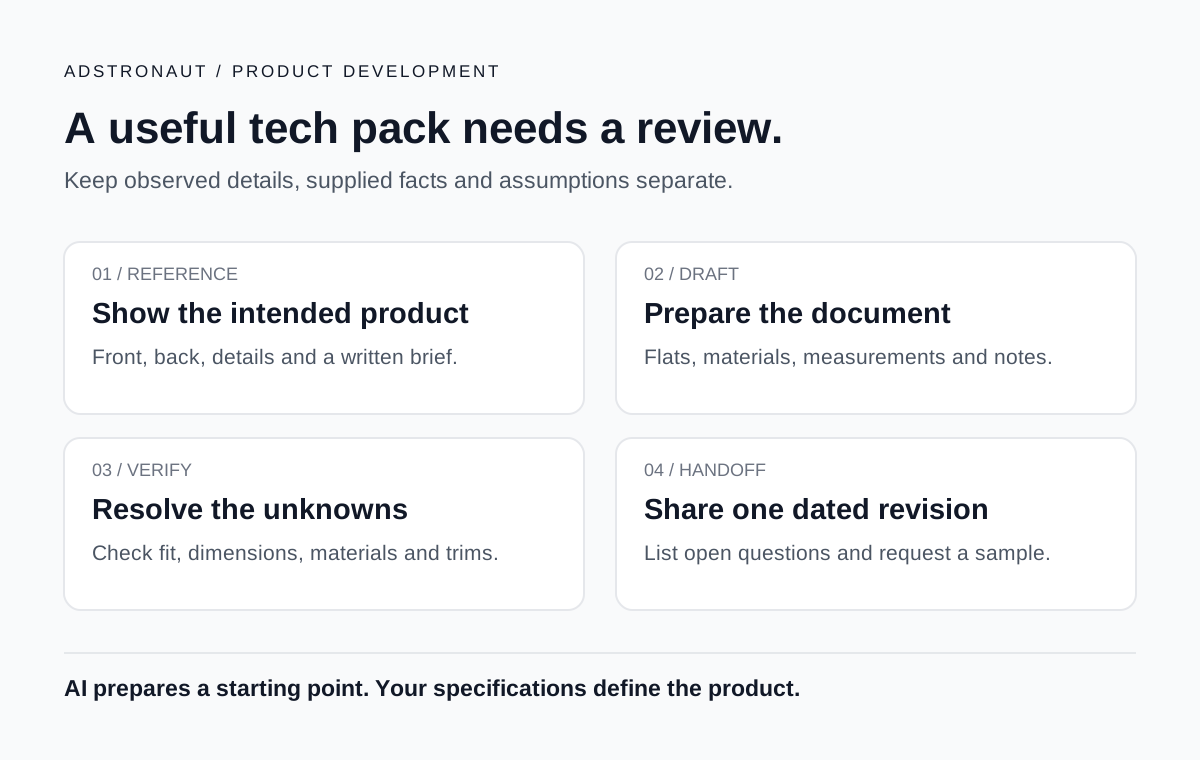
Send a clothing manufacturer a product brief, the latest tech pack or available specifications, a quantity breakdown, and a clear request for a quote or sample. Identify your material choices, target dates and unresolved questions. This gives the factory a defined job to assess instead of asking it to price a moodboard.
Download the factory brief and email template, then use a completed hoodie tech pack to see how the supporting document is organized. Both are available without an email gate.
Table of Contents
- What belongs in the first handoff?
- A sample request you can adapt
- Make quotes comparable
- What if your specifications are incomplete?
- Handle revisions without losing the decision
- Frequently asked questions
What belongs in the first handoff?
| Item | What to include | What not to assume |
|---|---|---|
| Product identity | Style name/number, garment type, brief description and document revision | A filename or reference photo explains the whole product |
| Design references | Front/back views and relevant detail images you may use | A factory should copy every feature of a reference brand |
| Tech pack | Flats, POMs, material list, construction and artwork information available so far | A generated measurement is physically verified |
| Quantity plan | Total units and breakdown by style, color and size, marked provisional if needed | A factory's minimum applies to the collection total rather than each style/color |
| Materials | Composition, weight/finish, color and supplier references when known | A similar-looking fabric is the same material |
| Sample request | Sample type, base size, what you want to assess and required deliverables | A first development sample is approved for bulk production |
| Commercial context | Target cost if you have one, delivery destination and desired timing | A quoted unit price includes freight, duties, packaging or development |
| Open questions | Missing facts, acceptable alternatives, approvals still needed | Silence means acceptance of a substitution |
For a straightforward first email, attach the current PDF and a short brief. Avoid sending several conflicting packs without explaining which one is current. If an editable workbook or artwork source file is requested, confirm the required format separately.
A sample request you can adapt
This is a fictional example. Replace the brackets with your own facts; do not keep invented quantities or specifications just because they appear in a template.
Subject: Sample and quotation request — [style number] — revision [date]
Hello [name],
We are developing [product description] and would like to confirm whether it fits your capabilities. Attached is revision [number/date] of the tech pack, plus [reference files].
Our provisional order is [quantity], split across [styles/colors/sizes]. The requested sample is [type and base size]. We want to assess [fit, fabric, construction or other purpose].
Please confirm the minimum order by style and color, sample cost, what that cost includes, estimated sample timing, and any information needed for a production quote. Please identify exclusions and proposed material substitutions separately.
These items remain open: [questions]. Please confirm receipt of this document revision before starting sample work.
Thank you, [name / brand / contact]
The downloadable text file contains this structure, a fill-in brief and a revision log. It is a communication aid, not a manufacturing contract or purchasing authorization.
Make quotes comparable
Send the same revision and quantity assumptions to each factory. Record material specification, included services, sample charges, packaging, currency, delivery basis and destination alongside the unit price. A lower headline price may cover a different scope.
Ask factories to separate a quote for your specification from alternatives. For example, “priced as requested” and “lower-cost fabric option” should not collapse into one unexplained number. A proposed alternative needs review for appearance, handfeel, performance and availability.
When comparing minimum orders, ask whether the minimum is per style, per color, per fabric order or across the complete purchase. Record the answer in the brief. The same total unit count can produce different fabric and production requirements depending on the breakdown.
Do not publish a manufacturer's capability, minimum or lead time as a permanent fact based on one quote. Keep the date and context attached to the information.
What if your specifications are incomplete?
You can begin a capabilities discussion with an incomplete pack, provided the gaps are explicit. Say what you know, what you want the factory to propose and what you will confirm later. Request a provisional estimate instead of presenting it as a final production price.
If the missing work is document preparation, Adstronaut's tech-pack generator can create a draft from your reference and brief. Review its suggestions before treating them as instructions. The free signup allocation covers one watermarked preview; editable exports depend on the plan.
Prepare a tech-pack preview for your factory brief →
If you need the process first, follow how to create a tech pack. If you are still selecting the supplier, read how to find a clothing manufacturer. A clear brief helps that conversation; it does not establish that any supplier is suitable.
Handle revisions without losing the decision
For each change, record the location, previous instruction, new instruction, reason, date and approval state. Update the affected drawing, material row and measurement table together. Then send one current revision and summarize what changed.
For a sample correction, distinguish a measurement observation from an instruction. “Chest measures 1 cm below target” is an observation. “Change the target by 1 cm” is a different design decision. Confirm which action is intended before asking for another sample.
Keep sample photos and fit comments associated with the revision they describe. A later document should not make an older sample appear to have been checked against newer specifications.
Frequently Asked Questions
Do I need a tech pack before contacting a manufacturer?
You can ask about capabilities first. For a meaningful style-specific quote or sample request, supply the specifications you have and identify what remains open. A picture alone leaves many production choices undefined.
Should I send a PDF or an editable file?
Ask the factory. A PDF is useful for a fixed revision; an editable spreadsheet or artwork file may be requested for a particular workflow. Check that the PDF and source files contain the same approved values.
What should I do when a factory suggests a substitution?
Record the exact proposed material or construction change, its reason and impact on cost/timing. Review the relevant sample or specification before accepting it. Update the pack only to reflect the decision actually made.
Is a line sheet the same as a manufacturer brief?
No. A line sheet presents products and ordering information to wholesale buyers. A manufacturer brief explains the development or production job. See the line-sheet guide for that separate document.
Related resources
- Free tech-pack templates — completed examples and editable starting material.
- Garment spec-sheet guide — measurement documentation.
- Garment BOM guide — materials and component information.
- Manufacturer communication guide — keeping questions and revisions clear.