
AI product photos for shoes that cover every footwear angle
Updated June 10, 2026
A converting shoe listing needs 7–8 angles — lateral and medial side profiles, front toe, back heel, top-down, sole, three-quarter, and an on-foot shot — captured with consistent framing and lighting across the whole line. Amazon's main shoe image must be a single shoe angled left at 45° on a pure-white background at 2,000px+. Adstronaut AI generates the full footwear set from one shoe photo for about $1 per image.
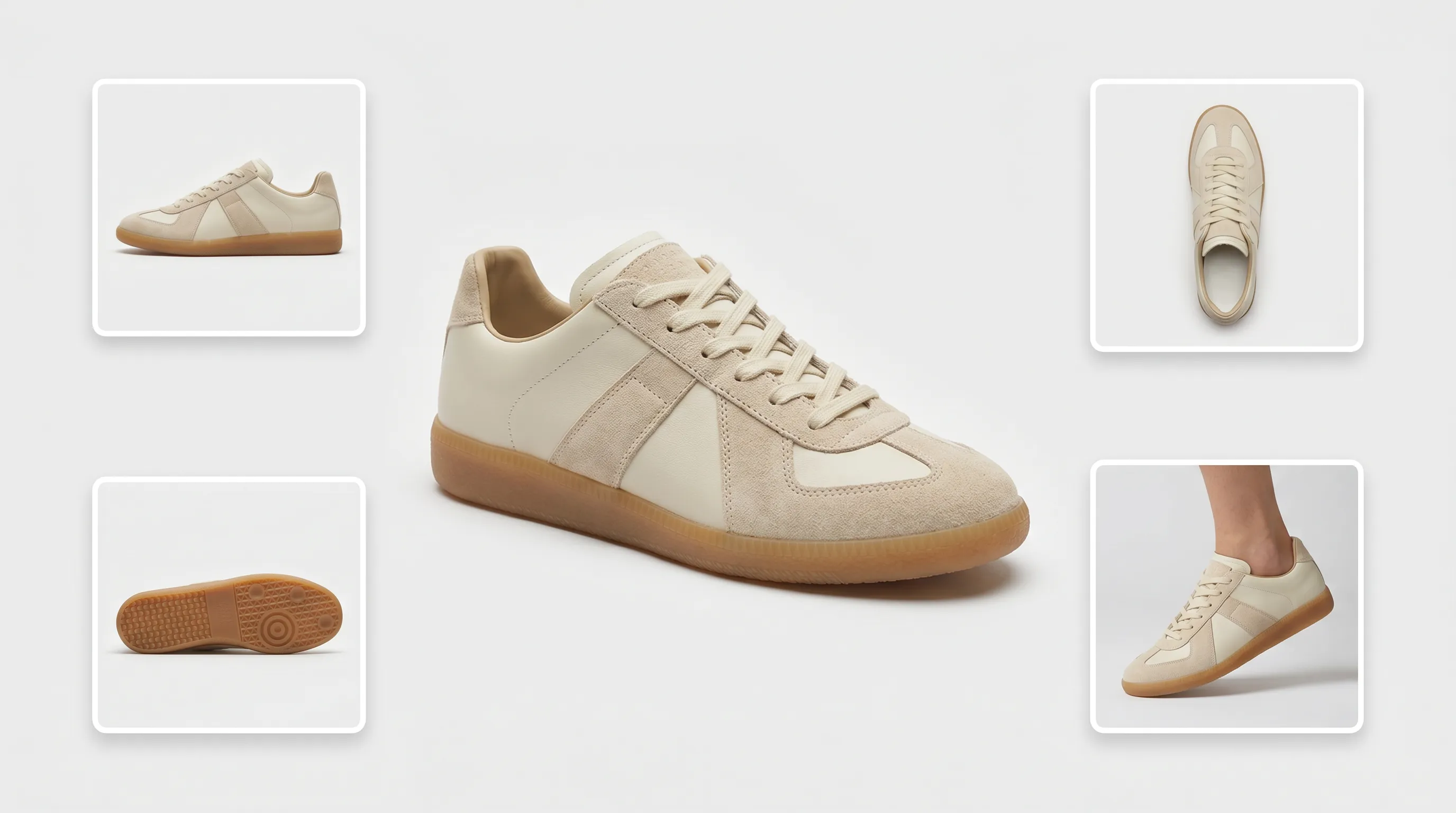
What a shoe listing actually needs to show
Footwear is a fit-anxiety category. A buyer who can't see the toe box width, the heel height, the sole, or how the shoe sits on a real foot will either bounce or buy-and-return. That's why the e-commerce convention for footwear is dense: practitioners converge on 7–8 images per style — far more than the single hero a flat apparel tee might get by with (Nightjar, soona).
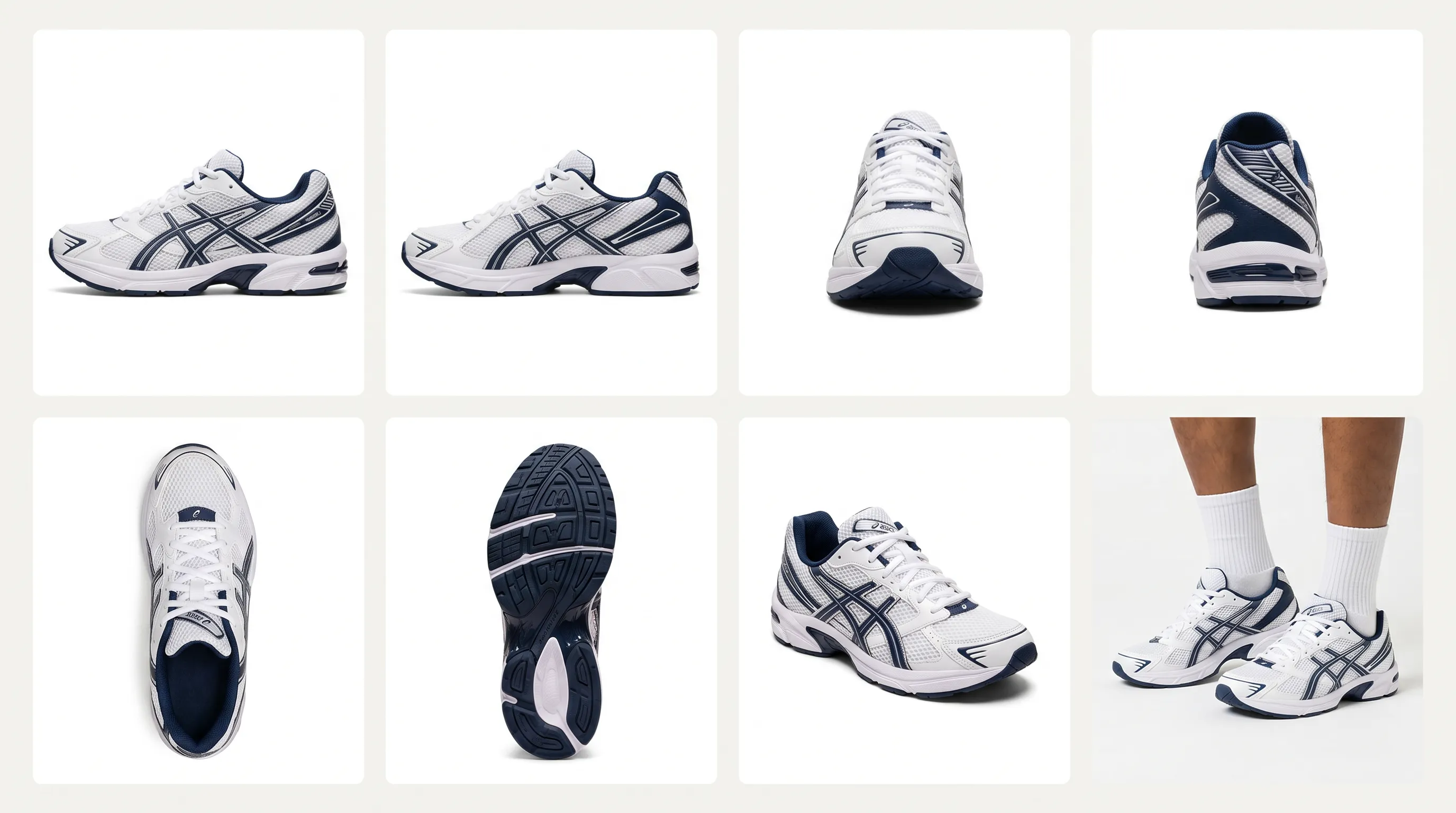
The standard footwear set has a name for each angle. The lateral side (outer profile) is the silhouette shot. The medial side (inner profile) shows arch and instep construction. The front toe reveals toe-box shape and width — one of the two biggest online sizing worries. The back heel shows heel height, pull tab, counter, and rear branding. Top-down captures lace layout and footprint. The sole answers tread, grip, and wear questions buyers actively hunt for. The three-quarter (45° elevated) is the workhorse hero. And the on-foot shot kills fit anxiety by showing scale and drape on a real foot (Orbitvu, Photorobot).
Most sets also split into two styling registers. The studio shots — every angle above, on clean white — let the buyer read the exact design, colorway, and silhouette without distraction, and they're what marketplaces require. The on-foot and lifestyle shots do the emotional work: scale, fit, and the imagined feeling of wearing them. Footwear guides are consistent that brands shipping both registers see higher conversion and fewer returns than ones leaning on studio frames alone (soona).
The second, quieter requirement is consistency across the line. If one shoe is zoomed in and the next is zoomed out, or the three-quarter angle drifts from style to style, the catalog reads as amateur. The convention is a fixed framing template — same crop, same lighting, same backdrop — applied to every SKU in the collection (Pixc).
The footwear angle set, view by view
The eight conventional footwear views and what each one resolves for the buyer.
| View | Camera position | What it sells / answers |
|---|---|---|
| Lateral side | Level, outer profile | Silhouette and overall design — the signature shot |
| Medial side | Level, inner profile | Arch, instep, and inner-construction detail |
| Front toe | Level, facing the toe | Toe-box shape and width — a top sizing worry |
| Back heel | Shoe height, directly behind | Heel height, pull tab, counter, rear branding |
| Top-down | Directly overhead | Lace layout, footprint, insole |
| Sole | Underside | Tread, grip, and wear — buyers actively look for it |
| Three-quarter | 45°, slightly elevated | The workhorse hero; Amazon's required main angle |
| On-foot | On a model's foot | Scale, fit, and styling — kills return-driving fit anxiety |
The conventional footwear set, per Nightjar, Orbitvu, and Photorobot footwear-photography guides (2026).
The marketplace rule footwear sellers trip on most
Most channels let you choose your hero angle. Amazon does not for shoes. Its category rule is specific: the main image must show a single shoe, angled left at a 45° (three-quarter) view — not a pair, not a straight side profile (Seller Labs, ListingForge).
The rest of Amazon's main-image spec stacks on top and is enforced automatically: a pure-white background (RGB 255,255,255) — off-white and cream get rejected — the product filling 85%+ of the frame, and no text, logos, watermarks, or inset graphics. Resolution matters for the zoom feature: the longest side must be at least 1,000px, and Amazon recommends 2,000px+ so the listing offers pinch-zoom, which footwear buyers lean on to inspect stitching and texture (Squareshot). Non-compliant main images get the listing suppressed until fixed — so the 45° single-shoe rule isn't a suggestion, it's a gate.
Generate above the floor and you stay portable: the same high-resolution three-quarter packshot drops into Amazon's main slot, while the side profiles, sole, and on-foot frames fill the supporting gallery and syndicate to other channels — see the Shopify product-photo guide for the sister platform's looser, lifestyle-friendly spec.
Building the full footwear set from one shoe photo
The two-feature workflow that produces the complete, line-consistent footwear gallery:
- 1
Generate the catalog angles
The Lookbook Creator treats footwear as its own product class with a dedicated view set — Lateral Side, Medial Side, Front Toe, Back Heel, Top Down, Three-Quarter Angle, and On-Foot. Five credits (~$1) per view, one batch, consistent lighting and backdrop. That single class-specific set covers seven of the eight conventional angles. - 2
Add the on-foot and lifestyle frames
AI Photoshoots renders the shoe worn on a real-looking foot in studio or location — the scale-and-fit shot that the on-foot view exists for, plus a lifestyle frame for the feed. Pick a named model and scene; ~$1 per finished image. - 3
Batch the whole collection at once
Lookbook runs up to 10 products per session with 3 reference images each, auto-classifying every upload. Run the season's drop in one pass so every shoe shares the same crop and lighting — that's the line consistency a footwear catalog needs, enforced automatically instead of by hand. - 4
Render colorways without a reshoot
Use the Color Changer to spin the same last into each colorway, then re-render the angle set per color. A six-color sneaker run gets its full gallery without booking a single additional shot.
Why consistency across the line is the hard part
Any photographer can shoot one beautiful shoe. The footwear problem is the fortieth shoe matching the first — same three-quarter angle, same crop, same shadow, same white. Shot manually, that drift is almost guaranteed across a multi-day production with re-lit setups and tired hands. The result is a catalog where the eye snags on every inconsistency and the brand reads as smaller than it is.
Generation inverts the problem. Because Adstronaut applies one class template across a batch, the lateral profile of shoe one and shoe forty are framed identically by construction, not by discipline. The Lookbook Creator spans 35 view types across 10 product classes — footwear is one, alongside bags, eyewear, jewelry, and apparel — so a multi-category drop (sneakers, a matching backpack, sunglasses) renders in a single coherent session with each class getting the views its category actually sells in.
Fidelity is the non-negotiable underneath all of it: the render must show the real shoe — its exact colorway, material, stitching, and sole pattern — because footwear returns are driven by mismatch between the photo and the box. Adstronaut transfers your source shoe's pattern, texture, and hardware into every angle rather than inventing a plausible-looking one, which is the same fidelity discipline a factory-ready footwear tech pack demands.
What the full footwear set costs
Adstronaut prices per output on plans from $29/month: 5 credits — about $1 — per finished image, whether it's a Lookbook angle or an on-foot AI Photoshoot frame. A complete eight-view set for one shoe runs roughly $8 in credits. A ten-style drop, each with the full angle set, lands around $80 — and a multi-colorway run adds only the recolor-and-re-render cost on top, since the lasts are already rendered.
The traditional comparison is steep. A studio multi-angle shoot covering the same footwear spread runs $3,000–$10,000 for a 10-SKU batch plus 3–7 days of lead time before retouched files land (Squareshot, Nightjar). Footwear also carries hidden production friction studio shoots hate — stuffing and pinning each shoe to hold its shape, re-lacing between angles, propping soles upright on hidden mounts, and a separate model booking just for the on-foot frames. Each of those steps is a place the look drifts and the bill grows.
The cadence cost is the one most footwear brands underweight. New colorways, collab drops, and seasonal restyles arrive faster than a quarterly studio calendar can absorb, so the choice is often a thin, single-hero listing now or a complete gallery three weeks late. Per-output generation collapses that trade-off: the full set ships the same day the sample does. Output renders well above Amazon's 2,000px zoom recommendation, exports clean — no baked-in text or watermarks to strip — and ships line-consistent by default. The break-even against a single studio day is roughly your first style. The deeper case for filling all eight slots is in one product, ten angles.
Built for footwear sellers
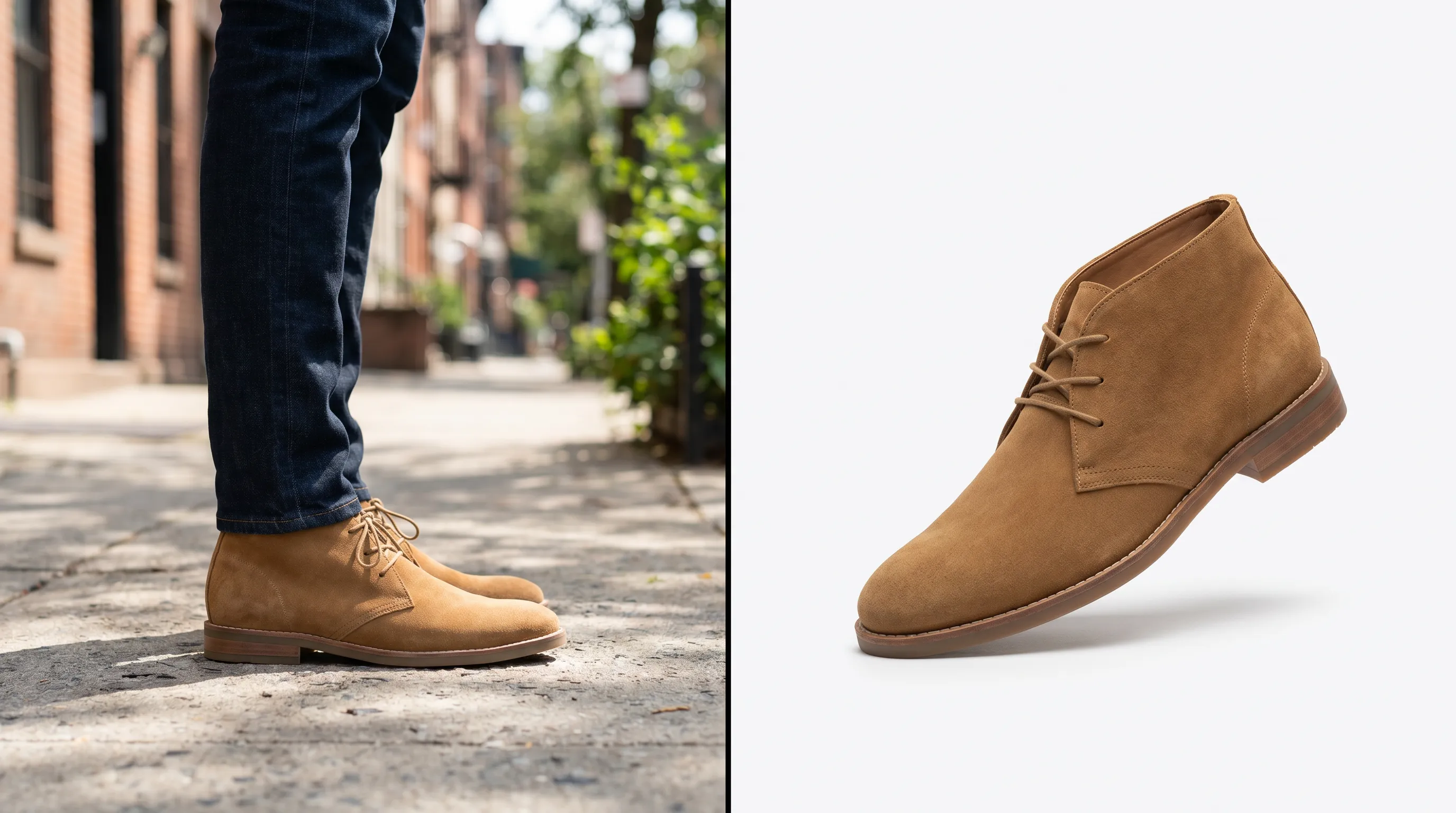
Indie sneaker and boot founders launching a drop the week samples land — the full eight-angle gallery the same afternoon, instead of waiting on a studio slot. Amazon footwear sellers who keep getting main images suppressed because they shot a pair, or a straight side, instead of the required single shoe at 45°. Multi-colorway brands (the same silhouette in six colors) that recolor-then-re-render to give every colorway its own complete, identical angle set. Multi-category marketplace operators standardizing back-catalog footwear imagery so the four-hundredth shoe matches the first.
The pattern across all four: footwear rewards gallery completeness and consistency, and punishes thin or mismatched listings — on a category where fit anxiety and the sole shot directly move both conversion and return rate. Generation at ~$1 per frame, line-consistent by construction, is how the math and the look close at the same time. Pair the gallery with the Product Tagger to auto-extract titles and attributes from the same shoe photos and ship a complete PDP in one pass.
Frequently asked questions
How many photos does a shoe listing need?
Footwear practitioners converge on 7–8 images per style: lateral side, medial side, front toe, back heel, top-down, sole, three-quarter, and on-foot. The dense set exists because footwear is a fit-anxiety category — buyers who can't see the toe box, heel, sole, and on-foot scale either bounce or buy-and-return.
What are the standard footwear photography angles?
Lateral side (outer profile / silhouette), medial side (inner profile / arch), front toe (toe-box width), back heel (heel height and counter), top-down (lace layout and footprint), sole (tread and grip), three-quarter (45° elevated hero), and on-foot (scale and fit on a real foot). Each resolves a specific buyer question.
What is Amazon's main image requirement for shoes?
A single shoe angled left at a 45° (three-quarter) view — not a pair, not a straight side profile — on a pure-white background (RGB 255,255,255), filling 85%+ of the frame, with no text, logos, or watermarks. Non-compliant main images get the listing suppressed until fixed.
What resolution should I generate shoe photos at?
At least 1,000 pixels on the longest side for Amazon's zoom feature to activate, and 2,000px+ as the recommended target — footwear buyers lean on pinch-zoom to inspect stitching, texture, and sole detail. Adstronaut renders well above the zoom floor, croppable to the square main slot.
Can AI keep my whole shoe line looking consistent?
Yes — that's the main reason to generate it. Adstronaut applies one footwear-class template across a batch, so the three-quarter angle and crop of shoe one and shoe forty are identical by construction rather than by a photographer's discipline across a multi-day shoot. Consistency across the line is the hardest part to do by hand.
Does Adstronaut generate the on-foot shoe shot?
Yes. The Lookbook Creator's footwear class includes an On-Foot view, and AI Photoshoots renders the shoe worn on a real-looking foot in studio or lifestyle scenes — the scale-and-fit frame that kills return-driving fit anxiety, without booking a separate foot model.
Will the render match my actual shoe?
That's the priority. Footwear returns are driven by mismatch between the photo and the box, so Adstronaut transfers your source shoe's real colorway, material, stitching, and sole pattern into every angle instead of inventing a plausible-looking shoe. Fidelity to the physical product is the point.
How much does a full footwear set cost?
About $8 in credits for a complete eight-view set on one shoe — 5 credits (~$1) per finished image. A ten-style drop with full angle sets lands around $80. The traditional equivalent — a studio multi-angle batch — runs $3,000–$10,000 for ten SKUs with 3–7 days of lead time, plus stuffing, pinning, and re-lacing each shoe.
Can I render every colorway without reshooting?
Yes. Use the Color Changer to spin the same last into each colorway, then re-render the footwear angle set per color. A six-color sneaker run gets its full, consistent gallery for the recolor-and-re-render cost on top of the base set — no additional studio booking.
Does the Lookbook Creator handle products beyond shoes?
Yes — 35 view types across 10 product classes, including footwear, bags, eyewear, jewelry, headwear, beauty, and apparel, up to 10 products per session. A multi-category drop (sneakers plus a matching bag and sunglasses) renders in one coherent batch, each class with its own view set.
Generate every footwear angle from one shoe photo
Upload a single shoe photo. Get the lateral, medial, front toe, back heel, top-down, sole, three-quarter, and on-foot views — line-consistent and marketplace-ready at about $1 per image.
Start a Footwear LookbookKeep going
Sources and further reading
- Nightjar — how to photograph shoes for e-commerce — 7–8 images per style; lateral, medial, front, back, top-down, sole, three-quarter, on-foot angle set
- Orbitvu — footwear product photography guide — standard footwear angles and the role of the three-quarter hero and on-foot shot
- Seller Labs — Amazon product image requirements 2026 — main shoe image must be a single shoe angled left at 45°; pure-white RGB 255,255,255; 85% fill; no text/logos
- Squareshot — Amazon image requirements & cost — 1,000px min / 2,000px+ recommended for zoom; suppression for non-compliant main images; multi-angle studio batch baseline
- soona — shoe photography tips for e-commerce — ~8 images per footwear listing; on-foot and lifestyle frames lift conversion and cut returns
- Pixc — footwear photography dos and don'ts — fixed framing template for consistency across every product in the catalog