
Best CLO 3D alternatives in 2026
Updated June 10, 2026
The best CLO 3D alternatives in 2026 are Browzwear VStitcher (from $750/year) and Marvelous Designer ($39/month) for true 3D simulation, Adobe Illustrator ($22.99/month) for hand-drawn flats, and Adstronaut AI for factory-ready tech packs and design visualization without learning CAD — $3–6 per pack from one photo. CLO 3D itself costs $50/month or $450/year and takes months of patternmaking practice to master.
The quick answer
Match the alternative to the deliverable, not the brand name.
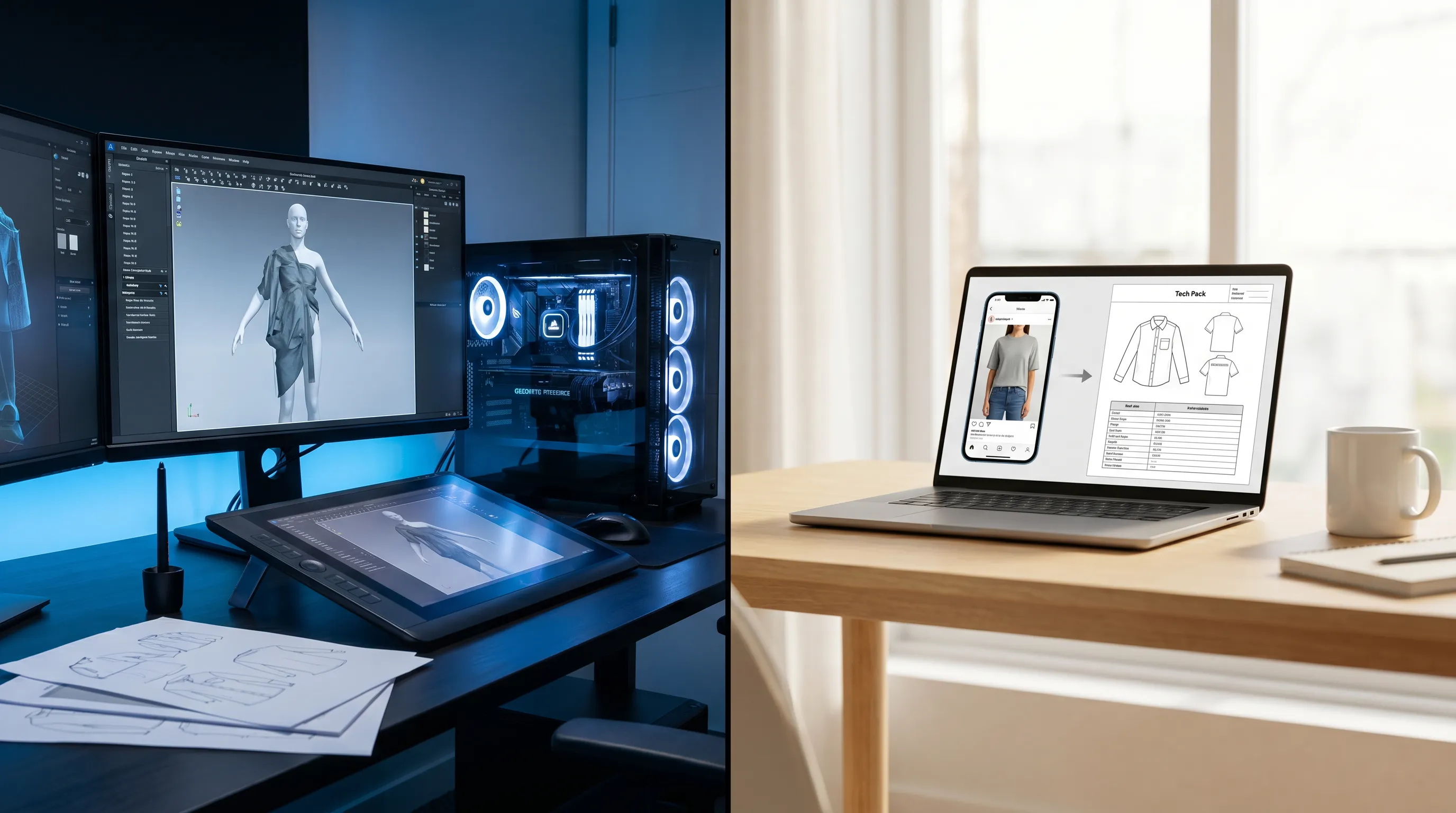
CLO 3D is a 3D garment-simulation and patternmaking tool — you draft 2D patterns, sew them virtually, and drape them on an avatar. It's excellent at that, but it costs $50/month or $450/year (CLO's official pricing), recommends a CUDA GPU with 12GB+ VRAM and 16–32GB RAM (CLO system requirements, April 2026), and by its own admission takes an open-ended, usually months-long ramp (CLO on its learning curve). If you need true 3D simulation, the real alternatives are Browzwear and Marvelous Designer. But the most common reason designers leave CLO is that they never needed 3D at all — they needed a tech pack or a design visual, which Adstronaut AI generates from one photo for $3–6.
CLO 3D vs the 4 best alternatives, side by side
| Tool | Price (2026) | Learning curve | Best for |
|---|---|---|---|
| CLO 3D | $50/mo or $450/yr individual; student ~$25/mo; Business by quote | Steep — months; patternmaking skill assumed | True 3D garment simulation, virtual fit, drape |
| Adstronaut AI | Plans from $29/mo; tech pack $3–6, concept render ~$2 | None — upload a photo | Factory-ready tech packs + design visualization without CAD |
| Browzwear VStitcher | Freelancer $750/yr; Teams $3,950/yr (≤3 users); Enterprise by quote | Steep — comparable to CLO; pattern-led | Enterprise 3D development and PLM-integrated workflows |
| Marvelous Designer | $39/mo or $280/yr personal; enterprise tiers higher | Moderate–steep; built for CG artists | Cloth simulation for film, games, and renders — not production specs |
| Adobe Illustrator | $22.99/mo annual, $34.49/mo monthly | Moderate — vector skills + garment conventions | Hand-drawn 2D flats and bespoke vector artwork |
Prices per each vendor's published 2026 plans (CLO support pages, Browzwear's Feb 2026 self-serve pricing, Marvelous Designer, Adobe). Only Adstronaut requires no 3D or CAD skill.
Why designers look for a CLO 3D alternative
Three decision-relevant reasons come up repeatedly — and none of them is that CLO is bad software.
The learning curve is real and open-ended. CLO is built around 2D patternmaking: you draft blocks, set seam lines, and stitch panels before anything drapes. CLO's own support answer declines to estimate a timeline — "the learning pace differs for each individual" — and its community threads consistently describe months to full proficiency (CLO learning-curve thread). For a founder without fashion-school patternmaking, that's a hard wall.
The hardware bill is part of the price. The April 2026 system requirements call for an NVIDIA GPU (4GB VRAM minimum, 12GB+ recommended for quality rendering) and 16–32GB RAM (CLO system requirements). A standard laptop strains; a proper rig adds hundreds of dollars to the true cost of entry.
The deliverable mismatch. At $50/month CLO is fairly priced for a working 3D patternmaker. But if what you actually hand off is a tech pack to a factory — not a draped simulation — you're paying a subscription plus a months-long skill investment for an output a simpler tool produces in minutes. That mismatch, not the software, is what sends most leavers searching.
Which CLO 3D alternative? Decide by deliverable
The best CLO 3D alternative for each use case
If you need true 3D simulation and virtual fit: Browzwear VStitcher. The closest enterprise-grade rival, with strong PLM integration — $750/year Freelancer to $3,950/year Teams under its February 2026 self-serve pricing, Enterprise by quote (Browzwear pricing). The full trade-off analysis lives on our Browzwear alternatives page.
If you need the most realistic cloth for CG: Marvelous Designer. At $39/month or $280/year personal (Marvelous Designer pricing), it produces arguably the best drape simulation anywhere — but it's built for film, games, and renders: no production grading, no factory tech packs. Same engine family as CLO, different audience.
If you only need 2D flats: Adobe Illustrator. The industry's manual standard at $22.99–$34.49/month — every line drawn by hand, BOM in Excel, 6–10 hours per pack. Our Illustrator alternatives roundup covers when that's worth it.
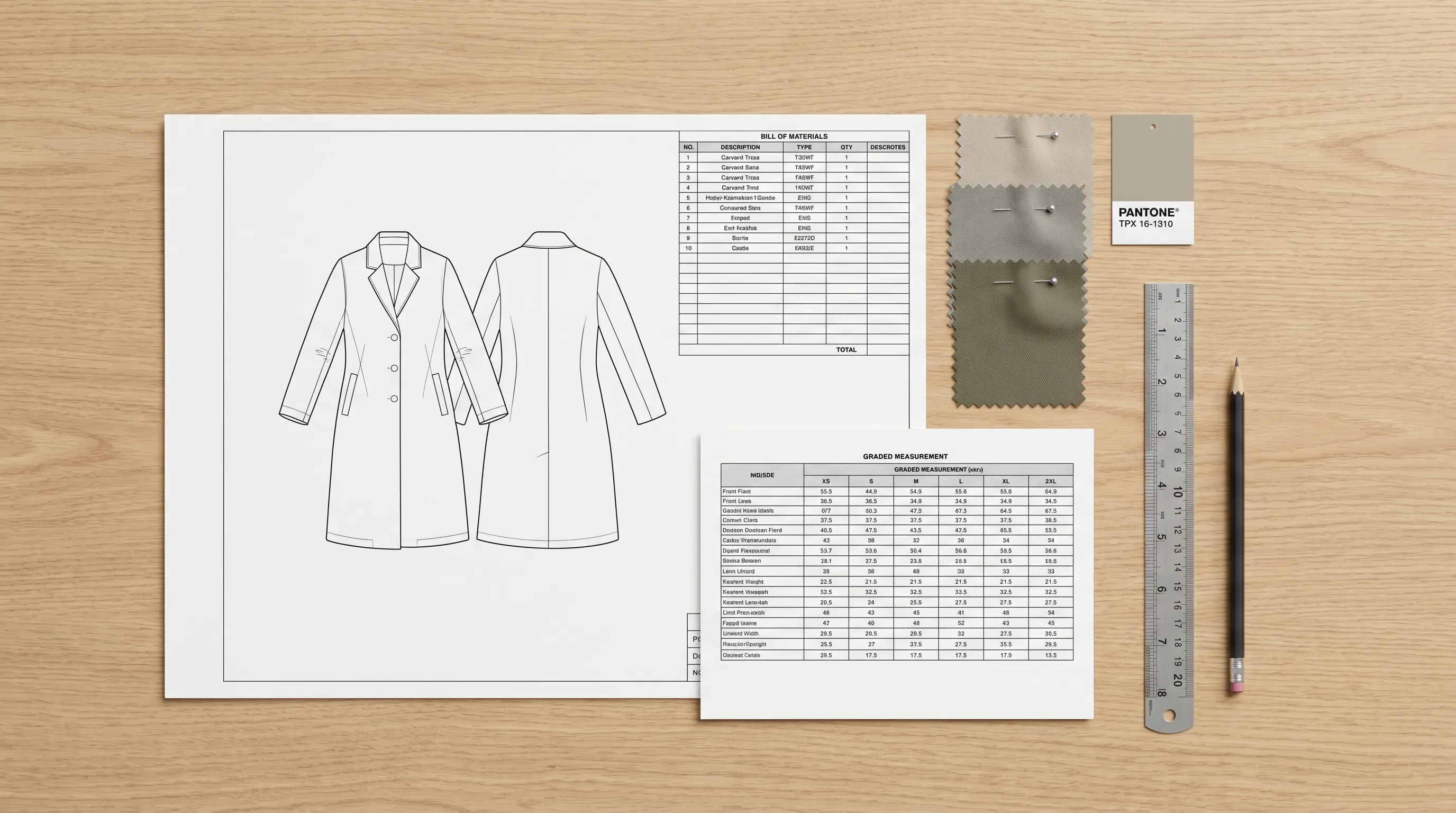
If you need the tech pack or the concept visual without CAD: Adstronaut AI. This is where most CLO leavers actually land. One garment photo in; annotated flats, structured BOM, graded measurements with tolerances, and construction notes out in 3–5 minutes for $3–6 per pack. The AI Designer covers the concept side — moodboard to photoreal render with an auto-extracted Pantone palette for about $2. No patternmaking, no GPU, browser-only. It does not simulate drape — and doesn't pretend to.
Leave CLO 3D, or keep it?
Move to Adstronaut if…
- ✓Your factory receives PDF tech packs, not 3D files — the simulation was always an intermediate step.
- ✓You spend CLO time on flats and spec documentation rather than fit iteration.
- ✓Your machine can't drive the GPU requirements, or you work from a laptop.
- ✓You're months from proficiency and shipping deadlines won't wait for the curve.
- ✓You want concept visuals from a moodboard in minutes (~$2) instead of building 3D scenes.
Keep CLO 3D if…
- ✓Virtual fit is your deliverable — you iterate drape and ease digitally to cut physical sample rounds.
- ✓You have patternmaking skills and the 3D workflow compounds them.
- ✓Your buyers or factory partners consume 3D assets (digital showrooms, virtual try-on pipelines).
- ✓You produce fit-critical structured garments where seeing drape before sampling pays for itself.
- ✓You're in fashion education — CLO fluency is a hiring signal at many technical-design roles.
Many brands run both: AI documents for most styles, one CLO seat for the fit-critical few.
Testing the no-CAD route: 4 steps
- 1
Pick the style you'd have built in CLO this week
Any clear photo works — the sample on a mannequin, a flat-lay, even a clean mockup render exported from a past CLO project. - 2
Generate the tech pack
Run it through the AI Tech Pack Generator — first one free. Compare its flats, BOM, and graded chart against what you'd assemble from a CLO project. - 3
Test the concept side
Feed a moodboard to the AI Designer (~$2 per finished concept with a Pantone palette) — the ideation work that doesn't need a drape engine. - 4
Decide per-style, not all-or-nothing
Keep CLO for fit-critical structured pieces if drape iteration genuinely saves you sample rounds; route everything else through the photo-to-pack flow at $3–6.
The verdict by persona
3D patternmakers and technical designers who need virtual fit should stay on CLO 3D or evaluate Browzwear — the simulation engine is the whole point, and no document generator replaces it. CG and VFX artists dressing characters want Marvelous Designer's cloth realism at $39/month.
Indie founders and first-time designers without a patternmaking background get the most from Adstronaut: it removes the months-long skill prerequisite and produces the factory document for $3–6, with the first pack free. Small brands and DTC labels shipping 10–50 styles a year save both the $450/year seat and the workstation. For the broader landscape, see the best tech pack software roundup and the best AI tools for fashion design.
Frequently asked questions
What is the best CLO 3D alternative in 2026?
It depends on the deliverable. For true 3D simulation: Browzwear VStitcher (from $750/year) or Marvelous Designer ($39/month, CG-oriented). For hand-drawn flats: Adobe Illustrator ($22.99/month). For factory-ready tech packs and design visualization without learning CAD: Adstronaut AI, at $3–6 per pack from one photo — the lane most CLO leavers actually want.
How much does CLO 3D cost in 2026?
CLO 3D's Individual plan is $50/month or $450/year, with a student discount around half price, per CLO's official support pricing page. Business and institutional licenses are quote-based. Add the hardware: CLO recommends an NVIDIA GPU (12GB+ VRAM for quality rendering) and 16–32GB RAM, which is part of the real cost of entry.
Why is CLO 3D hard to learn?
Because it's built on 2D patternmaking — you draft pattern blocks, set seam lines, and stitch panels virtually before anything drapes correctly. CLO's own support page declines to give a timeline ('the learning pace differs for each individual'), and its community threads consistently describe months to real proficiency. Without a patternmaking background, the wall is the pattern, not the software.
Is Adstronaut AI a true CLO 3D replacement?
Only for the document and visualization jobs. Adstronaut does not simulate 3D drape, virtual fit, or fabric physics — if those are core to your process, keep a 3D seat. It replaces CLO for tech-pack output (flats, BOM, graded measurements from a photo) and concept visualization (moodboard to photoreal render), which for many small brands was the only part of CLO they used.
What's the difference between CLO 3D and Marvelous Designer?
Same simulation heritage, different audiences. CLO 3D is built for fashion production: patternmaking, grading, colorways, factory handoff. Marvelous Designer ($39/month or $280/year) is built for CG — dressing characters for film and games with superb drape, but no production grading and no tech-pack output. Fashion brands should compare CLO with Browzwear, not MD.
Is Browzwear better than CLO 3D?
They're close rivals with different centers of gravity: CLO is more common in education and among individual designers ($450/year); Browzwear is more enterprise- and PLM-oriented, with self-serve pricing from $750/year since February 2026 and a 4.8/5 G2 rating. Both are pattern-led with months-long curves — switching between them rarely solves a skills problem.
Can I get a factory-ready tech pack without CLO 3D or any 3D software?
Yes. Adstronaut generates the complete document — annotated flat sketch, structured BOM with supplier fields, graded measurements with tolerances, construction notes, Pantone colorways — from one garment photo in 3–5 minutes for $3–6. Factories evaluate the document's completeness, not the software behind it; the export is a standard print-ready PDF.
What hardware do the alternatives need?
CLO recommends an NVIDIA CUDA GPU (4GB minimum, 12GB+ VRAM for quality rendering) and 16–32GB RAM; Browzwear and Marvelous Designer have similar appetites. Illustrator runs on ordinary machines. Adstronaut runs entirely in the browser — generation happens server-side, so a basic laptop is enough.
Does Adstronaut handle the garment classes CLO covers?
For documentation, yes: apparel, footwear, leather goods, knitwear, and bodywear each get class-specific tech-pack sections (sole units for footwear, yarn and gauge for knitwear, hardware callouts for leather goods). What it doesn't do is simulate those garments in 3D — the honest line between the two categories.
Should fashion students learn CLO 3D or use AI tools?
Both, for different reasons. CLO fluency is a genuine hiring signal for technical-design roles, and education licenses are discounted — learning it has career value beyond any one brand. AI generation is the faster path to shipping an actual collection. Students launching brands while studying often use CLO for coursework and Adstronaut for their label's production documents.
Skip the months-long curve — keep the deliverables
If your factory needs a tech pack, not a 3D file: upload one garment photo and get flats, BOM, grading, and construction notes in minutes. $3–6 per pack, first one free, no GPU required.
Try the AI Tech Pack GeneratorKeep exploring
Sources and further reading
- CLO — official pricing — $50/mo or $450/yr Individual (support page, updated 2025)
- CLO — system requirements (April 2026) — CUDA GPU, 4GB min / 12GB+ VRAM recommended, 16–32GB RAM
- CLO — how long to learn — no official estimate; learning pace 'differs for each individual'
- CLO community — learning curve discussion — months to full proficiency in practitioner reports
- Marvelous Designer — pricing — $39/mo or $280/yr personal
- Browzwear — pricing plans — Freelancer $750/yr; Teams $3,950/yr (≤3 users); Feb 2026 self-serve launch