Pixelcut vs Adstronaut AI for fashion product photos
Updated June 10, 2026
Pixelcut is a mobile-first product-photo app — background removal, AI backgrounds, mockups, and a basic virtual try-on — at $0–$30/month. Adstronaut AI is purpose-built for fashion: editorial on-model photoshoots with a 22-model roster and 35 class-specific product views across 10 categories, at about $1 per finished image. Pixelcut edits the photo you have; Adstronaut creates the fashion photos you don't.
Pixelcut vs Adstronaut AI: the quick verdict
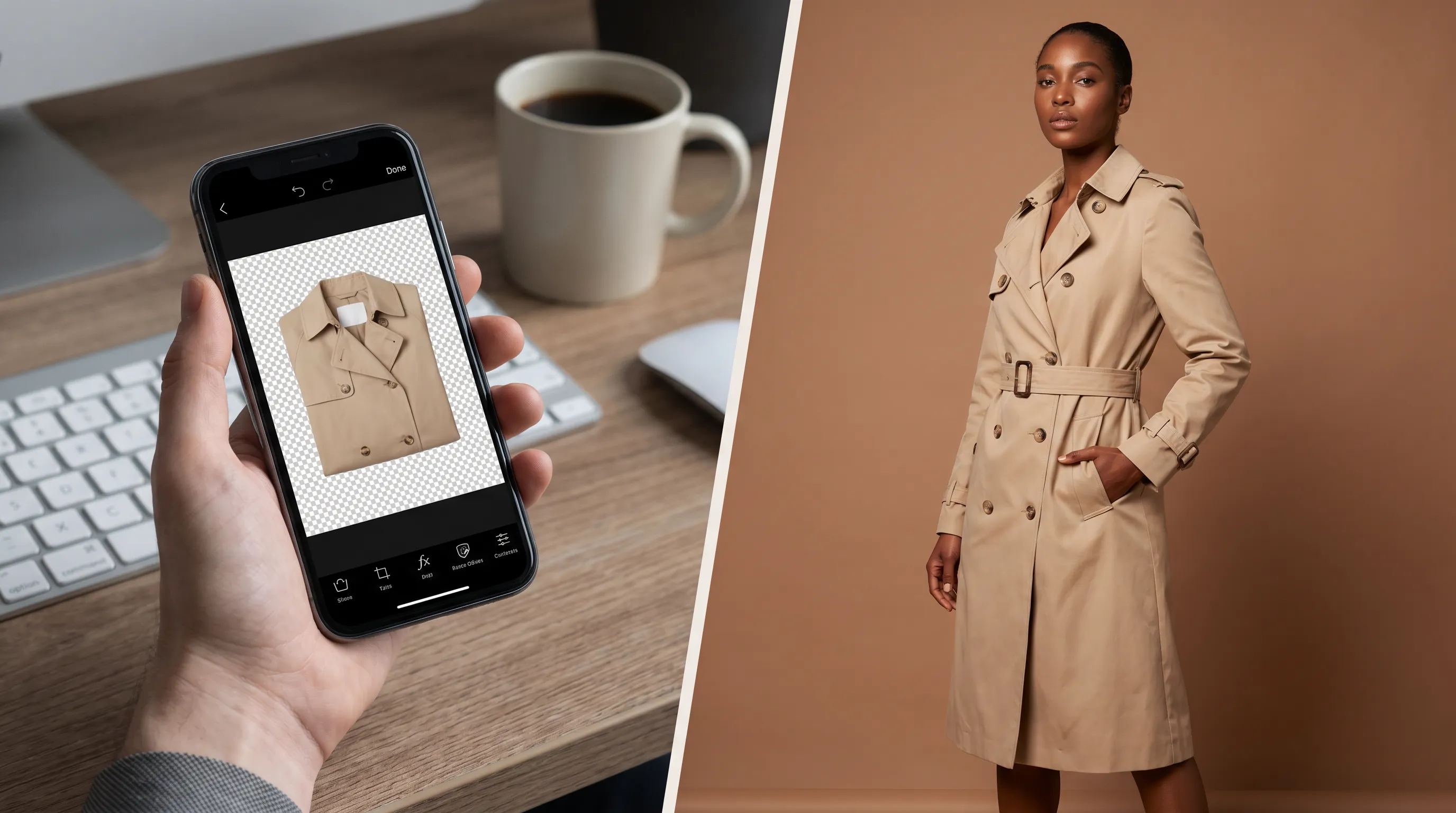
Pixelcut and Adstronaut AI overlap on one promise — "product photos without a studio" — but solve different halves of it. Pixelcut is a general product-photo editor: background removal, AI scenes, mockups (tees, mugs, phone cases), batch edits, an image upscaler, and credit-metered access to third-party generative models for images and video. It is mobile-first and big — the company cites "over 70 million" users on its homepage and 200,000+ businesses on its pricing page (Pixelcut). It added a virtual try-on, but it remains a horizontal tool that treats a hoodie like a candle.
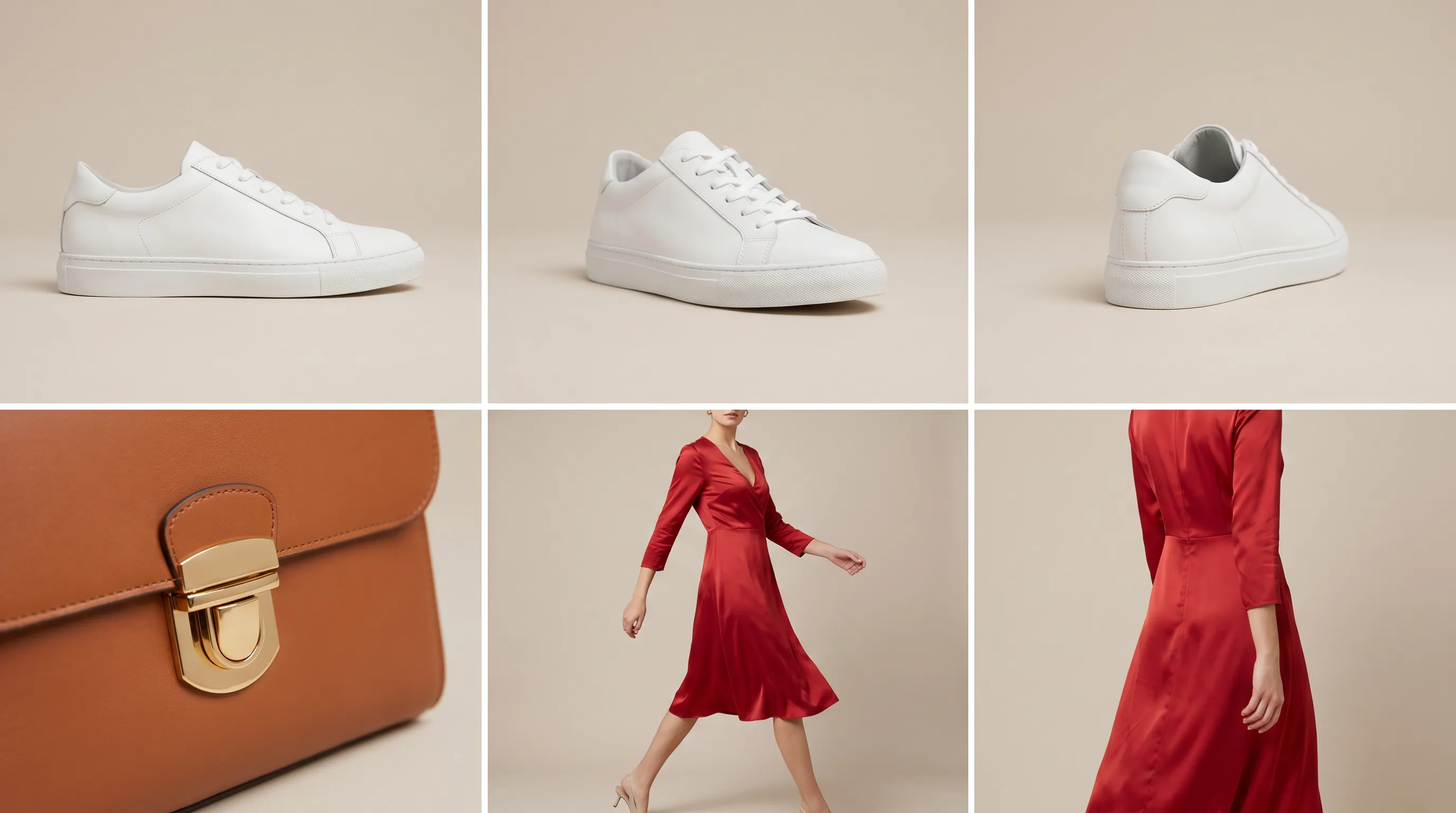
Adstronaut AI is vertical fashion software. AI Photoshoots put a garment on a named, repeatable model in a directed pose and scene; the Lookbook Creator generates the exact multi-angle set each product class sells in — footwear gets toe and heel, bags get hardware detail. Choose Pixelcut for quick mobile cleanup and generic mockups across any product. Choose Adstronaut when you sell fashion and the deliverable is an on-model catalog.
Pixelcut vs Adstronaut AI, side by side
| Factor | Pixelcut | Adstronaut AI |
|---|---|---|
| Primary purpose | General product-photo editing, backgrounds, mockups, upscaling | Fashion on-model photoshoots + multi-angle product views |
| Price | Free $0; Pro $10/mo ($8 annual, 600 credits); Pro+ $30/mo ($24 annual, 3,600 credits) | Plans from $29/mo; ~$1 per finished image (5 credits) |
| On-model fashion shoots | Basic virtual try-on — single AI clothing shot, no controlled roster | Full editorial direction: 22 named models, 8 poses, 12 scenes + 36 lifestyle presets |
| Model consistency | Generic AI models, not a named reusable set | Same face across a whole collection — one-shoot look |
| Multi-angle product views | Manual, one staged photo at a time | 35 class-specific views across 10 product classes, batched |
| Outfit assembly | One garment per image | Top, bottom, full-body, footwear slots on one model |
| Background removal | Core strength — unlimited on paid plans, batch exports | Not the focus — regenerates the full scene instead |
| Generative engine | Credit-metered third-party models (Flux, Imagen, video models) | Fashion-specialized pipeline tuned for garment fidelity |
| Platform | Mobile-first iOS/Android + web | Web app, project-based for collections |
| Best for | Quick mobile edits, mockups, any-product sellers | Fashion brands shipping on-model PDPs and lookbooks |
Pixelcut pricing per its live 2026 pricing page (Free / Pro / Pro+ — some aggregators list older tier names). Adstronaut counts per its published product configuration.
Choose Adstronaut if… / Choose Pixelcut if…
Choose Adstronaut AI if…
- ✓You sell apparel, footwear, or accessories and conversion depends on on-model imagery, not staged cut-outs.
- ✓You need the same model across a drop so the catalog reads as one shoot — Pixelcut has no reusable roster.
- ✓You want class-aware galleries: lateral/medial/toe/heel for sneakers, hardware and interior shots for bags, 35 views across 10 classes.
- ✓You direct the frame — 8 poses, 12 scenes — instead of accepting whatever the try-on returns.
- ✓Your benchmark is the $2,500–$8,000 studio day, so ~$1 per finished image is the unit that matters.
Choose Pixelcut if…
- ✓Your job is fast background removal on a phone — listing one-off items on resale marketplaces.
- ✓You sell non-fashion products — candles, packaged goods, phone cases — where mockups and staging are the whole need.
- ✓You want print-on-demand mockups (logo on a blank tee or mug) rather than photography of a real garment.
- ✓You need cheap bulk staging: $10/month Pro with unlimited background removal and 1,000 batch exports.
- ✓You occasionally want AI video clips from the same app via its credit-metered video models.
The dividing line: Pixelcut edits the photo you have; Adstronaut creates the fashion photo you don't.
Building a 10-product PDP catalog, each way
How much does each actually cost?
Pixelcut is subscription-priced. Free covers limited background removal and upscaling with watermark-free export; Pro is $10/month ($8 billed annually) with 600 AI credits, unlimited background removal, 1,000 batch exports, and a commercial license; Pro+ is $30/month ($24 annually) with 3,600 credits and 2,000 batch exports (Pixelcut pricing). Its generative features meter credits against third-party models — a detail worth knowing, because heavy image generation can drain a month's pool quickly.
Adstronaut prices per output on plans from $29/month: a finished on-model image or product view is 5 credits — $0.62–$1.16 depending on plan, call it $1. A six-view PDP gallery per product is about $6; a 10-product batch about $60. The honest split: if your job is removing 200 backgrounds a week, Pixelcut's flat Pro fee is unbeatable. If your job is producing imagery a studio would otherwise shoot — a $2,500–$8,000 day for on-model work, or $3,000–$10,000 for a 10-SKU multi-angle e-commerce shoot (Squareshot 2026) — Adstronaut's per-image economics replace that line item, not the editing subscription.
Generic try-on vs directed on-model photography
Pixelcut's center of gravity is the product cut-out: remove the background, drop the object on an AI scene or mockup blank, batch it, export. That's exactly right for a phone case or a candle. For apparel it offers a virtual try-on that produces a single AI clothing shot — but with no named model you can reuse, no controlled pose set, and no scene direction, three things a catalog lives or dies on. Ten SKUs through a generic try-on come back as ten different-looking shots.
Adstronaut treats fashion as its own discipline. AI Photoshoots renders your garment on one of 22 named models — same face, same proportions, across every pose and scene — with 8 directed poses and 12 named scenes plus 36 lifestyle presets for social-first frames. You can assemble a full outfit from separate garment photos (top, bottom, footwear) on one model. And where Pixelcut stages one photo at a time, the Lookbook Creator generates 35 class-specific views across 10 product classes in consistent-lighting batches of up to 10 products. The result reads as one shoot — which is what buyers subconsciously check before they trust a store.
When Pixelcut is the better tool
Pixelcut earns its 70-million-user claim at jobs Adstronaut doesn't attempt. It wins mobile-first editing — clean cut-outs from your phone in seconds, ideal for resellers listing single items on Depop, Vinted, or eBay. It wins non-fashion staging: candles, beauty, electronics, packaged goods on AI backdrops with believable shadows. It wins print-on-demand mockups — a logo on a blank tee or mug is a mockup job, not a photography job, and Pixelcut's mockup library is built for it.
It also wins cheap bulk cleanup: unlimited background removal plus 1,000 batch exports at $10/month is a strong deal for a high-volume mixed-category seller. And its credit pool doubles as a general-purpose AI playground (image models, video models) if you want one casual app for everything. The honest line is the same as with Photoroom: these tools edit and stage the photo you already have. The moment the deliverable is a consistent on-model fashion catalog, you've left their territory.
From phone photos to a full fashion catalog: 4 steps
- 1
Shoot raw flats once
Phone camera, window light, plain backdrop. One clear front-facing shot per garment is the only input Adstronaut needs — JPG, PNG, or WEBP. - 2
Generate the on-model set
Upload to AI Photoshoots; pick one model for the whole drop, select the poses your PDP template uses, choose a studio scene for catalog consistency. - 3
Batch the multi-angle gallery
Run up to 10 products through the Lookbook Creator — each class gets its selling angles (footwear toe/heel, bag hardware/interior) under consistent lighting. - 4
Add colorways without reshooting
Recolor the source in the AI Color Changer (2,300+ Pantone TCX codes), then regenerate the same model, pose, and scene — the variant drops into the catalog seamlessly.
Which should you choose?
Any-product e-commerce sellers doing high-volume background cleanup, mockups, and quick phone edits should choose Pixelcut — it's fast, cheap, and built for exactly that. Print-on-demand sellers especially benefit from its mockup library.
Apparel, footwear, and accessory brands should choose Adstronaut: indie streetwear founders launching a first drop without a photo budget, Shopify sellers adding colorways without a reshoot, and marketplace operators standardizing PDP galleries across hundreds of SKUs. Many run both — Pixelcut to tidy raw shots, Adstronaut to produce the on-model and multi-angle imagery. For the broader field, see the best AI photoshoot tools for clothing brands and why multi-angle PDPs convert.
Frequently asked questions
Is Adstronaut a good Pixelcut alternative for fashion brands?
Yes — for fashion specifically. Pixelcut is a strong general product-photo app (background removal, mockups, staging), but its virtual try-on produces one-off generic shots. Adstronaut renders garments on 22 named, consistent models across 8 directed poses and generates 35 class-specific views across 10 product classes — the on-model catalog work Pixelcut isn't built for.
Can Pixelcut create on-model fashion photoshoots?
Only at a basic level. Its virtual try-on places clothing on an AI model, but there's no named reusable roster, no controlled pose set, and no scene direction — ten SKUs come back as ten visually unrelated shots. Adstronaut runs directed shoots where the same model, pose language, and scene carry across the whole collection.
How much does Pixelcut cost vs Adstronaut?
Pixelcut: Free, Pro $10/month ($8 annually, 600 credits, unlimited background removal), Pro+ $30/month ($24 annually, 3,600 credits). Adstronaut: plans from $29/month, with finished images at 5 credits — about $1 each; a six-view product gallery runs ~$6. For bulk cleanup Pixelcut is cheaper; for finished on-model photography Adstronaut replaces a $2,500–$8,000 studio day.
Why do fashion sellers switch from Pixelcut to Adstronaut?
Usually after hitting the consistency wall: staged cut-outs and one-off try-on shots don't make a catalog feel like a brand. The switch trigger is needing the same model across a drop, real pose direction, class-correct angle sets, and colorway variants that match the original shoot — all native to Adstronaut, all manual or impossible in Pixelcut.
Does Pixelcut generate multiple product angles automatically?
No — angles are staged manually, one image at a time, with no category logic. Adstronaut's Lookbook Creator generates 35 view types across 10 product classes in one batch: footwear gets lateral, medial, toe, heel, top-down and on-foot; bags get hardware, interior and scale shots — up to 10 products per session under consistent lighting.
Which is better for print-on-demand sellers?
Pixelcut, in most cases. POD imagery is mockup work — placing artwork on blank garments — and Pixelcut's mockup library handles that directly. Adstronaut becomes relevant when a POD brand graduates to cut-and-sew with real samples and needs true on-model photography and tech packs rather than mockups.
Is Pixelcut's free plan enough to run a store?
For occasional listings, possibly — free covers limited background removals and upscales with watermark-free export. Serious sellers hit the limits fast and need Pro ($10/month) for unlimited removal, batch exports, and the commercial license. Adstronaut's free tier is a 25-credit watermarked preview — about five test shots — before its paid plans.
Can I use Pixelcut and Adstronaut together?
Yes, and the division of labor is natural: Pixelcut for fast mobile cleanup and batch background removal of raw shots; Adstronaut to turn those garments into on-model editorial imagery, multi-angle PDP galleries, and Pantone-accurate colorway variants. Pixelcut edits the photo you have; Adstronaut creates the fashion photos you don't.
Are both tools' images licensed for commercial use?
Pixelcut grants a commercial license on Pro and Pro+. Adstronaut's paid plans license every image for product pages, ads, social, and email with no royalties, caps, or model releases — the models are synthetic. Marketplace rules still apply to content itself; our TikTok Shop guide covers the platform-specific image policies.
What input photo does Adstronaut need?
One clear, front-facing garment photo — flat-lay, mannequin, or amateur on-model — in JPG, PNG, or WEBP up to 10MB. Higher-resolution input yields higher-fidelity output, but phone photos in window light are a normal starting point; the system auto-detects the input type and garment class.
Generate your first on-model fashion shoot
Pixelcut cleans the photo. Adstronaut creates the fashion photo. Upload one garment, pick a model, a pose, and a scene — editorial on-model imagery in minutes at about $1 per image.
Try AI PhotoshootsKeep comparing
Sources and further reading
- Pixelcut — pricing and plan comparison — Free; Pro $10/mo ($8 annual); Pro+ $30/mo ($24 annual); credit-metered AI models (2026)
- Pixelcut — product overview — background removal, mockups, virtual try-on, mobile apps; self-reported 70M+ users
- Pixelcut — virtual try-on — single-garment AI try-on capability
- Fahim AI — Pixelcut review (2026) — founding (2021, San Francisco), feature set, fashion limitations
- Squareshot — clothing photoshoot cost (2026) — $2,500–$8,000 production day; multi-angle e-commerce shoot economics