
Photoroom vs Adstronaut AI for fashion product imagery
Updated June 10, 2026
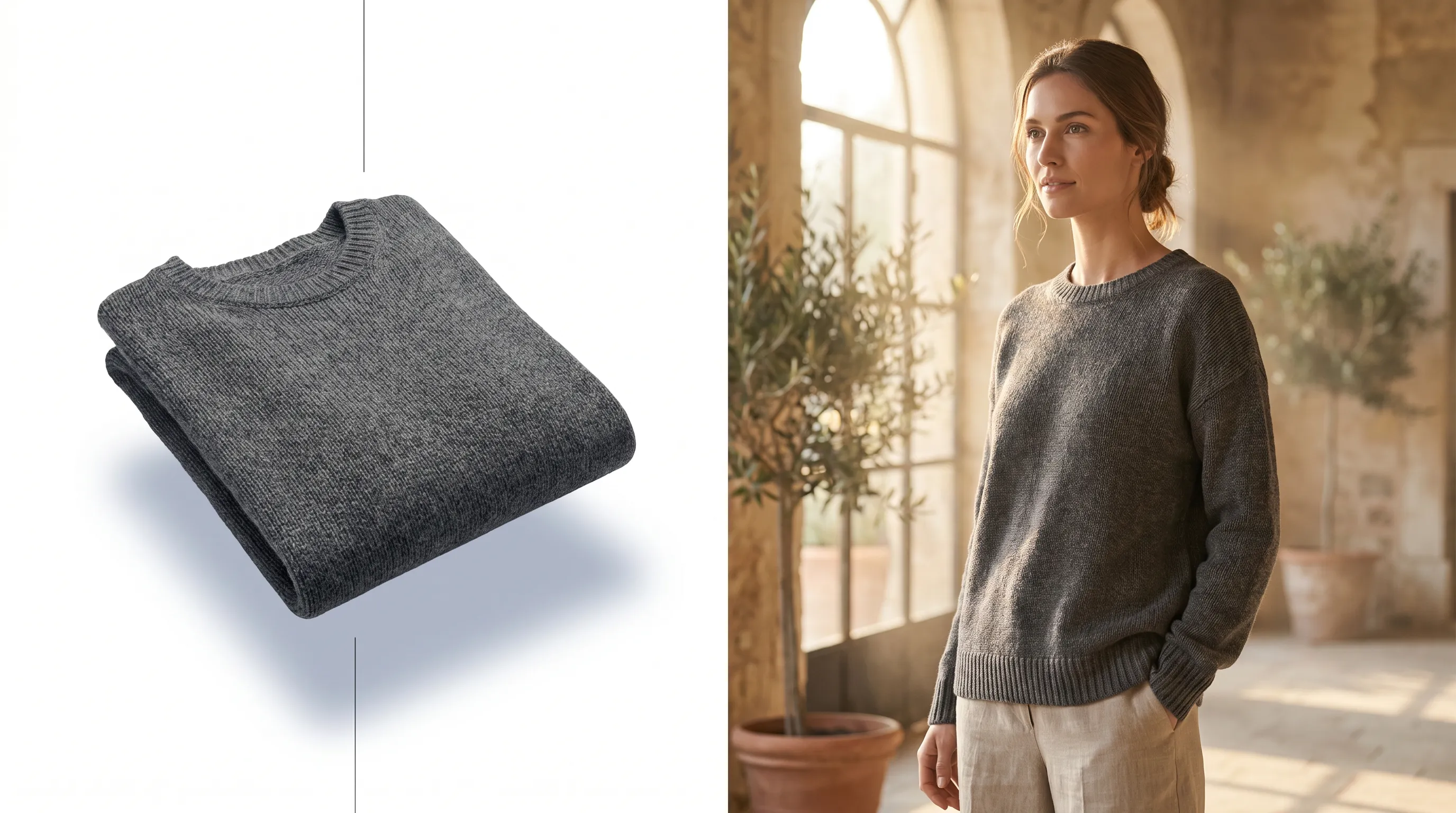
Photoroom is a mass-market product-photo app — instant background removal, AI backgrounds, batch staging — priced from $7.99/month with 300M+ self-reported downloads. Adstronaut AI is fashion-specific: it generates on-model editorial photoshoots with 22 named repeatable models, 8 poses, and 12 scenes from one garment photo, for about $1 per image. Photoroom stages the product photo; Adstronaut shoots the campaign.
Photoroom vs Adstronaut AI: the quick verdict
Photoroom and Adstronaut AI both improve fashion product imagery, but they sit at different stages of the workflow. Photoroom is a product-photo editor — it removes backgrounds, drops items onto AI-generated scenes, batch-cleans hundreds of SKUs, and now ships fashion-adjacent tools (Virtual Model, Ghost Mannequin, Flat Lay, Unwrinkle). It is mobile-first, category-agnostic, and enormous: 300M+ downloads by its own count, processing roughly 50 million images a month (Photoroom; company statistics).
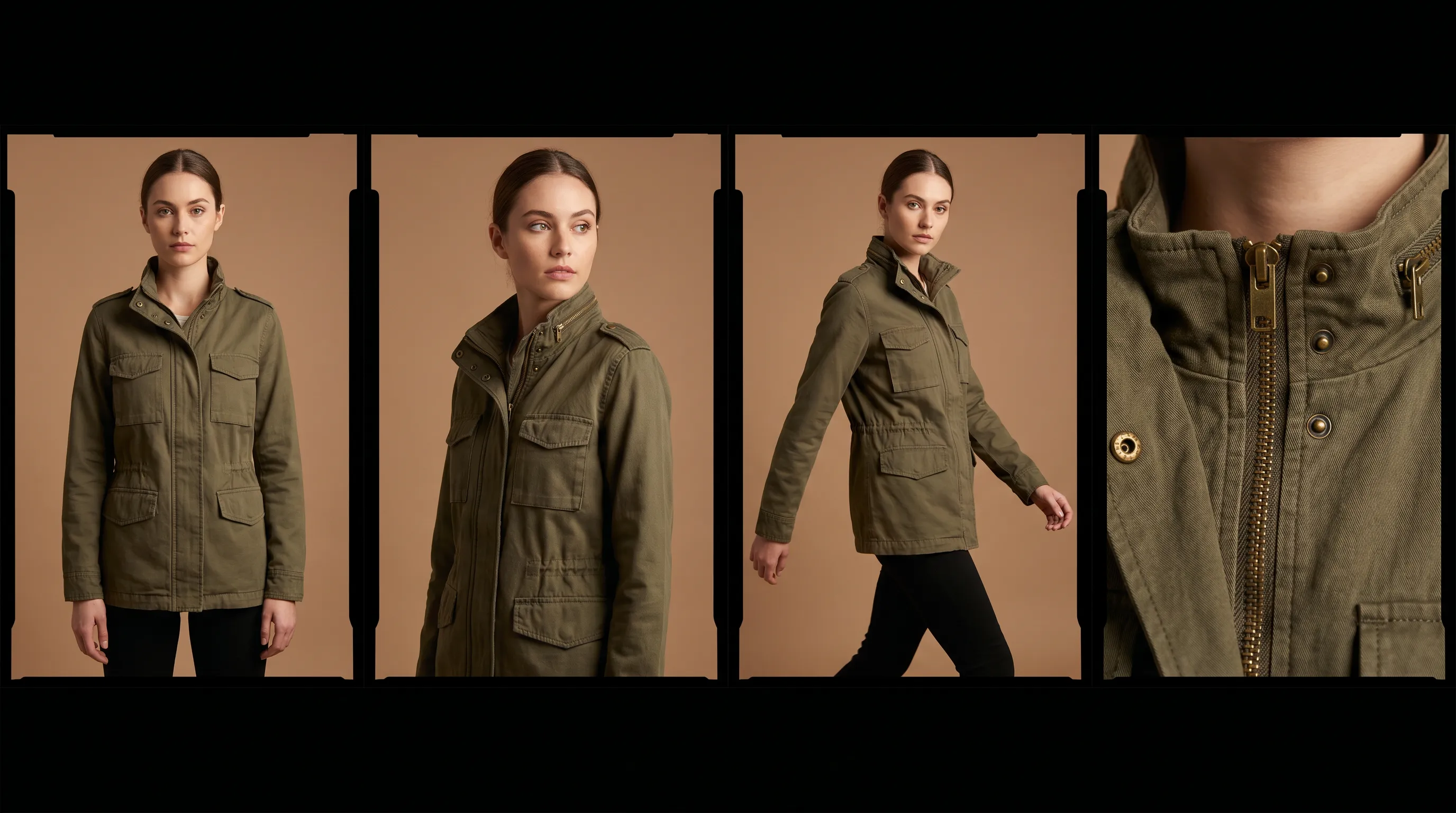
Adstronaut AI is built only for fashion. Its AI Photoshoots take a flat-lay or mannequin shot and render the garment on a named, repeatable model — the same face across an entire collection — across 8 poses and 12 scenes, while the Lookbook Creator builds the multi-angle PDP gallery. Choose Photoroom for fast bulk background removal and product staging across any category. Choose Adstronaut when the deliverable is editorial on-model fashion imagery and a consistent catalog.
Photoroom vs Adstronaut AI, side by side
| Factor | Photoroom | Adstronaut AI |
|---|---|---|
| Core job | Background removal, AI backgrounds, staging, batch editing | On-model editorial photoshoots + multi-angle PDP views |
| Category focus | Generalist — resale, electronics, beauty, apparel | Fashion-specific — apparel, footwear, bags, accessories |
| On-model imagery | Virtual Model add-on (Pro+); preset AI models, pose options undisclosed | Core product: 22 named models (12 women, 10 men), consistent across a collection |
| Poses & scenes | Model + pose + background selection inside the editor | 8 named poses; 12 named scenes + 36 lifestyle presets |
| Outfit assembly | Single garment per image | Top, bottom, full-body, footwear slots assembled on one model |
| Pricing | Free (250 exports/mo); Pro $7.99/mo; Max $26.99/mo; Ultra from $99/mo | Plans from $29/mo; ~$1 per finished on-model image (5 credits) |
| Free tier | 250 exports/mo, no watermark — licensed for personal use | 25 credits — about 5 on-model shots, watermarked preview |
| API | Background removal $0.02/image; GenAI editing $0.10/image | Web app; batch up to 10 products per Lookbook session |
| Batch exports | Pro 500/mo, Max 1,500/mo, Ultra ~5,000+/mo | Per-output credits; multi-product Lookbook batches |
| Best for | Resellers and marketplace sellers cleaning packshots at volume | Fashion brands replacing the on-model studio day |
Photoroom pricing and limits per its 2026 pricing page and API docs; Adstronaut per its published plan credits. Photoroom's Virtual Model catalog size isn't publicly disclosed.
Choose Adstronaut if… / Choose Photoroom if…
Choose Adstronaut AI if…
- ✓Your bottleneck is getting garments onto a model, not cleaning backgrounds — apparel converts on bodies, not hangers.
- ✓You need one consistent model identity across a whole drop so the catalog reads as a single shoot.
- ✓You want direction, not luck: a chosen pose set (full-length, walk, detail close-up) and named scenes per channel.
- ✓You assemble full outfits from separate garment photos — top, bottom, footwear on one model.
- ✓You're replacing a $2,500–$8,000 studio day, so ~$1 per finished image is the relevant unit price.
Choose Photoroom if…
- ✓Your volume job is bulk background removal — hundreds of SKUs to clean white at $0.02/image via API.
- ✓You sell mixed categories (beauty, electronics, resale) where on-model fashion rendering is irrelevant.
- ✓You work from your phone — listing items one at a time on Vinted, eBay, Depop.
- ✓You need quick staging: AI backdrop, shadow, flat-lay cleanup, unwrinkling — not a full campaign.
- ✓A flat $7.99–$26.99/month subscription fits your cash flow better than per-image credits.
Many fashion brands run both: Photoroom to clean and prep source photos, Adstronaut to generate the on-model shoot.
What a finished on-model image costs, each way
Product staging vs on-model photoshoots: the real difference
Photoroom's strength is the product-only image: a clean cut-out, a white-background packshot, an AI backdrop with a believable shadow. Its 2025–2026 fashion push added a Virtual Model tool — flat-lay or ghost-mannequin in, AI model out, with pose and background selection at 2K–4K on higher tiers (Photoroom Virtual Model). It's a real feature, and for a one-off it works. But it lives as one tool inside a category-agnostic editor: the model catalog size isn't published, reusable identity requires saving models into the Pro-tier Brand Kit, and there's no concept of shooting a collection.
Adstronaut treats on-model imagery as the entire product. You pick from 22 named models — Ingrid, Amina, Luca, Rohan and 18 more — and the same face renders across every pose, scene, and SKU, so a 15-piece drop reads as one editorial session. You direct the shoot: 8 poses (full-length, three-quarter, dynamic walk, side profile, detail close-up, over-the-shoulder, seated, leaning) and 12 named scenes from Studio Mocha Mousse to Santorini Sunscape, plus 36 lifestyle presets for social. You can even assemble a complete outfit from separate garment uploads — top, bottom, footwear — on one model. That's the wedge: Photoroom stages the product photo; Adstronaut shoots the campaign. For the price context of what's being replaced, see how much a fashion photoshoot costs in 2026.
How much does each actually cost?
Photoroom is cheap to start and scales by tier: Free gives 250 exports/month with no watermark, licensed for personal use; Pro is $7.99/month ($90/year) and unlocks commercial use, batch exports (500/month), and Virtual Model access; Max is $26.99/month (1,500 batch exports, better AI models); Ultra runs $99–$990/month for catalog-scale volume (Photoroom pricing). Its API bills separately — $0.02 per background removal, $0.10 per GenAI edit (API pricing). The fine print that matters for sellers: free-tier output is licensed for personal, non-commercial use, so listing products commercially means Pro at minimum (Photoroom's free-account terms).
Adstronaut prices per finished output on plans from $29/month: an on-model image is 5 credits — $0.62–$1.16 depending on plan, call it $1. A 10-pose PDP set runs about $10 in credits; the free plan's 25 credits cover about five watermarked test shots. The two pricing models suit different jobs: Photoroom's flat subscription wins when the unit of work is cleanup (hundreds of cut-outs); Adstronaut's per-image price wins when the unit of work is a finished on-model frame that would otherwise come from a $2,500–$8,000 studio day (Squareshot 2026).
When Photoroom is the better tool
Photoroom genuinely wins several jobs, and this page would be useless if it pretended otherwise. It wins bulk background removal — hundreds of SKUs to clean white in a batch, at $0.02/image via API, with SOC 2 compliance for enterprise pipelines. It wins non-fashion products: beauty bottles, electronics, homeware, packaged goods, where on-model rendering is meaningless. It wins mobile-first selling — it's a phone app a Vinted or eBay reseller can run in seconds per item, which is exactly why its download count is in the hundreds of millions.
It also wins quick staging: AI backdrops, shadows, ghost-mannequin conversion, unwrinkling — fast cosmetic lifts to a photo you already have. The honest line: if your imagery need is "clean up and stage the product photo," Photoroom is the right tool. If your need is "put this garment on a model and build a consistent catalog," it isn't — and that's the gap Adstronaut occupies. For the same comparison against Photoroom's closest rival, see Pixelcut vs Adstronaut.
Running both: the prep-then-shoot workflow
Plenty of fashion sellers use Photoroom and Adstronaut together. The division of labor is clean:
- 1
Shoot raw flats on your phone
Flat-lay or mannequin shots in even window light. No studio required — this is the input both tools accept. - 2
Clean in Photoroom (optional)
Batch background removal or unwrinkle if your raw shots are messy. Skippable when your flat-lays are already clean — Adstronaut handles normal photos directly. - 3
Generate the on-model set in Adstronaut
Upload to AI Photoshoots, pick one model for the whole drop, choose poses per PDP slot, pick a studio scene for catalog and a lifestyle scene for social. - 4
Fill the gallery with multi-angle views
Run the Lookbook Creator for front, back, side, and detail views — up to 10 products per session with consistent lighting.
Which should you choose?
Resellers and marketplace sellers moving high volumes of mixed-category items should choose Photoroom — fast batch cleanup, mobile editing, and per-image API pricing are exactly their job. Multi-category stores that occasionally sell apparel can stretch Photoroom's Virtual Model for one-off on-model frames.
Fashion brands — indie founders, Shopify apparel sellers, DTC labels — should choose Adstronaut the moment on-model imagery and catalog consistency drive revenue: same model across the drop, directed poses, scene control, outfit assembly, and multi-angle galleries at about $1 per finished image. If you've outgrown staging tools entirely and are comparing against hiring a photographer, start with can't afford a fashion photographer — and for the wider field, the best AI photoshoot tools for clothing brands ranks seven options honestly.
Frequently asked questions
Can Photoroom generate on-model fashion photos?
Yes, at a basic level. Photoroom's Virtual Model tool (paid tiers) places a garment from a flat-lay or ghost-mannequin shot onto an AI model with pose and background selection. But it's one add-on inside a generalist editor — the model catalog isn't published, and reusing one identity across a collection requires Brand Kit setup. Adstronaut makes this the core product: 22 named models, 8 poses, 12 scenes, consistent across every SKU.
Is Adstronaut cheaper than Photoroom?
They price different jobs. Photoroom is a flat subscription — Free (250 exports), Pro $7.99/month, Max $26.99/month — ideal for high-volume background cleanup. Adstronaut charges about $1 per finished on-model image on plans from $29/month. For cut-outs, Photoroom is cheaper; for finished on-model photography the relevant alternative is a $2,500–$8,000 studio day, against which $1 per image is the cheaper unit by orders of magnitude.
Does Photoroom's free plan allow commercial use?
No — and this is the trap for sellers. Photoroom's free tier includes 250 exports per month without a watermark, but the license covers personal, non-commercial use only; listing products for sale requires Pro ($7.99/month) or above, per Photoroom's own help documentation. Adstronaut's paid plans license every image for commercial use with no model releases; its free tier is a watermarked preview.
Why do fashion brands switch from Photoroom to Adstronaut?
The trigger is almost always the same: they've cleaned their packshots but conversion stalls because apparel sells on bodies. Photoroom can't deliver a consistent on-model catalog — no named reusable roster, no pose direction, no outfit assembly. Brands switch when the job changes from 'stage my product photo' to 'shoot my collection,' which is Adstronaut's entire scope.
What's the difference between product staging and an on-model photoshoot?
Staging — Photoroom's strength — cleans and composites the product image: cut-out, white background, AI backdrop, shadow. An on-model photoshoot renders the garment on a person with direction: chosen model, chosen pose, chosen scene. Adstronaut produces the second category, including detail close-ups and lifestyle frames, which is what PDPs and campaigns actually run on.
Which is better for a Shopify clothing brand?
For listing imagery, Adstronaut — it generates the on-model gallery (front, three-quarter, walk, detail) plus multi-angle views per product, with the same model across the catalog. Photoroom remains a useful companion for bulk-prepping raw photos. Our guide to AI product photos for Shopify covers the full spec.
How many models and poses does each tool offer?
Photoroom offers a portfolio of AI model presets in Virtual Model — the exact count and pose list aren't publicly disclosed. Adstronaut publishes its roster: 22 named models (12 women, 10 men) with consistent identity across renders, 8 poses (full-length, three-quarter, dynamic walk, side profile, detail close-up, over-the-shoulder, seated, leaning), 12 named scenes, and 36 lifestyle presets.
Can I assemble a full outfit from separate garment photos?
In Adstronaut, yes — the E-commerce workflow has four slots (top, bottom, full-body, footwear); upload one garment per slot and the AI assembles the complete look on a single model. Photoroom's Virtual Model works one garment image at a time and doesn't combine separate pieces into a styled outfit.
Does Adstronaut do background removal like Photoroom?
Not as a standalone tool — that's Photoroom's specialty, with batch processing and a $0.02/image API. Adstronaut regenerates the full frame instead: garment on model in a chosen scene, so the 'background' is part of the photography rather than a removed layer. Sellers who need pure cut-outs at volume often run both.
Are the images licensed for ads and marketplaces?
Adstronaut's paid-plan images are fully commercially licensed — product pages, paid ads, social, email — with no royalties, usage caps, or model releases, since the models are synthetic. Photoroom requires a paid plan for any commercial use. On marketplace policy specifically (TikTok Shop's white-background main-image rule, for instance), see our TikTok Shop image guide.
Generate your first on-model photoshoot
Photoroom cleans the product photo. Adstronaut puts it on a model. Upload one garment photo, pick a model, a pose, and a scene — editorial on-model imagery in minutes at about $1 per image.
Try AI PhotoshootsKeep comparing
Sources and further reading
- Photoroom — pricing (Free, Pro, Max, Ultra) — 250 free exports/mo; Pro $7.99/mo; Max $26.99/mo; Ultra from $99/mo (2026)
- Photoroom — Virtual Model — flat-lay/ghost-mannequin to AI model; 2K–4K on higher tiers; Brand Kit model saving
- Photoroom — free accounts and commercial use — free-tier license is personal, non-commercial
- Photoroom — API pricing — $0.02/image background removal; $0.10/image GenAI editing
- Photoroom usage statistics — downloads and ~50M images processed monthly
- Squareshot — clothing brand photoshoot cost (2026) — $2,500–$8,000 typical production day; per-image economics