AI photoshoot for activewear: on-model motion imagery without the action shoot
Updated June 10, 2026
Activewear only converts in motion — stretch, compression, and four-way fit have to be visible on a moving body, which makes the category among the most expensive and return-prone to photograph. A traditional action shoot runs $2,500–$8,000 per day and branded campaigns $10,000–$25,000, while activewear sits near the top of fashion's 14–30% return range. Adstronaut AI renders on-model activewear imagery from one garment photo — gym, studio cyclorama, mountain trail — for about $1 per finished image, on any of 22 named models in 8 poses.
Why activewear is uniquely hard — and expensive — to photograph
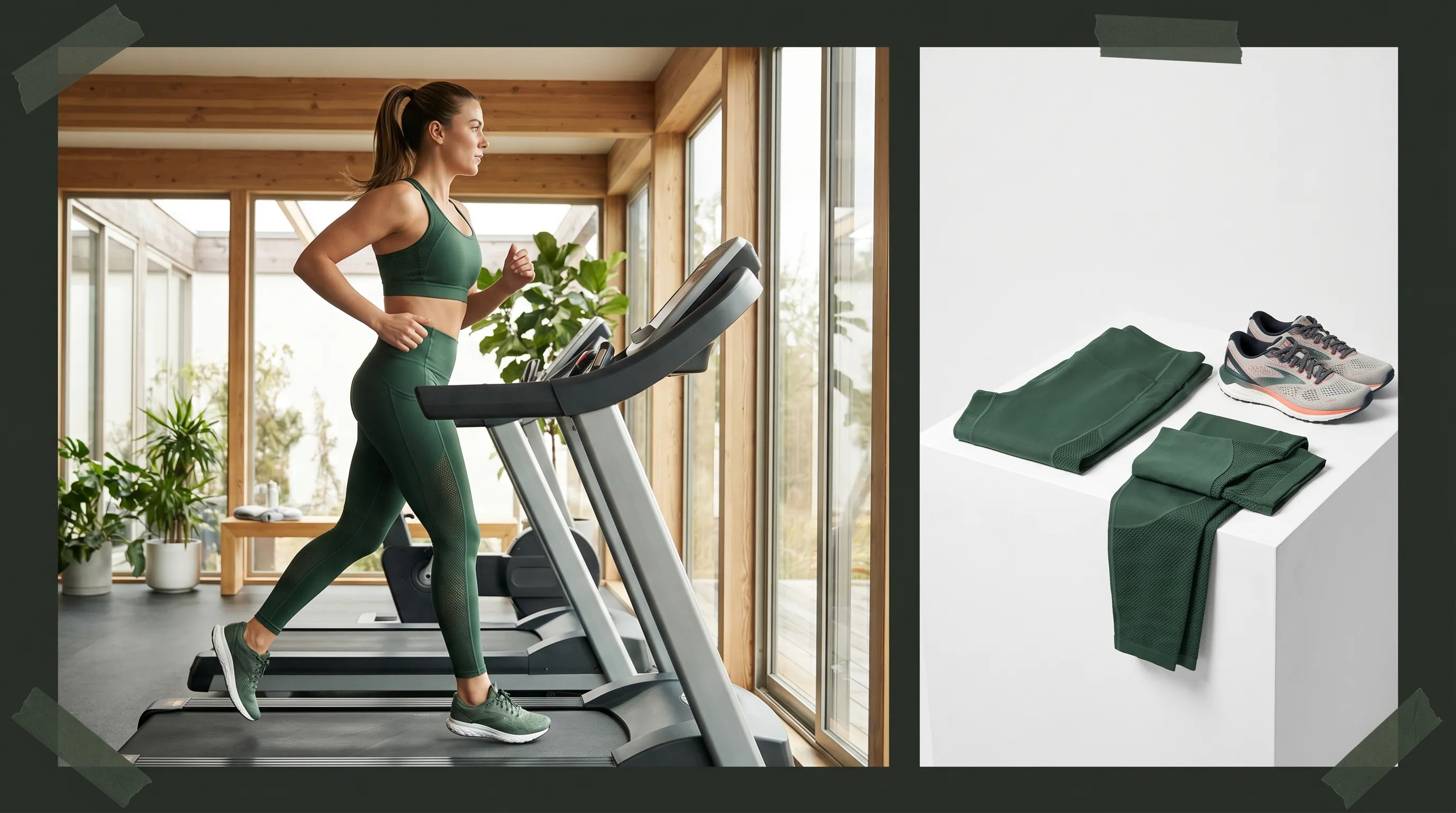
A pair of leggings cannot be judged from a flat-lay: buyers need to see how the compression holds, how the waistband sits through a bend, whether a mesh panel breathes or gaps. Activewear sells in motion, and that single requirement stacks costs other categories skip. A production day runs $2,500–$8,000 in major US markets, with branded campaigns reaching $10,000–$25,000 (Wearview's 2026 cost breakdown) — and the action format adds fitness-rated talent, motion-capable lighting, and the freeze-frame skill to catch a jump or a sprint cleanly.
The fabric itself fights the camera. Spandex and elastane reflect light unevenly, mesh panels disappear under flat lighting, and dark performance fabrics lose their contour if shadows aren't controlled (Nerdbot's activewear return analysis). When images flatten those details, customers can't judge fit — and activewear sits near the top of fashion's 14–30% return range precisely because fit and fabric matter more here than almost anywhere else. The market has also moved toward Nike's "Inner Strength"-style realism — real gym environments, visible exertion — which rejects the easy white-studio shortcut and pushes brands toward expensive on-location action work (Lenflash activewear photography guide). Every structural feature of the category demands more motion frames, in more scenes, on more body types, than any budget wants to buy at $45–$200 each.
Traditional activewear shoot vs generated, need by need
Activewear's cost drivers map almost one-to-one onto what directed generation removes.
| Need | Traditional action shoot | Adstronaut AI |
|---|---|---|
| Cost per finished image | $45–$200+ (day cost over usable motion frames) | ~$1 (5 credits per pose) |
| Athletic / fitness talent | Day rates plus fit-model bookings, releases, usage windows | 22 named synthetic models, no releases or usage caps |
| Motion & action capture | Specialist freeze-frame lighting and shooting skill | Dynamic Walk, Hands on Hip, Leaning, Side Profile poses built in |
| Scene variety (gym / studio / outdoor) | Location scout, permits, travel, weather risk | Studio Loft, Central Park, Kashmir Peaks scenes built in |
| Stretch / mesh fabric rendering | Controlled lighting to keep contour and panels visible | Fabric texture transfers from your source photo |
| Colorway runs (one legging, six colors) | New sample + setup per variant | Recolor (~$0.50) then re-render on the same model and scene |
| Body-type coverage | Separate model bookings per size segment | Same set rendered across the roster's body types |
| Seasonal / drop refresh | 1–3 week scheduling lead, weather-dependent | Same-day generation when samples land |
Day rates per Wearview (2026); pose and scene counts per Adstronaut's published configuration.
The activewear workflow, set to selling page
Four steps take an approved sample to a motion-rich, multi-scene PDP set.
- 1
Upload one garment photo
Flat-lay, mannequin, or an amateur on-model shot of the legging, sports bra, or performance top — the AI detects the category and routes it to the right setup. A steamed, evenly lit input gives the cleanest transfer of mesh panels and seam lines. - 2
Pick model, motion pose, scene
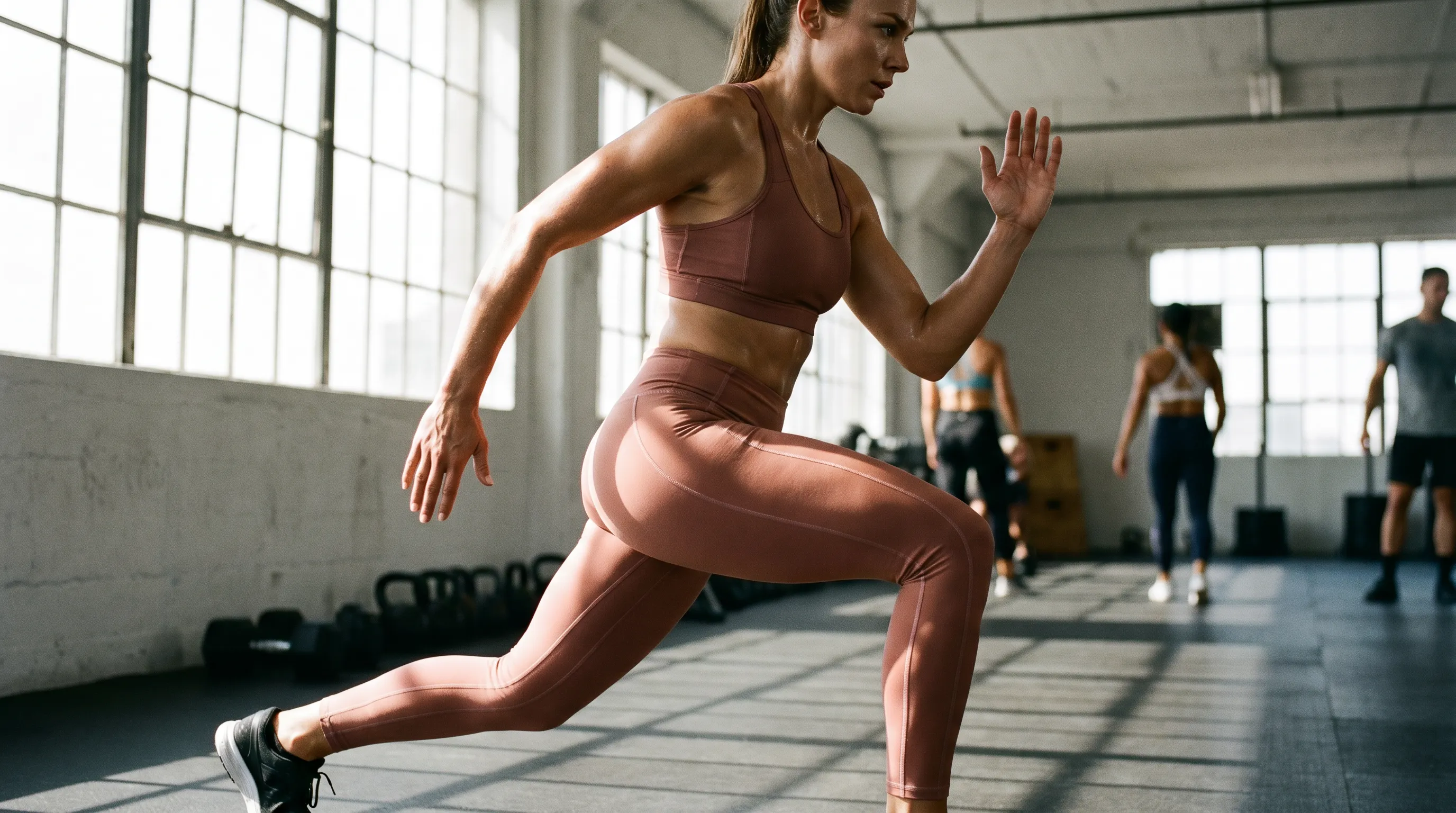
AI Photoshoots: one of 22 named models held consistent across the line, poses that read as motion and show fit (Dynamic Walk, Hands on Hip, Side Profile, Leaning, Full-Length Front), and a scene — Studio Loft or a clean cyclorama for catalog, Central Park or Kashmir Peaks for the outdoor-performance story. - 3
Spin the colorway run
The Color Changer recolors body, waistband, and mesh trim per zone against 2,300+ Pantone TCX codes (~$0.50); re-render each color on the same model, pose, and scene so the whole legging grid reads as a single shoot. - 4
Fill the gallery and the feed
The Lookbook Creator adds back, side, and detail views for the multi-image galleries marketplaces reward, while the 36 Lifestyle presets handle social-first, in-context gym and outdoor frames.
Showing fit, compression, and stretch the way shoppers buy
The reason on-model wins in activewear is specific: on-model imagery converts 20–30% higher than flat-lay for structured garments, and 76% of shoppers call on-model the most useful format for a buying decision (Metamodels.ai conversion analysis). For a compression legging, that usefulness is literal — the shopper is trying to predict squat-proof opacity, waistband hold, and where a seam will land on their own body.
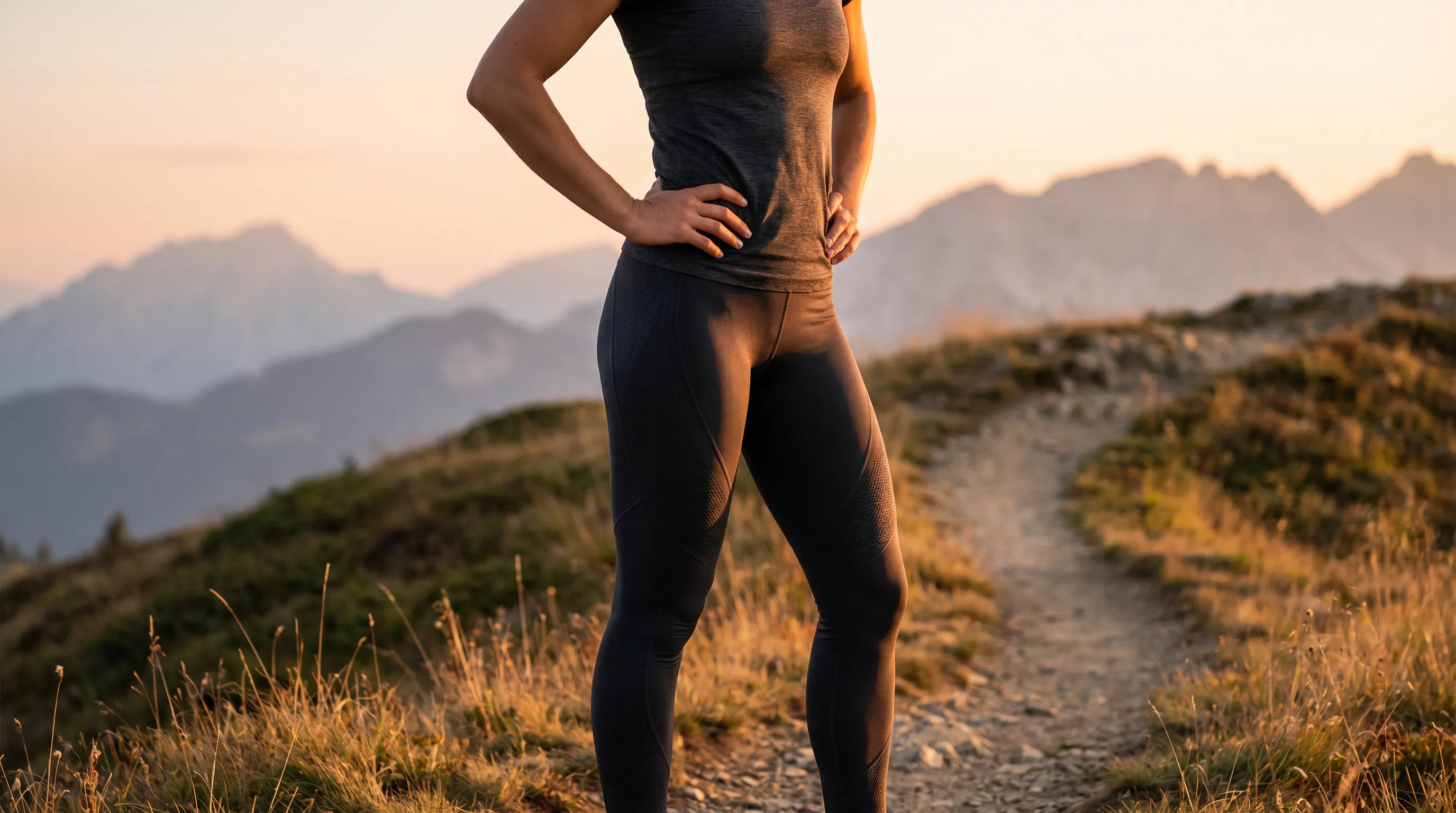
Directed generation lets you answer those questions on purpose. Choose motion poses — a Dynamic Walk, a Leaning stance, a Side Profile — that put the garment under the same tension a workout would, so compression and four-way stretch are visible rather than implied. Choose a scene that matches the use case: a clean Studio Loft for catalog opacity checks, an outdoor Kashmir Peaks or Central Park frame for the performance story. Because fabric texture, seam placement, and panel layout transfer from your source photo, the rendered mesh and contour stay accurate — which is exactly the detail that, when flattened, drives the category's high return rate (Nerdbot). What ships should match what's rendered, both because returns track fit accuracy and because it's the honest thing to show.
Built for activewear and athleisure brands
Indie activewear founders launching a first legging-and-bra capsule without a five-figure action-shoot budget — motion PDP imagery the week samples land. Athleisure labels spinning one base legging into six colorways, every color on the same body in the same light. Size-inclusive performance brands showing the same compression set across multiple body types — the representation customers expect — without multiplying bookings. DTC and Shopify sellers refreshing seasonal drops on the calendar the trend moves on, not the studio's, generating gym and outdoor frames on demand.
One honest boundary: AI renders don't replace fit validation. A stretch, compression, or moisture-wicking garment still needs a real fit sample on a real body before production — the too-many-sampling-rounds fix covers that split, and the swimwear sibling page makes the same point for stretch swim (AI photoshoot for swimwear). What generation replaces is the marketing production: the motion frames between an approved sample and a live selling page. For the manufacturing side of performance apparel — four-way stretch specs, gussets, flatlock seams, GSM — that lives in the tech pack workflow, not here. This page is strictly about the imagery.
Frequently asked questions
How much does a traditional activewear photoshoot cost?
A production day runs $2,500–$8,000 in major US markets — photographer, fitness-rated model, studio or location, styling, retouching — and branded campaigns reach $10,000–$25,000. Action and motion work adds cost on top: specialist freeze-frame lighting, athletic talent who can hold a clean mid-jump or mid-stride, and the time to get usable frames out of movement.
How much does an AI activewear photo cost?
About $1 per finished image — 5 credits per pose — so a 10-frame motion set runs roughly $10 in credits, and a six-color legging grid (recolor plus re-render) lands around $9–$12 total. The free plan's 25 credits cover about five watermarked test shots so you can judge how compression and mesh render on your own garment before committing.
Can AI show activewear in motion?
Yes — the 8 poses include motion-reading options like Dynamic Walk, Leaning, and Side Profile that put the garment under the same kind of tension a workout would, so compression and four-way stretch are visible rather than implied. That matters because on-model imagery converts 20–30% higher than flat-lay for structured apparel, and motion is what makes activewear read as performance gear.
Will compression and mesh panels render accurately?
Fabric texture, seam placement, mesh-panel layout, and color transfer from your input photo, and fidelity is the design priority — higher-resolution input improves it. This is where activewear is unforgiving: spandex and elastane reflect light unevenly and mesh disappears under flat lighting, which is a major driver of the category's high return rate. What's rendered should match what ships.
What scenes work for activewear?
Twelve named scenes cover the activewear use cases — a clean Studio Loft and studio cyclorama for catalog opacity and fit checks, plus Central Park, Kashmir Peaks, and other outdoor-performance settings for the training story. The 36 Lifestyle presets add social-first gym and street frames. No location scout, permit, travel, or weather window.
How do I shoot six colorways of one legging without six setups?
Recolor first, re-render second: the Color Changer applies colors per zone — body, waistband, mesh trim — against 2,300+ Pantone TCX codes at about $0.50, then AI Photoshoots renders each color on the same model, pose, and scene. The colorway grid reads as one shoot because, visually, it is one.
Can I show the same set on different body types?
Yes — render the same legging-and-bra set across the 22-model roster's body types from one source photo. For size-inclusive performance lines, that's every-size representation without booking and paying separate models per segment, and the consistent scene keeps the size run reading as one campaign.
Are AI activewear images commercial-safe? Do I need model releases?
Yes — images are commercial-licensed on paid plans for your Shopify store, marketplace listings, paid ads, and social. The 22 models are synthetic, not real people, so there are no model releases, likeness rights, or usage caps to manage. The free tier renders watermarked previews to test fidelity first.
Does this replace the activewear fit sample?
No — and it shouldn't. Compression and stretch garments need physical fit validation on a real body before production; AI imagery replaces the marketing shoot after the sample is approved, not the sample itself. Spec the garment properly first — four-way stretch, gussets, flatlock seams — then sell it with generated motion imagery.
Shoot your activewear line without booking an action shoot
Upload one garment photo. Pick a model, a motion pose, and a gym, studio, or outdoor scene — on-model activewear imagery in minutes for about $1 per image. Free test shots included.
Start an AI PhotoshootKeep going
Sources and further reading
- Wearview — real cost of a fashion photoshoot (2026) — $2,500–$8,000 production day; $10,000–$25,000 branded campaign; per-image math
- Metamodels.ai — on-model vs flat-lay conversion — on-model converts 20–30% higher; 76% of shoppers find on-model most useful
- Nerdbot — reducing activewear returns through photography (2026) — 14–30% return range; spandex/elastane light reflection and mesh-under-flat-lighting problem; motion poses for fit
- Lenflash — activewear product photography ideas — Nike 'Inner Strength' real-gym realism; motion and movement framing for activewear