
AI photoshoot for swimwear: on-model imagery without the beach booking
Updated June 10, 2026
Swimwear only sells on a body, which makes it the most production-heavy category to photograph: a location shoot runs $2,500–$8,000+ per day, swim and lingerie talent bill premium rates often on closed sets, and every print or colorway multiplies the bill. Adstronaut AI renders on-model swimwear imagery from one garment photo — studio, Villa Poolside, Santorini Sunscape — for about $1 per finished image, on any body type in the 22-model roster.
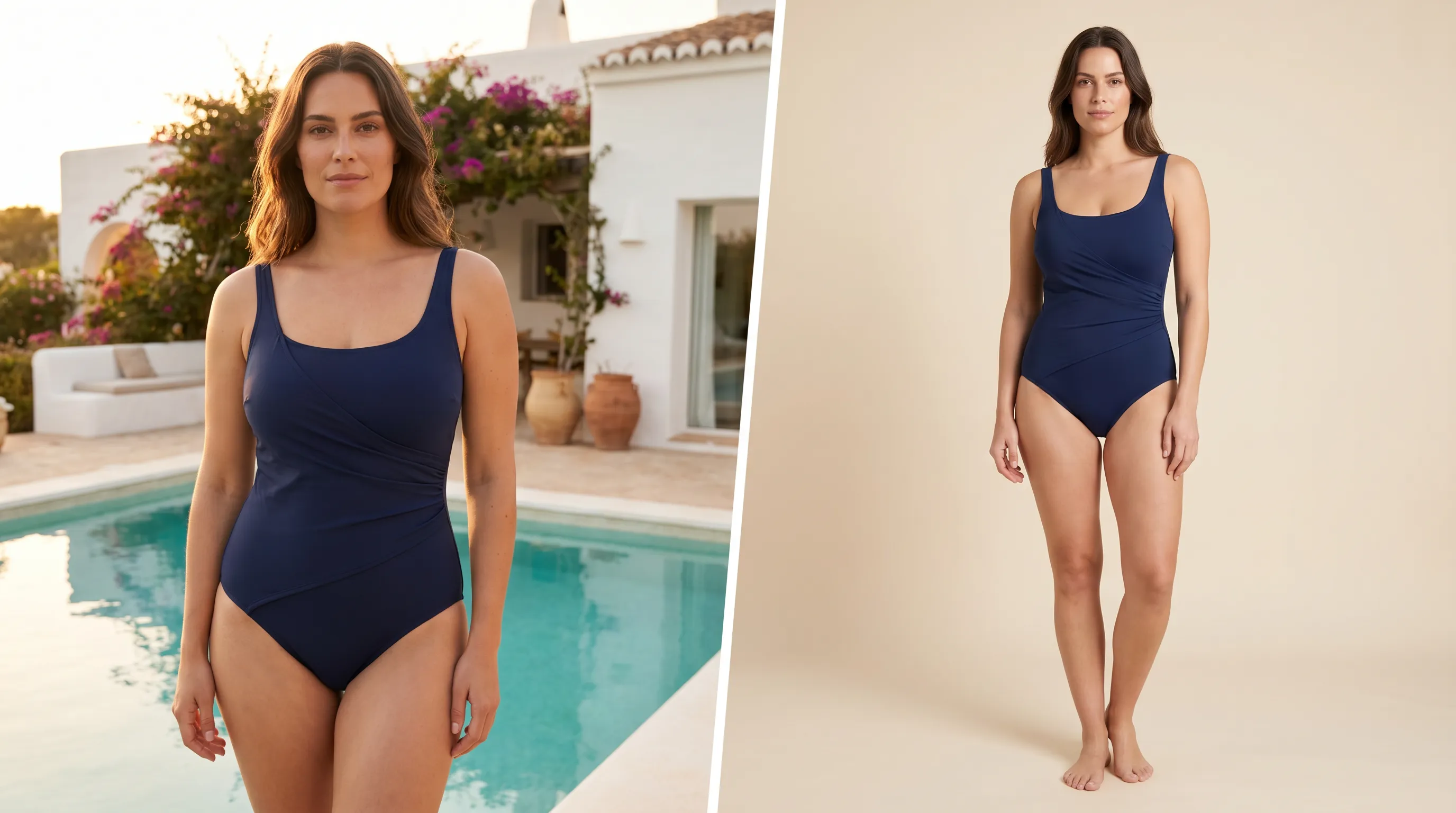
Why swimwear photography is uniquely expensive
A swimsuit can't be sold from a hanger: buyers need fit, coverage, and stretch on a body, so on-model is effectively mandatory — and that requirement stacks costs that other categories can skip. A production day runs $2,500–$8,000 in major US markets before extras (Wearview's 2026 breakdown), location work adds travel and permits, and swim and lingerie talent command premium rates, frequently with closed-set requirements (Photta's model-rate survey).
Then the category multiplies it. Swim lines live on print and colorway breadth — one silhouette in six prints — and each variant historically meant another sample and another setup. The calendar compounds it: resort and summer drops have hard seasonal windows, so a slipped shoot date can cost the selling season. And the inclusive-sizing standard set by brands across the market means showing the same suit on multiple body types, which under the traditional model means multiple bookings. Every structural feature of the category pushes the same direction: more on-model frames than any budget wants to buy at $45–$200 each.
Traditional swimwear shoot vs generated, need by need
| Need | Traditional shoot | Adstronaut AI |
|---|---|---|
| Cost per finished image | $45–$200+ (day cost over usable frames) | ~$1 (5 credits per pose) |
| Swim-rated talent | Premium day rates, closed sets, usage windows | 22 named synthetic models, no releases or usage caps |
| Location | Travel, permits, weather risk for beach/pool | Villa Poolside, Santorini Sunscape, Obsidian Shore scenes built in |
| Prints & colorways | New sample + setup per variant | Recolor (~$0.50) then re-render on the same model and scene |
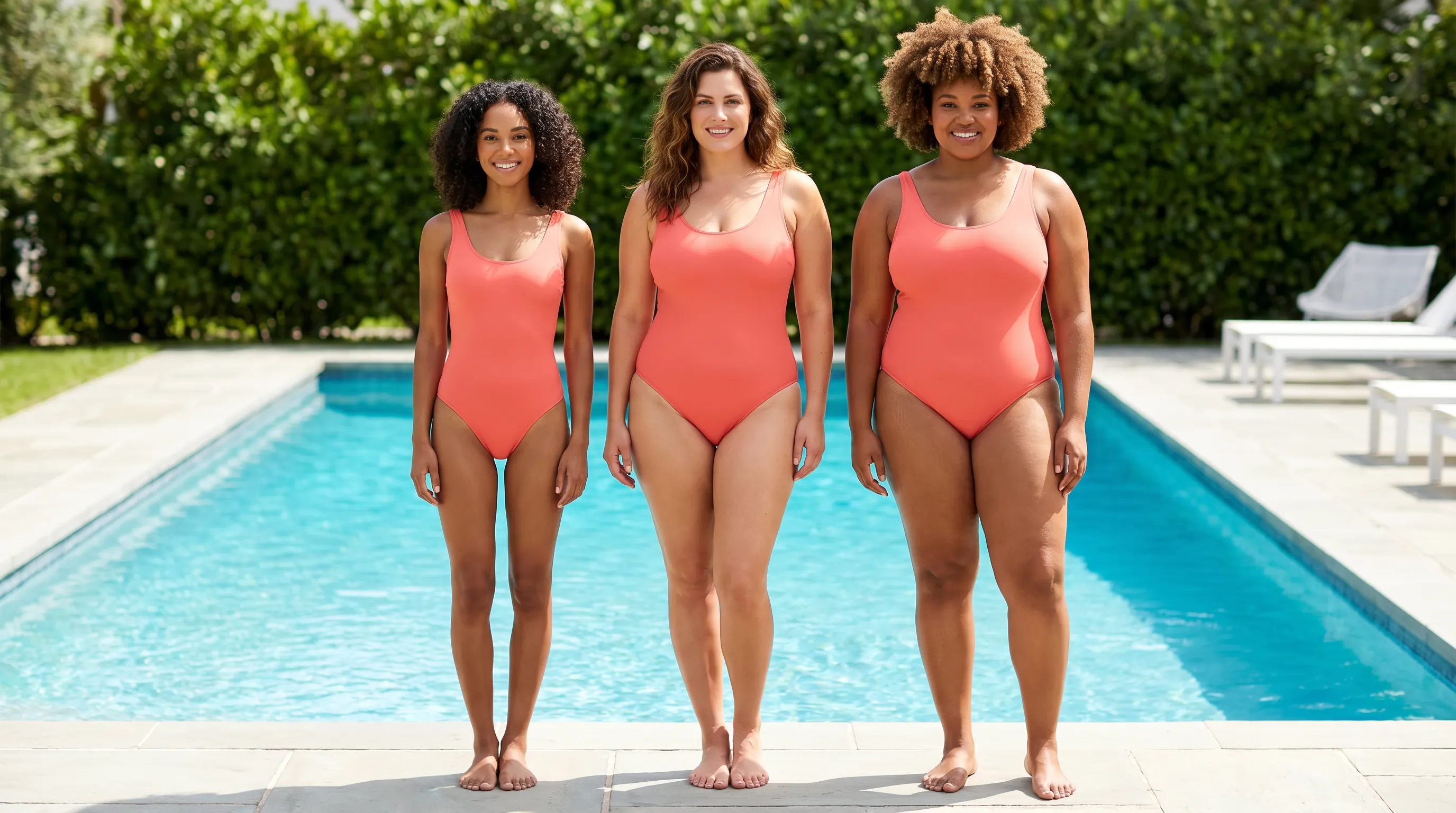
| Body-type coverage | Separate model bookings per size segment | Same suit rendered across the roster's body types |
| Seasonal timing | 1–3 week scheduling lead, weather-dependent | Same-day generation when samples land |
| Reshoots | Re-book the full production | Re-generate for a few credits |
Day rates and talent premiums per Wearview and Photta (2026); scene and model counts per Adstronaut's published configuration.
The swimwear workflow, suit to selling page
- 1
Upload one suit photo
Flat-lay, mannequin, or an amateur on-model shot — the AI detects the category and routes to the right setup. Steamed, well-lit input gives the highest-fidelity print transfer. - 2
Pick model, pose, scene
AI Photoshoots: one of 22 named models (held consistent across the line), poses that show coverage and fit (full-length, three-quarter, seated), and a scene — studio cyclorama for catalog, Villa Poolside or Santorini Sunscape for the resort story. - 3
Spin the print run
The Color Changer recolors body, trim, and straps per zone against 2,300+ Pantone TCX codes (~$0.50); re-render each variant on the same model and scene so the print grid reads as one shoot. - 4
Fill the marketplace slots
The Lookbook Creator adds back and detail views for the 5+ image galleries platforms reward — with the white-background packshot for marketplace main-image rules.
The marketplace rules swimwear has to clear
Swimwear imagery carries category rules on top of the usual specs, and they differ by platform. TikTok Shop is the strictest: children's swimwear must be displayed flat — no child models or mannequins — adult swim imagery must avoid "revealing" styling, and several markets prohibit certain styles entirely (TikTok Shop listing policy; full spec in our TikTok Shop guide). Amazon treats adult swim as on-model apparel for the main image while kids' swim must shoot flat off-model, all on pure white. Shopify imposes no modesty rules, but conversion still favors tasteful, fit-clear framing.
This is where directed generation beats both DIY and a loose shoot brief: you choose poses and scenes that are fit-clear but modest by construction — seated, three-quarter, walking — and regenerate instantly if a platform flags a frame. The same source photo yields the compliant flat for kids' listings and the on-model set for adult lines, without two productions.
Built for swim and resort brands
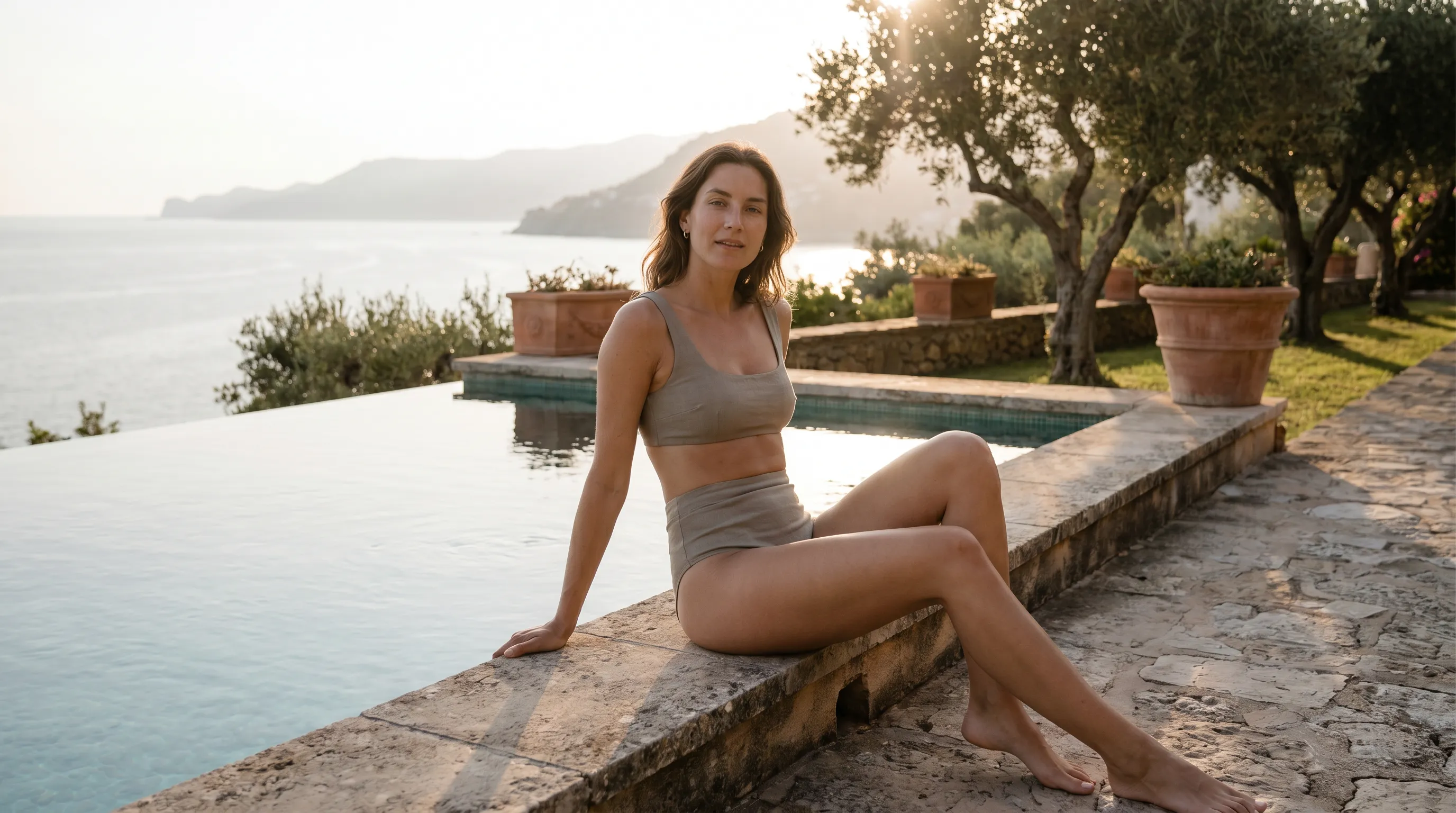
Indie swim founders launching a first collection without a five-figure location budget — PDP imagery the week samples land. Print-led labels spinning six-variant runs from one base sample, every print on the same body in the same light. Size-inclusive brands showing every suit on multiple body types without multiplying bookings. Resort and vacation-shop brands racing seasonal windows, generating poolside imagery on the drop calendar instead of the studio calendar.
One honest boundary: AI renders don't replace fit validation — a stretch garment still needs a real fit sample on a real body before production (the sampling-rounds fix covers that split). What it replaces is the marketing production: the frames between an approved sample and a selling product page. For the manufacturing side of swim — stretch fabric specs, linings, gussets — see the swimwear tech pack guide.
Frequently asked questions
How much does a traditional swimwear photoshoot cost?
A production day runs $2,500–$8,000 in major US markets — photographer, model, location or studio, styling, retouching — before swim-specific premiums. Swim and lingerie talent bill higher day rates than standard e-commerce work, often with closed-set requirements, and beach or pool locations add travel, permits, and weather risk.
How much does an AI swimwear photo cost?
About $1 per finished image — 5 credits per pose — so a 10-frame swim set runs roughly $10 in credits, and a six-print colorway grid (recolor + re-render) lands around $9–$12 total. The free plan's 25 credits cover about five watermarked test shots to judge print fidelity on your own suit.
Can I show the same swimsuit on different body types?
Yes — render the same suit across the 22-model roster's body types from one source photo. For size-inclusive lines, that's every-size representation without booking and paying separate models per segment, and the consistent scene keeps the size run reading as one campaign.
What scenes work for swimwear?
Twelve named scenes include several built for swim — Villa Poolside, Santorini Sunscape, Obsidian Shore, Terracotta Courtyard — plus a clean studio cyclorama for catalog consistency and 36 lifestyle presets for social-first frames. No travel, permits, or golden-hour scheduling.
How do I shoot six prints of one bikini without six setups?
Recolor first, re-render second: the Color Changer applies prints and colors per zone (body, trim, straps) against 2,300+ Pantone TCX codes at ~$0.50, then AI Photoshoots renders each variant on the same model, pose, and scene. The grid reads as one shoot because, visually, it is one.
What are the marketplace rules for swimwear imagery?
TikTok Shop: children's swim must be flat-lay only (no child models or mannequins), adult swim must avoid 'revealing' styling, and some markets ban certain styles. Amazon: adult swim on-model for the main image, kids' swim flat, pure-white background. Directed generation lets you produce the compliant variant per platform from one source.
Will the AI keep my print and coverage accurate?
Print, color, fabric texture, seam placement, and coverage transfer from your input photo — fidelity is the design priority, and higher-resolution input improves it. Accuracy matters doubly in swim, where coverage misrepresentation drives both returns and platform flags; what's rendered must be what ships.
Does this replace the swim fit sample?
No — and it shouldn't. Stretch garments need physical fit validation on a real body before production; AI imagery replaces the marketing shoot after the sample is approved, not the sample itself. Spec the suit properly first (the swimwear tech pack guide covers stretch fabrics, linings, and gussets), then sell it with generated imagery.
Shoot your swim line without booking a beach
Upload one suit photo. Pick a model, a pose, and a poolside or studio scene — on-model swimwear imagery in minutes for about $1 per image. Free test shots included.
Start an AI PhotoshootKeep going
Sources and further reading
- Wearview — fashion photoshoot costs (2026) — $2,500–$8,000 production day; line-item rates
- Photta — model pay per shoot (2026) — premium swim/lingerie talent rates and closed-set norms
- TikTok Shop — product listing policy — kids' swim flat-lay rule; adult swim modesty requirements
- Seller Labs — Amazon image requirements (2026) — adult apparel on-model main image; kids' apparel flat off-model