
AI fabric swap for denim: test washes and weights before you sample
Updated June 10, 2026
Denim is the most variable fabric in fashion — weight runs 10–16 oz, the fabric can be raw, sanforized, rigid, or stretch, and the wash recipe alone takes multiple sample rounds to land. A physical swatch costs $50–$200 and ships in 1–3 weeks, and wash sampling adds rounds on top. Adstronaut's Fabric Swapper renders any wash, weight, or finish onto your real jeans photo — with unlimited custom swatch uploads, per region, for about $0.25–$0.50 per swap.
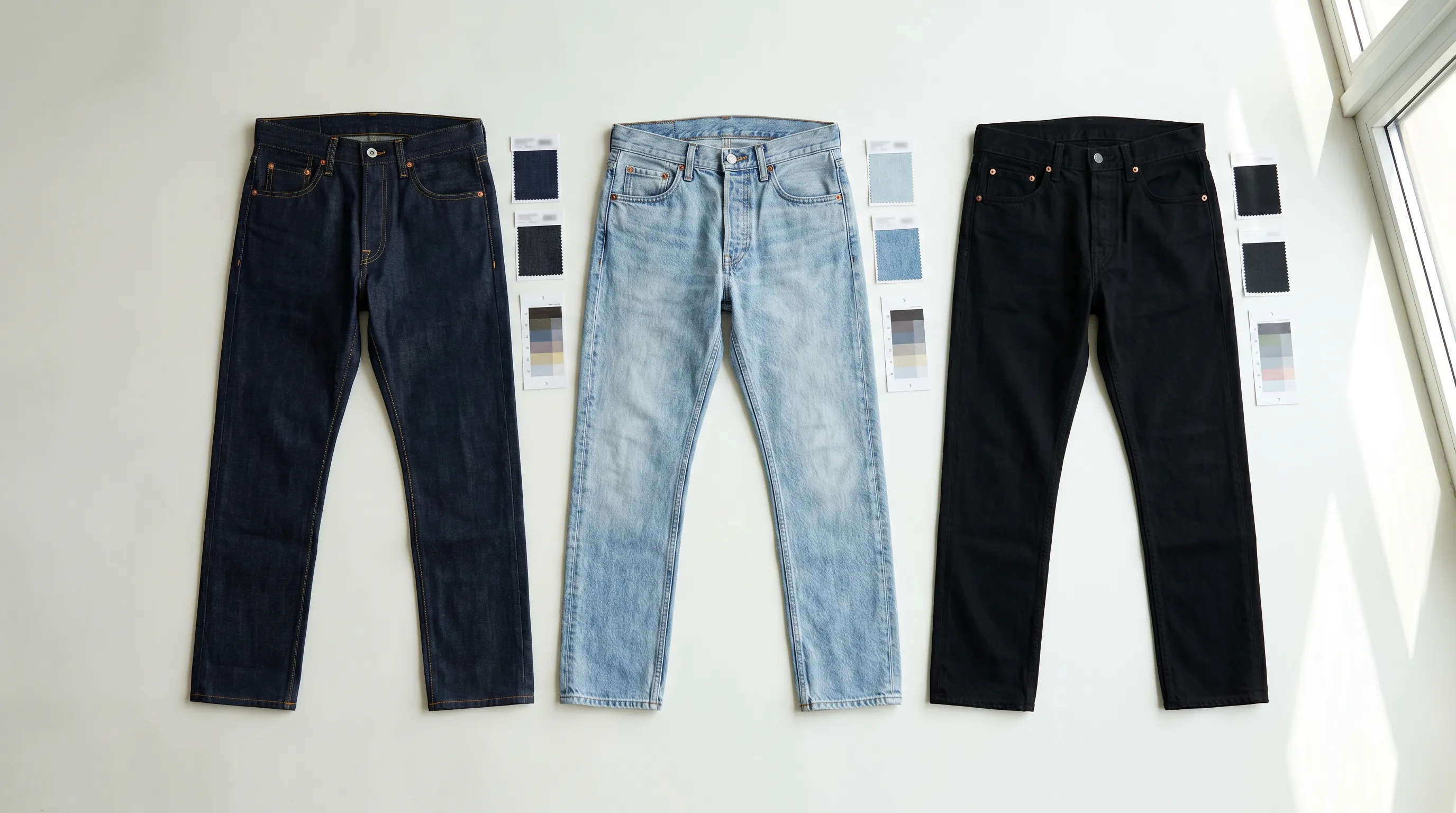
Why denim has more variables than any other fabric
No fabric stacks decisions like denim. Before a pair of jeans can be costed, a developer has to settle a chain of variables that each change how the garment looks, drapes, and shrinks.
Weight (oz/yd²). Denim weight is measured in ounces per square yard. The working ranges: lightweight sits around 10–12 oz, midweight 12–14 oz, heavyweight 14–16 oz, with premium raw running above 16 oz (Denimhunters). Weight changes the hand, the break-in time, and the drape on the body — a 10 oz summer jean and a 15 oz rigid jean photograph as completely different garments.
Raw vs sanforized. Sanforized (pre-shrunk) denim shrinks a controlled 1–3%; unsanforized raw denim shrinks 10–15% after the first wash (Arcoiriz). That single choice drives the entire pattern grading and inseam allowance.
Rigid vs stretch. Rigid is 100% cotton; stretch blends elastane or polyester into the weft, changing recovery, weight, and durability (He Spoke Style). Selvedge adds the shuttle-loom self-edge as a further fabric tier.
Wash and finish. Then the surface: raw, rinse, stone, enzyme, bleach, ozone, acid, or vintage hand-sand — each finish lightens, softens, or textures the same base cloth differently. Getting the exact shade and texture right "often requires multiple rounds" (New Asia Garment). Every one of these is a separate physical sample if you test it the old way.
Denim variables at a glance
The decisions a denim developer locks before costing — and what each one changes:
| Variable | Working range / options | What it changes |
|---|---|---|
| Weight | 10–12 oz light · 12–14 oz mid · 14–16 oz heavy · 16 oz+ raw | Hand, drape, break-in time, season |
| Construction | Raw (unsanforized) vs sanforized (pre-shrunk) | Shrinkage: ~10–15% raw vs ~1–3% sanforized |
| Stretch | Rigid 100% cotton vs stretch (elastane/poly weft) | Recovery, weight, durability, fit feel |
| Edge | Selvedge (shuttle-loom self-edge) vs open-end | Out-seam look, premium positioning |
| Wash | Raw · rinse · stone · enzyme · bleach · ozone · acid · vintage | Shade, contrast, fade pattern, softness |
| Finish round | Lab dip + wash-down swatch, multiple rounds typical | Final color/texture sign-off before bulk |
Verified against denim-industry references on weight, shrinkage, and wash development (2026); see sources.
What physical denim sampling actually costs
Each variable above, tested physically, is a swatch order and a wait. A single fabric swatch order from a mill runs $50–$200 depending on size, region, and shipping, and arrives in 1–3 weeks — Adstronaut's own fabric workflow and the fashion sampling cost breakdown both pin that range.
Denim compounds it. "Denim sampling costs more than most other garments and takes longer," because wash development alone — landing the exact shade, weight, and texture — needs multiple rounds, each on its own timeline (New Asia Garment). Lab dips are made on small 6"×6" swatches and must be approved before bulk (Textile School). Development yardage typically runs 30–40 yards, and sample yardage takes 2–3 weeks to produce (Szoneier).
So the real cost of "which wash?" isn't one swatch — it's three washes × two weights × a rigid-vs-stretch call, each a $50–$200 order with a 1–3 week tail and wash rounds layered on. A modest denim exploration — say five washes against two base weights — is ten swatch orders before you've even started fit sampling. That crosses $500–$1,000 and a month before a single design decision is locked, and the courier and reorder costs when the first batch comes back in the wrong weight stack on top.
That's the spend Adstronaut moves to the screen first. The exploration — the part that's purely about how a wash reads on the silhouette — happens digitally at roughly $0.25–$0.50 a swap, so only the one or two finalists ever ship as physical swatches. The losing washes, the weight you were never going to choose, the stretch call you can rule out by eye — all of it gets settled before the mill is emailed.
Testing denim digitally before you order swatches
The screen-first workflow that narrows every denim variable before a swatch ships:
- 1
Upload one jeans photo
Flat-lay, on-model, mannequin, or sketch. The Fabric Swapper auto-detects every fabric region — body, yoke, waistband, pocket bags, contrast panels — so each can take a different denim. - 2
Test the wash range
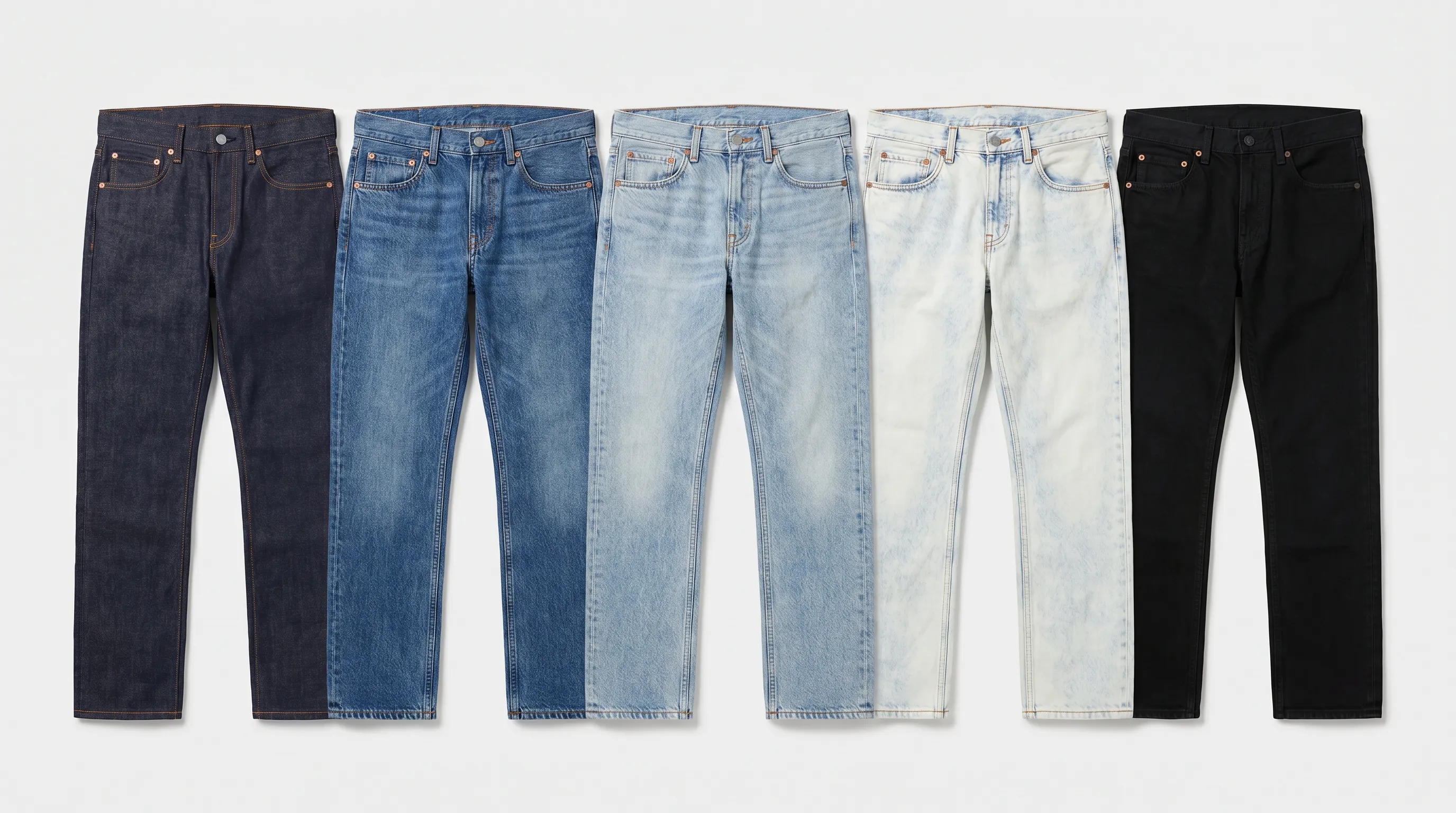
Swap raw indigo → rinse → light stone → bleach → black-overdye on the same silhouette. Each swap is 2 credits (~$0.25–$0.50), rendered with real fade and contrast — not a flat overlay. This is the wash exploration that would otherwise be multiple lab-dip rounds. - 3
Compare weights and hand visually
A 10 oz drape reads differently from a 14 oz rigid. Upload reference swatches of each weight and see how the heavier cloth stiffens the silhouette before committing to a base fabric. - 4
Upload your own mill swatches — unlimited
The 21 curated presets are a starting point, not a limit. Photograph a swatch from your mill's lookbook, scan a vintage pair, or drop in a WGSN tear — custom uploads are unlimited, and the AI applies that exact denim's texture and color. - 5
Carry the winner to the tech pack
Once a wash and weight win, the fabric direction flows into the tech pack bill of materials — your factory quotes and orders the physical swatch only for the finalist. See the denim jeans tech pack guide for the full spec.
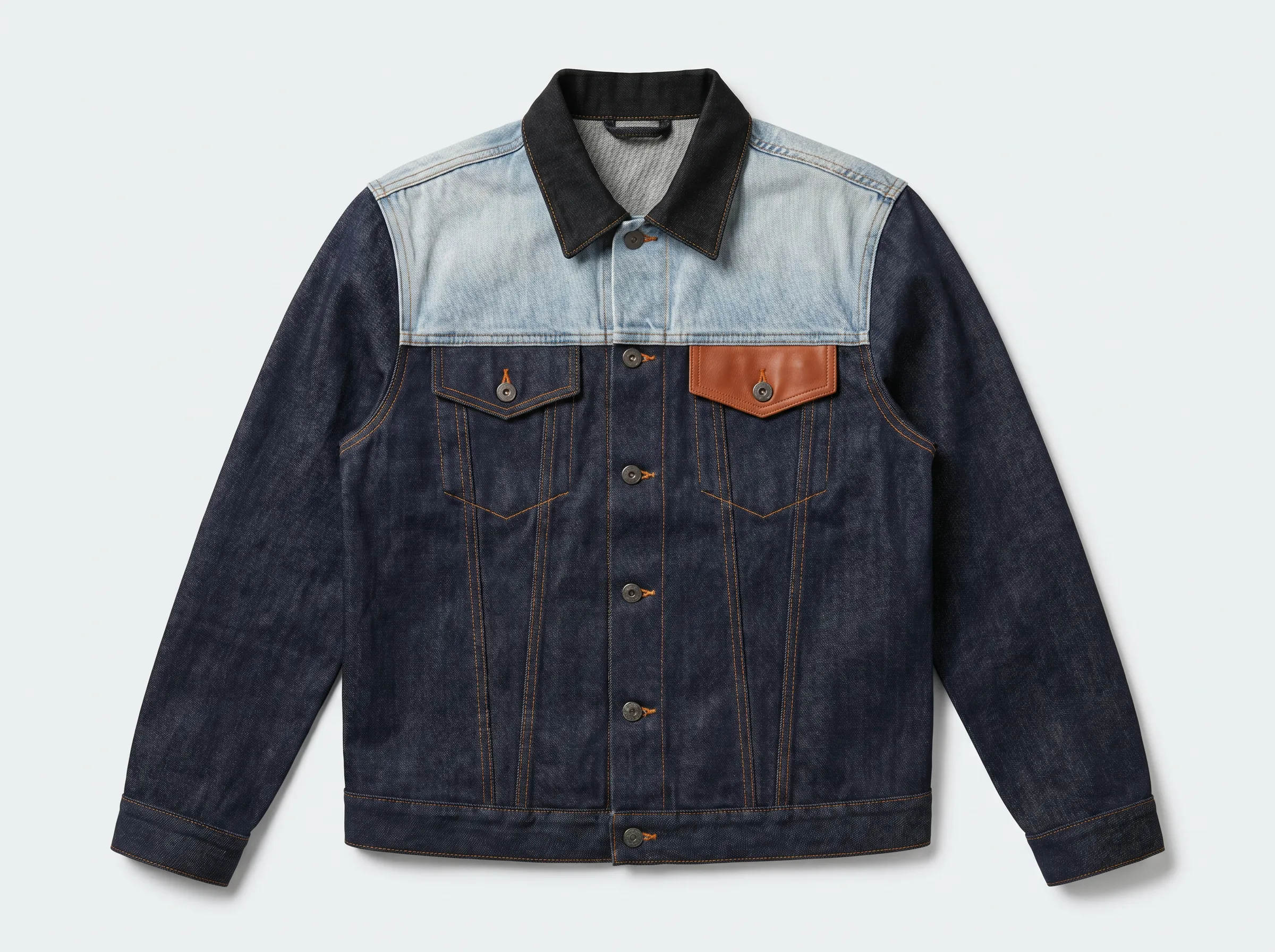
Per-region denim: contrast panels, yokes, and trims
Real denim garments are rarely one cloth. A jacket pairs a rigid body with a stretch back panel; a jean mixes a 12 oz body with a contrast pocket facing; a denim-and-canvas bag splits two materials across one silhouette. Generic AI fabric tools treat the whole garment as a single block and swap it as one texture.
Adstronaut's Fabric Swapper auto-detects every distinct region — typically 3 to 6 on a denim piece — and lets you assign a separate fabric to each: raw indigo body, light-wash yoke, black contrast waistband, leather patch. The boundaries stay clean, with no texture bleed between sections, so a two-tone denim concept is a single render rather than three.
If the variable you're testing is color rather than cloth — the same indigo body in twelve washed-down shades — the Color Changer runs the same per-zone detection on Pantone TCX references instead of fabric textures. Material lives in the Fabric Swapper; shade lives in the Color Changer. Both keep the jeans' silhouette, seams, rivets, and stitching identical — only the surface changes.
Where physical swatches still win
A digital swap is a visual decision tool — it narrows the field, it does not replace the final approval. Three things only a physical swatch confirms, and you should always order one for the finalist:
Hand and weight. You can compare how a 14 oz rigid stiffens a silhouette on screen, but you cannot feel the cloth, judge its true break-in, or confirm the exact oz against a target by sight alone.
Shrinkage and wash behavior on real fibers. Whether your sanforized base lands at 2% or your raw at 13% is a physics test on actual cotton — render the look, but wash-test the cloth before grading the pattern.
Color and lab-dip sign-off. Bulk approval still runs through a physical lab dip on a 6"×6" swatch; a screen render gets you to the right shade direction far faster, but the mill signs off on cloth.
The honest workflow: use Adstronaut to kill the losing directions — the washes and weights that were never going to win — so you order one finalist swatch instead of six exploratory ones. That's the 85%-fewer-swatches math the ROI breakdown walks through, not a claim that pixels replace cloth.
Built for denim developers
Indie denim founders pre-validating a first drop — testing whether the brand reads as raw selvedge, vintage stone, or clean black before committing 30–40 yards of development fabric to a single direction.
Design studios pitching a denim client live: three washes on the same jean during a 30-minute call, the decision closed before the meeting ends instead of a swatch round between.
Sustainability and sourcing leads swapping conventional cotton denim for organic or recycled-blend alternatives across a whole denim collection — comparing the visual outcome in minutes rather than ordering a full re-sampling round per style.
Production leads mapping how a wash recipe reads at different weights before the wash house starts its multiple-round development — fewer dead-end rounds at the laundry, a tighter brief to the mill.
The pattern across all four: denim has the longest, most expensive variable chain in fashion, and most of it is a visual decision that doesn't need cloth in hand to make. Move the exploration to ~$0.25–$0.50 a swap, and you spend your fabric budget on the winning denim, not the rejects.
Frequently asked questions
Can AI accurately render different denim washes?
Yes — the Fabric Swapper renders raw indigo, rinse, stone, bleach, enzyme, and black-overdye washes onto your real jeans photo with fade direction, contrast, and texture that respond to the garment's geometry, not a flat 2D overlay. It's a visual decision tool: it narrows the wash field before you order a physical lab dip, which the mill still signs off on a 6"×6" swatch.
How much does a digital denim swap cost versus a physical swatch?
A swap is 2 credits — about $0.25–$0.50 — on plans from $29/month. A single physical fabric swatch from a mill runs $50–$200 and ships in 1–3 weeks, and denim wash development typically needs multiple rounds on top. Testing five washes digitally costs roughly $1.25–$2.50; the same five as physical swatches crosses $250–$1,000 and weeks of waiting.
Am I limited to the 21 preset fabrics?
No. The 21 curated presets are a starting point, not a limit — custom swatch uploads are unlimited. Photograph or scan any mill swatch, vintage denim, supplier lookbook, or WGSN tear and the AI applies that exact denim's weave, wash, and color to your garment. For denim specifically, custom uploads are the main workflow because every mill's indigo is different.
Can I apply different denim to different parts of a garment?
Yes — per-region is the core workflow. Adstronaut auto-detects every distinct fabric region (typically 3 to 6 on a denim piece: body, yoke, waistband, pocket facings, contrast panels) and you assign a separate denim to each. A rigid raw body with a light-wash yoke and a leather patch is a single render, not three, with clean boundaries and no texture bleed.
Does the swap preserve the jeans' seams, rivets, and stitching?
Yes. The silhouette, seam lines, rivet and button placement, hem, fly, and pocket geometry stay identical — only the denim surface changes. That's essential for denim, where the topstitching and hardware are part of the design language and a fabric test shouldn't alter them.
Can I compare denim weights digitally?
Visually, yes — a 10 oz drape reads differently from a 14 oz rigid, and uploading reference swatches of each weight shows how the heavier cloth stiffens the silhouette. But weight, hand, and true break-in are physical properties: use the swap to narrow the direction, then order one finalist swatch to confirm the oz and feel in hand.
Will the digital swap tell me the shrinkage rate?
No — shrinkage is a physics test on real fibers. Sanforized denim shrinks roughly 1–3% and unsanforized raw 10–15%, and you must wash-test actual cloth before grading the pattern. The swap helps you choose the wash and look; the swatch confirms how it behaves wet. Use both — the screen narrows, the cloth confirms.
Does this work for denim jackets, skirts, and bags — not just jeans?
Yes. Any denim or denim-mixed garment works: jackets, skirts, shirts, overalls, and denim-and-canvas accessories. The per-region detection is especially useful on jackets and bags where rigid denim meets stretch panels, canvas, or leather trims in one silhouette.
Can I use the rendered denim images commercially?
Yes, on paid plans. Every render is high-resolution and commercially licensed for product pages, line sheets, lookbooks, client pitches, and technical specs — no royalty fees or usage caps. For a packaged denim spec sheet, the rendered fabric direction carries into the tech pack bill of materials.
How fast is a denim swap?
Under a minute per image for a single-region swap; multi-region swaps (different denims across body, yoke, and trims) stay under two minutes. A full five-wash comparison set is typically rendered and downloadable in under five minutes — versus the 1–3 weeks a single physical swatch takes to ship.
Test every wash and weight before a single swatch ships
Upload one jeans photo. Swap raw indigo, stone wash, bleach, black overdye, or any mill swatch you upload — per region, with real fade and texture, at about $0.25–$0.50 a swap.
Try the Fabric SwapperKeep going
Sources and further reading
- Denimhunters — denim weight explained — weight in oz/yd²; ~10–12 oz light, 12–14 mid, 14–16 heavy, 16 oz+ premium raw
- Arcoiriz — denim shrinkage: sanforized vs unsanforized — sanforized shrinks ~1–3%; unsanforized raw ~10–15% after first wash
- He Spoke Style — raw denim guide — raw/dry definition; selvedge self-edge; stretch via elastane/poly blend
- New Asia Garment — denim lead time & production — denim sampling costs more and takes longer; wash development needs multiple rounds
- Textile School — lab dips in garment manufacturing — lab dips made on 6"×6" swatches; buyer approval required before bulk
- Szoneier — custom denim production guide — development ~30–40 yards; sample yardage produced in ~2–3 weeks