Best Optitex alternatives in 2026
Updated June 10, 2026
The best Optitex alternative depends on whether you actually need pattern CAD. Optitex is enterprise 2D/3D pattern-design software, EFI-owned and priced by custom quote — built for pattern makers and manufacturers. If your real deliverable is a factory-ready tech pack from a photo, Adstronaut AI generates it in 3–5 minutes for $3–6 per pack with no patternmaking. CLO 3D ($450/yr) and Browzwear ($750/yr) suit teams committed to 3D draping; Adobe Illustrator suits studios hand-drawing flats.
The quick answer
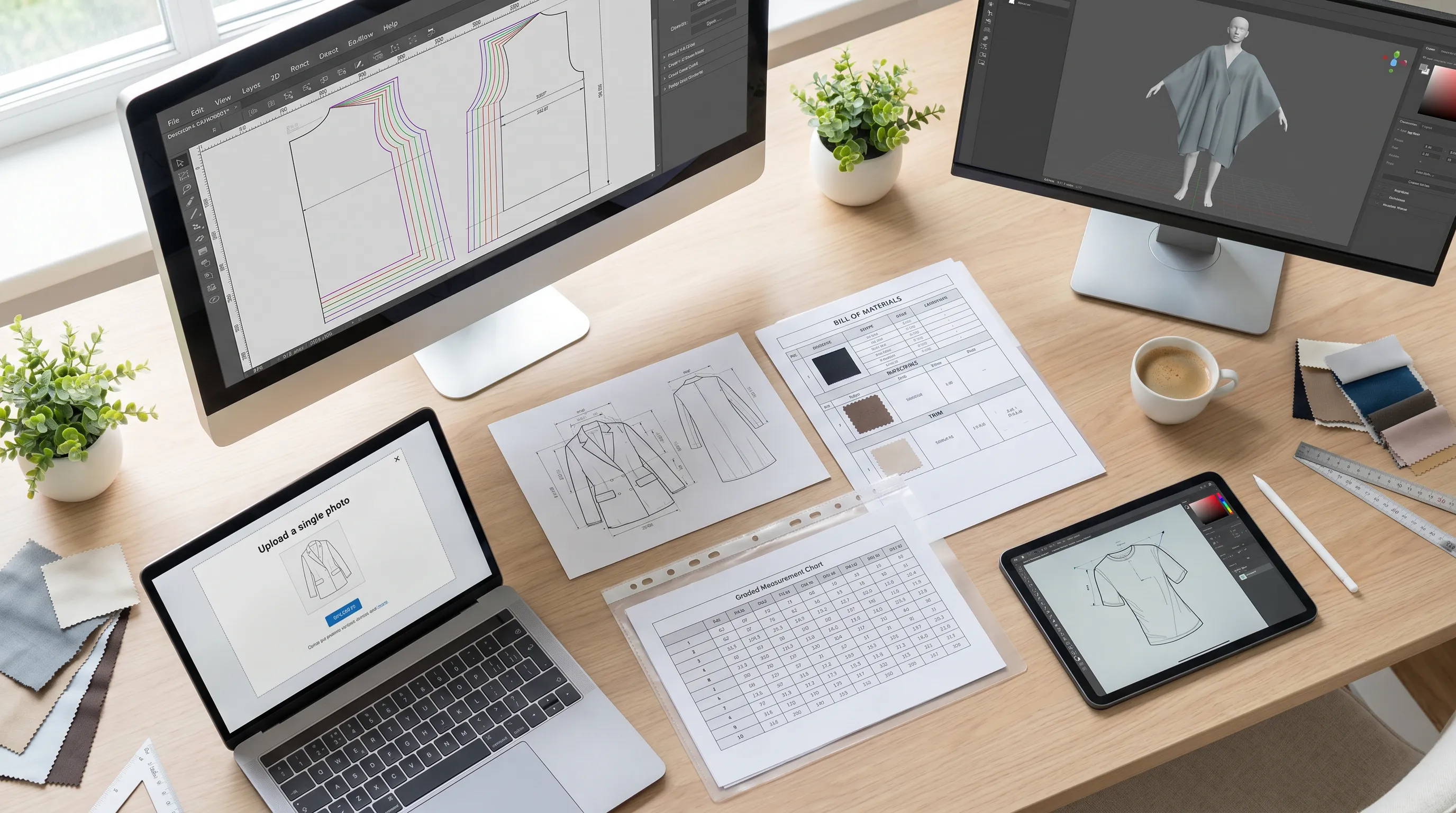
Most brands looking for an Optitex alternative don't need pattern CAD at all.
Optitex is integrated 2D/3D pattern-design software — pattern digitizing, grading, marker-making, and 3D prototyping — owned by EFI and sold through enterprise quote-only pricing (Optitex). It's genuinely strong CAD for pattern makers and manufacturers. But the inputs it assumes — a trained pattern maker, a graded block, months of CAD practice — are exactly what most small brands don't have. If your actual deliverable is a factory-ready tech pack and product imagery, the practical alternative isn't another CAD suite; it's Adstronaut AI, which generates the tech pack from one photo for $3–6. If you truly need pattern grading and 3D drape, CLO 3D ($450/year) or Browzwear ($750/year) are the closest accessible substitutes.
Optitex alternatives compared: price, best-for, and what each needs from you
| Tool | Pricing (2026) | Best for | What it needs from you |
|---|---|---|---|
| Optitex | Enterprise quote only (not published); EFI-owned | Manufacturers and pattern rooms doing 2D/3D pattern CAD and marker-making | A pattern maker, a graded block, and months of CAD training |
| Adstronaut AI | Plans from $29/mo; tech pack 25 credits = $3–6, on-model image ~$1 | Founders and small brands needing tech packs + visuals from a photo | One garment photo — no patternmaking, no CAD |
| CLO 3D | $50/mo or $450/yr individual; Enterprise by quote | Designers committed to 3D draping for virtual samples | A 2D pattern to drape and a months-long learning curve |
| Browzwear (VStitcher) | Freelancer $750/yr; FreelancerPlus $1,500/yr; Teams $3,950/yr (up to 3 users) | Development teams running enterprise 3D pattern simulation | A graded pattern, 3D skills, and a capable GPU |
| Adobe Illustrator | $22.99/mo annual, $34.49/mo monthly (single app) | Studios hand-drawing flats and bespoke artwork | Vector skills; flats drawn by hand, BOM built in Excel |
Optitex pricing is not published — EFI sells it by request-a-quote/enterprise contract. CLO and Adobe per their published 2026 plans; Browzwear per its February 2026 self-serve launch (Teams is flat for up to 3 named users, not per seat).
Why brands look for an Optitex alternative
Optitex isn't disliked — it's a category mismatch for most of the brands searching for an alternative. Three realities push them elsewhere.
Quote-only, enterprise pricing. Optitex publishes no price; you request a quote and engage with EFI sales (Optitex). Integrated 2D/3D pattern CAD historically lands in the four-to-five-figure-per-seat range with annual maintenance — affordable for a manufacturer amortizing it across thousands of styles, opaque and heavy for a brand shipping a few dozen. When the price isn't even listed, that itself is the signal: this is enterprise software with an enterprise sales motion.
It assumes a pattern maker. Optitex is built around the pattern: you digitize or draft a block, grade it across sizes, nest a marker, and prototype in 3D. A founder without patternmaking can't drive it — there is nothing to grade or drape until a pattern exists. The tech pack most small brands actually need is downstream of all that work, and Optitex doesn't shortcut the upstream skill.
The learning curve is long. Production pattern CAD is a specialist craft; practitioners describe ramp times measured in months, on top of the patternmaking expertise the software presumes. For a two-person brand, that's a hire and a training budget before the first useful output. The honest counterpoint: for a manufacturer or a brand with a pattern room, Optitex's grading, marker efficiency, and PLM integration are exactly the right tools — switching away would be a downgrade.
Where each tool sits in the pipeline
The best Optitex alternative by use case
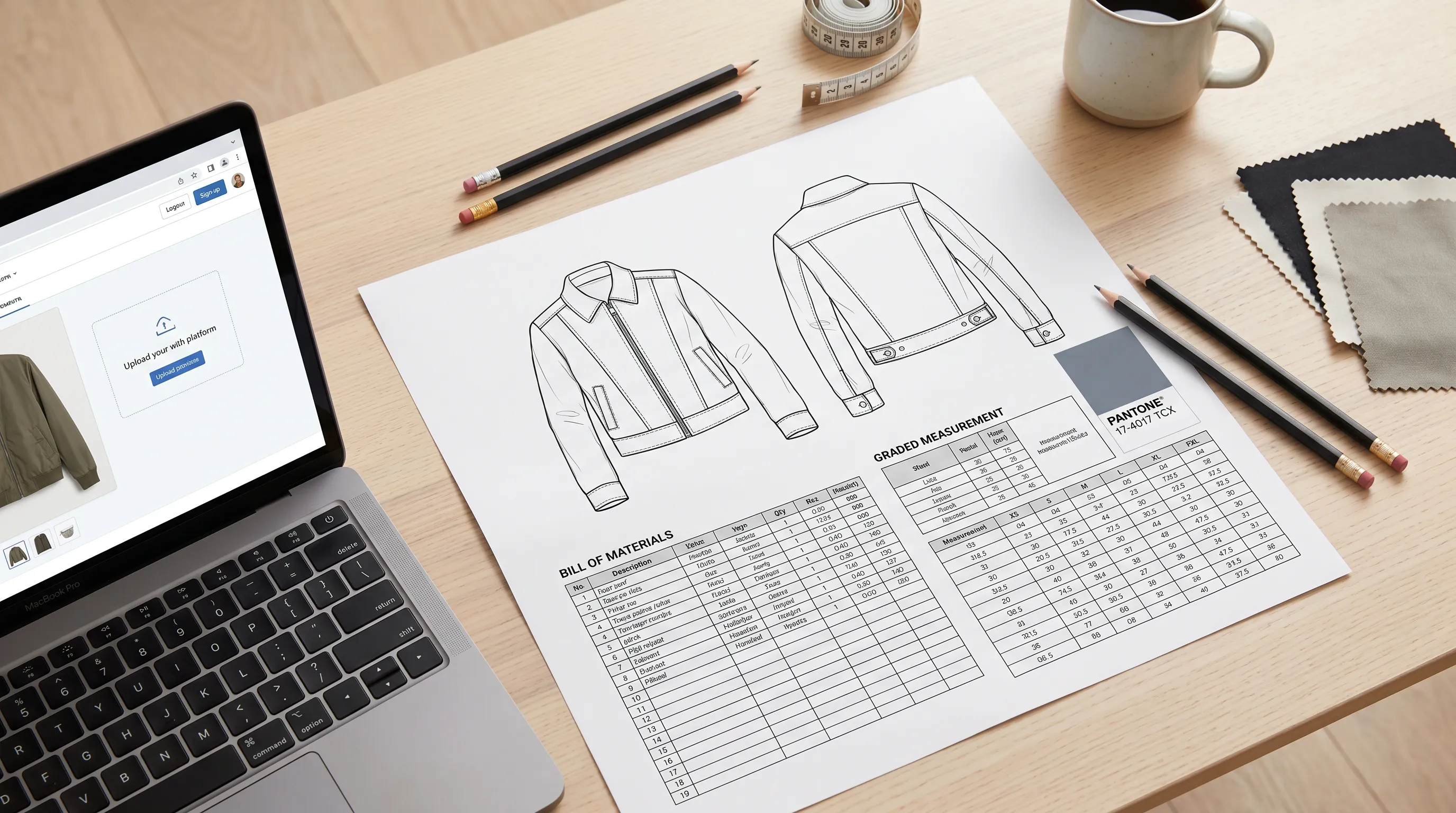
No pattern maker, you need tech packs fast → Adstronaut AI. Upload one garment photo and the AI generates a factory-ready tech pack — annotated flat sketch, structured BOM, graded measurements with tolerances, construction notes — in 3–5 minutes for $3–6, across apparel, footwear, leather goods, knitwear, and bodywear. No pattern, no CAD, no seat license. The first pack is free to preview. This is the most direct fit for founders and small DTC brands who were never going to staff a pattern room.
You genuinely want 3D draping on a budget → CLO 3D. At $50/month or $450/year (CLO pricing), CLO simulates garments in 3D and exports tech-pack data via CLO-SET. It's far cheaper than enterprise Optitex but still real pattern-led 3D software — choose it only if virtual fit is the actual deliverable. Our CLO 3D alternatives page runs this analysis from the CLO side, and the CLO 3D vs Adstronaut comparison is the head-to-head.
You're a development team set on enterprise 3D → Browzwear. VStitcher is the other enterprise 3D pattern-simulation suite, now with self-serve pricing from $750/year (Browzwear). It's a lateral move from Optitex, not a downsizing — see our Browzwear alternatives breakdown.
You only need hand-drawn flats → Adobe Illustrator. At $22.99–$34.49/month (Adobe), Illustrator is the cheapest seat here, but it automates nothing — every flat is drawn with the pen tool and the BOM lives in Excel, a 6–10 hour cycle per style.
You're a manufacturer with a pattern room → staying on Optitex is legitimate. If you digitize, grade, nest markers, and integrate with PLM, Optitex's CAD is doing work no AI document generator replaces. The switchers are mostly brands who never needed the pattern engine in the first place.
Switch from Optitex, or stay?
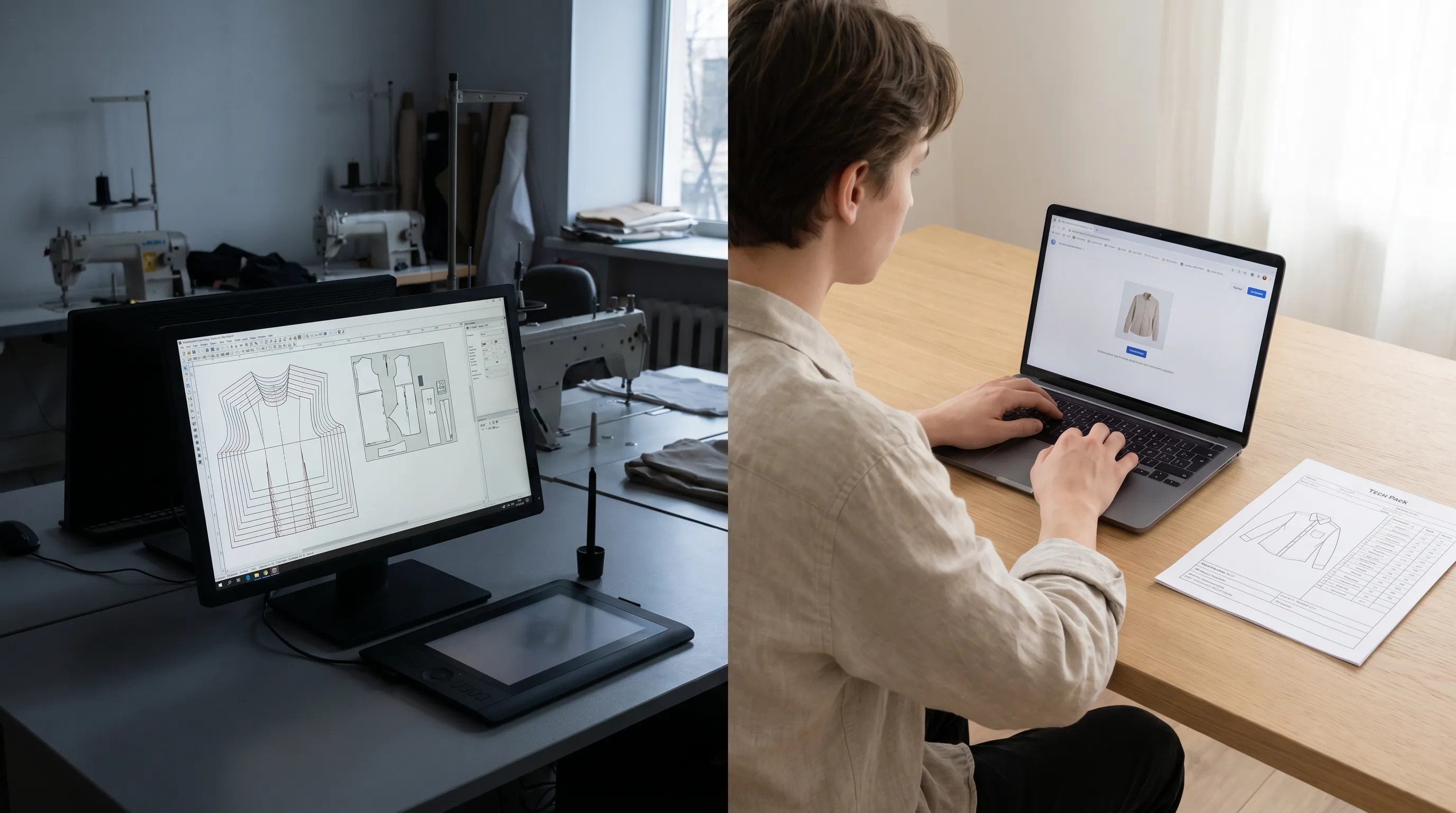
Switch to Adstronaut if…
- ✓Nobody on the team makes patterns — Optitex has nothing to grade or drape without one, and you don't need it to.
- ✓Your deliverables are tech packs and product imagery, not graded patterns or markers.
- ✓You're a solo founder or small brand that can't justify quote-only enterprise CAD plus a pattern hire.
- ✓You want per-output pricing: a tech pack is $3–6, five packs ≈ $29 of credits.
- ✓You need class-specific packs (footwear, knitwear, leather, bodywear) without learning each CAD convention.
Stay on Optitex if…
- ✓You run a pattern room that digitizes, grades, and nests markers for production.
- ✓Marker efficiency drives your fabric cost and you need true nesting and yield optimization.
- ✓You prototype in 3D from your own graded patterns and the drape accuracy matters.
- ✓You're integrated with EFI / enterprise PLM and the data pipeline is working.
- ✓You manufacture at a scale that amortizes a quoted enterprise license across thousands of styles.
A pairing also works: engineer patterns and markers in Optitex, generate the brand-facing tech pack and product imagery in Adstronaut.
Why Adstronaut is the practical alternative — and where it isn't
Adstronaut AI and Optitex aren't the same category, and for a small brand that's the point. Optitex engineers the pattern; Adstronaut produces the deliverables a small brand ships — the tech pack and the product image — without a pattern at all.
No CAD, no pattern, no curve. Upload a flat-lay, mannequin shot, or mockup and the AI Tech Pack Generator writes the flat sketch, bill of materials, graded measurements (held to the relevant ASTM tables where one applies), and construction notes in 3–5 minutes. The AI Designer turns a concept into a photoreal render with an auto-extracted Pantone palette for about $2, and AI Photoshoots render the finished garment on a named model for about $1 per image. A 20-style collection runs roughly $60–$120 in tech-pack credits on plans from $29/month — against a quoted enterprise license plus the patternmaking capability you'd have to hire.
The honest boundary: Adstronaut is not pattern CAD. It does not digitize or grade sewing patterns, nest markers, or simulate drape physics. Its graded measurements are point-of-measure specs for the tech pack, not a graded sewing pattern you can cut from. If your job is producing production-ready patterns and markers, Optitex (or CLO/Browzwear for 3D) is the right tool and Adstronaut won't replace it. If your job is getting a clean, complete tech pack to a factory fast, that's exactly what it's built for — see the best tech pack software roundup for where it sits among the options.
Testing the switch: a zero-risk check in 4 steps
- 1
Pick one style you'd normally spec by hand
Choose a garment you'd otherwise document downstream of an Optitex pattern. A clear photo of the sample or mockup is the only input — no pattern file required. - 2
Generate the pack and compare
Run it through the Tech Pack Generator (first one free) and put it next to your Optitex-derived spec. Check the sections your factory reads: flats, BOM, graded POMs with tolerances, construction notes. - 3
Add your shop-floor knowledge in review
The 10–15 minute review is where your exact measurements, supplier names, and preferred trims go — the same knowledge a pattern room carries in its blocks and notes. - 4
Keep pattern CAD only where it earns its place
If marker efficiency or true grading drives your costs, keep Optitex for the pattern engineering and use Adstronaut for the brand-facing documentation and visuals — many teams split the work this way.
Which Optitex alternative should you choose?
Indie founders and first-time designers without a pattern maker get the most from Adstronaut — it produces the tech pack and the visual directly from a photo, skipping the pattern-CAD prerequisite entirely, at per-output pricing instead of a quoted enterprise license. Small DTC and streetwear brands shipping 10–50 styles a year get the cost and speed win.
Designers who specifically want 3D draping without enterprise pricing should evaluate CLO 3D at $450/year, accepting the months-long curve. Development teams set on enterprise 3D can compare Browzwear as a lateral option. Studios drawing bespoke flats keep Illustrator. And manufacturers with a real pattern room should stay on Optitex — paired, if useful, with an AI generator for the brand-facing tech pack. For wider context, see the best AI tools for fashion design and the full alternatives hub.
Frequently asked questions
What is the best alternative to Optitex?
It depends on whether you need pattern CAD. For brands without a pattern maker, Adstronaut AI is the strongest alternative — it generates a factory-ready tech pack from one photo for $3–6 per pack, with no patternmaking, which Optitex structurally can't shortcut. For teams that genuinely need pattern grading and 3D drape, CLO 3D ($450/year) or Browzwear ($750/year) are the closest accessible substitutes to enterprise Optitex.
How much does Optitex cost in 2026?
Optitex does not publish pricing. It's enterprise 2D/3D pattern-design software owned by EFI and sold by custom quote through its request-a-quote sales process. Integrated pattern CAD of this class typically lands in the four-to-five-figure-per-seat range with annual maintenance, but the exact figure is contract-specific — when a vendor lists no price, that's the enterprise signal.
Why do people switch away from Optitex?
Three patterns dominate: quote-only enterprise pricing that's heavy for a small brand, the requirement for a trained pattern maker (Optitex is built around the pattern, so there's nothing to do without one), and a long CAD learning curve on top of patternmaking expertise. Manufacturers with a pattern room rarely switch — the switchers are mostly brands who never needed the pattern engine to begin with.
Is Adstronaut a pattern CAD tool like Optitex?
No, and that's the honest distinction. Optitex digitizes, grades, and nests sewing patterns and prototypes them in 3D. Adstronaut uses AI to generate tech packs and product imagery from a photo — its graded measurements are point-of-measure specs for the tech pack, not a graded sewing pattern you can cut from. If you need production patterns and markers, Optitex is the right tool. If you need the tech pack, Adstronaut is faster and far cheaper.
Is Adstronaut cheaper than Optitex?
For a small brand, almost certainly. Optitex is quote-priced enterprise CAD with annual maintenance and assumes a pattern maker on staff. Adstronaut charges per output: a tech pack is 25 credits — about $5.80 on the $29/month Standard plan, down to roughly $3.10 on annual Studio — and the first pack is free. A 20-style collection costs $60–$120 in credits versus a quoted enterprise license plus a hire.
Is CLO 3D a good Optitex alternative?
Only if you need 3D draping. CLO 3D ($50/month or $450/year) simulates garments in 3D and exports tech-pack data through CLO-SET, at a fraction of enterprise Optitex pricing — but it's still pattern-led 3D software with a months-long curve. For a brand that just needs clean 2D tech packs faster, an AI generator is the closer fit; for virtual-fit-driven development, CLO is the right lane.
How is Optitex different from Browzwear and CLO 3D?
All three are pattern-led professional tools, but the emphasis differs. Optitex is integrated 2D/3D pattern CAD with strong grading and marker-making for manufacturing; Browzwear (VStitcher) and CLO 3D lead with photorealistic 3D garment simulation for virtual sampling. All three assume a graded pattern and CAD skills as input — which is why brands without a pattern maker often skip the category and use an AI tech-pack generator instead.
Can I get a factory-ready tech pack without pattern CAD software?
Yes. Adstronaut generates the complete document — flat sketch, bill of materials, graded measurements with tolerances, construction notes, Pantone colorways — from a single garment photo in 3–5 minutes for $3–6. Factories evaluate the document's completeness and accuracy, not the software that produced it; the output is a standard print-ready PDF (Excel/CSV export on Pro).
Does Optitex make tech packs, or just patterns?
Optitex's core is pattern engineering — digitizing, grading, marker-making, and 3D prototyping. Tech-pack documentation is assembled downstream of that work, often in a separate tool or PLM. That's the gap many alternative-seekers feel: they want the tech pack at the end, but Optitex is priced and built for the pattern steps before it. An AI generator produces the tech pack directly.
Can I keep Optitex and still use Adstronaut?
Yes, and it's a sensible pairing. Engineer patterns and markers in Optitex where grading and yield matter, then generate the brand-facing tech pack and on-model product imagery in Adstronaut. The CAD handles production pattern work; the AI handles the documentation and visuals a small team would otherwise build by hand.
Get the tech pack without the pattern room
Skip the pattern CAD. Upload one garment photo and get a factory-ready tech pack — flat sketch, BOM, graded measurements, construction notes — in minutes. First pack free, then $3–6 each.
Try the AI Tech Pack GeneratorKeep exploring
Sources and further reading
- Optitex — 2D/3D pattern CAD (EFI) — integrated 2D/3D pattern design, grading, marker-making, 3D prototyping; enterprise request-a-quote pricing, no published price (2026)
- CLO — official pricing — $50/mo or $450/yr individual; CLO-SET tech-pack data export
- Browzwear — pricing plans — Freelancer $750/yr; FreelancerPlus $1,500/yr; Teams $3,950/yr for up to 3 users (Feb 2026 self-serve launch)
- Adobe Illustrator — pricing — $22.99/mo annual, $34.49/mo monthly (single app)
- WearView — 3D pattern-CAD learning-curve analysis (2026) — production proficiency in pattern-led 3D/CAD measured in months