
CLO 3D vs Adstronaut AI
Updated June 10, 2026
CLO 3D is 3D garment-simulation software: you draft 2D patterns, stitch them virtually, and drape them on an avatar to see fit before you cut fabric. It costs $50/month or $225/year, wants a CUDA GPU, and takes months of patternmaking practice. Adstronaut AI is the opposite tool — it generates a factory-ready tech pack from one garment photo in 3–5 minutes for $3–6, with no CAD and no 3D. They overlap only at the handoff document; the simulation itself is not what Adstronaut does.
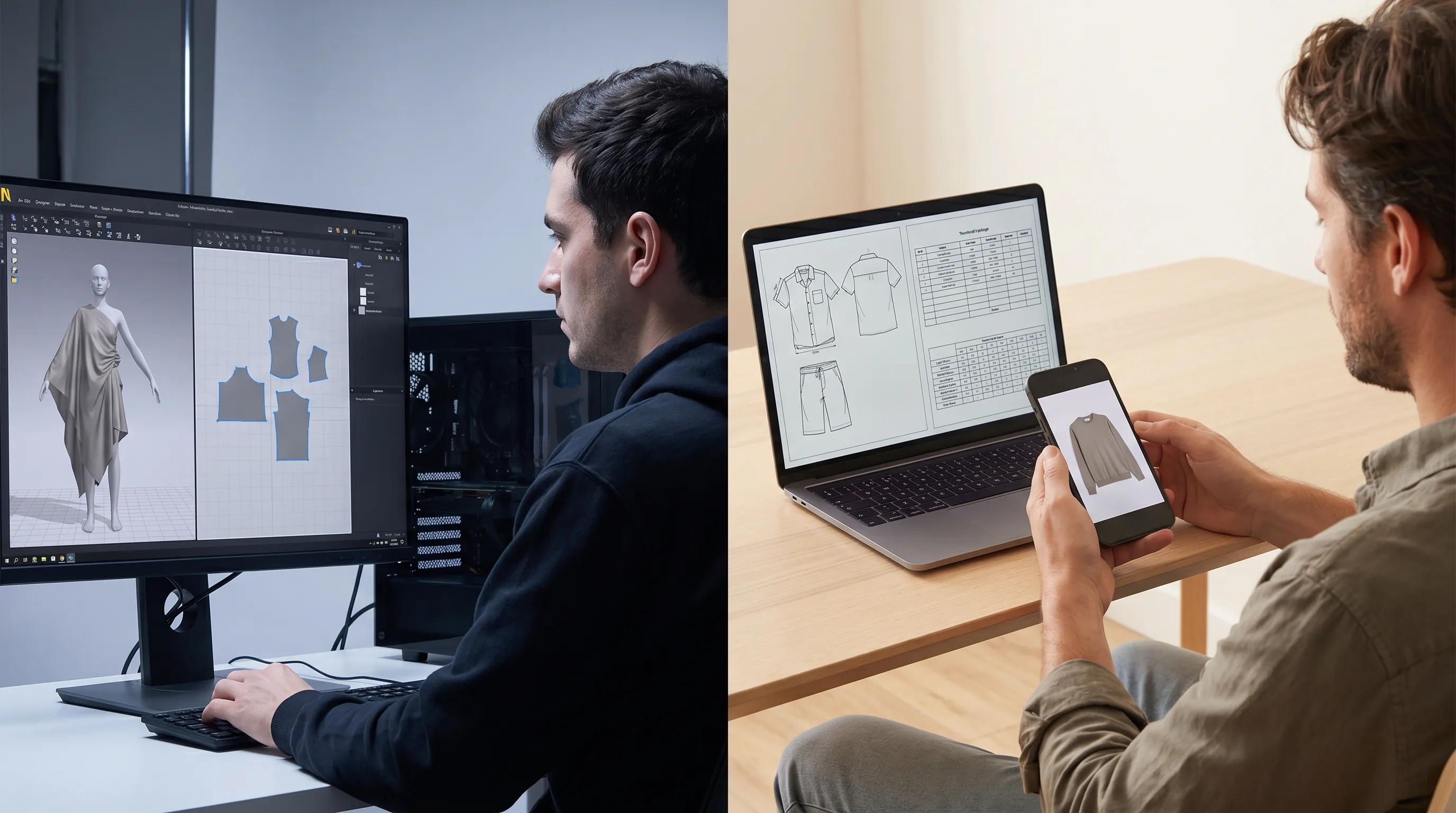
CLO 3D vs Adstronaut AI: the quick verdict
CLO 3D and Adstronaut AI are not the same kind of tool, and the honest comparison starts there. CLO 3D is a 3D garment-simulation and patternmaking application — you draft 2D pattern blocks, stitch the panels virtually, and drape the result on a digital avatar to judge fit, ease, and drape before any fabric is cut. It costs $50/month or $225/year (CLO pricing), recommends a CUDA GPU with 12GB+ VRAM and 16–32GB RAM (CLO system requirements, April 2026), and takes months of patternmaking practice to use well (CLO learning-curve thread).
Adstronaut AI does not simulate drape and doesn't pretend to. It generates the document a CLO project eventually exports — annotated flats, a structured bill of materials, graded measurements, construction notes — directly from one garment photo in three to five minutes, for $3–6 per pack (AI Tech Pack Generator). Choose Adstronaut if your factory receives a PDF tech pack and the simulation was always an intermediate step you don't actually hand off. Choose CLO 3D if seeing the garment drape before you sample is the deliverable. That single fork — do you need the simulation, or the spec it produces? — decides this page. (Weighing more than these two tools? The CLO 3D alternatives roundup scores Browzwear, Marvelous Designer, and Illustrator too; this page is the strict CLO-vs-Adstronaut head-to-head.)
CLO 3D vs Adstronaut AI, side by side
| Factor | CLO 3D | Adstronaut AI |
|---|---|---|
| Price | $50/mo month-to-month, or $225/yr billed annually (~$18.75/mo); student ~50% off; Enterprise by quote | Plans from $29/mo (125 credits); a tech pack is 25 credits — $3–6 per pack |
| What it actually does | 3D simulation: draft patterns, stitch virtually, drape on an avatar to judge fit | Photo-to-document: generates the factory tech pack from one image — no 3D |
| Core deliverable | A simulated 3D garment (and the patterns/specs you export from it) | A print-ready PDF tech pack: flats, BOM, graded POMs, construction notes |
| Time to first output | Months of practice before a clean drape; hours per style once fluent | 3–5 minutes to generate, 10–15 minutes to review |
| Skills required | 2D patternmaking plus CLO's 3D toolset — fashion-school-level knowledge | None — upload a front-facing photo |
| Hardware | NVIDIA CUDA GPU (12GB+ VRAM recommended), 16–32GB RAM — a real workstation | Runs entirely in the browser; generation is server-side |
| 3D fit / virtual sampling | Yes — its whole reason to exist; reduces physical sample rounds on fit | No — does not simulate drape, ease, or fabric physics |
| Tech-pack output | Patterns and measurements export, but the spec doc is assembled by you | Generated as one structured document; Excel/CSV export on Pro |
| Garment classes | Anything you can pattern and simulate, if you know the craft | Apparel, footwear, leather goods, knitwear, bodywear — class-specific sections |
| Best for | Fit-critical, structured garments where seeing drape before sampling pays off | Founders and small brands shipping styles who need the spec, not the simulation |
CLO pricing per CLO's published 2026 plans (annual billed at $225/yr, ~25% off monthly); hardware per CLO's April 2026 system requirements. Adstronaut pricing per its plan credits (25 credits/pack, plans from $29/mo).
Choose Adstronaut if… / Choose CLO 3D if…
Choose Adstronaut AI if…
- ✓Your factory receives a PDF tech pack, not a 3D file — the simulation was never part of your handoff.
- ✓You can't pattern or simulate in 3D, and learning months of CAD just to produce a spec document is the wrong investment.
- ✓You're shipping 5–50 styles a year and the bottleneck is documenting them, not iterating their drape.
- ✓You work from a laptop and don't want to buy a CUDA workstation to open a design tool.
- ✓You'd rather pay $3–6 per pack than $50/month for software whose 3D engine you'd barely touch.
Choose CLO 3D if…
- ✓Virtual fit is your deliverable — you iterate drape and ease digitally to cut physical sample rounds before production.
- ✓You have patternmaking skills (or are building them) and the 3D workflow compounds them.
- ✓You produce fit-critical structured garments — tailoring, outerwear, lined pieces — where seeing drape before sampling pays for itself.
- ✓Your buyers or factory partners consume 3D assets — digital showrooms, virtual try-on, 3D PLM pipelines.
- ✓You're in fashion education or technical design, where CLO fluency is a genuine hiring signal.
Many brands run both: CLO for the fit-critical few, Adstronaut for the documents on everything else.
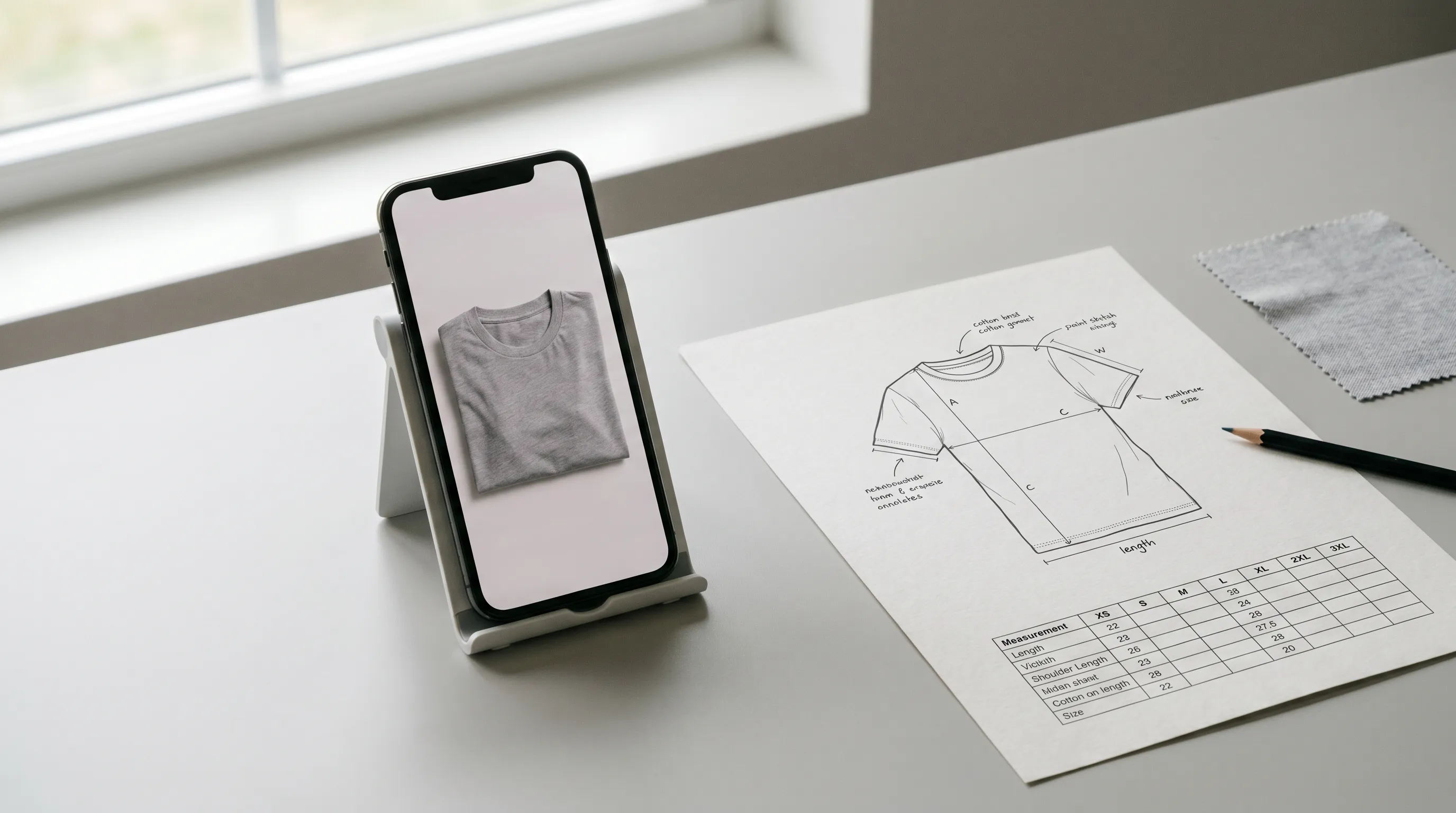
Where the two tools actually overlap
How much does each actually cost?
CLO 3D's Individual plan is $50/month month-to-month, or $225/year billed annually — roughly $18.75/month, about 25% off the monthly rate — with a student license around half price and Enterprise by quote (CLO pricing). But the subscription is only part of the entry cost. CLO's April 2026 system requirements call for an NVIDIA CUDA GPU (4GB minimum, 12GB+ VRAM recommended for quality rendering) and 16–32GB RAM (CLO system requirements). A standard laptop strains; a capable workstation adds hundreds of dollars before you draft a single pattern. And the largest cost is the one that doesn't appear on the invoice — the months of patternmaking practice the tool assumes (CLO learning curve).
Adstronaut prices per output, not per seat. A tech pack costs 25 credits: on the Standard plan ($29/month, 125 credits) that is five packs a month at $5.80 each; on Pro ($69/month, 375 credits) about $4.60; on annual Studio it falls to roughly $3.10. Call it $3–6 per pack, with no GPU and no skill prerequisite. The free plan includes 25 credits — your first pack free as a watermarked preview. For a brand documenting 20 styles, the contrast is stark: a $225/year CLO seat plus a workstation plus a months-long ramp, versus about $60–$120 in Adstronaut credits and an afternoon. The catch is honest — that $60–$120 buys you the document, not a drape simulation. Whether that matters is the whole decision, and our tech pack cost guide breaks the same math down across methods.
3D fit simulation vs fast photo-to-pack: the real difference
This is the section that matters most, because the two tools genuinely do different work. CLO 3D's value is the simulation. You draft 2D pattern blocks, define seams and stitch lines, sew the panels virtually, and watch the garment drape on a parametric avatar. You can change the avatar's measurements, swap fabric presets with real physical properties, and see where a sleeve pulls or a hem flares — before you commission a single physical sample. For fit-critical, structured garments, that loop can replace one or two rounds of sampling, and that's a real, defensible saving.
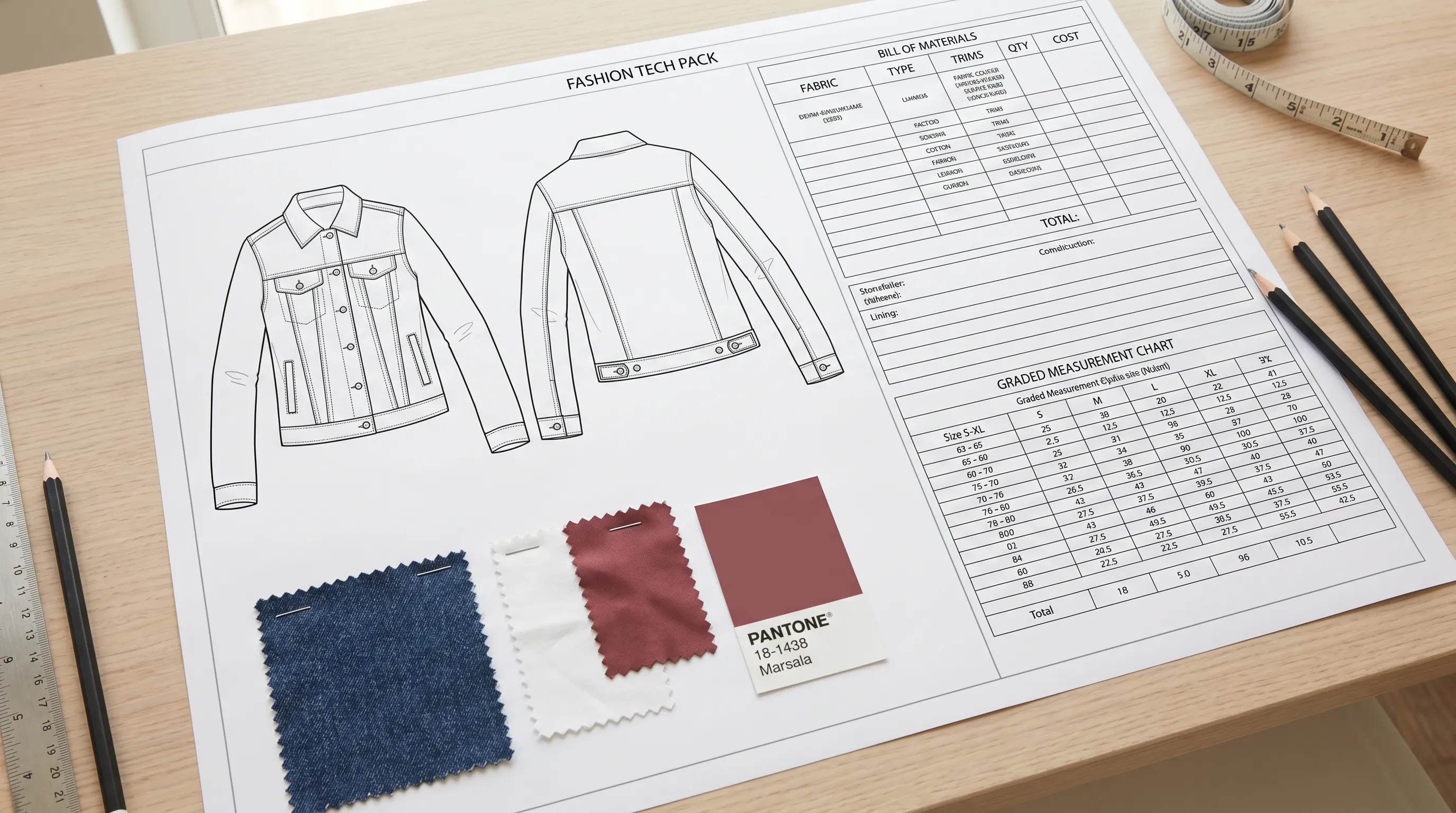
Adstronaut does none of that — by design. There is no avatar, no drape engine, no fabric physics. Instead, the AI Tech Pack Generator reads one garment photo, detects the product class, draws annotated front and back flats, fills a structured BOM, and grades the points of measure with tolerances — the finished specification document, in three to five minutes. Where CLO gives you a 3D model from which you then build a tech pack, Adstronaut gives you the tech pack directly, skipping the 3D step entirely. It also covers the concept side CLO doesn't touch: the AI Designer turns a moodboard into a photoreal concept render with an auto-extracted Pantone palette for about $2, no patternmaking involved.
The practical test: does seeing the garment drape before you sample change a decision you'd otherwise make wrong? For a tailored jacket or a lined coat, often yes — keep CLO. For a tee, a hoodie, a slip dress, most knitwear, or anything you can already photograph as a sample or mock up, the simulation is a step you pay for and then translate into a document anyway. Adstronaut removes the translation.
When CLO 3D is the better choice
Adstronaut does not replace CLO 3D, and saying otherwise would cost this page its credibility. CLO is the better tool whenever the 3D simulation itself is the value, not just a path to a document. Three cases stand out.
True virtual fit and digital sampling. If you iterate drape and ease on the avatar to cut physical sample rounds — and you can measure that saving in fewer prototypes — CLO earns its seat. A document generator can describe a garment; it cannot show you how the fabric falls. Structured, fit-critical garments. Tailoring, outerwear, corsetry, lined pieces and anything where drape is the design: seeing it before you cut fabric is worth the months of learning. 3D-native pipelines. If your buyers consume 3D assets — virtual showrooms, try-on, 3D-PLM workflows — CLO produces those assets natively and Adstronaut produces none of them.
The pattern many brands land on is hybrid: keep one CLO seat for the fit-critical few, and route everything else through photo-to-pack. That keeps the months of patternmaking skill earning their value on the garments that need it, and stops paying that cost on the styles that don't. If you're comparing CLO against the wider 3D field rather than against Adstronaut specifically, the CLO 3D alternatives roundup covers Browzwear and Marvelous Designer; for the document lane, the best tech pack software roundup scores every method side by side.
Testing the no-CAD route: a 4-step trial
There's no migration — your CLO projects stay valid. Run this per style to see whether the simulation step was load-bearing for you.
- 1
Pick the style you'd have built in CLO this week
Any clear image works — the physical sample on a mannequin, a flat-lay, or even a mockup render exported from a past CLO project. Front-facing, evenly lit, JPG/PNG/WEBP. - 2
Generate the tech pack
Upload it to the AI Tech Pack Generator — first pack free. In 3–5 minutes you get annotated flats, a structured BOM, graded POMs with tolerances, construction notes, and Pantone colorways. - 3
Compare against what you'd assemble from CLO
Put the generated document next to the spec you'd export and hand-finish from a CLO project. Ask whether the drape simulation actually changed any field in the final tech pack for this style. - 4
Decide per style, not all-or-nothing
Keep CLO for fit-critical structured pieces where drape iteration saves real sample rounds. Route tees, basics, knitwear, and anything photographable through photo-to-pack at $3–6. Try the concept side in the AI Designer (~$2) too.
Which should you choose?
3D patternmakers and technical designers who iterate virtual fit should stay on CLO 3D — the simulation engine is the whole point, and no document generator replaces drape. Brands with 3D-native buyers (try-on, virtual showrooms) need CLO's assets natively.
Indie founders and first-time designers without a patternmaking background get the most from Adstronaut: it removes the months-long skill prerequisite and the workstation, and produces the factory document for $3–6 with the first pack free to preview. Small brands and DTC labels shipping 10–50 styles a year save both the seat and the ramp — the per-collection math is roughly $60–$120 in credits against a $225/year CLO seat plus the hardware and the months. Production leads use it to get first drafts to factories days earlier on the styles that never needed simulation. If you came here from the broader search, the CLO 3D alternatives roundup and the best AI tools for fashion design widen the field beyond these two.
Frequently asked questions
Why do people look for a CLO 3D alternative like Adstronaut?
Three reasons come up consistently — and none is that CLO is bad software. The learning curve is months of patternmaking practice; the hardware bill includes a CUDA GPU and 16–32GB RAM; and most importantly, many designers realize they never needed the 3D simulation at all — what they actually hand to a factory is a PDF tech pack. When the simulation is an intermediate step you don't deliver, paying $50/month plus a months-long ramp for it is the mismatch that sends people searching.
Is CLO 3D cheaper than Adstronaut AI?
It depends on how much you produce. CLO's Individual plan is $50/month month-to-month or $225/year billed annually (about $18.75/month), regardless of output — plus a workstation and months of practice. Adstronaut has no seat: a tech pack costs 25 credits, about $3–6, on plans from $29/month, and the first pack is free as a watermarked preview. For a brand documenting a handful of styles a month without needing 3D, Adstronaut is far cheaper all-in. For a working 3D patternmaker iterating fit daily, CLO's flat seat price is the better value.
Can Adstronaut AI replace CLO 3D?
Only for the document and concept jobs — and that's the honest line. Adstronaut does not simulate 3D drape, virtual fit, or fabric physics. It replaces CLO for tech-pack output (flats, BOM, graded measurements from a photo) and concept visualization (moodboard to photoreal render). For many small brands, those were the only parts of CLO they actually used. If virtual fit is core to your process, keep a 3D seat.
Does Adstronaut do 3D garment simulation?
No. This is the clearest difference between the two tools. Adstronaut has no avatar, no drape engine, and no fabric physics — it generates a 2D specification document (annotated flats, BOM, graded POMs, construction notes) from a photo in 3–5 minutes. CLO 3D is built specifically to simulate how a garment drapes and fits in 3D before you sample. If you need that simulation, Adstronaut is not a substitute for it.
Do I need a CLO 3D model to make a tech pack?
No. A CLO project gives you patterns and measurements you then assemble into a spec, but the tech pack itself is a document, not a 3D file — and factories evaluate the document's completeness, not the software behind it. Adstronaut generates that document directly from one garment photo, skipping the patternmaking and simulation entirely. You only need CLO if seeing the garment drape changes a production decision for that style.
How long does each take to produce a tech pack?
With CLO, the honest answer includes the ramp: months of patternmaking practice before you can draft and drape cleanly, then hours per style to pattern, simulate, and assemble the spec once fluent. Adstronaut generates the draft in 3–5 minutes from a photo; with a 10–15 minute review you finish a style in under 30 minutes, with no prior skill. The gap is the months CLO assumes you've already invested.
What hardware does each tool need?
CLO recommends an NVIDIA CUDA GPU (4GB minimum, 12GB+ VRAM for quality rendering) and 16–32GB RAM — a real workstation, which is part of the true cost of entry. Adstronaut runs entirely in the browser; generation happens server-side, so a basic laptop is enough. If your machine can't drive CLO's requirements, that alone is a reason the photo-to-pack route fits better.
Do factories accept Adstronaut tech packs over CLO-built ones?
Factories judge completeness and accuracy, not the tool. Adstronaut outputs the sections manufacturers check — annotated flats, line-itemized BOM, graded points of measure with tolerances, construction notes, Pantone callouts — as a print-ready PDF, the same deliverable a CLO project produces after you assemble it. Teams that switched report first-sample revision rounds dropping from about three per style to one. A CLO-built pack is not inherently more acceptable; it's the same document by a longer road.
Should fashion students learn CLO 3D or use AI tools?
Both, for different reasons. CLO fluency is a genuine hiring signal for technical-design roles, and education licenses are discounted — learning it has career value beyond any one brand. Adstronaut is the faster path to shipping an actual collection while you study. Students launching a label often use CLO for coursework and Adstronaut for their brand's production documents.
Can I use CLO 3D and Adstronaut together?
Yes, and many brands do exactly that. Keep one CLO seat for fit-critical structured garments where drape iteration saves physical sample rounds, and route everything else — tees, basics, knitwear, anything photographable — through Adstronaut's photo-to-pack flow at $3–6. You can even feed a mockup render exported from CLO into the tech pack generator. You pay for simulation only where it earns its hours.
Need the tech pack, not the 3D model?
If your factory receives a PDF, not a draped simulation: upload one garment photo and get flats, BOM, graded measurements, and construction notes in minutes. $3–6 per pack, first one free, no GPU and no CAD required.
Try the AI Tech Pack GeneratorKeep comparing
Sources and further reading
- CLO — prices and subscription plans — $50/mo month-to-month, $225/yr billed annually (~25% off), student ~50% off (2026)
- CLO — system requirements (April 2026) — CUDA GPU, 4GB min / 12GB+ VRAM recommended, 16–32GB RAM
- CLO community — learning curve discussion — months to full proficiency in practitioner reports; pace 'differs for each individual'
- CLO — patternmaking in CLO — CLO is built around 2D pattern drafting before 3D drape
- World Fashion Exchange — Tech Pack 101 — what a factory-grade tech pack must contain; unclear specs as leading cause of first-sample failure
- Successful Fashion Designer — freelance technical design rates — $100–$1,200+ per tech pack by complexity; the manual document cost CLO output still requires