Midjourney vs Adstronaut AI for fashion brands
Updated June 10, 2026
Midjourney is a general-purpose AI image generator — $10 to $120 per month across Basic, Standard, Pro and Mega — that produces beautiful, imaginative pictures but cannot reproduce your actual garment, hold a consistent model across a catalog, or output production specs. Adstronaut AI is purpose-built for fashion: it renders your real product on a chosen, repeatable model from ~$1 per image and drafts factory tech packs. Pick Midjourney for concept art and moodboards; pick Adstronaut to ship a catalog.
Midjourney vs Adstronaut AI: the quick verdict
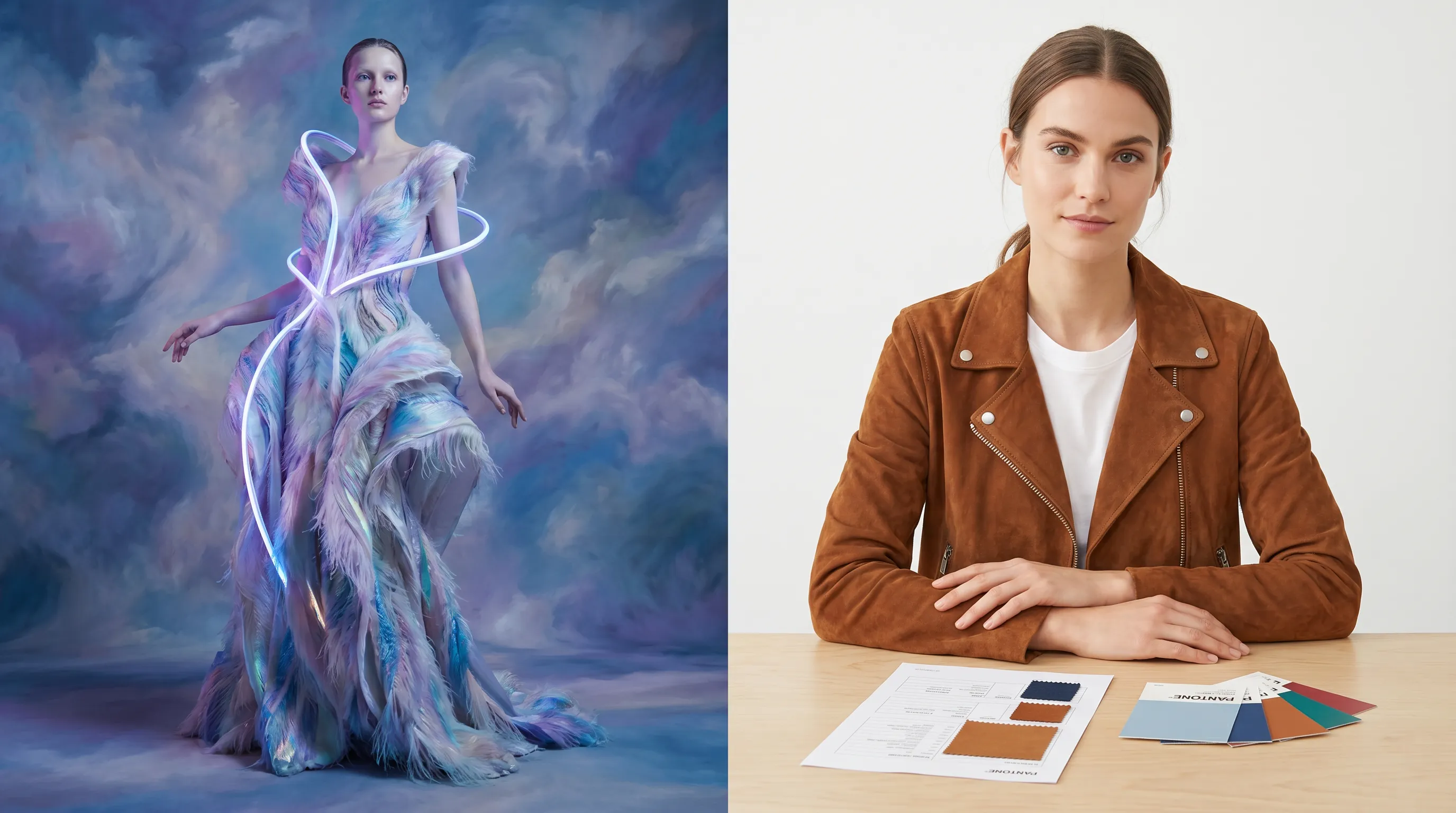
Midjourney and Adstronaut AI both generate fashion imagery, but they answer different questions. Midjourney is a general-purpose text-to-image model — you describe a scene and it imagines one, with industry-leading aesthetic quality. What it cannot do is reproduce a specific real product: feed it your jacket and ask for ten catalog shots, and you get ten different jackets on ten different faces. It has no garment-fidelity guarantee, no repeatable model identity, no tech packs, no graded measurements (Midjourney plan documentation).
Adstronaut AI is built the other way around. You upload the photo of the product you actually sell, and the AI Photoshoots tool renders that garment on one of 22 named, consistent models — same face every reuse — for about $1 per image, while the AI Designer takes a moodboard to a production-ready concept. Choose Midjourney if you want concept art, moodboards, and creative exploration where invention is the point. Choose Adstronaut if you need on-model photos of your real product, a consistent model across a whole catalog, and a path to factory specs. The rest of this page is the evidence.
Midjourney vs Adstronaut AI, side by side
| Factor | Midjourney | Adstronaut AI |
|---|---|---|
| Price | $10 Basic, $30 Standard, $60 Pro, $120 Mega per month (annual saves 20%) | Plans from $29/mo (125 credits); a photoshoot image is 5 credits — ~$1 each; a designer concept is 10 credits — ~$2 |
| Built for | General-purpose creative image generation | Fashion production — real-product imagery, concepts, specs |
| Your actual product | Cannot reproduce a specific garment faithfully; it invents one | Renders the exact garment from your uploaded photo — pattern, color, seams transfer |
| Model consistency | No persistent identity — a new face every generation | 22 named models with the same face across every pose and scene |
| Repeatable catalog | Each image is a fresh invention; no cohesive set | One model across a full collection for a single-shoot look |
| Tech packs / specs | None | Separate tech pack tool: flats, BOM, graded measurements (25 credits, $3–6) |
| Workflow | Prompt via Discord bot or the Midjourney web app | Upload photo → pick model, pose, scene → render in the browser |
| Poses & scenes | Whatever you can describe; no guarantee of repeatability | 8 poses, 12 named scenes, 36 lifestyle presets, 4 outfit slots |
| Commercial use | Paid plans only; companies over $1M prior-year revenue must be on Pro/Mega | Commercial license on paid plans |
| Best for | Moodboards, concept art, campaign mood, creative exploration | PDP photos, ad creative, lookbooks, line sheets, factory handoff |
Pricing per Midjourney's published 2026 plans and Adstronaut's pricing page. Midjourney commercial-revenue rule per Midjourney's terms; capability rows reflect each tool's documented feature set.
Choose Adstronaut if… / Choose Midjourney if…
Choose Adstronaut AI if…
- ✓You need on-model photos of the exact product you sell — pattern, color, fabric texture, and seam placement have to match what the customer receives.
- ✓You're building a catalog or lookbook and need the same model across every shot, not a different face per image.
- ✓You want to add a colorway or a new SKU without the garment morphing into something you don't manufacture.
- ✓You need the imagery to flow into production — Pantone palettes, tech packs, line sheets — not just live on a moodboard.
- ✓You'd rather pay ~$1 per usable on-model image than buy GPU time and re-roll prompts hoping the garment stays right.
Choose Midjourney if…
- ✓You want concept art and moodboard imagery where inventing a new look is the entire point.
- ✓You're exploring campaign mood, color stories, or art direction before any real product exists.
- ✓You value Midjourney's best-in-class aesthetic range and don't need the output to match a physical sample.
- ✓You're a creative generalist who also makes posters, environments, and editorial concepts, not only garments.
- ✓You're comfortable in Discord or the web app and treat each image as a one-off, not a repeatable catalog.
Many brands run both: Midjourney to explore the mood, Adstronaut to render the real product they actually ship.
Fashion-specific vs general-purpose, mapped
How much does each actually cost?
Midjourney sells GPU time, not images. The 2026 plans are Basic $10/month (about 3.3 fast GPU hours), Standard $30/month (15 hours plus unlimited Relax-mode generations), Pro $60/month (30 hours, Stealth Mode), and Mega $120/month (~60 hours); annual billing saves 20% (Midjourney pricing). One catch that matters for brands: if your company made over $1,000,000 in gross revenue last year, you must be on Pro or Mega to use outputs commercially. The harder cost is hidden — because Midjourney can't lock onto your real garment, getting a usable product shot means many re-rolls, and most still won't match your sample.
Adstronaut prices per finished output. A photoshoot image is 5 credits — about $1 ($0.62–$1.16 depending on plan); a designer concept is 10 credits, roughly $2. Plans run Standard $29/mo (125 credits), Pro $69/mo (375), Studio $149/mo (1,000), with annual at 17% off, and the free plan includes 25 credits so your first shoot is free as a watermarked preview. A 10-pose PDP set costs about $10 in credits — versus the $5,000–$15,000 a traditional shoot runs. The point isn't that Midjourney is expensive; it's that its cheap images aren't the images a catalog needs.
Product fidelity: the thing a general model can't fake
This is the core divide. Midjourney generates from a text description, so it has no concept of your product — it produces a plausible garment in the category you describe. Upload a reference and prompt around it and you can nudge style, but the output is an interpretation, not a reproduction: the print shifts, a pocket appears, the collar changes shape. For art direction that's a feature. For a product detail page, where the customer must receive the item they saw, it's disqualifying — mismatched imagery is a documented driver of returns.
Adstronaut's AI Photoshoots model is fine-tuned for fashion fidelity. You upload the actual garment photo — flat-lay, mannequin, or amateur on-model — and the pattern, color, fabric texture, seam placement, and hardware transfer to the rendered image. The garment in the output is the garment from your input, just placed on a model with studio lighting. You can even assemble a full look across four outfit slots — top, bottom, full-body, footwear — from separate uploads. That faithful-render guarantee is the entire reason a fashion-specific tool exists where a general one can't follow.
Consistency: one model across a whole catalog
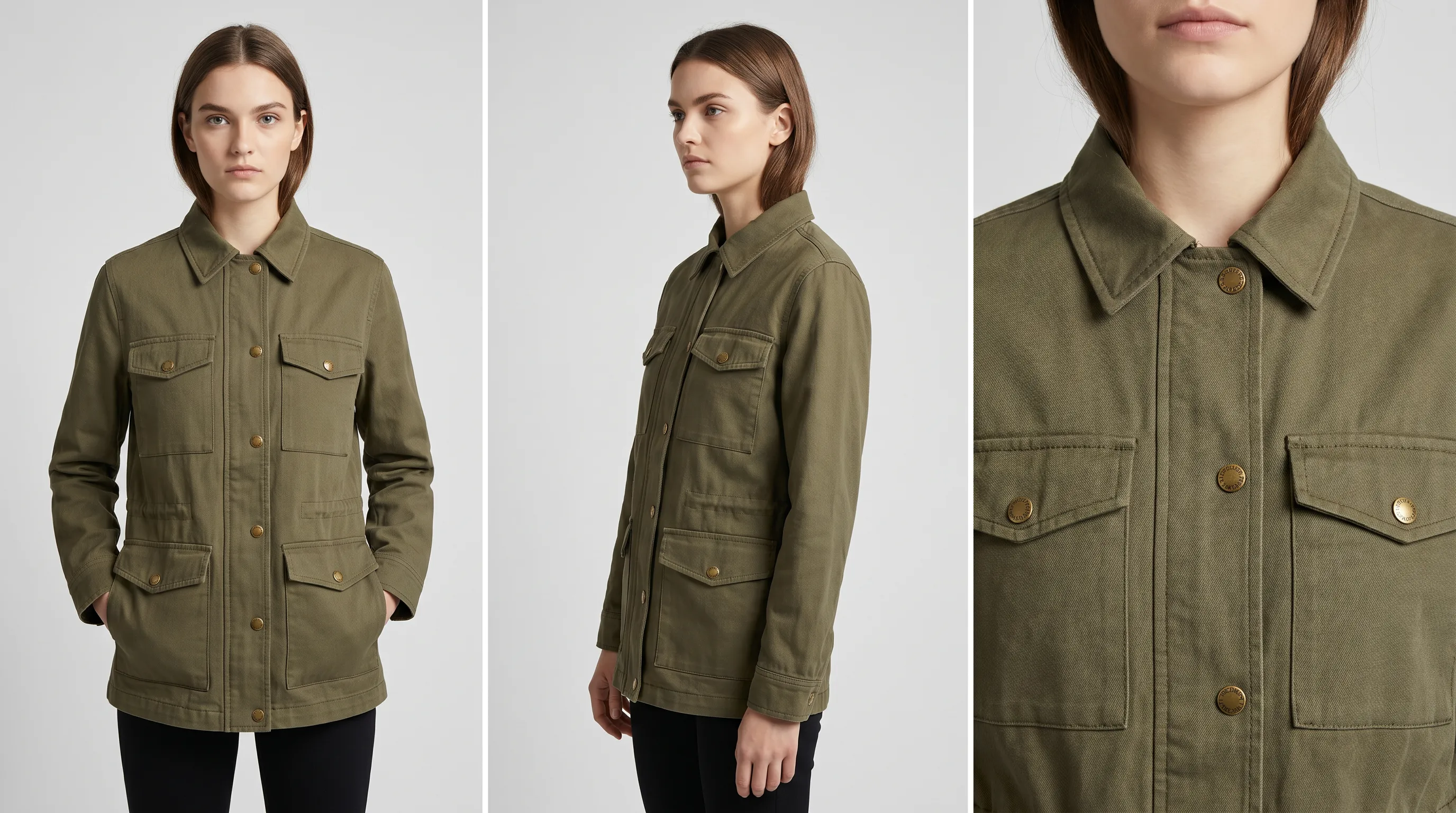
A catalog reads as a single shoot only when the same model appears across every product, pose, and angle. Midjourney has no persistent identity baked in — each generation invents a new face, and while character-reference tricks help, they don't deliver the locked, reusable model a brand needs for forty SKUs. The result is a grid of strangers wearing approximations of your clothes.
Adstronaut ships 22 named models — 12 women, 10 men — each with consistent facial features, body proportions, and skin tone across every one of the 8 poses and 12 named scenes, plus 36 lifestyle presets for social. Reuse Camille across your whole spring drop and every product page matches; render the same garment on a model who reflects each market — a North American campaign, a Southeast Asian PDP — from one source photo. That repeatability is what turns single images into a cohesive lookbook, and it's a structural property of a purpose-built tool, not a prompt you can coax out of a general one.
From image to production: specs Midjourney never touches
Imagery is one third of getting a garment made. The other two — a concept you can iterate and a spec sheet a factory can build from — are outside a general image model's scope entirely. Midjourney stops at the picture; there is no Pantone extraction, no bill of materials, no graded measurement chart.
Adstronaut closes that loop. The AI Designer turns a moodboard into four illustration variations and a photoreal render, each shipping with an auto-extracted 5-color Pantone palette ready for your dye house. From there the separate AI Tech Pack Generator drafts the flat sketches, a structured bill of materials, and graded measurements for apparel, footwear, leather goods, knitwear, and bodywear in 3–5 minutes, at 25 credits (about $3–6) per pack. The same product DNA carries from concept to catalog to factory — a pipeline a general-purpose tool was never designed to enter. If you're choosing tools for the whole stack, the best AI tools for fashion design roundup scores Midjourney and Adstronaut against CLO 3D, Resleeve, and others by lane.
When Midjourney is the better choice
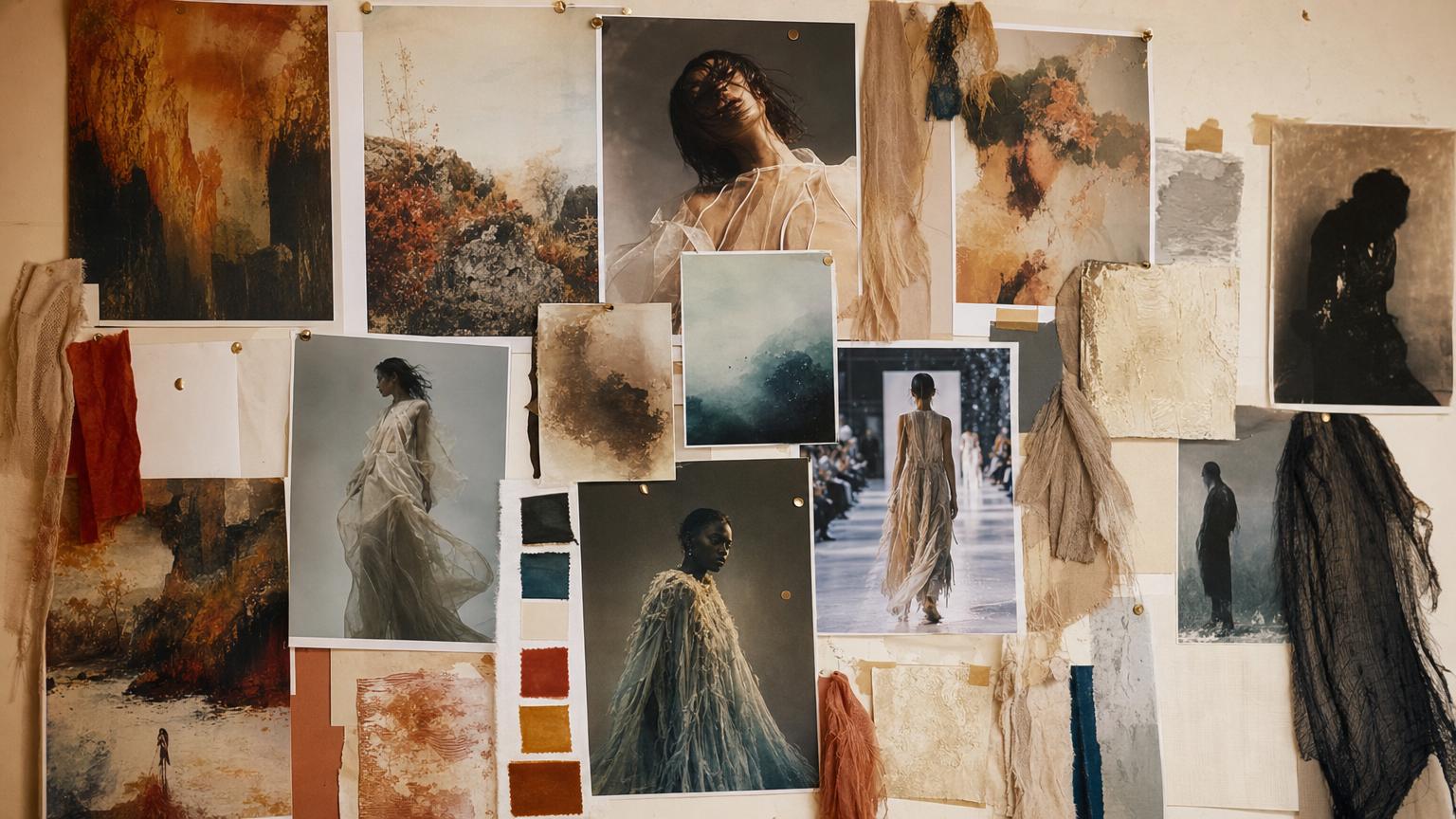
Adstronaut does not replace Midjourney, and pretending otherwise would cost this page its credibility. For concept art, moodboards, and pure creative exploration, Midjourney is outstanding — its aesthetic range and prompt-driven invention are why art directors, illustrators, and brand designers love it. If you're developing a campaign mood, a color story, an editorial direction, or environment and poster work before any garment exists, that imagined-from-nothing quality is exactly what you want, and a faithful-render tool would only get in the way.
The pattern most fashion teams land on is hybrid: explore the mood in Midjourney, then render the real product you ship in Adstronaut. Use Midjourney to pitch a season's feeling to stakeholders; use Adstronaut once you have a sample to photograph and a catalog to fill. If you want a creative-tool view of the same trade-off, the Illustrator comparison covers the manual-vector side, and the comparison hub lines up every tool against Adstronaut on the same criteria.
Moving fashion work off Midjourney: the 4-step workflow
Keep Midjourney for concept work — this is the per-product workflow once you need the real garment on a model.
- 1
Photograph the real product
A flat-lay, mannequin shot, or amateur on-model photo works. JPG/PNG/WEBP. This is the input Midjourney can't faithfully use but Adstronaut is built around. - 2
Pick a model, pose, and scene
Choose one of 22 named models so your catalog stays consistent, then a pose and scene. Reuse the same model across the collection. - 3
Render at ~$1 per image
Each pose is 5 credits, about $1 — the actual garment on the model with studio lighting. A 10-pose PDP set lands near $10 in credits. - 4
Carry it into production
Extract the Pantone palette in AI Designer, test colorways in the Color Changer, and draft a tech pack when you're ready for the factory.
Which should you choose?
Indie founders and DTC brands shipping real product get the most from Adstronaut — it renders the exact garment on a consistent model from ~$1 an image, no studio, no model release, and the first shoot is free to preview. Catalog and e-commerce teams save the most on consistency: one model across forty SKUs is something a general model structurally can't deliver. Design and merchandising leads use the AI Designer plus tech packs to run concept-to-factory in one pipeline.
Art directors, illustrators, and brand-mood teams should keep Midjourney — for invention and aesthetic range it's hard to beat, and many Adstronaut users run both. For the wider field, see the best AI photoshoot tools and the best AI tools for fashion design roundups, which place each tool in its real lane.
Frequently asked questions
Can Midjourney make product photos of my actual clothing?
Not faithfully. Midjourney generates from a text description, so it invents a plausible garment in the category you describe rather than reproducing your specific product. Prints shift, details appear or vanish, and the result won't match your physical sample. Adstronaut is built for the opposite job: you upload your real garment photo and it renders that exact item — pattern, color, texture, seams — on a model for about $1 per image.
Why do people switch from Midjourney for fashion work?
Three reasons recur: fidelity (Midjourney can't reproduce the real product a customer must receive, which drives returns), consistency (no persistent model, so a catalog looks like a grid of strangers), and production (no Pantone, no tech packs, no specs). Midjourney stays in the workflow for moodboards and concept art; the on-model catalog and factory handoff move to a fashion-specific tool like Adstronaut.
Is Midjourney cheaper than Adstronaut?
On the sticker, Midjourney's Basic plan is $10/month versus Adstronaut's $29/month Standard. But Midjourney sells GPU time, not usable product images — getting a shot that resembles your garment takes many re-rolls and most still won't match. Adstronaut charges ~$1 per finished on-model image of your real product. For concept art Midjourney is the better value; for catalog imagery you can actually ship, the per-usable-image cost favors Adstronaut. Companies over $1M in revenue also must buy Midjourney's $60+ Pro plan for commercial rights.
Can Midjourney keep the same model across a whole catalog?
Not reliably. Midjourney has no built-in persistent identity — each generation produces a new face, and character-reference techniques don't deliver the locked, reusable model a catalog needs. Adstronaut ships 22 named models with consistent features across all 8 poses and 12 scenes, so you can reuse one model across an entire collection and every product page matches.
Does Midjourney create tech packs or production specs?
No. Midjourney is a general image generator — it stops at the picture, with no bill of materials, graded measurements, or Pantone extraction. Adstronaut's AI Designer auto-extracts a 5-color Pantone palette from each render, and the separate AI Tech Pack Generator drafts flats, a BOM, and graded measurements in 3–5 minutes for 25 credits ($3–6) per pack.
How do the workflows differ?
Midjourney runs through a Discord bot or its web app: you type a prompt and it imagines an image. Adstronaut runs in the browser around your product: upload a garment photo, pick a model, a pose, and a scene, and it renders the real item on that model. One is prompt-to-invention; the other is photo-to-faithful-render.
Are Midjourney images safe for commercial use in fashion?
Paid Midjourney plans grant commercial-use rights, but if your company made over $1,000,000 in gross revenue the prior year you must be on the Pro or Mega plan, and AI-generated portions can't be copyrighted under current law. Adstronaut grants a commercial license on paid plans, and because the models are synthetic there are no model releases or likeness issues to manage.
Can I use both Midjourney and Adstronaut together?
Yes, and many fashion teams do. Use Midjourney to explore campaign mood, color stories, and concept art before a product exists; use Adstronaut once you have a real sample to photograph and a catalog to fill. Midjourney imagines the direction; Adstronaut renders the product you actually ship.
Will the garment in an Adstronaut image match my real product?
Yes — that's the priority. Adstronaut's photoshoot model is fine-tuned for fashion fidelity, so pattern, color, fabric texture, seam placement, and hardware transfer from your uploaded photo to the rendered image. This is the guarantee a general-purpose generator like Midjourney structurally can't make.
Do I need design or prompting skills to use Adstronaut?
No. Where Midjourney rewards prompt-craft, Adstronaut is point-and-click: upload a garment photo, pick a model, pose, and scene, and render. The AI Designer similarly takes a moodboard plus a one-line direction to a finished concept, so founders who can't sketch or prompt still get production-ready output.
Render your real product, not an imagined one
Midjourney makes beautiful pictures of clothes that don't exist. Upload the garment you actually sell and Adstronaut renders it on a consistent model in minutes. First shoot free as a watermarked preview, then about $1 per image in credits.
Try AI PhotoshootsKeep comparing
Sources and further reading
- Midjourney — comparing plans — Basic $10, Standard $30, Pro $60, Mega $120/mo (2026); annual saves 20%; Relax on Standard+, Stealth on Pro/Mega
- Midjourney — using images commercially — paid-plan commercial use; companies over $1M prior-year revenue must be on Pro/Mega
- Midjourney — Terms of Service — default public gallery; ownership and licensing terms for generated assets
- eesel AI — Midjourney pricing 2026 — GPU-hour allotments per plan (~3.3 / 15 / 30 / 60 fast hours)
- Terms.Law — Midjourney commercial use policy 2026 — no copyright on AI-generated portions; commercial-rights breakdown by plan
- Adstronaut pricing and plans — photoshoot 5 cr ~$1, designer 10 cr ~$2, tech pack 25 cr $3–6; plans from $29/mo