Can't visualize colorways without ordering samples?
Updated June 10, 2026
Colorway decisions stall because the only way to see a color on your garment has been a physical lab dip — $50–$150 each and 1–2 weeks per round. The fix: generate Pantone-referenced digital colorways on your actual product photo for about $0.25–$0.50 each, narrow a dozen options to two or three, and order lab dips only for the finalists.
Why colorway decisions stall
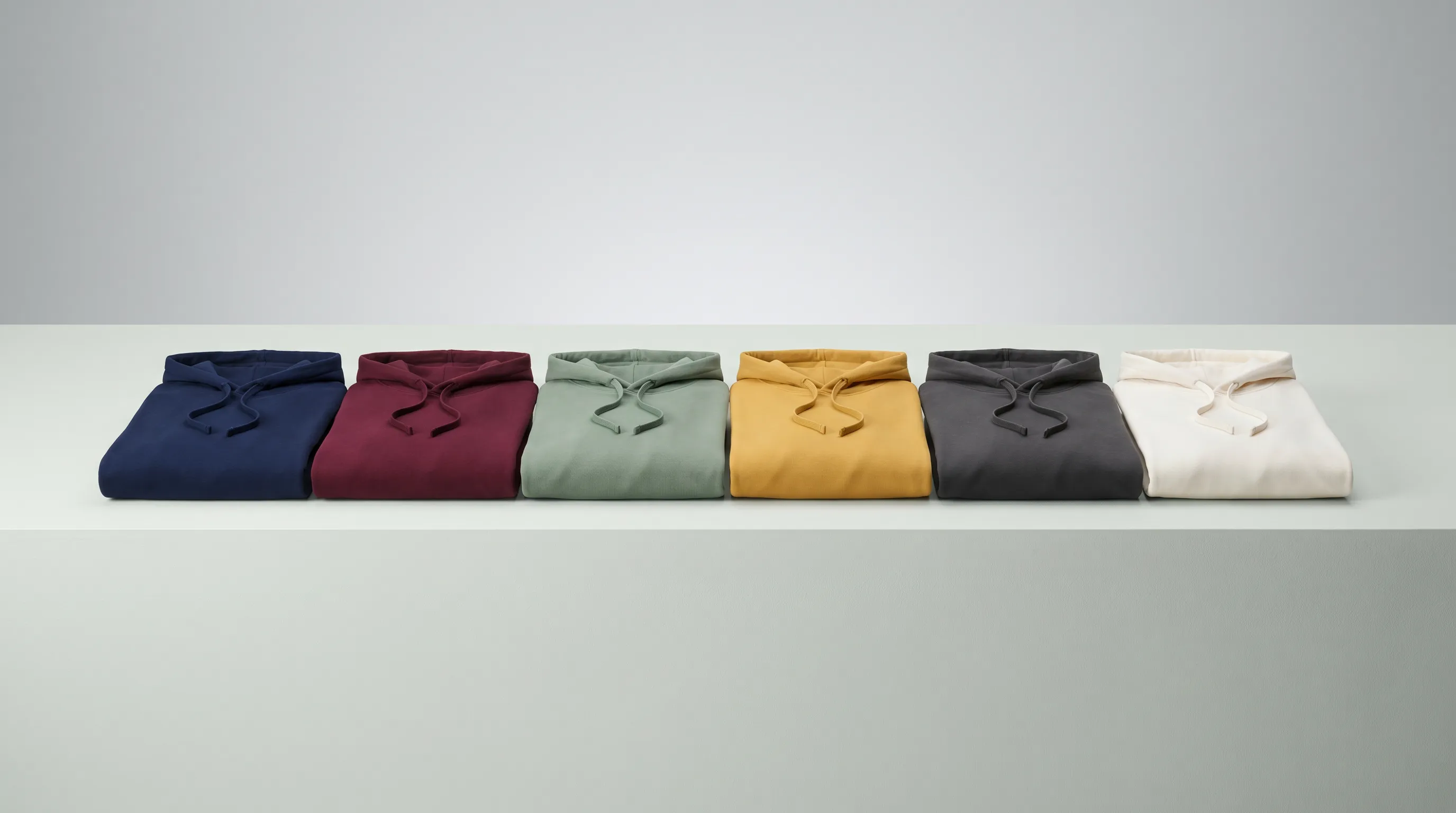
Choosing a season's colors should be the fun part. Instead it's the bottleneck — because the only trustworthy way to judge a color on your fabric has been to dye it and wait.
First, the fixes that cost nothing
Before any tool, tighten the analog process — these reduce dips on their own:
Start from physical Pantone TCX chips, not a screen. A Pantone TCX cotton swatch is the shared reference your mill dyes against. Selecting from chips under D65 daylight removes the single biggest source of wasted dips: approving a color on an uncalibrated monitor that the fabric can never match.
Send the exact TCX code, not a name. "Burgundy" invites interpretation; 19-1617 TCX (Port) does not. Specifying the code — and the tolerance you'll accept (commonly ΔE ≤ 1.0) — lets a mill hit it in fewer rounds.
Batch your dips. Order a season's shades together rather than one at a time, so the 1–2 week wait overlaps instead of stacking. None of this lets you see the color on the garment before dyeing, though — which is where the digital step earns its place.
The fix: choose the range digitally, dip only the finalists
The structural fix is to move the exploration upstream of sampling. Adstronaut's AI Color Changer recolors your real product photo to a chosen color — over 2,300 Pantone TCX shades — in seconds, for about $0.25–$0.50 per recolor (2 credits). Because it works per zone, you can recolor just the body, just the trim, or a single graphic, and keep the rest of the garment fixed.
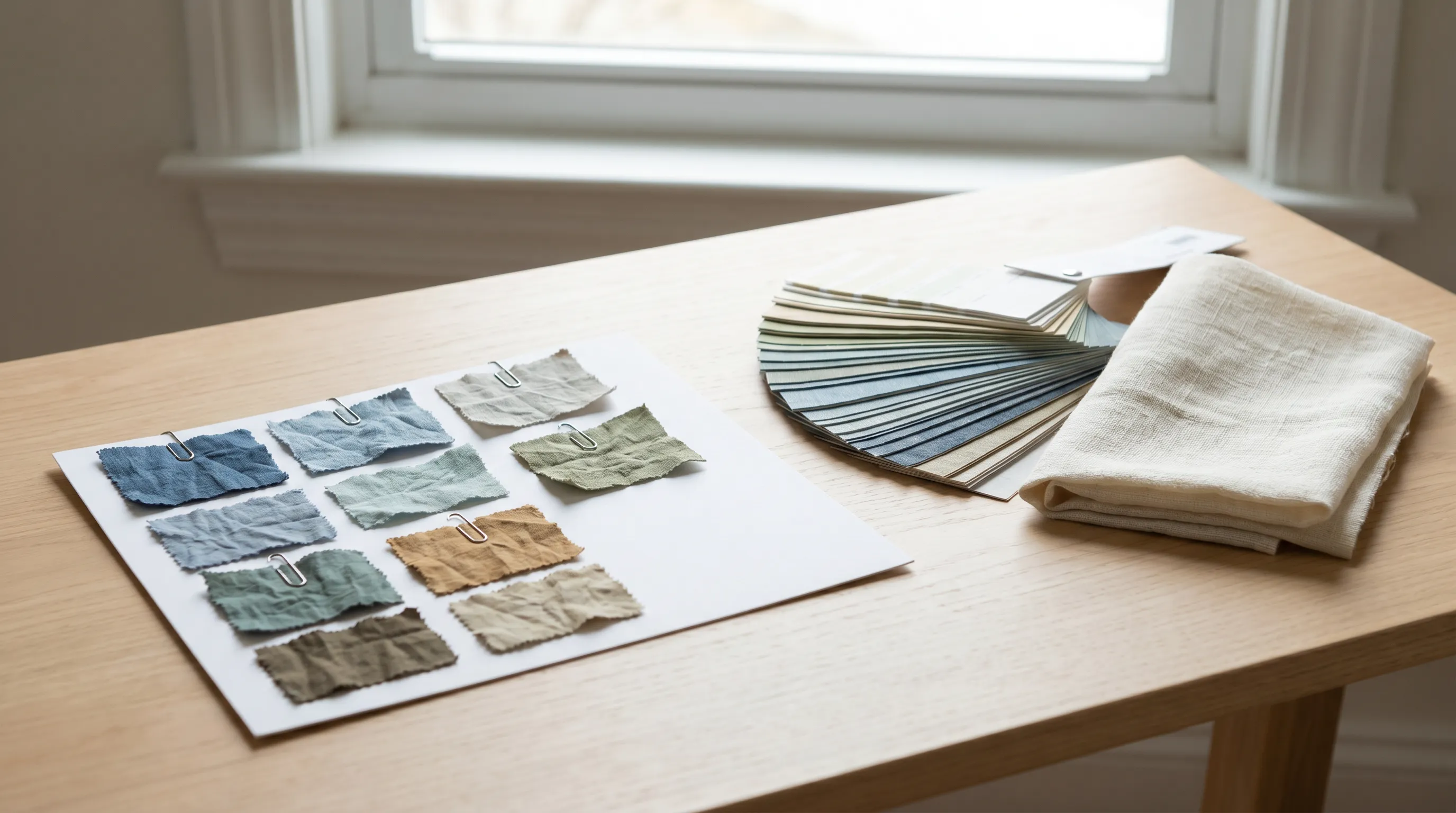
That turns a two-week, $100 question into a same-session one: drop a flat-lay or product shot in, generate the eight or twelve colors you're considering, and compare them side by side on the actual garment. You still order lab dips — but for the two or three finalists you've already validated, not the dozen you were guessing between. The savings compound across a range: see the full method in our guide to creating colorways without samples.
Physical-first vs digital-first colorway development
| Step | Lab-dip-first (old way) | Digital-first (the fix) |
|---|---|---|
| Explore 12 candidate colors | 12 lab dips — $600–$1,800, 1–2 weeks each | 12 recolors — ~$3–$6 total, same session |
| Compare on the actual garment | Only after dips return | Immediately, side by side on your photo |
| Per-zone options (body vs trim) | A dip per combination | Lock zones, recolor the rest |
| Present to buyers / pre-sell | Wait for physical samples | Photoreal colorway boards in a day |
| Physical lab dips ordered | All 12 you were unsure about | Only the 2–3 finalists |
| Pantone reference | TCX chip to the mill | TCX-referenced on screen, then the same chip to the mill |
Lab-dip pricing per common mill charges (Common Objective); recolor cost per Adstronaut credits (2 credits ≈ $0.25–$0.50).
The colorway math, visualized
A 4-step colorway workflow
Run this per style and you'll cut the exploratory dips out of every range.
- 1
Pull your candidate TCX codes
Choose from physical Pantone TCX chips under daylight; record the exact codes (e.g. 19-4052 TCX) and the tolerance you'll accept. - 2
Recolor your real product photo
Upload a flat-lay or product shot to the AI Color Changer; generate each candidate, locking zones so trims or graphics stay put. ~$0.25–$0.50 each. - 3
Compare and shortlist
Lay the colorways side by side on the actual garment, build a board, and — if you sell wholesale — present them to buyers to pre-validate demand before you commit. - 4
Lab-dip the finalists only
Send the 2–3 winning TCX codes to your mill for physical strike-offs. The dip confirms the on-fabric result; the digital step made sure you only pay for colors you'll actually use.
When the lab dip still rules
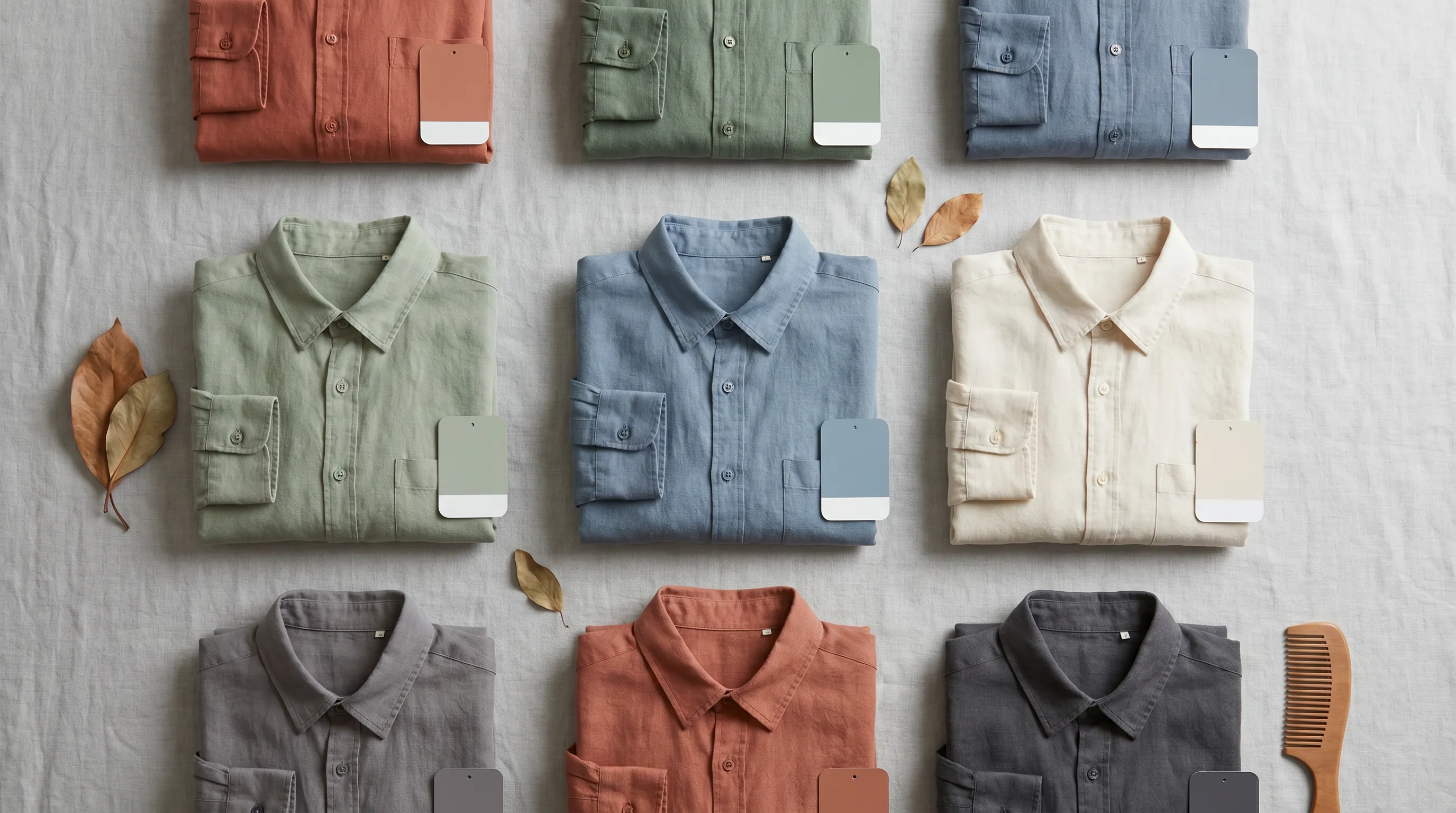
A screen is not fabric, and the honesty here matters: a digital recolor shows you hue, value, and placement on the garment, but it cannot certify the exact dyed result, hand-feel, or how a shade reads across different fibers and finishes. Metallics, neons, and fluorescents are notoriously hard to judge on any monitor. So the physical lab dip remains the final sign-off — always dip before bulk.
What changes is how many you order and when. Digital-first means the lab dip becomes a confirmation step for a decision you've already made, not the expensive way you explore. For the related decision of testing materials rather than colors, the same logic applies to fabric swapping.
Who this helps most
Indie founders and small brands feel it hardest — a $1,200 round of exploratory dips can be a whole style's sampling budget. Moving exploration to ~$3–$6 of recolors frees that budget for the samples that matter. Designers building a seasonal range use it to test a cohesive palette across multiple styles before committing. Wholesale brands generate buyer-ready colorway boards to pre-sell a drop and let orders, not guesswork, decide which colors get produced — the approach behind recoloring a streetwear collection.
Frequently asked questions
Can I see a colorway on my garment without ordering a sample?
Yes. An AI color changer recolors your real product photo to a chosen shade in seconds, so you can judge hue, value, and placement on the actual garment before any physical dyeing. It costs about $0.25–$0.50 per recolor versus $50–$150 for a lab dip, though the lab dip is still the final sign-off before bulk.
How much does a lab dip cost?
Most mills charge roughly $50–$150 per lab dip (strike-off) to dye a swatch to your target color, and each round takes about 1–2 weeks. Colors often need 2–3 rounds to land within tolerance, so exploring a dozen candidates physically can run $600–$1,800 and several weeks before you've even compared them.
Does a digital colorway replace a physical lab dip?
No — it replaces the exploration, not the sign-off. Use digital recolors to narrow a dozen candidates to two or three on your actual garment, then order lab dips only for the finalists. A screen can't certify the exact dyed result, hand-feel, or how a shade reads on different fibers, so always dip before bulk production.
Are the colors Pantone-accurate?
Adstronaut's AI Color Changer works from over 2,300 Pantone TCX shades — the textile standard your mill dyes against — so you can reference the exact code (e.g. 19-4052 TCX) on screen and hand the matching physical chip to the factory. For best results, choose from physical TCX chips under D65 daylight and treat the recolor as a visualization, not a calibrated proof.
Can I recolor just part of a garment, like the trim?
Yes. The tool is zone-based, so you can lock the body and recolor only the collar, cuffs, or a graphic — or the reverse. That lets you test color-blocking and trim combinations across a garment without ordering a separate dip for every permutation.
How many colorways can I test before sampling?
As many as you want for a few dollars: at about 2 credits (~$0.25–$0.50) per recolor, twelve candidates cost roughly $3–$6 total and take one session. The point is to do all the exploring digitally, then order physical lab dips only for the two or three you actually shortlist.
Can I present digital colorways to buyers?
Yes, and many brands do. Photoreal colorway boards let you pre-sell a drop in buyer meetings or line sheets before committing to production, so real orders guide which colors get made. Just be transparent that final shades are confirmed by lab dip — the boards are for direction, not exact color contracts.
Will the digital color exactly match the dyed fabric?
Treat it as a close visualization, not an exact match. Monitors and fabrics render color differently, and difficult shades (metallics, neons, deep saturated tones) are hardest to judge on screen. The digital step gets you to the right two or three candidates; the lab dip confirms the exact on-fabric result before bulk.
Test your colorways before you dip
Upload one product photo and generate Pantone-referenced colorways in seconds — choose the range first, then lab-dip only the finalists. About $0.25–$0.50 per recolor.
Try the AI Color ChangerKeep going
Sources and further reading
- Pantone — Fashion, Home + Interiors (TCX) — the textile cotton standard mills dye against; ΔE tolerance reference
- Common Objective — sustainable sourcing resources — lab dip / strike-off cost and lead-time context
- Adstronaut — Pantone color matching for fashion — TCX vs TPX/TPG, lab dip process, delta E tolerances
- Adstronaut — how to create colorways without samples — the full digital-first colorway workflow and cost math