
What is a Pantone TCX?
Updated June 10, 2026
A Pantone TCX (Textile Cotton eXtended) is a color physically dyed onto a cotton swatch in Pantone's Fashion, Home + Interiors (FHI) system — the textile industry's standard reference for specifying garment color. Each color carries a six-digit code plus the TCX suffix (e.g. 19-4052 TCX, Classic Blue), so a designer's spec and a factory's dye lot point to the same physical standard.
What is a Pantone TCX?
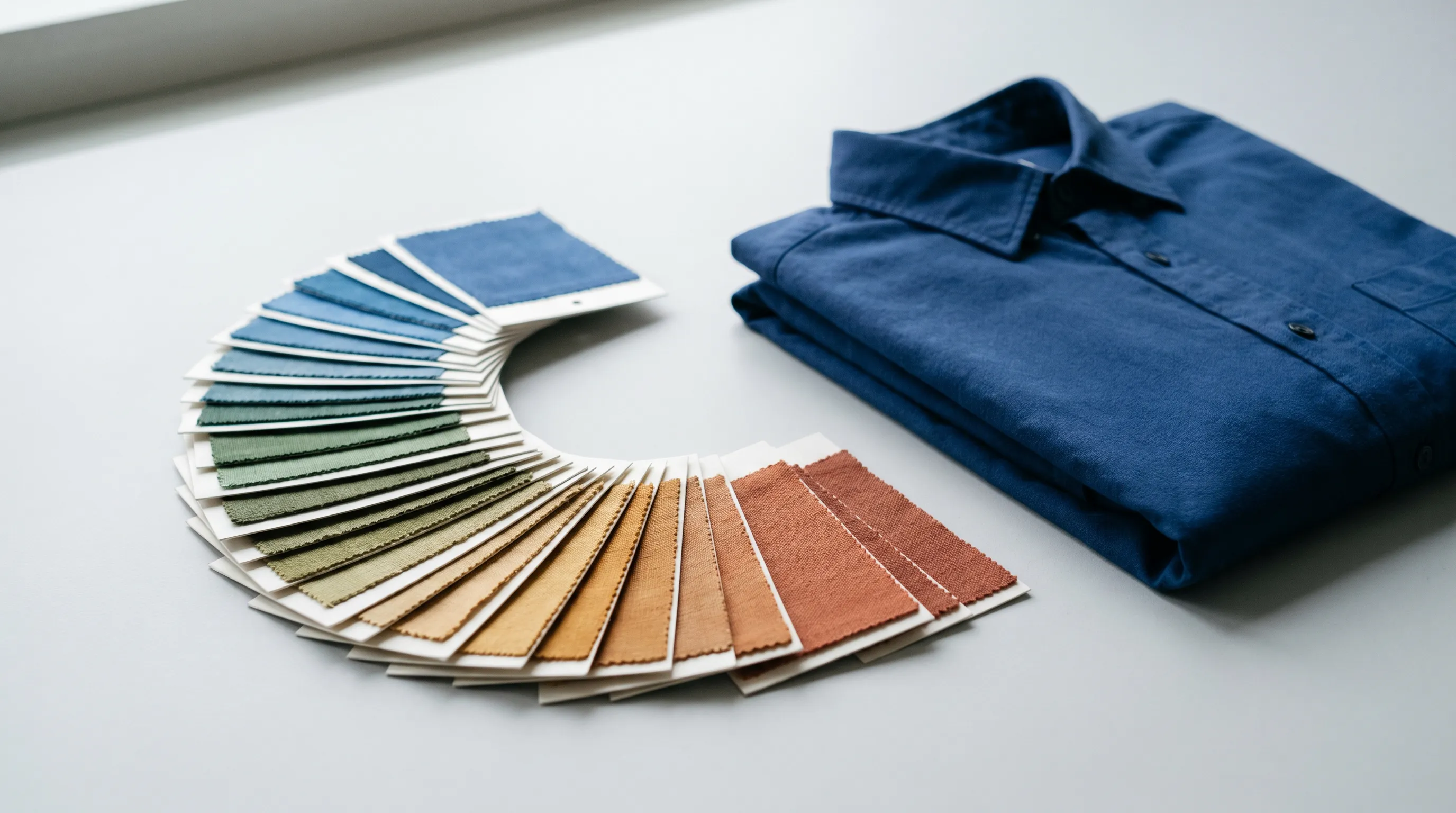
TCX stands for Textile Cotton eXtended. It is the cotton-based color standard inside Pantone's Fashion, Home + Interiors (FHI) system — the color language the apparel and textile industries actually run production on. A TCX is not a number on a screen: it is a real swatch of 100% cotton poplin dyed to an exact spectral target, supplied as fanned-out swatch cards, tear-out chips, or a fabric "passport."
The reason fashion standardizes on cotton rather than paper is physical. Color reflects and absorbs differently on fabric than on a coated paper chip, so a cotton swatch shows how a hue will actually read once it is dyed into cloth. That makes TCX the reference a mill, dye house, and pattern cutter all hold against the real dye lot — the "gold standard" for lab dips and production matching in textiles.
The key nuance: a TCX is a target, not a guarantee. The same TCX code dyed onto different fibers looks different — cotton absorbs dye deeply and reads matte, polyester sits brighter on the surface, silk reflects more light and looks richer. That is why a complete color spec names both the TCX code and the target fabric, never the code alone.
How a TCX code reads
A Pantone FHI code is six digits in a LL-HHCC pattern, followed by the TCX suffix that tells you it is the cotton edition. Each pair of digits maps to a coordinate in three-dimensional color space, so the number itself is descriptive, not arbitrary.
- First pair — lightness. Runs roughly 11 (lightest) to 19 (darkest). In 19-4052 TCX, the leading 19 marks it as a dark color.
- Middle pair — hue. Steps around the hue circle from about 01 to 65 (roughly ~10 yellow, ~20 red, ~40 blue, ~50 blue-green). The 40 in 19-4052 places it squarely in the blues.
- Last pair — chroma (saturation). Runs from 00 (neutral/grey) to ~64 (most vivid). The 52 marks a strong, saturated color.
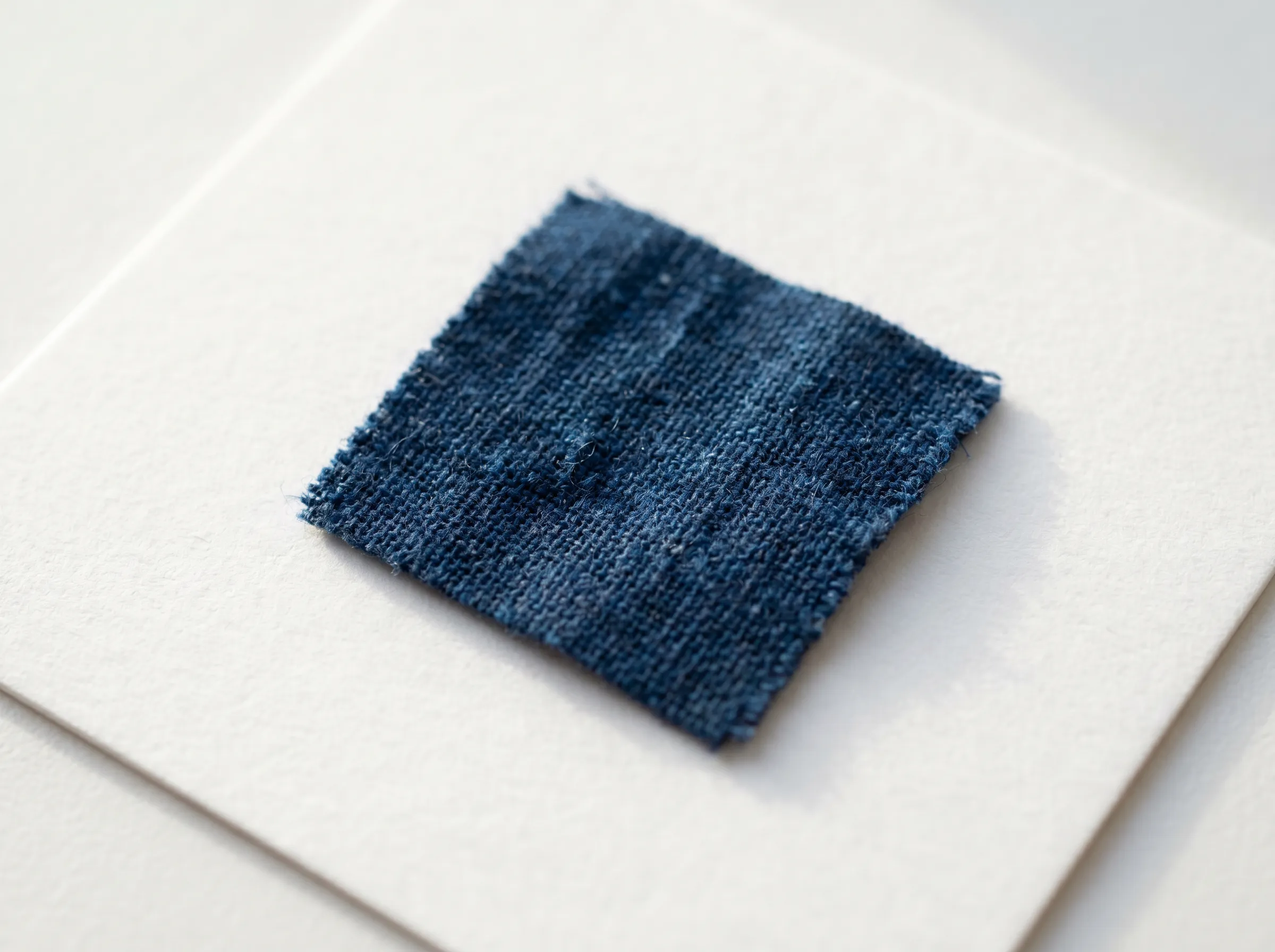
So 19-4052 TCX Classic Blue decodes as a dark, blue, highly saturated color — and indeed it is a deep, bold blue (hex ≈ #0F4C81), the shade Pantone named Color of the Year 2020. Read this way, an experienced colorist can predict roughly where a code sits before ever seeing the swatch. The flip side: the digits are a map, not a measurement — the physical swatch and its lab values remain the authority.
Worked example: from code to approved dye lot
Specifying a colorway and signing off the lab dip
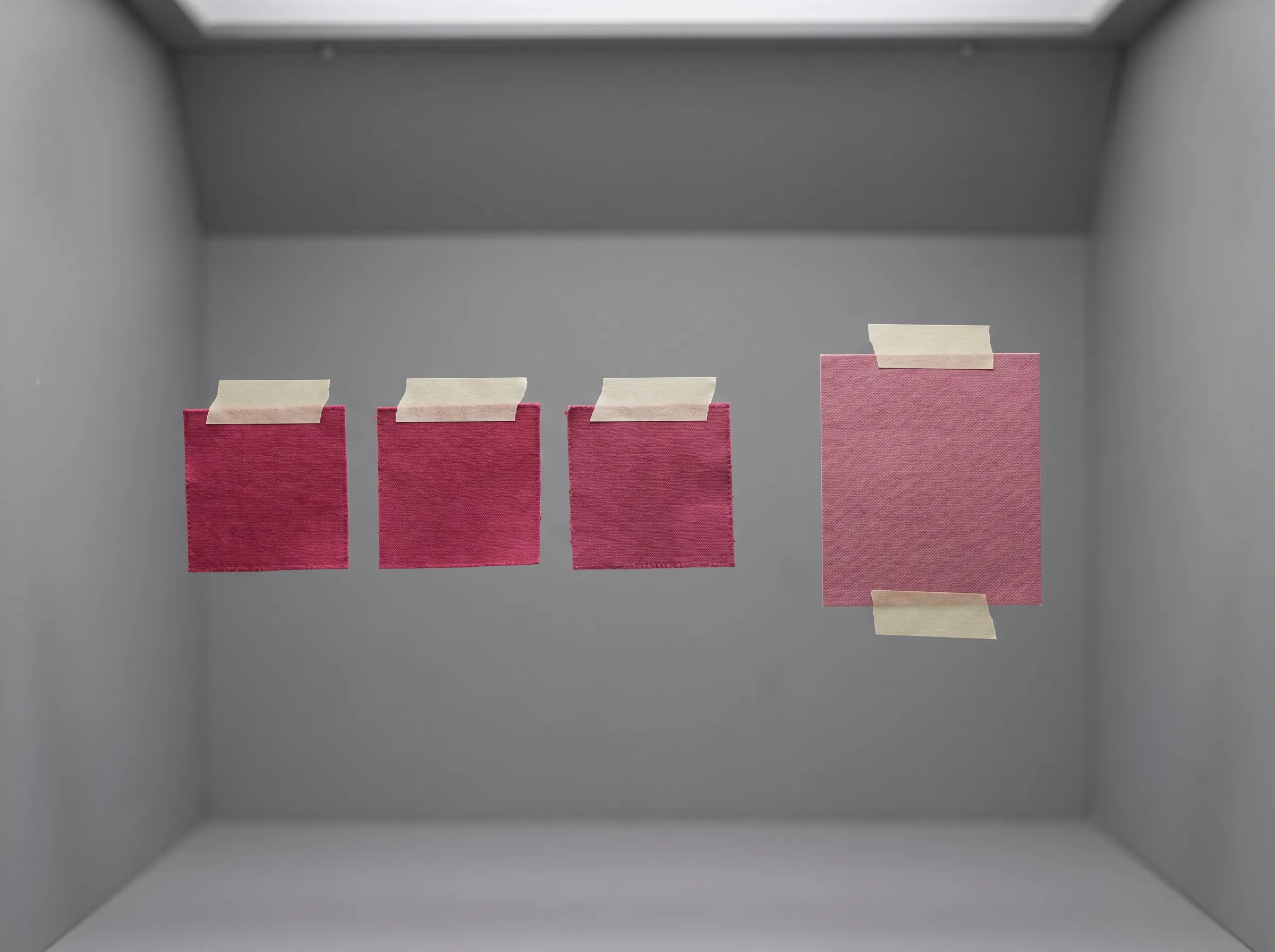
You pick 18-1750 TCX (Raspberry) for a hoodie body and write it onto the bill of materials beside the fabric: "Body: 320 GSM brushed-back cotton fleece, color 18-1750 TCX." The factory pulls the matching swatch from its TCX book and dyes three trial lab dips to hit it. They mail the physical dips back, taped beside the actual TCX card.
You evaluate them in a D65 daylight lightbox (so store lighting doesn't fool your eye) and measure each against the standard with a spectrophotometer, which reports a Delta E (ΔE) — the perceptual distance between the dip and the target. Your spec calls for ΔE ≤ 1.0; dip #2 lands at ΔE 0.7 and you approve it, dips #1 and #3 (ΔE 1.8 and 2.4) read visibly off and get rejected. The approved dip becomes the production color standard every future bulk roll is checked against. That entire loop — code, dip, measure, approve — is what the TCX system exists to make repeatable across countries and suppliers.
TCX vs TPX vs TPG vs TCP
Pantone's FHI colors ship in several editions. They can share a number yet sit on different substrates — and the substrate changes how the color reads. What matters for garment production is which one your factory matches against.
| Suffix | Stands for | Substrate | Best for | Status |
|---|---|---|---|---|
| TCX | Textile Cotton eXtended | Dyed 100% cotton swatch | Production color matching, lab dips, dye-lot sign-off | Current — the textile gold standard |
| TPG | Textile Paper Green | Eco lacquer coating on paper | Quick design-stage selection, fan decks, lighter to ship | Current — replaced TPX in 2015 |
| TPX | Textile Paper eXtended | Coated paper chip (older formula) | Legacy specs still quoting TPX numbers | Discontinued 2014 |
| TCP | Textile Cotton Platinum | Cotton swatch (supplementary cotton set) | Extending cotton references beyond the core book | Niche / supplementary |
Paper editions (TPG/TPX) read slightly lighter and brighter than the cotton TCX of the same number, because dye on cotton sits deeper and matter. When in doubt, match to TCX — that is the swatch held against the real fabric. Suffix definitions per Pantone reference and National Colour Supplies.
Decoding 19-4052 TCX at a glance
Digital TCX vs the physical swatch
Most designers now meet TCX on a screen first — in Pantone Connect or a brand's color library — where each code carries a hex/sRGB value and a CIELAB value. Those are useful, but they are approximations of a physical standard, not the standard itself.
Hex and sRGB are screen estimates. A monitor can only show colors inside its own gamut, and no two uncalibrated screens agree, so the on-screen #0F4C81 for Classic Blue is a preview — handy for picking, unsafe for signing off a dye lot.
Lab (CIELAB) is the real currency of color matching. It is device-independent and perceptually uniform, so equal numerical steps mean equal perceived change. Spectrophotometers output Lab values, and Delta E — the distance between two Lab points — is what quantifies whether a lab dip matches. This is why production sign-off happens on measured Lab and a physical swatch, never on a hex code.
For early-stage work, though, the digital TCX is exactly the right tool: you choose codes by name, code, or hex long before committing to fabric. Adstronaut's AI Color Changer is built on this — its library carries over 2,300 Pantone TCX codes, so you can recolor a garment photo to a real, factory-readable standard (search 19-4052 TCX by code, "Classic Blue" by name, or by hex) and see a photoreal preview before any swatch is ordered.
Common TCX mistakes (and what TCX is NOT)
Specifying a code without a fabric. A TCX is a cotton target; on polyester, silk, or nylon the same code reads differently. A real spec is "18-1750 TCX on 320 GSM cotton fleece," not "18-1750 TCX."
Trusting the on-screen hex for sign-off. Hex/sRGB is a screen preview, not the standard. Approve dye lots on a physical swatch under a D65 lightbox with a measured Delta E — not by eyeballing a monitor.
Mixing up the suffixes. TPG and TPX are paper and read slightly lighter and brighter; TCX is cotton. Matching a cotton dye lot to a TPG chip builds in a visible drift before the fabric is even dyed.
Thinking TCX is a dye recipe. It is not. TCX defines the target appearance; the dye house works out the chemistry to hit it on your specific fabric. Two mills can reach the same TCX with different recipes.
Skipping the Delta E tolerance. "Match this Pantone" with no number invites argument. State the threshold — most brands hold critical colorways to ΔE ≤ 1.0–2.0 — so approval is measured, not debated.
Frequently asked questions
What does TCX stand for in Pantone?
TCX stands for Textile Cotton eXtended. It is the cotton-based edition of Pantone's Fashion, Home + Interiors (FHI) color system — each color is physically dyed onto a 100% cotton swatch, which is why it is the textile industry's standard for matching garment color and approving dye lots.
How do you read a Pantone TCX code like 19-4052?
The six digits are a LL-HHCC coordinate. The first pair is lightness (about 11 lightest to 19 darkest), the middle pair is hue around a 01-65 circle (~40 is blue), and the last pair is chroma/saturation (00 neutral to ~64 most vivid). So 19-4052 TCX decodes as a dark, blue, saturated color — Classic Blue. The TCX suffix means it is dyed on cotton.
What is the difference between TCX and TPX or TPG?
TCX is dyed onto cotton fabric; TPX and TPG are printed on paper. TPX (Textile Paper eXtended) was discontinued in 2014 and replaced by TPG (Textile Paper Green), an eco-friendly lacquer-on-paper edition. Paper versions read slightly lighter and brighter than the cotton TCX of the same number. Factories match production color to TCX because cotton shows how the color behaves on real cloth.
What is TCP in Pantone?
TCP refers to Pantone's Textile Cotton Platinum cotton swatches, a supplementary cotton reference set. For everyday garment production the core reference is TCX; TCP is a niche extension. The systems most teams use day to day are TCX (cotton), TPG (current paper), and legacy TPX (discontinued paper).
Is a Pantone TCX a digital color or a physical swatch?
Fundamentally physical — a TCX is a real swatch of dyed cotton. It also has digital representations (a hex/sRGB value for screens and a CIELAB value for measurement) inside tools like Pantone Connect, but those are approximations. Final dye-lot sign-off is done against the physical swatch with measured Lab values, never an on-screen hex.
What is a lab dip and how does it relate to TCX?
A lab dip is a small trial swatch a dye house dyes to try to hit a specified TCX color. You evaluate it against the physical TCX card under a D65 daylight lightbox and measure it with a spectrophotometer, which reports a Delta E. If the Delta E is within tolerance (often 1.0 or below for critical colors), the dip is approved and becomes the production standard.
What Delta E is acceptable for matching a TCX color?
Most fashion brands hold critical, visible colorways to a Delta E of roughly 1.0-2.0 versus the TCX standard, with the strictest specs requiring ΔE ≤ 1.0 measured on a spectrophotometer under D65 lighting. A lower Delta E means a closer match; ΔE near 1.0 is at the edge of what a trained eye notices.
Why does the same TCX look different on different fabrics?
Because fiber changes how dye behaves. Cotton absorbs dye deeply and reads matte; polyester sits brighter on the surface; silk reflects more light and looks richer and more saturated. The TCX defines a cotton target, so a tech pack must always pair the TCX code with the target fabric — the code alone is not enough.
How many Pantone TCX colors are there?
Pantone's Fashion, Home + Interiors cotton range spans roughly 2,600+ TCX colors and grows as new shades are added. Tools vary in how many they support: Adstronaut's AI Color Changer carries over 2,300 Pantone TCX codes, searchable by code, name, or hex, so you can recolor a garment to a factory-readable standard.
Can I use a TCX code to recolor a product photo before ordering swatches?
Yes — that is exactly what digital TCX is for at the design stage. Adstronaut's AI Color Changer recolors a garment photo to over 2,300 Pantone TCX codes with the real fabric texture preserved, so you can preview and validate colorways before paying for lab dips. The chosen TCX code then flows straight onto the tech pack your factory dyes against.
Preview any TCX on your garment before you order a swatch
Pick a Pantone TCX code by code, name, or hex and recolor your product photo in seconds — over 2,300 TCX standards, real fabric texture preserved, locked zones untouched. First colorway free, then about $0.40 per render.
Try the AI Color ChangerRelated reading
Sources and further reading
- Pantone — 19-4052 TCX Classic Blue — official TCX color reference, hex #0F4C81, Color of the Year 2020
- VeriVide — Pantone numbering system explained — six-digit LCH code structure: lightness, hue, chroma pairs
- National Colour Supplies — Pantone textile numbers — TCX vs TPX vs TPG suffix definitions and substrates
- Trimsbest — Pantone TCX vs TPG (2026 guide) — TPX discontinued 2014; TPG eco lacquer-on-paper; cotton vs paper read difference
- Adstronaut — Pantone color matching for fashion — lab-dip workflow, D65 evaluation, Delta E tolerance, Lab vs sRGB