
What is GSM in fabric?
Updated September 22, 2026
GSM (grams per square meter) is the weight of one square meter of a fabric — the textile industry's standard unit for fabric weight. A higher GSM means a denser, heavier, warmer cloth. Typical ranges run from 120–160 GSM for lightweight t-shirt jersey through 280–400 GSM for hoodie fleece to 340–475+ GSM for denim. One oz/yd² equals 33.906 GSM.
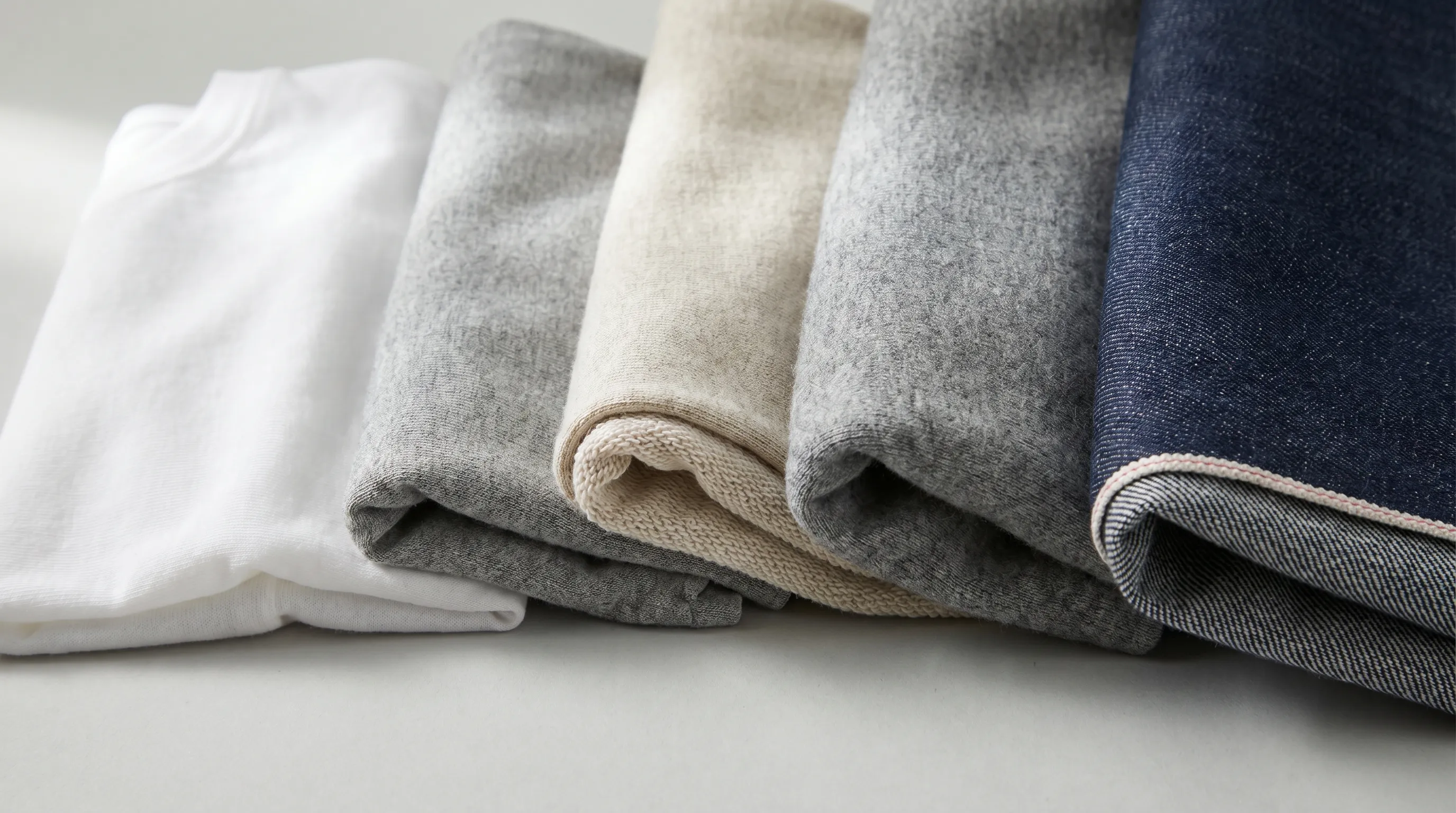
What is GSM?
GSM stands for grams per square meter (also written g/m² or gm²) — the weight of one square meter of fabric. It is the global standard for expressing fabric weight on tech packs, mill specs, and supplier quotes, because it communicates density, warmth, opacity, and substance in one number.
How it's measured: a technician punches a precise 100 cm² swatch (one-hundredth of a square meter) with a circular GSM cutter and weighs it on a calibrated scale; the gram weight × 100 = GSM (SANVT's fabric weight guide). Mills average several swatches, since weave density, finishing, and moisture all shift the reading.
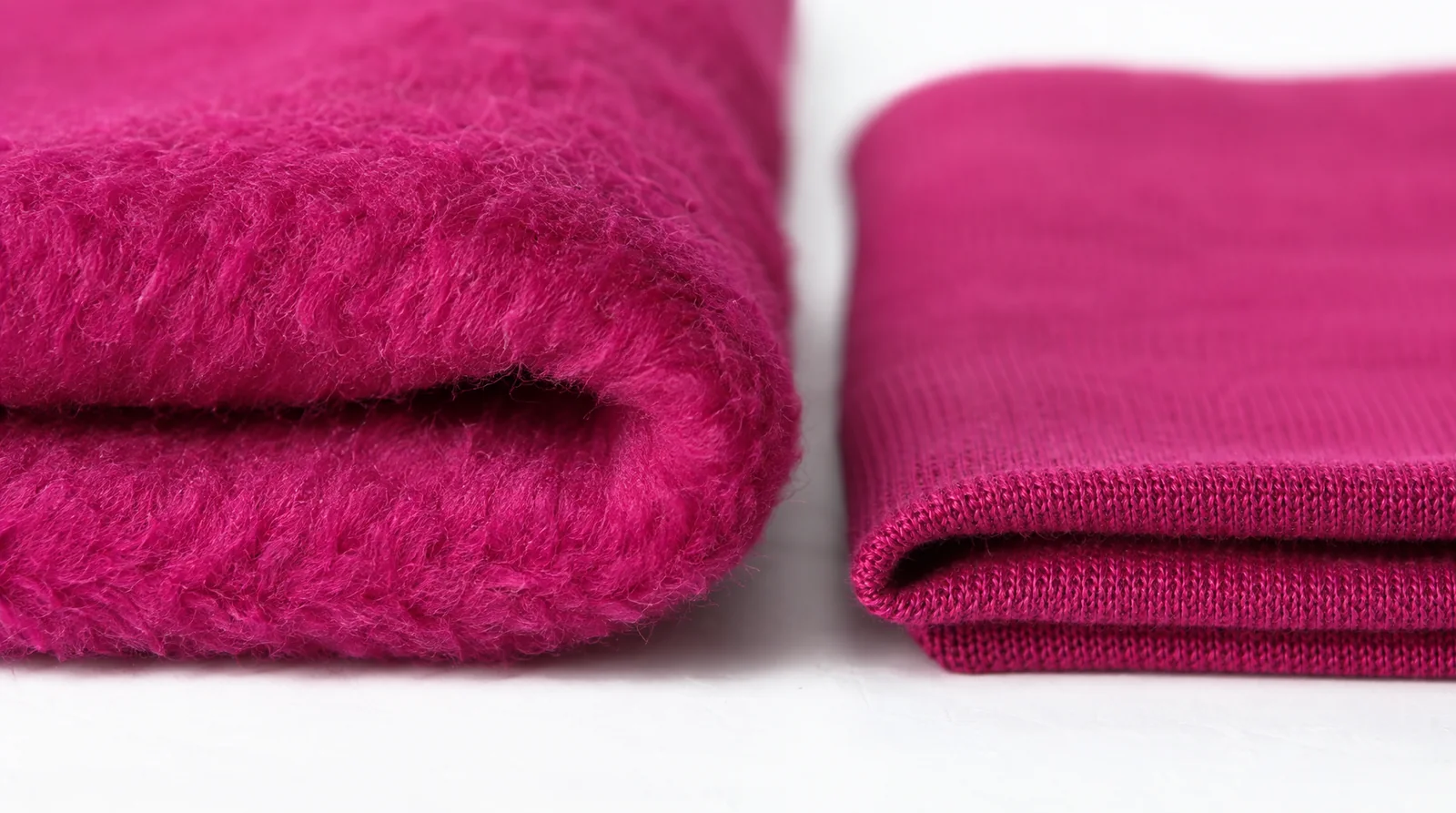
The key nuance: GSM is weight, not thickness. A tightly woven 200 GSM poplin is thinner than a lofty 200 GSM brushed fleece — same weight per square meter, very different hand. Within one fabric family, though, GSM tracks closely with what you feel: higher = denser, warmer, more opaque, more durable; lower = lighter, more breathable, more drape.
Worked example
From swatch to spec line in three steps
A mill sends you a jersey sample. You cut a 10 × 10 cm swatch (100 cm²) with a GSM cutter and it weighs 1.8 g on the scale. GSM = 1.8 × 100 = 180 GSM — a standard-weight tee jersey. Converting for a US supplier: 180 ÷ 33.906 = 5.3 oz/yd². The BOM line then reads: "Body: 100% combed cotton jersey, 180 GSM (5.3 oz), supplier X." That one number is what lets a factory in another country source the same hand-feel you approved.
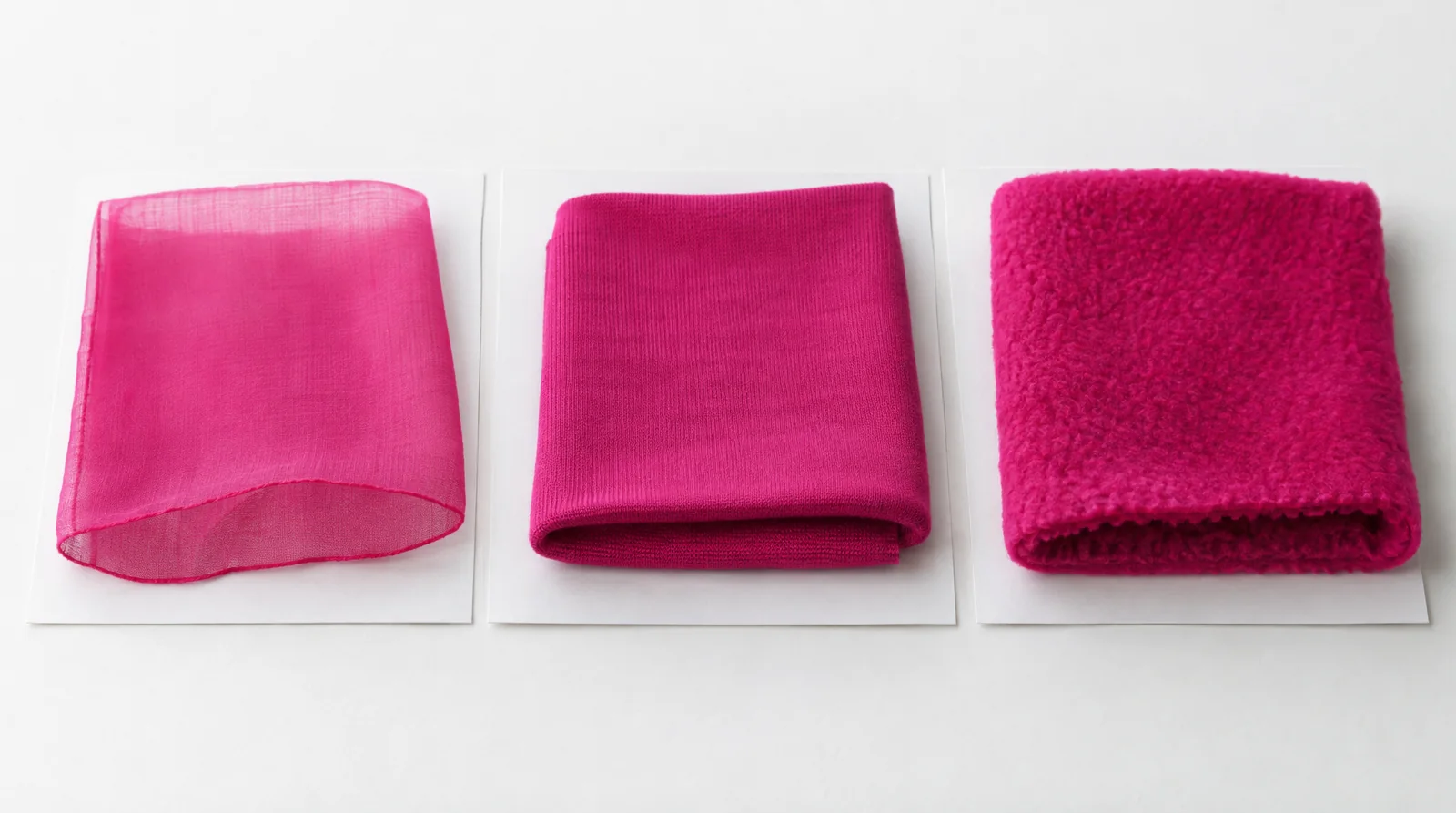
GSM ranges by garment and fabric
| Fabric / garment | Typical GSM | Reads as |
|---|---|---|
| Chiffon / sheers (woven) | 30–70 GSM | Semi-sheer, fluid drape |
| Cotton poplin / shirting | 110–150 GSM | Crisp, light, opaque shirting |
| Lightweight summer tee (jersey) | 120–160 GSM | Soft, breathable, drapes close |
| Standard unisex tee (jersey) | 160–200 GSM | The everyday sweet spot |
| Heavyweight / boxy tee | 200–250 GSM | Structured, premium streetwear weight |
| French terry (mid-season hoodie) | 280–320 GSM | Smooth face, looped back, mid warmth |
| Brushed-back fleece (winter hoodie) | 300–400 GSM | Lofty, warm, holds shape |
| Denim (jeans, ~10–14 oz) | 340–475 GSM | Midweight to sturdy five-pocket |
| Heavy canvas / raw denim (15 oz+) | 475–550+ GSM | Rigid, workwear-grade |
| Wool suiting / coating | 200–500 GSM | Suiting at the low end, overcoating high |
Indicative ranges: lightweight <150 GSM, midweight 150–350, heavyweight 350+. Exact GSM varies by fiber, weave, and finish — per SANVT and Core Fabrics references.
The GSM scale at a glance
GSM vs oz/yd²: the conversion
US apparel — denim especially — often quotes weight in ounces per square yard (oz/yd²). The two units convert cleanly: 1 oz/yd² = 33.906 GSM. Multiply ounces by 33.906 to get GSM; divide GSM by 33.906 to get ounces (conversion reference).
Anchors worth memorizing: a 5.5 oz tee fabric ≈ 186 GSM; a 7 oz shirting ≈ 237 GSM; 12 oz denim ≈ 407 GSM, with raw-denim enthusiasts running 15–21 oz (≈ 509–712 GSM) (Denim Hunters' weight guide). A single tech pack can legitimately mix units — knits specced in GSM, the denim shell in oz — so always state the unit: "200" alone is meaningless until you say which.
Common GSM mistakes
Treating GSM as a quality score. Higher isn't better — it's heavier. A 400 GSM summer tee is a mistake, not a premium product; the right GSM is the one matching the garment's purpose and season.
Confusing weight with thickness. Two 200 GSM fabrics can have completely different lofts. If hand-feel matters, spec GSM and construction (e.g., "brushed-back fleece" vs "poplin").
Leaving GSM off the BOM. A bill of materials that says "black cotton jersey" without a weight invites the mill to quote whatever's in stock — and a tee that arrives sheer at 130 GSM when you imagined 200 is a full re-sample. GSM is a required line for every fabric in a tech pack; Adstronaut's generator carries a weight field per material in the generated BOM so the spec ships complete.
Ignoring shrinkage and finish. Washing and finishing shift measured GSM by several percent — mills quote greige (unfinished) or finished weight, and the BOM should say which.
Frequently asked questions
What does GSM mean in fabric?
GSM means grams per square meter — the weight of one square meter of fabric, and the textile industry's standard unit for fabric weight. Higher GSM = denser, heavier, warmer cloth. Broad zones: lightweight under 150 GSM, midweight 150–350, heavyweight 350+.
How is GSM measured?
With a circular GSM cutter that punches a precise 100 cm² swatch (one-hundredth of a square meter), weighed on a calibrated scale. Swatch grams × 100 = GSM, so a 1.8 g swatch is 180 GSM. Mills average several swatches because weave, finish, and moisture shift readings.
What is a good GSM for a t-shirt?
Standard unisex tees run 160–200 GSM in cotton jersey. Summer-light tees sit at 120–160 GSM; heavyweight or boxy premium tees reach 200–250 GSM. Below ~140 GSM a tee starts reading sheer; above ~220 it reads structured and streetwear-weight.
What GSM should a hoodie be?
Quality hoodies run 280–400 GSM: french terry at 280–320 for mid-season, brushed-back fleece at 300–350 for the everyday weight, and 350–400+ for winter heft. Summer hoodies can drop to 200–250 GSM.
How do you convert GSM to oz/yd²?
Divide GSM by 33.906 to get oz/yd², or multiply ounces by 33.906 to get GSM (1 oz/yd² = 33.906 GSM). Examples: 186 GSM ≈ 5.5 oz; 237 GSM ≈ 7 oz; 12 oz denim ≈ 407 GSM. Always state the unit on specs — '200' alone is ambiguous.
What GSM is denim?
Most jeans use 340–475 GSM denim (about 10–14 oz/yd²). Lightweight shirting denim runs 5–9 oz (≈170–305 GSM); heavyweight raw denim runs 15–21 oz (≈509–712 GSM). Denim is the category where you'll most often see ounces rather than GSM on specs.
Does higher GSM mean better quality?
No — it means heavier and denser, which is only 'better' when the garment calls for it. Higher GSM adds warmth, opacity, and durability but costs more, ships heavier, and breathes less. A 140 GSM tee is right for summer; 350+ GSM is right for winter fleece. Match weight to purpose.
Where does GSM go in a tech pack?
On the bill of materials, as part of each fabric line: fiber content, construction, GSM/weight, color, and supplier — e.g. 'Body: 100% combed cotton jersey, 180 GSM.' It's the number the factory sources against; omitting it is one of the most common causes of a first sample arriving with the wrong hand-feel.
Put fabric weight on the spec automatically
Upload one garment photo and get a factory-ready tech pack whose BOM carries a weight field for every material — no separate spreadsheet. First pack free, then $3–6.
Try the AI Tech Pack GeneratorRelated reading
Sources and further reading
- SANVT — fabric weight guide (GSM) — definition, measurement method, cotton garment ranges
- Custom Apparel Source — weight conversion table — 1 oz/yd² = 33.906 GSM
- Denim Hunters — denim weight explained — oz categories from lightweight to 21 oz raw
- Core Fabrics — understanding fabric weights — weight zones and garment matching