What is MOQ (minimum order quantity)?
Updated September 22, 2026
MOQ (minimum order quantity) is the smallest number of units a clothing factory will produce in a single run — typically 50–500 units per style, and usually per colorway. Factories set MOQs because setup costs (pattern, marker, machine tuning) are fixed and fabric is bought by the roll (~100 metres per color), so small runs leave them with unrecoverable costs and unusable leftovers.
What is MOQ?
MOQ (minimum order quantity) is the lowest number of units a manufacturer requires per production run. In apparel it is almost always counted per style, and very often per colorway — 300 units of a tee in two colors is two 150-unit runs, not one 300-unit order. Always clarify whether a quoted MOQ is per style, per color, or per size before budgeting.
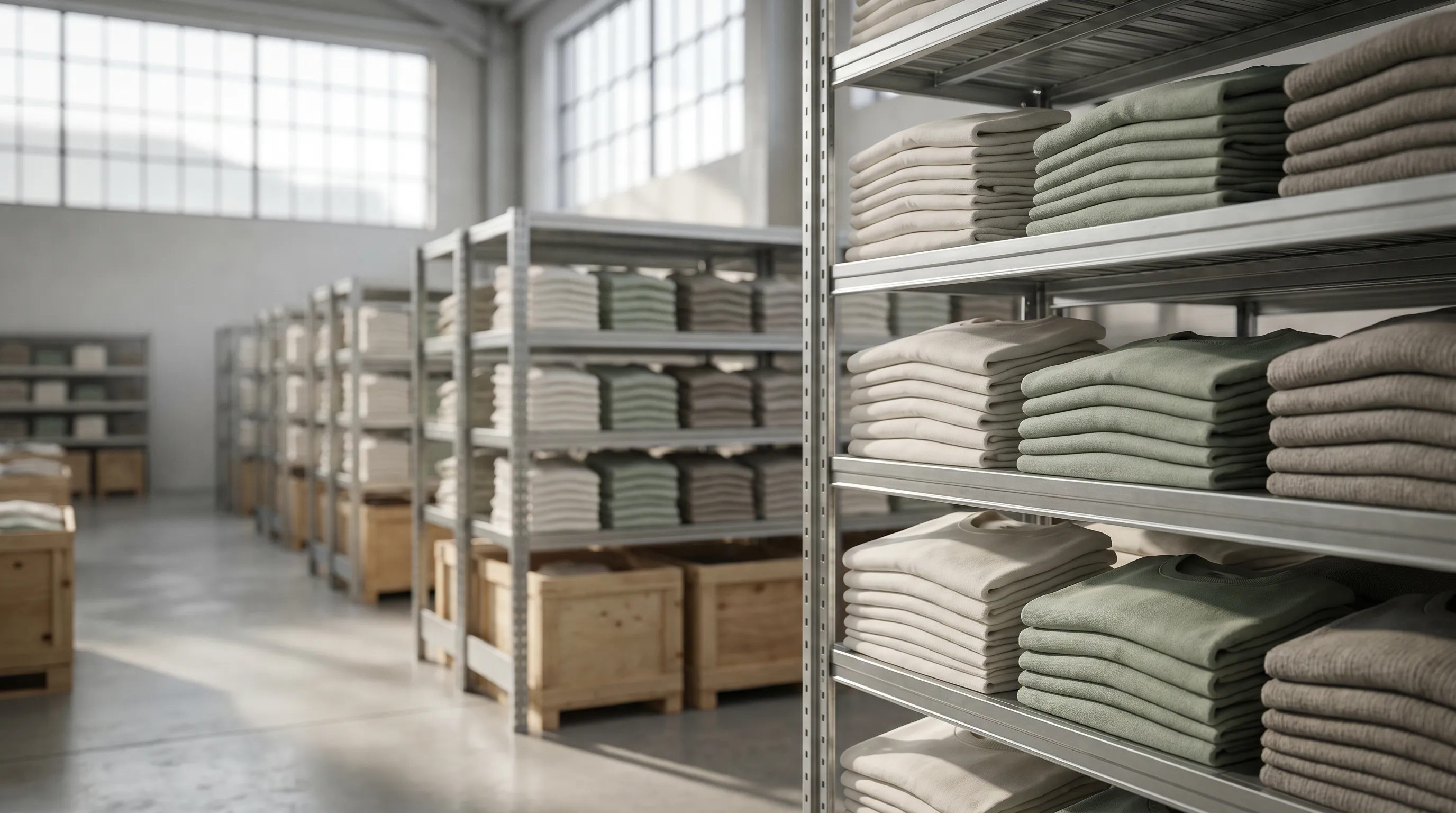
Factories set MOQs because most of a run's cost is fixed, not per-piece: pattern grading, marker making, cutting setup, machine threading, and tension tuning cost roughly the same for 50 pieces as for 5,000. Quality also stabilizes with volume — the first pieces off a freshly tuned line are the roughest. The second driver sits upstream: material minimums. Mills sell fabric by the roll — commonly ~100 metres per color, with many mills setting their own minimums at 500–1,000 metres (Hook & Eye's explainer) — and dyed-to-match thread, custom trims, and knitwear yarn each carry their own floors. Your garment MOQ is largely those material floors translated into units.
Worked example
Why "300 units" is really a fabric-roll calculation
A tee uses ~1.3 m of jersey. A mill's minimum dye lot is one 100 m roll per color, and the factory wants ≤10% leftover. 100 m ÷ 1.3 m ≈ 77 garments per roll — so a 3-roll commitment (the practical minimum for a stable dye lot and cutting efficiency) lands near 230–300 units per colorway. Add a second colorway and the math restarts: same style, two colors = two MOQs. This is why limiting launch colorways is the single most effective MOQ reducer.
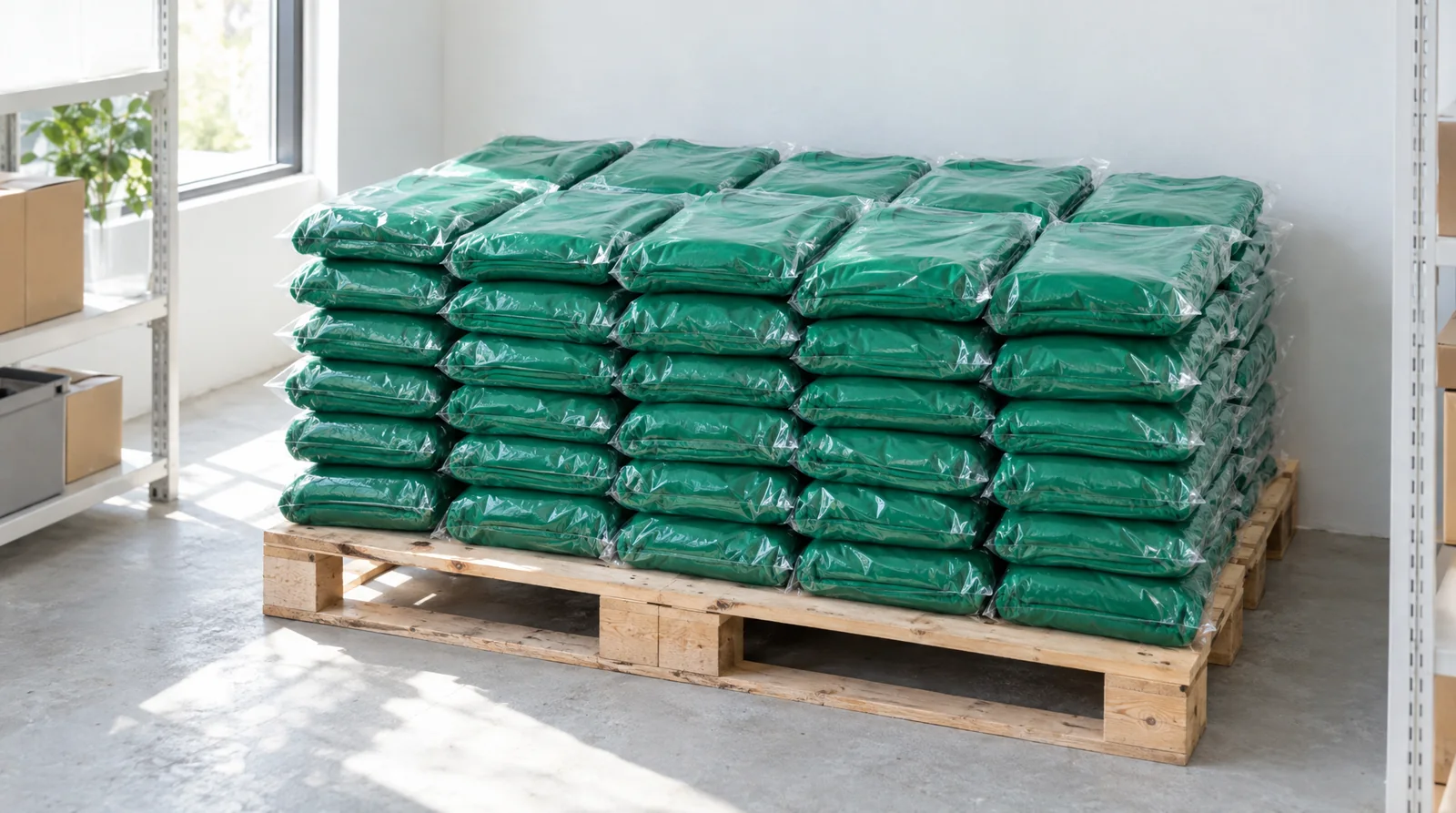
Typical MOQ ranges by production type
| Production type | Typical MOQ |
|---|---|
| Print-on-demand / DTG (Printify, Printful) | 1 unit — highest per-piece cost |
| Domestic small-batch cut-and-sew (US/EU) | 50–100 units per style |
| Standard knit garments (tees, basics) | 100–300 units per style/color |
| Woven garments (shirts, trousers, outerwear) | 300–500+ units per style/color |
| Overseas full-package (China, Vietnam, India) | 300–1,000+ units per style/color |
| Custom-dyed or technical fabrics | 500–1,000+ units per style/color |
| Fabric at the mill (per color) | ~100 m (1 roll) to 500–1,000 m minimums |
| Wholesale price-break tier | 1,000–5,000+ units per style/color |
Indicative 2026 ranges per Argus Apparel and sourcing references. Knits run lower than wovens because basics share standardized equipment; custom textiles push minimums up.
How new brands work around high MOQs
The playbook is reducing the factory's risk and setup burden until a small order becomes economical for them:
- 1
Use stock fabrics and limit colorways
Custom dyes and extra colors are the biggest MOQ multipliers — each adds a fresh fabric or yarn minimum. In-stock jersey in one or two colorways keeps minimums near the 50–100 floor. - 2
Trade price for quantity
"Your MOQ is 300 — I can do 150 at +15–20% per unit" often works, because the premium covers the factory's fixed setup. Simplifying the design (fewer trims, standard hardware) lowers what they must amortize. - 3
Sequence your production
Validate with print-on-demand (MOQ 1), run 50–100 units domestically to confirm fit and demand, then move proven styles overseas for the bulk price break. Some factories also split one fabric minimum across styles. - 4
Arrive with a complete tech pack
A factory that can scope your job precisely quotes tighter and flexes more. A clear pack — graded measurements, BOM, construction — signals you won't burn their calendar on revisions; generate one from a photo for $3–6 before the first email.
Common MOQ mistakes
Budgeting per style instead of per colorway. The most expensive misreading: a 3-color drop at "MOQ 300" is 900 units, not 300. Ignoring the fabric floor. Negotiating the factory down to 150 units is useless if the mill still requires a 500 m dye lot — ask where the minimum actually lives. Designing against the MOQ. Custom-dyed technical fabric with bespoke hardware on a first order stacks three minimums; designing the first run around stock materials is cheaper than negotiating around custom ones. Treating MOQ as fixed. It's the opening position of a negotiation about risk — deposits, simpler specs, longer lead times, and off-peak slots all move it.
And one upstream mistake: sending a vague brief. A factory quoting from a napkin sketch protects itself with a high minimum; one quoting from a complete tech pack prices the actual work.
Frequently asked questions
What does MOQ mean in clothing manufacturing?
MOQ (minimum order quantity) is the smallest number of units a factory will produce in one run — typically 50–500 per style. It exists because setup costs (pattern, marker, machine tuning) are fixed regardless of run size, and because fabric is bought by the roll, so small runs leave factories with unrecoverable setup and unusable leftovers.
What is a typical MOQ for a small clothing brand?
Domestic small-batch cut-and-sew: 50–100 units per style. Standard knits: 100–300 per style/color. Overseas full-package factories: usually 300–500+ per style, often per color. Custom-dyed or technical fabrics push minimums to 500–1,000+ because of dye-lot floors.
Is MOQ per style or per color?
Usually both: counted per style and very often per colorway, because each color triggers its own fabric minimum (commonly a ~100-metre roll). So 300 units across two colors is treated as two 150-unit runs — and an 'MOQ 300' three-color drop is a 900-unit commitment. Always confirm the counting basis before budgeting.
Why do fabric minimums raise garment MOQs?
Mills sell fabric by the roll (~100 m per color) and often set 500–1,000 m dye-lot minimums. Your run must consume most of that material or the factory absorbs dead stock. At ~1.3 m per tee, one roll is only ~77 garments — which is why realistic per-colorway minimums cluster around 150–300 units for knits.
How can a startup get a lower MOQ?
Use the factory's stock fabrics, limit colorways to one or two, simplify trims, offer 15–20% more per unit to cover setup, accept off-peak production slots, and arrive with a complete tech pack so the factory can quote precisely. Many factories will cut a 300-unit minimum to ~150 on those terms.
Can you manufacture clothing with an MOQ of 1?
Yes — print-on-demand services print single garments on blank stock, an effective MOQ of 1 with the highest per-unit cost and limited fabric/construction choices. It's the standard validation step before committing to a 50–500 unit cut-and-sew run of your own design.
Why are knit MOQs lower than woven MOQs?
Knit basics run on standardized equipment factories keep permanently set up, so tees and fleece can go as low as 100 units. Wovens — shirts, trousers, outerwear — need different machinery, more pattern pieces, and dedicated setup per style, pushing minimums to 300–500+.
Does a tech pack help lower MOQ?
Indirectly but reliably. A complete pack — graded measurements with tolerances, a structured BOM, construction callouts — lets the factory quote accurately and produce a correct first sample, removing the revision risk that makes them quote defensively. A clearly scoped, low-complexity style is the easiest 'yes' to a smaller run.
Arrive at the MOQ conversation factory-ready
A complete tech pack is negotiating leverage. Turn one garment photo into a factory-ready pack — flats, BOM, graded measurements — in minutes. First pack free, then $3–6.
Try the AI Tech Pack GeneratorRelated reading
Sources and further reading
- Argus Apparel — MOQ in clothing manufacturing (2026) — ranges by garment type and production scale
- Hook & Eye — MOQs explained — fabric roll minimums (~100 m/color) and fixed-cost rationale
- CH Cashmere — MOQ in knitwear — yarn-driven minimums
- Shanghai Garment — overseas MOQ and negotiation — China bulk-production minimums and tactics
- Makers Row — what is MOQ — domestic small-batch ranges