
What is CMT in fashion manufacturing?
Updated September 22, 2026
CMT (Cut, Make, Trim) is a garment manufacturing arrangement where the brand supplies all materials — fabric, thread, buttons, zippers, labels — and the factory provides only the labor and equipment to cut, sew, and finish. The factory charges a per-piece labor fee: typically $1–$3 for a basic tee and $8–$15+ for a structured jacket, excluding materials. Roughly 80% of apparel brands use some form of CMT in their supply chain.

What is CMT?
CMT stands for Cut, Make, Trim — a production model in which the brand sources and supplies every physical material, and the factory provides only labor, machines, and facility to convert those materials into finished garments. The price is a per-piece labor charge, not a finished-goods price.
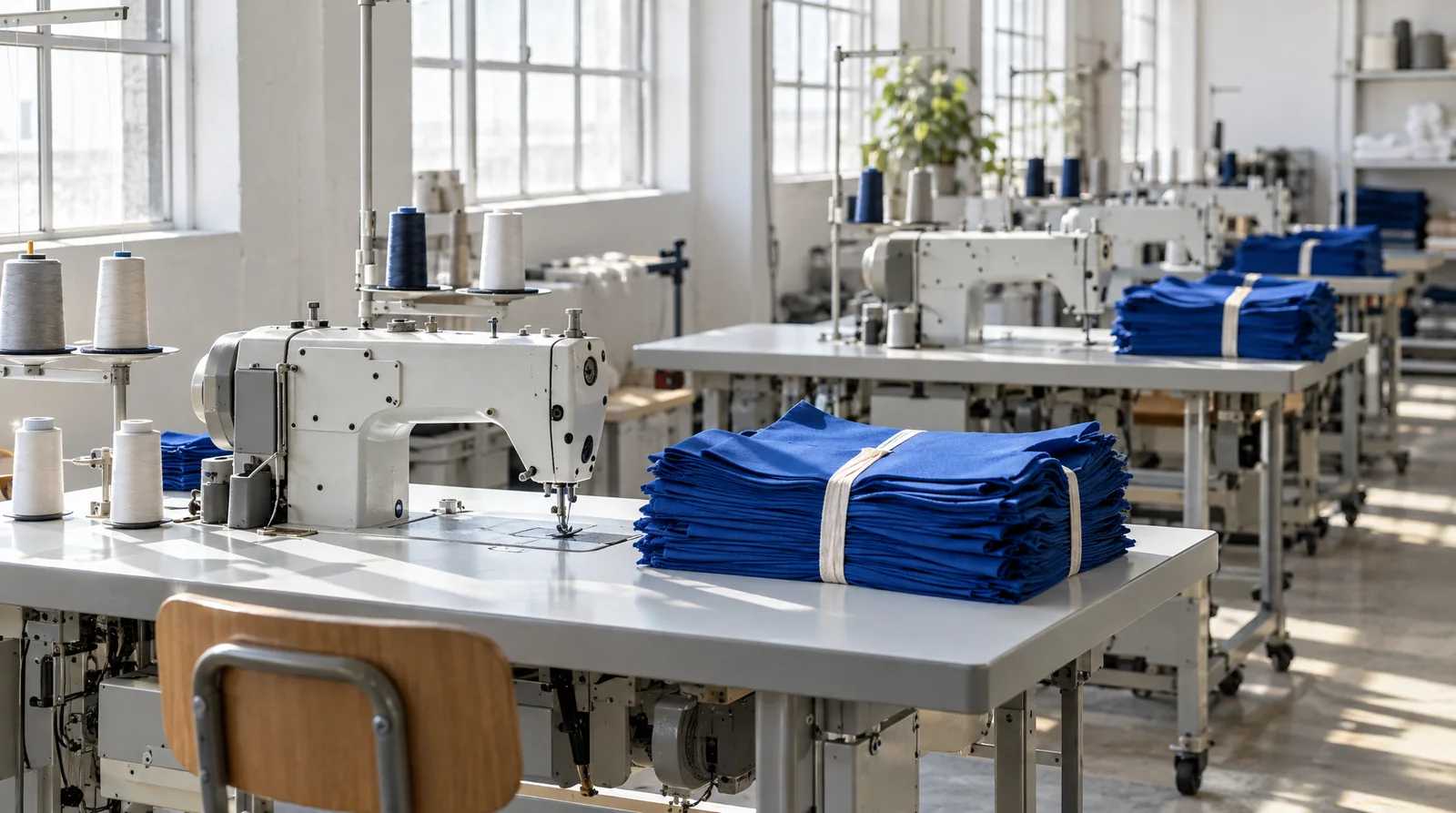
The name walks through the factory's three stages. Cut: your fabric is spread and cut to the supplied pattern — and cutting waste is your cost, since you own the fabric. Make: cut panels move through 10–30 sewing stations, depending on complexity. Trim: finishing — buttons, labels, thread trimming, pressing, final QC, packing.
What CMT excludes is the defining part: the factory sources nothing. Fabric, trims, labels, and packaging all arrive from you or your nominated suppliers. Ownership splits risk accordingly — a fabric-quality defect is the brand's problem, a sewing defect is the factory's. Roughly 80% of apparel brands use some form of CMT somewhere in their supply chain (Online Clothing Study).
Worked example
Pricing one hoodie under CMT vs FOB
You're producing 300 hoodies. CMT route: you buy 400 m of 320 GSM fleece directly from a mill at $4.50/m ($1,800), trims and labels for $450, and the factory quotes $6.50/piece CMT labor ($1,950) — total ≈ $4,200, or $14.00 per hoodie, with you coordinating fabric delivery. FOB route: the factory sources everything and quotes $17.50/piece — total $5,250 — one invoice, one point of accountability. The $3.50/unit spread is the factory's material markup plus sourcing labor: that spread is what CMT saves, and the coordination burden is what it costs.
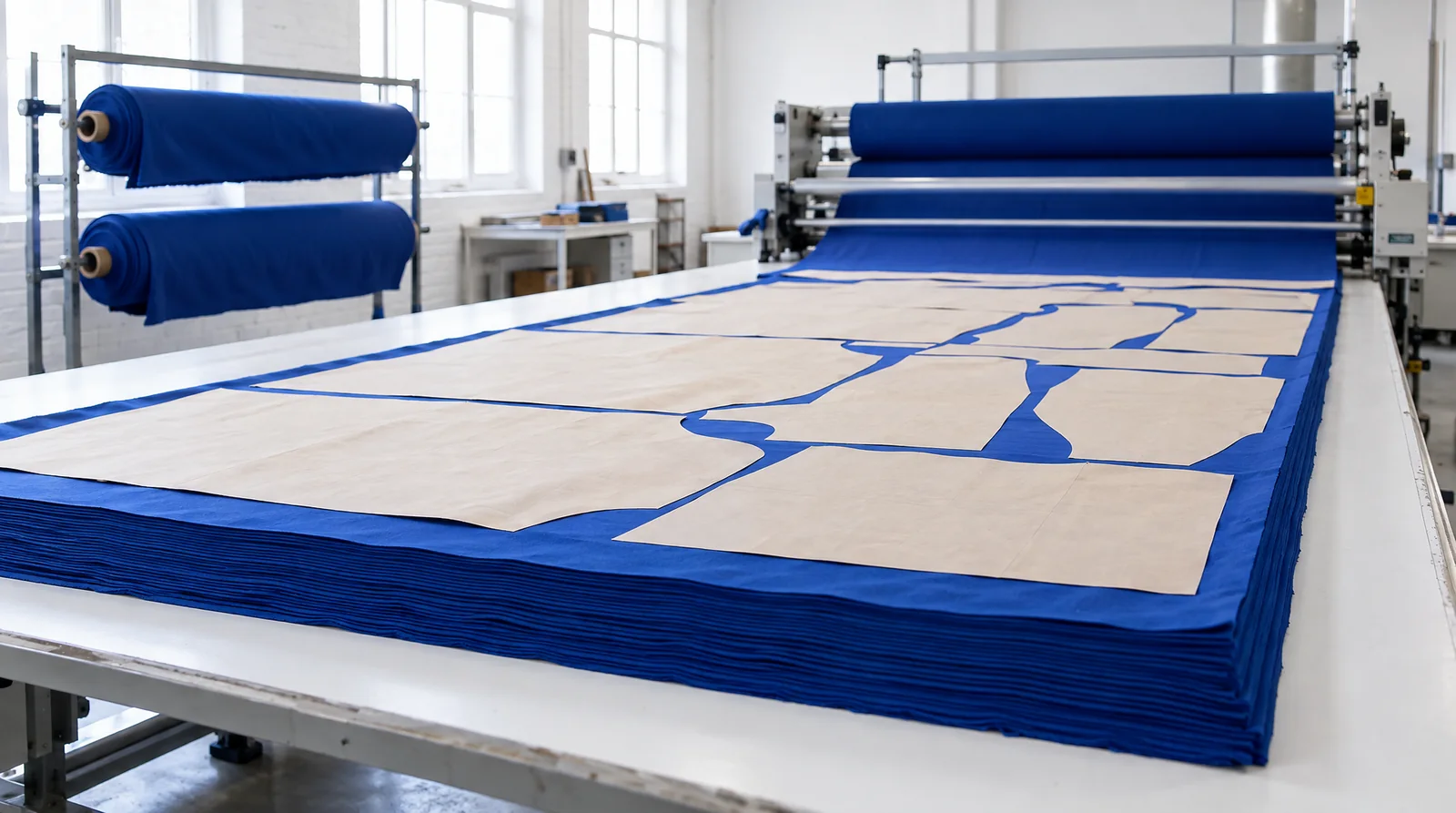
CMT vs FOB vs full-package production
| Model | Who sources materials | Price covers | Best for |
|---|---|---|---|
| CMT (Cut, Make, Trim) | The brand — every fabric, trim, and label shipped to the factory | Labor + factory overhead + margin only | Brands with material control needs, nominated mills, or strong sourcing — and small labels, since CMT shops accept lower volumes |
| FOB (Free On Board) | The factory sources to your spec | Materials + labor + overhead + profit, delivered to the export port | Brands wanting one price and one point of accountability |
| Full-package (FPP/ODM) | The factory end-to-end, sometimes with design support | Everything from development to shipped goods | Brands outsourcing the whole process with the volume to support it |
CMT isolates labor; FOB and FPP bundle materials and sourcing into one factory-managed price. Sources: Cosmo Sourcing, Online Clothing Study, Zedonk.
What does CMT cost?
A CMT quote covers factory labor, overhead, and margin — nothing else (Online Clothing Study's CMT-vs-FOB breakdown). Directional per-piece ranges: a basic tee runs $1–$3, a structured blazer or technical jacket $8–$15+, with complex embellished styles at 2–3× basic rates (Cosmo Sourcing). Region moves the number more than anything: Bangladesh sits around $1–$3 for basics, India and Vietnam $2–$6, China $3–$8, Turkey $5–$12, and US/EU shops $8–$15+ — there is no official index, so treat all ranges as directional.
The model's financial appeal is transparency and material margin: you see exactly what sewing costs, and buying fabric at mill rates captures the 15–30% markup an FOB factory would add. The trade-off is logistics: you coordinate every delivery, and one late trim shipment stalls the whole line.
When to use CMT (and when not to)
CMT is right when material control matters more than convenience: proprietary or specialty fabrics, a nominated mill you trust, certification requirements (organic, recycled) you must verify yourself, or exact consistency across multiple factories. It's also the natural home for small and emerging brands — CMT shops are flexible on volume where FOB and full-package factories often aren't, which pairs naturally with the MOQ math.
It's wrong when you lack a sourcing operation: under CMT you are the supply chain — sourcing every component, timing deliveries, absorbing fabric-waste and supplier-delay risk. Brands without that muscle usually start full-package and move to CMT as they scale sourcing in-house; the transition logic is covered in how to find a clothing manufacturer.
What a CMT factory needs from you
Because a CMT factory sews exactly what you specify and sources nothing, the brief has to be complete — there's no in-house development team to fill gaps. To quote and run a CMT order, the factory needs a complete tech pack: graded measurements with tolerances, a bill of materials naming every fabric and trim you'll supply, flat sketches, construction and stitch callouts, and Pantone color references. Missing information is the leading cause of unsatisfactory CMT samples — the factory can't interpret intent it was never given.
This is where Adstronaut's Tech Pack Generator fits: one garment photo becomes a factory-ready pack — flats, structured BOM, graded points of measure — in minutes for $3–6, so a first-time founder can brief a CMT factory as precisely as a brand with a technical-design team. The wider briefing workflow is in how to communicate with your manufacturer.
Common CMT mistakes
Comparing a CMT quote to an FOB quote directly. A $6.50 CMT hoodie isn't cheaper than a $17.50 FOB hoodie until you've added your fabric, trims, freight, and coordination time — compare landed cost per unit, not quotes. Under-shipping materials. Factories cut with 3–8% wastage; sending exactly 300 garments' worth of fabric for a 300-piece order guarantees a shortfall. Ask for the consumption-plus-wastage figure and ship to it. Vague material ownership at QC. Agree in writing how fabric defects (yours) versus sewing defects (theirs) are counted, or the dispute eats the margin you saved. Skipping the spec. A CMT factory without a complete tech pack will sew its best guess — and its best guess is your re-sample bill.
Frequently asked questions
What does CMT stand for in fashion?
Cut, Make, Trim — a manufacturing model where the brand supplies all materials (fabric, thread, buttons, zippers, labels) and the factory provides only labor and equipment: cutting the fabric, sewing the garment, and finishing it. The factory charges a per-piece labor fee rather than a finished-goods price.
Who supplies the materials in CMT manufacturing?
The brand — every fabric, lining, thread, trim, label, and hang tag is sourced, purchased, and shipped to the factory by you or your nominated suppliers. The factory contributes labor, machines, and floor space only. This single fact is what separates CMT from FOB and full-package, where the factory sources.
How much does CMT cost per garment?
As a labor-only fee: roughly $1–$3 per basic tee and $8–$15+ per structured jacket, with complex styles at 2–3× basic rates. Region dominates: Bangladesh ~$1–$3, India/Vietnam ~$2–$6, China ~$3–$8, Turkey ~$5–$12, US/EU $8–$15+. No official index exists — treat ranges as directional and quote per style.
What is the difference between CMT and FOB?
In CMT you source all materials and the factory bills labor only — maximum control and material-margin capture, maximum coordination. In FOB the factory sources materials and delivers finished goods to the export port at one bundled price covering materials, labor, overhead, and profit — one point of accountability, less control. Compare them on landed cost, not quote price.
Is CMT cheaper than full-package production?
The labor line is the lowest of the three tiers, but you pay for all materials separately. CMT wins overall when you source fabric well — capturing the 15–30% markup an FOB factory adds. Without sourcing infrastructure, full-package is often cheaper in practice because the factory buys materials at scale you can't match.
When should a brand use CMT?
When material control matters: proprietary fabrics, nominated mills, certification chains you must verify, or consistency across factories. It also suits small and emerging labels because CMT shops accept lower volumes than full-package factories. Start full-package if you have no sourcing operation, and migrate to CMT as you bring sourcing in-house.
What documents does a CMT factory need?
A complete tech pack: graded measurements with tolerances, a bill of materials naming every component you'll supply, flat sketches, construction and stitch callouts, and Pantone color references. Because a CMT factory sews exactly what's specified and sources nothing, incomplete information is the leading cause of failed CMT samples.
Who is responsible for defects in CMT production?
Responsibility follows ownership: fabric and trim defects belong to the brand (you supplied them), sewing and construction defects belong to the factory. Agree the counting method in writing before production — this split is the most common CMT dispute, and a precise tech pack plus approved material standards is what makes it adjudicable.
Brief your CMT factory without a technical designer
CMT factories sew exactly what your tech pack specifies — nothing more. Turn one garment photo into a factory-ready pack with flats, a BOM, and graded measurements in minutes. First pack free, then $3–6.
Try the AI Tech Pack GeneratorRelated reading
Sources and further reading
- Cosmo Sourcing — CMT explained — per-piece cost ranges and stage breakdown
- Online Clothing Study — CMT vs FOB — price-tier composition and sourcing responsibility
- Online Clothing Study — what is CMT manufacturing — ~80% adoption across apparel brands
- Zedonk — CMT in fashion — advantages, disadvantages, full-package contrast
- Garment Export House — CMT vs FOB rates — regional labor-rate ranges