What is a proto sample?
Updated June 10, 2026
A proto (prototype) sample is the first physical version of a new garment, sewn from a tech pack to prove that the design works in three dimensions — its construction logic, proportions, and seam placement. It is a design proof, not a fit or color proof: it is often cut in a substitute fabric and is the first of four sampling stages (proto → fit → PP → TOP).
What is a proto sample?
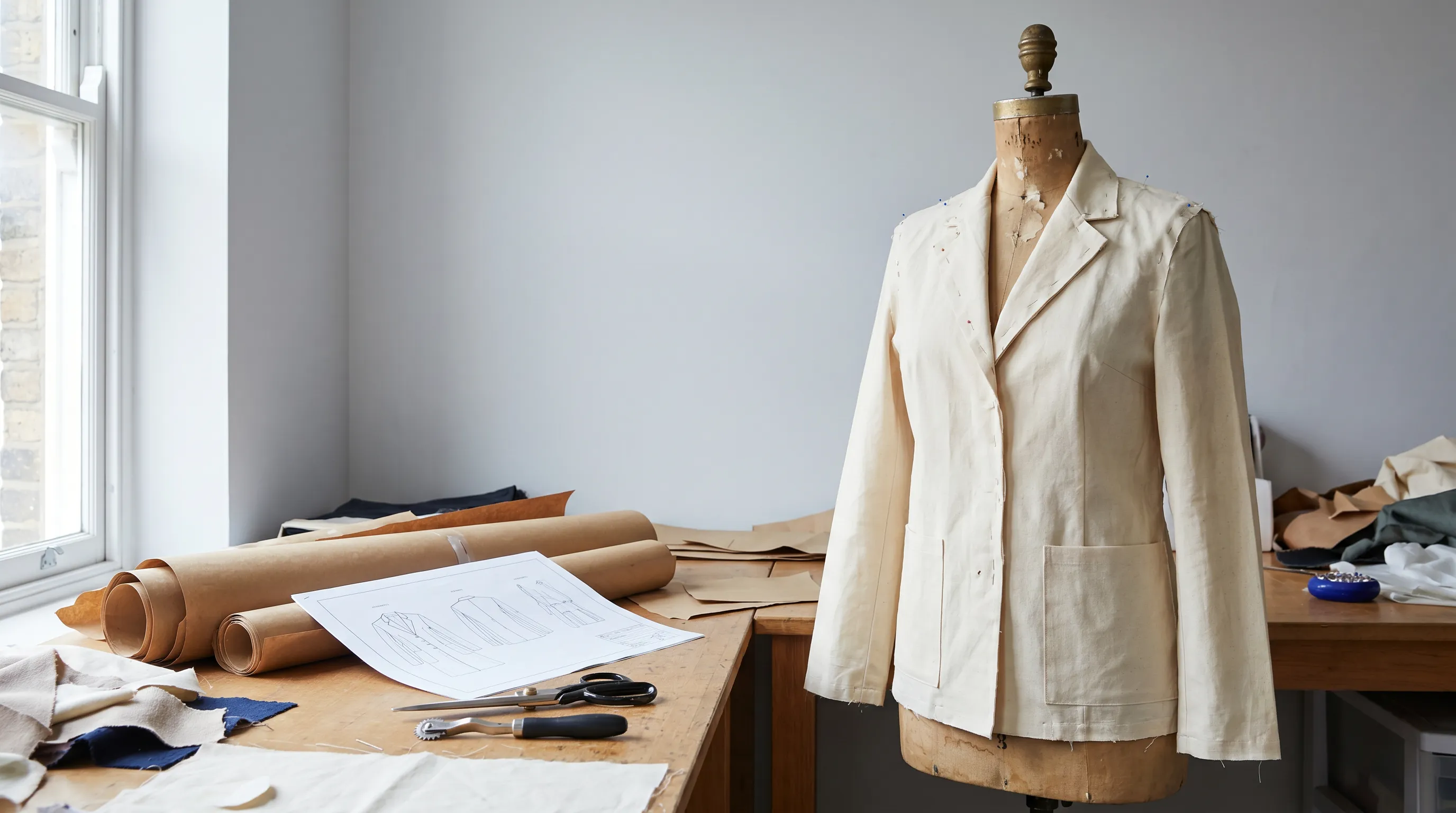
A proto sample — short for prototype sample, and often called the first sample — is the earliest physical version of a garment, sewn by a factory or sample room directly from your tech pack. Its job is to translate a flat design into a real, wearable object so you can see whether the idea actually holds up in three dimensions.
The proto answers one question: does this design work as a garment? The technical team confirms construction logic, design proportions, seam placement, and pattern direction — that the panels join correctly and the silhouette reads the way the sketch promised (Ninghow Apparel). Because the goal is to validate the concept rather than the finished look, the proto is frequently cut in a substitute fabric with similar weight or stretch when the approved material isn't ready yet, which lets construction testing start without waiting on fabric (Uphance).
The key nuance: a proto is a design proof, not a fit or color proof. Measurements may be off by centimeters and the fabric and trims may be stand-ins — that is expected at this stage. Precise fit, true color, and production materials are locked later, in the fit and pre-production samples. Judging a proto on color accuracy is like judging a film by its storyboard.
The proto is also where a brand decides whether a design is worth pursuing at all. Because it is the first tangible build, it is the cheapest moment to discover that a silhouette doesn't work, a seam can't be sewn cleanly, or a panel needs to be re-cut — long before anyone has paid for production fabric or trims. A good proto round saves time and money by catching exactly these problems early (Uphance). That is why even brands working in 3D still build a physical proto: you have to hold the garment to know it.
Worked example: a proto round on one jacket
From tech pack to first critique in one round
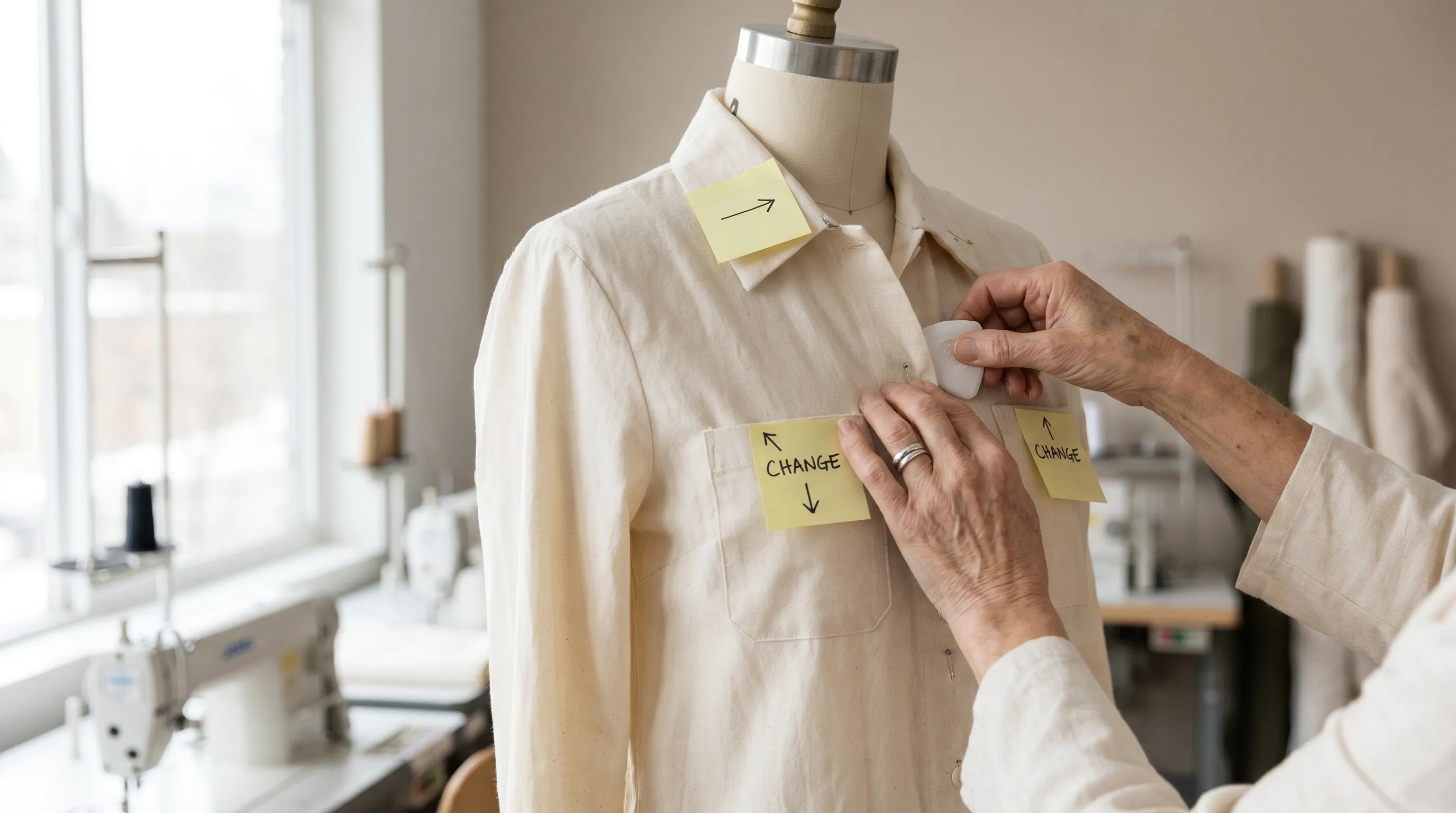
You send a factory a tech pack for a lined bomber jacket. Two weeks later the proto arrives, sewn in a substitute shell of similar weight because the final nylon hasn't been milled. You put it on a dress form and check the design intent: the raglan seams sit where the flat said they would, but the collar stands too tall and the welt pockets read small against the body. None of those are fit problems — they are design and construction problems, exactly what the proto exists to surface. You mark up the tech pack, the factory cuts a second proto with a shorter collar and larger pockets, and only once the design is approved does the program advance to a fit sample in the real nylon at the target size. Catching the collar at proto — not at pre-production — saves a full $200–$1,500 sample round later (fashion sampling cost ranges).
Where the proto sits: the four sampling stages
Most apparel programs move through four named sample stages, each a checkpoint that approves one set of decisions before the next begins. The proto is the gate for design.
| Stage | What it proves | Fabric used | Who signs off |
|---|---|---|---|
| 1. Proto (prototype) | Design, construction logic, proportions, seam placement | Often substitute / similar fabric | Designer + technical team |
| 2. Fit sample | Measurements and fit on a target-size body | Intended fabric, main size | Designer + fit / pattern team |
| 3. PP (pre-production) | Real materials, trims, color, print, wash — the 'dress rehearsal' | Final production materials and trims | Brand + factory QC (locked) |
| 4. TOP (top of production) | That bulk output matches the approved PP sample | Pulled from the live production run | Brand QC / final approval |
The proto → fit → PP → TOP sequence, per Ninghow Apparel and BOMME Studio sampling guides. Each stage approves one thing; skipping the proto pushes design errors downstream where they cost more to fix.
The sampling pipeline at a glance
Proto vs fit sample vs PP sample
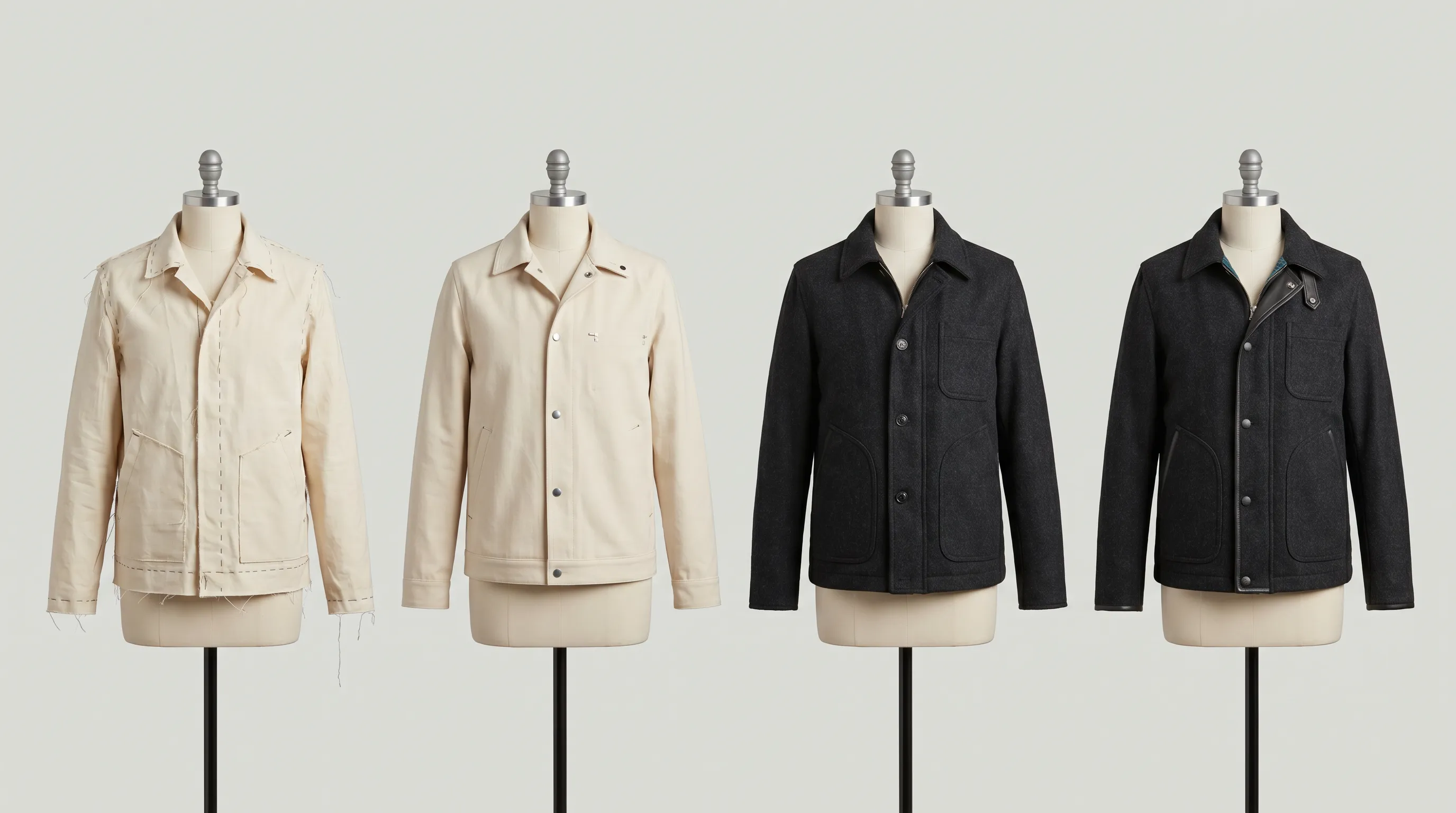
The three early samples are easy to confuse because they look similar, but each tests a different thing and is judged against different standards.
Proto vs fit sample. A proto focuses on construction feasibility — can the garment be built from these pattern pieces, seams, and assembly order, and does it look right? A fit sample comes next and is built in the correct fabric at the main target size to verify that measurements match the customer's body (Ninghow Apparel). Because fit depends on how the real cloth behaves, fit samples need the actual material (or a near-identical one), whereas a proto can tolerate a stand-in.
Proto vs PP sample. The pre-production (PP) sample is the dress rehearsal: real production materials, real trims, locked color, print placement, wash effects, labeling, and packaging, all signed off by the brand and the factory's QC before bulk begins (BOMME Studio). A proto deliberately ignores most of that — it would be wasteful to source final trims for a garment whose collar might still be redesigned.
In short: proto proves the design, fit proves the measurements, PP proves the production. Color accuracy and final fabric belong to the later stages, not the proto, which is why a smart proto round spends its energy on silhouette and construction instead of chasing a Pantone match. For where measurements themselves get nailed down, see points of measure and the broader garment glossary.
How many proto rounds — and what they cost
A proto is rarely a one-and-done. Most styles go through 2–4 sampling rounds before production approval, with simple garments like a t-shirt often needing just 2 and complex ones — tailored blazers, lined dresses, outerwear — running 3–5 (Ninghow Apparel cost analysis). Across all sample types, brands commonly cycle through 5–7 rounds before the bulk run — mock-up, proto, fit, size set, PP, TOP, and sometimes a shipment sample (Maker's Row).
That adds up. A single physical sample runs $200–$1,500 per style per round depending on complexity, so a multi-style collection can spend tens of thousands of dollars on sampling before one unit ships (sampling cost breakdown). Most of that cost is set in motion at the proto stage: every ambiguity in the first sample becomes another round.
The single biggest lever on proto rounds is the quality of the tech pack the factory sews from. A complete spec — clear flats, callouts, construction notes, and a bill of materials — lets the factory hit the design intent on the first proto instead of guessing. Vague packs are the most common reason a proto comes back wrong and a second round is needed.
Time matters as much as money. Each physical proto round typically adds one to two weeks of shipping and sewing before you can even see the result, so a style that needs three proto rounds can burn a month or more of calendar time on the first stage alone. Compressing that — by getting the design approved in one or two protos — is often the difference between hitting a season and missing it.
Common proto sample mistakes
Judging a proto on color or final fabric. The proto is a design proof; it is often sewn in substitute material precisely so construction testing can start before fabric is ready (Uphance). Rejecting a proto because the blue is wrong wastes a round on a problem the PP sample exists to solve.
Sending a thin tech pack and expecting a perfect first sample. A factory can only build what's specified. Missing construction notes or measurements force the sample maker to guess, and guesses come back as extra proto rounds — each one $200–$1,500 and 1–2 weeks.
Trying to fix fit on the proto. Fit is the next stage's job, in the correct fabric at the target size. Re-grading a proto sewn in a stand-in fabric produces measurements you'll have to redo anyway once the real cloth arrives.
Skipping the proto entirely. Jumping straight to a fit or PP sample pushes design and construction errors downstream, where they surface in expensive production-material samples instead of a cheap first proof. The proto is the cheapest place to be wrong.
Reducing proto rounds with a digital-first workflow
Because nearly every avoidable proto round traces back to an unclear specification, the fastest way to cut sampling cost is to give the factory a better starting point. Digital sampling and pattern tools let brands resolve design questions on screen before committing fabric and labor — one analysis found a digital-first approach can cut physical prototypes from 15–25 per style down to 1–2, saving roughly 60–80% of sampling cost (physical vs digital sampling).
The tech pack is where that leverage lives. Adstronaut's AI tech pack generator turns a single garment photo into a factory-ready spec — flats, callouts, construction notes, and a bill of materials with a weight field per material — in 3–5 minutes, for $3–6 a pack on paid plans. A complete, unambiguous pack means the factory's first proto is far likelier to land on the design intent, so the program reaches an approved proto in fewer rounds. Adstronaut doesn't replace the physical proto — you still need to hold the real garment — but it removes the spec ambiguity that turns one proto round into three. See also digital sampling in fashion and automating tech packs from sketch to sample.
Frequently asked questions
What is a proto sample?
A proto (prototype) sample is the first physical version of a garment, sewn from a tech pack to prove that the design works in three dimensions — its construction logic, proportions, and seam placement. It is a design proof, not a fit or color proof, and is the first of four sampling stages: proto, fit, PP, and TOP.
What is the difference between a proto sample and a fit sample?
A proto sample tests construction feasibility and design — can the garment be built from these patterns and does it look right — and is often cut in substitute fabric. A fit sample comes next, built in the correct fabric at the main target size to verify that measurements match the customer's body. Proto proves the design; fit proves the measurements.
What is the difference between a proto sample and a PP sample?
A proto is an early design proof in often-substitute materials. A PP (pre-production) sample is the dress rehearsal using real production materials, trims, locked color, print placement, and packaging, signed off by the brand and factory QC before bulk production. Proto proves the design; PP proves the production.
What is evaluated on a proto sample?
Construction logic, design proportions, seam placement, panel balance, and overall silhouette — whether the pattern pieces join correctly and the garment hangs the way the sketch promised. Exact fit, final fabric, and true color are deliberately not the focus; those are locked in later sampling stages.
Is a proto sample made in the final fabric?
Often not. Because the proto's job is to validate construction, it is frequently cut in a substitute fabric with similar weight or stretch when the approved material isn't ready, so construction testing can start without waiting on fabric. Final production fabric is used in the fit and pre-production samples.
How many proto sample rounds are typical?
Most styles need 2–4 sampling rounds before production approval — simple garments like t-shirts often just 2, complex ones like tailored blazers 3–5. Across all sample types, brands commonly run 5–7 rounds total (mock-up, proto, fit, size set, PP, TOP). A clear tech pack reduces the number of proto rounds.
How much does a proto sample cost?
A physical garment sample runs roughly $200–$1,500 per style per round, depending on complexity. Simple pieces sit at the low end; tailored or lined garments at the high end. Because a multi-style collection multiplies that across rounds, sampling can reach tens of thousands of dollars before any units ship.
Why is it called a proto sample?
Proto is short for prototype — it is the prototype of the garment, the first tangible build used to test and refine the idea. It is also commonly called the first sample, because it is the first physical version produced from the tech pack before fit, pre-production, and top-of-production samples follow.
Can you skip the proto sample?
You can, but it's risky. Skipping the proto pushes design and construction errors downstream into expensive samples made with real production materials, where fixing them costs far more. The proto is the cheapest place to discover a design is wrong, which is why most programs keep it as the first checkpoint.
How can I reduce proto sample rounds?
Send the factory a complete, unambiguous tech pack — clear flats, callouts, construction notes, and a bill of materials — so the first proto lands on the design intent instead of a guess. Digital-first workflows can cut physical prototypes from 15–25 per style to 1–2, saving roughly 60–80% of sampling cost.
Get the proto right on the first round
Most extra proto rounds come from a vague spec. Upload one garment photo and get a factory-ready tech pack — flats, callouts, construction notes, and a bill of materials — in 3–5 minutes, so your first sample lands closer to the design. First pack free, then $3–6.
Try the AI Tech Pack GeneratorRelated reading
Sources and further reading
- Ninghow Apparel — the 4 stages of sampling (proto, fit, PP, TOP) — proto purpose, proto vs fit, stage sequence and sign-off
- Uphance — types of garment samples in apparel production — proto as first sample; substitute fabric for construction testing
- BOMME Studio — garment sampling process (proto, fit, PP) — PP sample as the production dress rehearsal; what each stage locks
- Ninghow Apparel — why samples are so expensive — 2–4 rounds typical; complex garments 3–5
- Maker's Row — the 7 stages of apparel samples — 5–7 total sampling rounds across all sample types