
What is FOB in apparel sourcing?
Updated June 10, 2026
FOB (Free On Board) carries two linked meanings in apparel. As an Incoterms 2020 shipping rule, the seller delivers — and risk passes to the buyer — once goods are loaded on the buyer's nominated vessel at the named export port. As a garment pricing model, an FOB quote is a single per-piece price covering all materials, labor, and delivery to that port — typically running 30–50% above the CMT (labor-only) price because the factory sources every component and adds a 15–30% markup on materials.
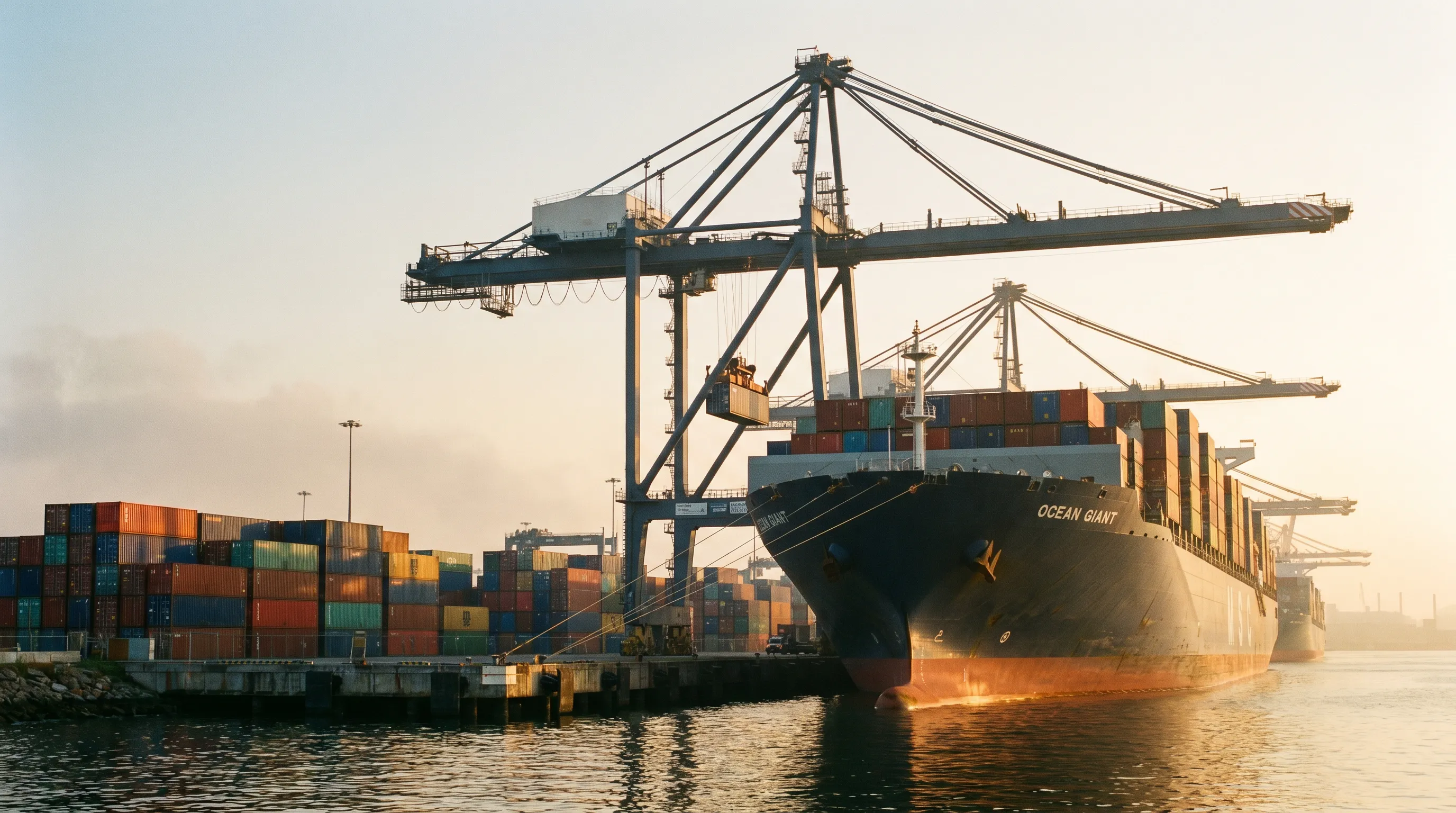
What is FOB?
FOB stands for Free On Board (occasionally written "Freight on Board"), and in apparel it does double duty as a shipping term and a pricing term.
As a shipping rule, FOB is one of the Incoterms 2020 rules published by the International Chamber of Commerce. Under FOB, the seller fulfils its obligation when the goods are loaded on board the vessel the buyer nominates at the named port of shipment — and at that loading point, both cost and risk pass to the buyer (Trade Finance Global). FOB is defined for sea and inland-waterway transport only.
As a pricing model, an FOB quote means the factory sources all materials, manufactures the garment, and delivers it loaded at the export port for one bundled per-piece price. This is the everyday meaning a brand hears when a supplier says "our FOB price is $9.80 a unit." It is the opposite of CMT, where you supply every material and the factory bills labor only — under FOB the factory is the supply chain up to the ship's rail.
What does an FOB price include?
An apparel FOB price rolls the full pre-export cost stack into a single number (Tobimax, HiSourcing). It includes:
- Fabric — sourcing, dyeing, and finishing of all shell and lining material
- Cut, Make, Trim — the cutting, sewing, and finishing labor that a standalone CMT quote would isolate
- Trims and accessories — thread, buttons, zippers, labels, hang tags, poly-bags, cartons
- Factory QC — in-line and final quality inspection at the plant
- Inland freight — moving the cartons from the factory to the export port
- Export clearance and loading — export customs paperwork and the cost of getting the cargo on board the vessel
What it excludes is everything past the ship's rail: ocean freight, marine insurance, destination-port charges, import duties, customs clearance, and last-mile delivery to your warehouse are all the buyer's cost from the loading point onward (approved forwarders). An FOB price is therefore not your landed cost — you still have to add freight and duty to know what a garment costs on your shelf.
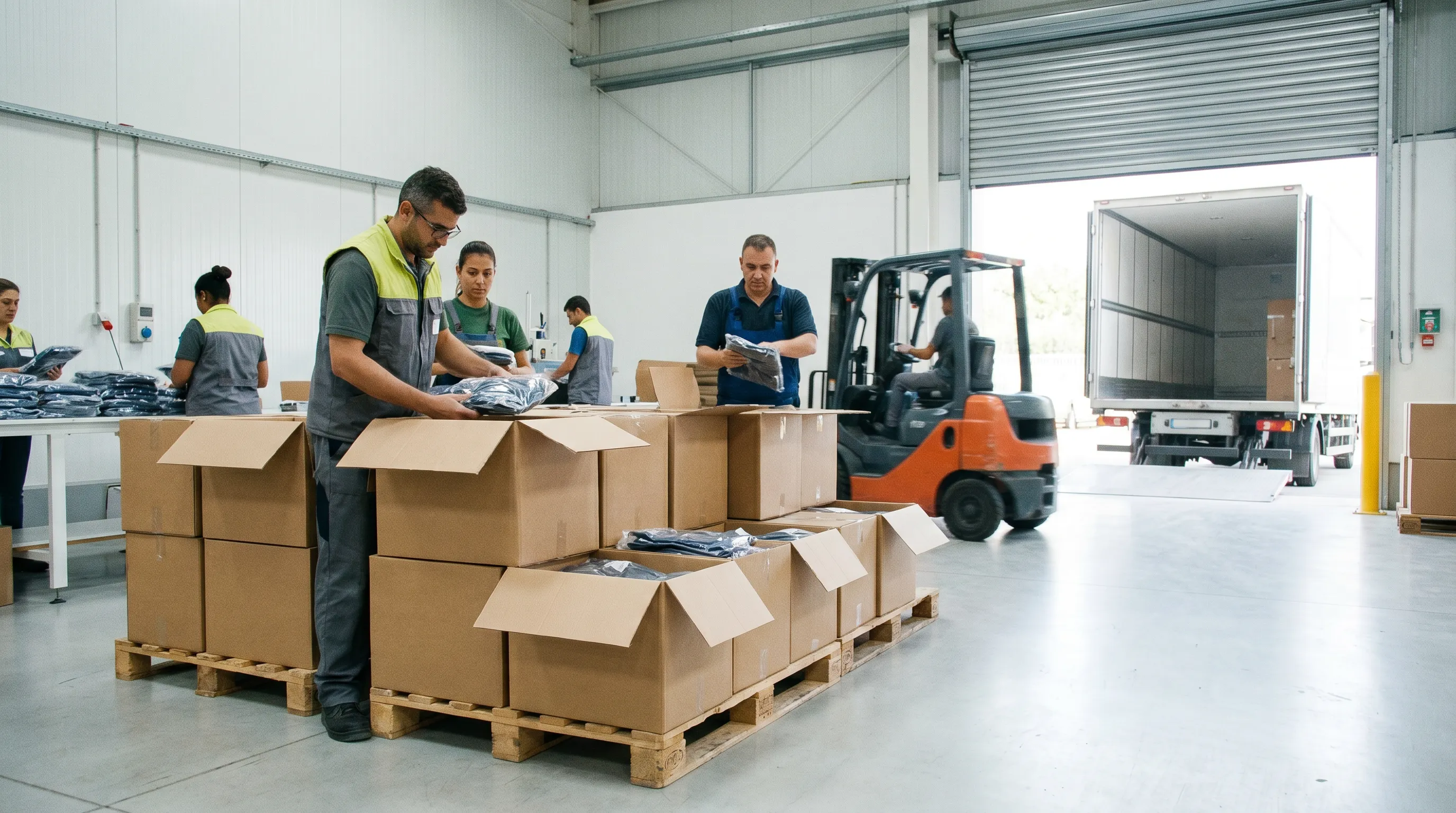
Worked example
Reading an FOB quote on 300 hoodies
A factory quotes $17.50 FOB per hoodie on a 300-unit order — total $5,250, one invoice. That single number already contains the fleece, the trims, the sewing labor, factory QC, the truck to the port, and loading onto your nominated vessel. What it does not contain: ocean freight (say $0.90/unit on a shared container), marine insurance (~$0.15), and import duty (apparel into the US can run 16–32% of customs value). Add those and your landed cost lands near $20.50–$23 per hoodie. The same garment quoted CMT might be ~$6.50 labor — but only after you've separately bought ~$10–$11 of fabric and trims and shipped them in. FOB's premium over that CMT-plus-materials math is the factory's sourcing work and its 15–30% material markup — the price of one invoice and one accountable partner.
FOB vs CMT vs full-package
All three are ways to buy the same garment; they differ in who sources materials and how much the factory owns.
| Model | Who sources materials | Price covers | Best for |
|---|---|---|---|
| FOB (Free On Board) | The factory, to your spec | Materials + labor + overhead + profit, delivered loaded at the export port | Brands wanting one price and one accountable partner; importers comfortable arranging their own freight |
| CMT (Cut, Make, Trim) | The brand — every fabric, trim and label shipped in | Labor + factory overhead + margin only | Brands with sourcing muscle, nominated mills, or material-control needs — and small labels accepting lower volumes |
| Full-package (FPP / ODM) | The factory, end-to-end, sometimes with design support | Everything from development to finished goods — usually priced on FOB terms | Brands outsourcing the whole process with volume to support it |
FOB and full-package both bundle materials into one factory-managed price; CMT isolates labor. FOB typically runs 30–50% above CMT alone. Sources: Online Clothing Study, Tobimax, Apex Fashion Lab.
FOB vs CMT: control versus convenience
FOB and CMT are the two ends of the sourcing spectrum, and the choice is really about who owns the material supply chain.
Under CMT you source every component, ship it to the factory, and pay labor only — capturing the 15–30% markup an FOB factory would add to materials, at the cost of coordinating every delivery yourself. Under FOB the factory sources everything and hands you one consolidated invoice covering materials, labor, and delivery to port; you trade material-margin capture and control for a single accountable partner and far less logistics (Online Clothing Study).
The rule of thumb: FOB suits brands without a sourcing operation — no nominated mills, no freight infrastructure, no desire to chase trim deliveries — while CMT rewards brands that have built that muscle. Most labels start FOB or full-package and migrate components to CMT as they bring sourcing in-house; the full FOB-versus-CMT cost breakdown lives in the CMT glossary entry.
FOB vs CIF vs DDP: how far the seller goes
FOB is one rung on the Incoterms ladder. The next rungs simply move more of the journey onto the seller — at a price.
| Incoterm | Seller pays up to | Risk transfers at | Buyer pays |
|---|---|---|---|
| FOB (Free On Board) | Goods loaded on vessel at export port | Loading onto the vessel | Ocean freight, insurance, import duty, last-mile |
| CIF (Cost, Insurance & Freight) | Destination port — seller pays freight + insurance | Loading at export port (risk still passes early) | Import duty, customs, last-mile delivery |
| DDP (Delivered Duty Paid) | Buyer's door — everything | Delivery at the buyer's named place | Nothing beyond the agreed price |
Under CIF the seller pays freight and insurance but risk still transfers at loading — a frequent trap. DDP puts maximum cost and risk on the seller (and the most markup in the price). Sources: trade.gov Incoterms, Trade Finance Global, Cosmo Sourcing.
Where FOB hands off cost and risk

A modern wrinkle: FOB vs FCA for containers
There is a technical catch worth knowing. The ICC actually recommends FCA (Free Carrier), not FOB, for containerized cargo — which is virtually all apparel (ICC Academy). The reason: FOB makes the seller responsible until goods are loaded on the vessel, but with containers the seller hands cargo to the port terminal beforehand and never controls the actual ship-loading. That gap creates a sliver of unallocated risk.
In practice, garment factories — especially in China — still quote and ship under FOB because their export operations are built around it, and the industry treats "FOB price" as shorthand for "finished goods to the port." For most brands this works fine; just know that if a dispute ever hinges on the exact loading moment, FCA is the cleaner rule for containers. The pricing model is identical.
Common FOB mistakes
Mistaking the FOB price for landed cost. FOB ends at the ship's rail. Treating $17.50 FOB as your real per-unit cost — before freight, insurance, and duty — is how brands blow their margin target. Always model the full landed cost before setting a retail price.
Assuming CIF means "risk-free to destination." Under CIF the seller pays freight and insurance to the destination port, but risk still transfers at loading — if the container is damaged at sea, the buyer files the claim. The seller paying the freight does not mean the seller owns the risk.
Comparing an FOB quote to a CMT quote head-to-head. A $17.50 FOB price and a $6.50 CMT price are not comparable until you add your own fabric, trims, and freight onto the CMT side. Compare landed cost per unit, never quote against quote.
Briefing an FOB factory loosely because "they source it anyway." An FOB factory sources to your spec — and a vague spec means it sources the cheapest material that technically matches, not the hand-feel you imagined. The fix is the same as for any factory: a complete tech pack with a named fabric weight, construction, and color.
What an FOB factory needs from you
Because an FOB factory buys materials on your behalf, the specification is what controls quality — you are not shipping in the fabric you approved, so the tech pack has to describe it precisely enough that the factory's sourcing team buys the right thing.
That means a complete pack: a bill of materials naming each fabric by content and weight (its GSM), construction and stitch callouts, graded measurements with tolerances, flat sketches, and Pantone color references. With FOB, an under-specified material line is the single biggest source of "the sample isn't what I pictured" — the factory sourced to the gap you left.
This is where Adstronaut's Tech Pack Generator fits: one garment photo becomes a factory-ready pack — flats, a structured BOM with a weight field per material, and graded points of measure — in minutes for $3–6. A first-time founder requesting an FOB quote can then brief the factory's sourcing team as precisely as a brand with a technical-design department, so the materials the factory buys match the garment you approved.
Frequently asked questions
What does FOB mean in apparel sourcing?
Free On Board. It has two linked meanings: as an Incoterms 2020 shipping rule, the seller delivers and risk passes to the buyer once goods are loaded on the buyer's nominated vessel at the export port; as a garment pricing model, an FOB quote is one per-piece price covering all materials, labor, and delivery to that port. It is the opposite of CMT, where you supply the materials and pay labor only.
What is included in an FOB price?
Fabric sourcing and dyeing, cut-make-trim labor, all trims and packaging, factory quality inspection, inland freight from the factory to the export port, and export clearance plus loading onto the vessel. It excludes ocean freight, marine insurance, import duty, destination-port fees, and last-mile delivery — all of which the buyer pays from the loading point onward.
What is the difference between FOB and CMT?
Under FOB the factory sources all materials and quotes one bundled per-piece price delivered to the port. Under CMT you source and ship in every material and the factory bills labor only. FOB buys convenience and a single accountable partner; CMT buys control and captures the 15–30% markup an FOB factory adds on materials. FOB typically runs 30–50% above CMT labor alone.
Is FOB more expensive than CMT?
The FOB number is higher than a CMT labor quote because it includes all materials plus the factory's 15–30% markup on them — roughly 30–50% above CMT alone. But that is not a like-for-like comparison: under CMT you still pay for fabric, trims, and freight separately. Compare landed cost per unit, not one quote against the other.
Who owns the risk under FOB?
The seller owns cost and risk up to the moment the goods are loaded on the buyer's nominated vessel at the export port. At that loading point, both transfer to the buyer — so ocean freight, marine insurance, and any damage in transit become the buyer's responsibility from the ship's rail onward.
What is the difference between FOB and CIF?
Under FOB the buyer arranges and pays for ocean freight and insurance from the loading point. Under CIF the seller pays freight and insurance to the destination port — but risk still transfers at loading, exactly as in FOB. So CIF moves more cost onto the seller without moving the risk transfer point; if cargo is damaged at sea under CIF, the buyer still files the claim.
What is the difference between FOB and DDP?
FOB ends the seller's responsibility at vessel loading; the buyer handles freight, duty, and delivery. DDP (Delivered Duty Paid) is the opposite extreme — the seller pays everything to the buyer's door, including import duty and customs, and the buyer pays nothing beyond the agreed price. DDP is simplest for the buyer but carries the most seller markup.
Is FOB the same as landed cost?
No. An FOB price covers the garment only up to loading at the export port. Landed cost adds ocean freight, marine insurance, import duty, customs fees, and last-mile delivery. Treating an FOB quote as your real per-unit cost — before adding those — is a common way brands miss their margin target. Model landed cost before setting a retail price.
Should containerized apparel use FOB or FCA?
Technically FCA (Free Carrier) is the ICC-recommended rule for containerized cargo, because the seller hands containers to the port terminal rather than loading the vessel directly, leaving a sliver of risk unallocated under FOB. In practice most garment factories — especially in China — still quote and ship FOB because their export operations are built around it. The pricing model is identical either way; FCA is just the cleaner term if a dispute hinges on the exact loading moment.
What documents does an FOB factory need from me?
A complete tech pack — because the factory sources materials on your behalf, the spec is what controls quality. That means a bill of materials naming each fabric by content and weight (GSM), construction and stitch callouts, graded measurements with tolerances, flat sketches, and Pantone colors. An under-specified material line is the leading cause of an FOB sample arriving wrong, since the factory sourced to the gap you left.
Brief your FOB factory so it sources the right materials
Under FOB the factory buys materials to your spec — so the spec has to be exact. Turn one garment photo into a factory-ready tech pack with flats, a weighted BOM, and graded measurements in minutes. First pack free, then $3–6.
Try the AI Tech Pack GeneratorRelated reading
Sources and further reading
- Trade Finance Global — FOB Incoterms 2020 rule — FOB definition, sea-only scope, risk transfer at vessel loading
- trade.gov — Know Your Incoterms — official FOB/CIF/DDP buyer-seller responsibility split
- Tobimax — FOB in garment manufacturing — apparel FOB price components; excludes ocean freight and duty
- Online Clothing Study — CMT vs FOB — single-invoice FOB vs material-control CMT; 15–30% markup
- HiSourcing — FOB price: what's included — FOB = goods + inland transport + packing + export clearance + loading
- ICC Academy — Incoterms 2020: FCA or FOB? — FCA recommended over FOB for containerized cargo