How to make a factory-ready tech pack for suits and blazers
Updated June 10, 2026
A suit or blazer tech pack must name the canvas construction — fused, half-canvas, or full floating canvas with hair-canvas (hymo) pad-stitching along the lapel roll line — plus shoulder padding, Bemberg/cupro lining, functional vs sham buttonholes, vent style, and tailored points of measure graded to ASTM D6240. Adstronaut AI drafts all of it — flat sketch, BOM, graded measurements, construction notes — from a single garment photo in minutes for $3–6 per pack.
What goes in a suit or blazer tech pack
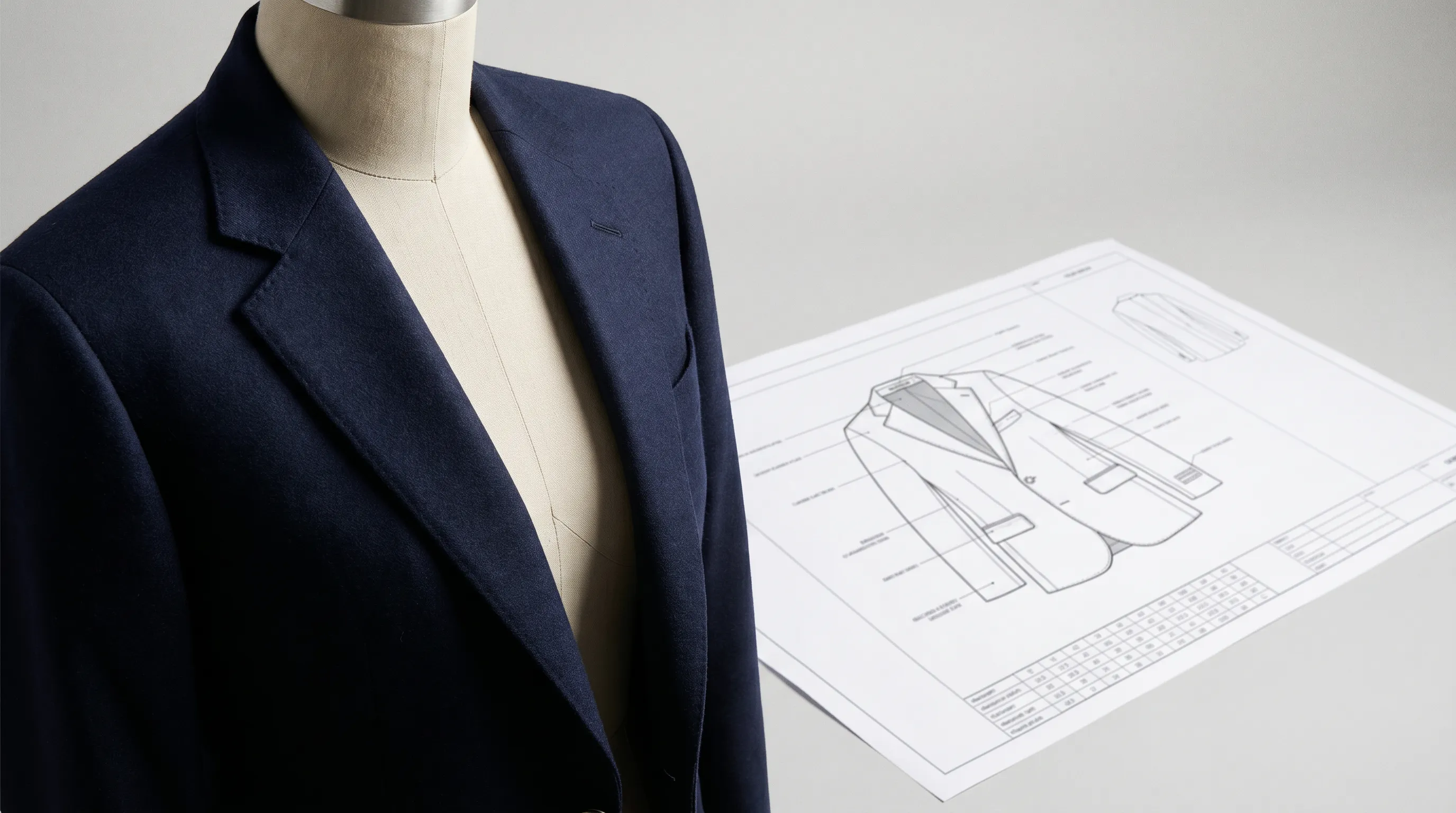
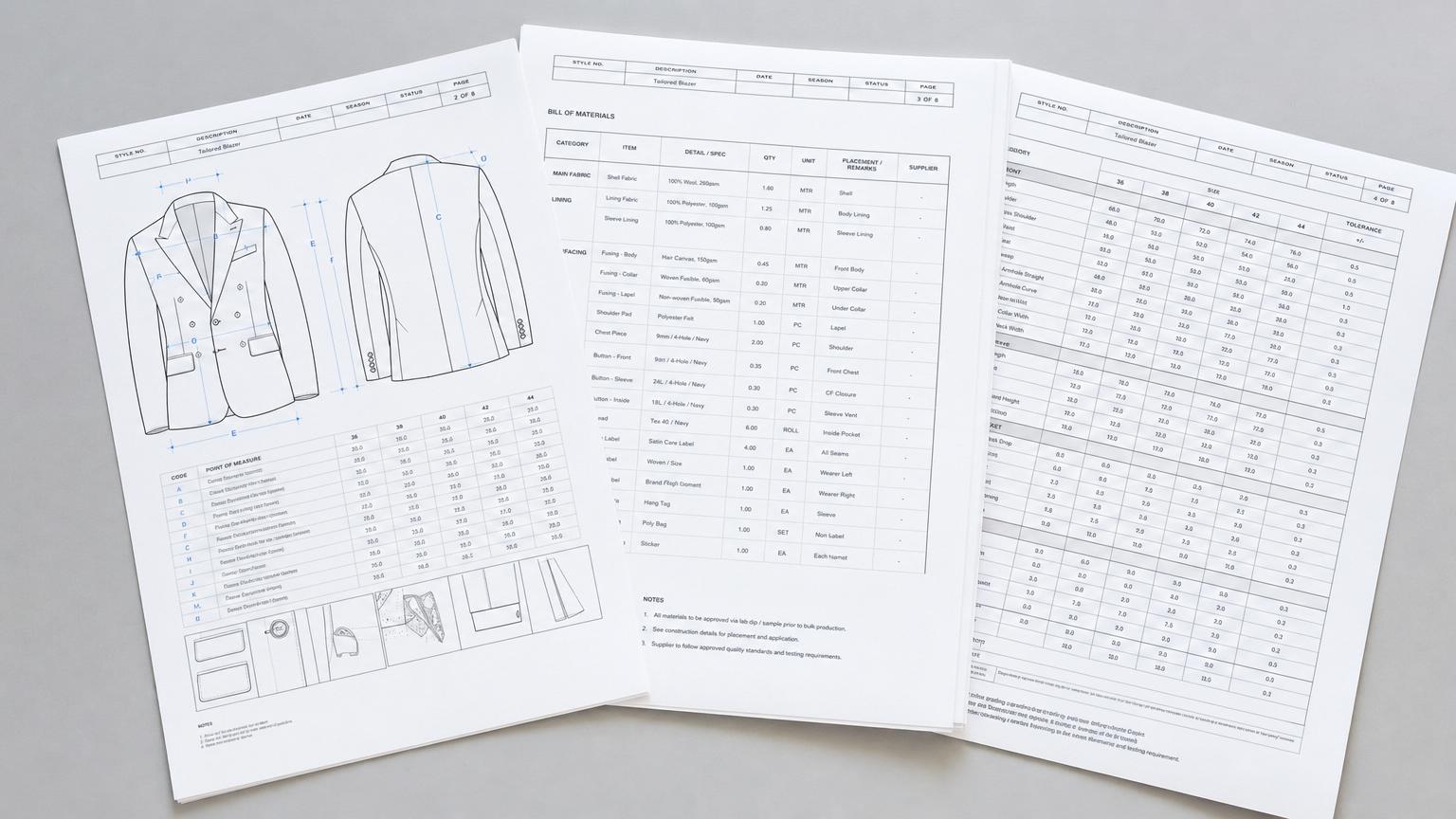
A tailoring tech pack is the manufacturing blueprint for a structured jacket — a suit coat, blazer, or sport coat. It carries the standard backbone (flat sketch, BOM, graded points of measure, construction notes, colorways), but the document is dominated by internal structure the eye never sees on a finished garment — and that the factory cannot guess from a front-view photo alone.
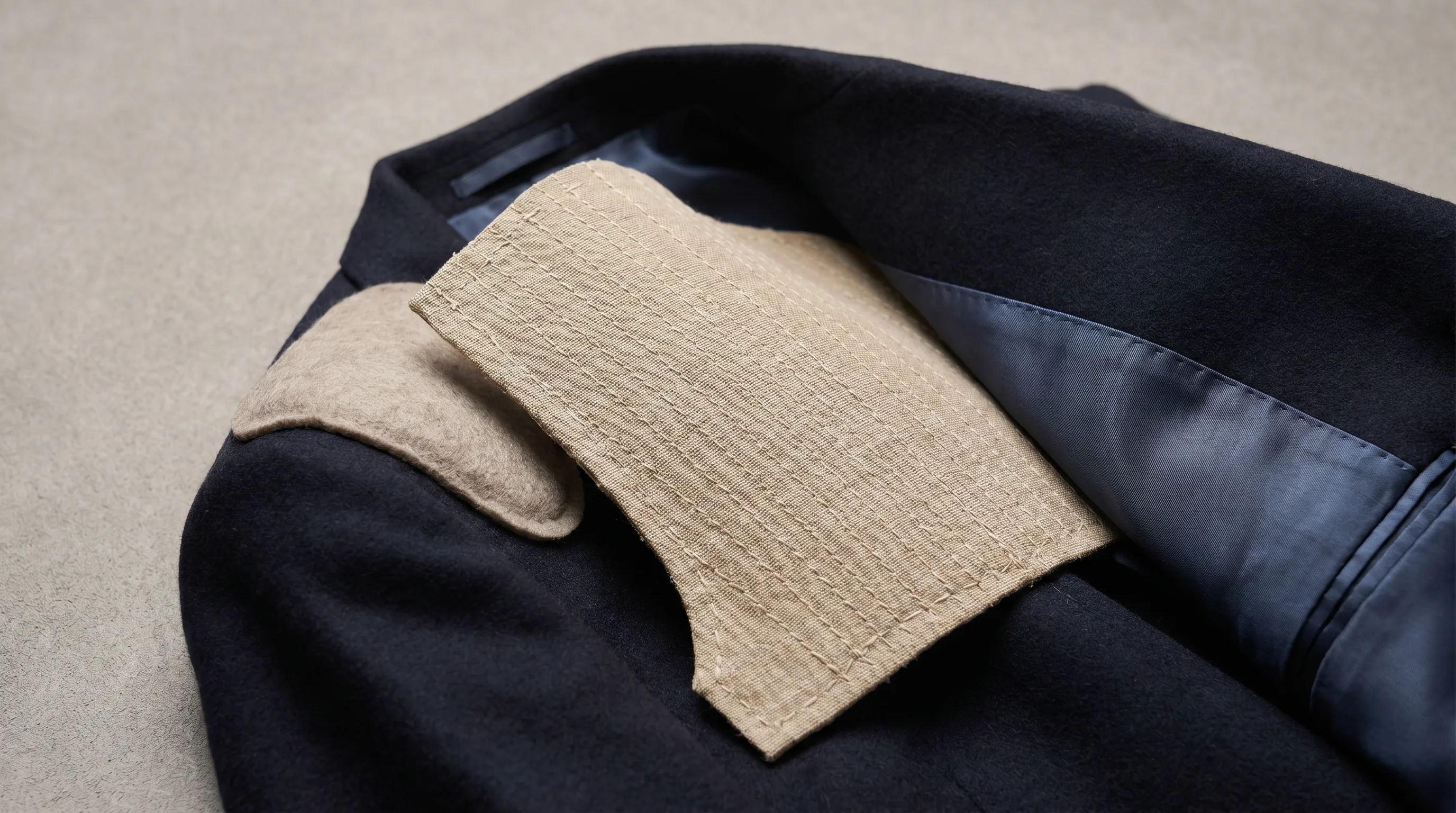
The single most important call is canvas construction. A jacket can be fused (interlining glued to the shell), half-canvas (a floating hair-canvas chest piece from shoulder to mid-chest, fused below), or full floating canvas (hair canvas running the entire front, pad-stitched by hand). That one decision changes the lapel roll, the drape, the price, and the labor hours — full canvas is more expensive mainly because of the hand sewing a skilled tailor puts in. The pack then specifies the lapel roll line and its pad-stitching, shoulder padding thickness, the lining (Bemberg/cupro is the industry default), functional or sham sleeve buttonholes, the vent style, and pocket type. Get the canvas or roll line wrong and the first sample bubbles at the chest, the lapel lies flat instead of rolling, and you pay for another round at $200–$1,500.
Suit & blazer tech pack: what each section needs
| Section | What tailoring demands |
|---|---|
| Canvas construction | State fused, half-canvas, or full floating canvas; for canvassed jackets, specify hair canvas (hymo) weight and the pad-stitch density along the roll line and lapel |
| Lapel & roll line | Lapel type (notch, peak, shawl), width to the gorge, and the roll-line height (which button the lapel rolls to); pad-stitching keeps the roll soft, not flat |
| Shoulder & padding | Shoulder pad thickness (none/light/regular/extra-padded), sleevehead roll, and natural vs roped/built-up shoulder expression |
| Lining | Full, half, or quarter lined; lining fiber (Bemberg/cupro rayon is the default for breathability) and color; pocketing and undercollar felt callouts |
| Buttonholes & buttons | Front button stance (1, 2, or 3 roll-2), sleeve buttons (working/functional vs sham), buttonhole type (Milanese/keyhole), button material and ligne size |
| Vents & pockets | Vent style (none/center/double side), welt/flap/patch/ticket pockets, chest welt or barchetta; hand-felled vs machine finishing |
| Stitch & seam class | Lockstitch (ISO 301) construction seams; stitch classes and seam types per ASTM D6193; AMF/pick-stitch decoration along lapel and pocket edges noted as SPI |
| Measurements & POMs | Tailored set: chest, waist, shoulder width, back length, sleeve length, sleeve opening, lapel width, gorge height, vent length, button stance |
| Grading | Graded to a men's body standard (ASTM D6240, chest 34–52 in Short/Regular/Tall); chest/waist circumference grades larger than neck and shoulder |
| BOM & colorways | Shell wool, canvas, lining, shoulder pads, sleevehead, buttons, pocketing, fusibles, felt, AMF thread; Pantone TCX per shell, lining, and contrast detail |
Construction terms per Gentleman's Gazette and Oliver Wicks tailoring references; stitch/seam classes per ASTM D6193; grading basis ASTM D6240.
Worked example
One blazer construction line, written correctly
Weak spec: "structured navy blazer, fully lined." Factory-ready spec: "Half-canvas construction: floating hair-canvas chest piece (hymo) pad-stitched along the lapel roll line, fused below mid-chest; notch lapel 8.5 cm to gorge, rolling to top button of a 2-button stance; light shoulder pad (6 mm) with sleevehead roll; full Bemberg cupro lining, navy; sham 4-button sleeve cuffs; double side vents 23 cm; AMF pick-stitch on lapel edge at 7 SPI." One paragraph, a dozen decisions the factory no longer guesses — and the difference between a first sample that rolls cleanly and a $200–$1,500 discovery round. That's the level of specificity the generator drafts and your review confirms.
Why tailoring packs differ from soft apparel
A tee or hoodie is mostly shell, thread, and labels. A tailored jacket is a layered assembly — shell, canvas, padding, lining, and felts — and most of the spec describes parts the customer never sees. The canvas decision is the spine of the document. A fused jacket lies flatter and risks "bubbling" if the glue degrades in dry-cleaning; a floating hair-canvas chest piece is pad-stitched so the lapel rolls softly and the chest molds to the body over time. A photo shows the outside; the pack has to declare the inside.
The lapel roll line is geometry, not decoration. Pad-stitching uses shorter, denser stitches right along the roll line and at the lapel corners to set the curve — so the pack specifies pad-stitch placement and density, not just "add canvas." Shoulder expression and lining are spec lines too: pad thickness, sleevehead roll, and whether the jacket is full/half/quarter lined in Bemberg cupro all get stated. And grading is unforgiving — tailored jackets grade against a men's body standard (ASTM D6240, chest 34–52), where chest and waist circumferences grade larger than shoulder and neck because the body doesn't scale uniformly. A generic apparel template has no field for canvas, roll line, sleevehead, or vent — which is exactly the gap a class-aware generator closes.
Generate a tailoring pack in 3 steps
- 1
Upload one photo
Flat-lay of your blazer, a dress-form shot, or a clean mockup — ideally with a front and a lapel/inside view. The AI detects the tailoring sub-class (suit coat, blazer, sport coat) and the structured construction it implies. - 2
Review the tailoring-specific draft
In 3–5 minutes you get the flat sketch, a BOM pre-populated with canvas, lining, padding, and button components, tailored graded POMs, and roll-line/vent/buttonhole callouts. Spend 15–20 minutes confirming the calls only you know — fused vs half vs full canvas, pad thickness, working vs sham cuffs, lining yardage, and your sample's exact measurements. - 3
Export and send
Print-ready PDF (Excel/CSV on Pro) to your tailoring factory. Total cost $3–6 — versus $150–$500 and 3–7 days for a freelance technical designer, per published rate surveys.
Built for tailoring and suiting founders
This is for the founder launching a suiting or blazer line without an in-house pattern-and-tailoring technician: you've sourced a wool, sewn a sample, and need a document a tailoring factory will quote from — without $150–$500 per style in freelance fees or the long Illustrator grind drawing a jacket flat with every internal callout. It fits made-to-measure and slow-fashion suiting brands scaling small structured collections, production leads cutting first-sample revision rounds on jackets (the most construction-heavy garment), and e-commerce menswear and womenswear tailoring stores moving from import-and-rebrand to true cut-and-make.
Adstronaut writes the canvas-construction callout, lapel roll line, shoulder and lining specs, buttonhole and vent details, and tailored measurements graded to a men's body standard — so your factory in Porto, Istanbul, Naples, or Guangzhou receives a tailoring-grade pack, in minutes. The same backbone handles softer structured pieces too: see the broader jacket tech pack guide for outerwear, or the activewear use case at the opposite, fully-stretch end of the spectrum. When the samples come back, AI Photoshoots handle the on-model imagery the same week.
Frequently asked questions
What is the most important spec in a suit or blazer tech pack?
Canvas construction. The pack must state whether the jacket is fused (interlining glued to the shell), half-canvas (a floating hair-canvas chest piece from the shoulder to mid-chest, fused below), or full floating canvas (hair canvas across the entire front, pad-stitched by hand). That single decision drives the lapel roll, the drape, the labor hours, and the cost — full canvas costs more mainly because of the hand sewing it requires.
What is the lapel roll line and how is it specified?
The roll line is the curve where the lapel folds back from the collar down to the top button. In a canvassed jacket it's set by pad-stitching — shorter, denser stitches along the roll line and at the lapel corners — so the lapel rolls softly instead of lying flat. The pack specifies the lapel type (notch, peak, or shawl), its width to the gorge, which button it rolls to, and the pad-stitch placement and density.
Should the tech pack specify functional (working) buttonholes?
Yes — it's a binding cost and process decision. Sham (non-functional) sleeve cuffs are sewn shut and cheaper; working/functional buttonholes are real, hand- or machine-cut openings that cost more and lock the sleeve length before finishing. The pack states working vs sham, the buttonhole style (e.g. Milanese or keyhole), button count per cuff, and button material and ligne size.
What lining does a tailored jacket tech pack call out?
Bemberg cupro — a smooth, breathable regenerated-cellulose rayon — is the industry default and what most packs specify by name, with color and the lining extent (full, half, or quarter lined). The BOM also lists pocketing fabric, the undercollar felt (melton), and any contrast lining for the body and sleeves.
How are vents specified in a suit jacket tech pack?
By style and length. A jacket has no vent (ventless), a single center vent, or double side vents — double side vents are the most common contemporary style. The pack states the vent style, the vent length, and whether the finishing is hand-felled or machine-sewn, since it affects how the jacket drapes when the wearer sits or puts hands in pockets.
What points of measure does a tailored jacket need?
Beyond chest and waist, a tailoring POM set includes shoulder width, back length, sleeve length and opening, front button stance, lapel width, gorge height, and vent length. Soft-apparel templates omit lapel, gorge, and vent fields entirely, which is why a tailoring-aware document matters.
What standard do you grade a suit jacket to?
Men's tailoring grades against ASTM D6240, the body-measurement table for adult males across chest sizes 34–52 in Short, Regular, and Tall. Because the body doesn't scale uniformly, chest and waist circumferences grade larger per size than shoulder width and neck — the grade-rule logic still applies, just against tailored dimensions. Women's tailoring uses the relevant ASTM women's body standard.
What's the difference between half-canvas and full-canvas in the pack?
Half-canvas places a floating hair-canvas chest piece from the shoulder down to about the waist and fuses the lower front — you get a proper lapel roll and structured shoulder at a more accessible price. Full canvas runs floating hair canvas across the entire front and is hand pad-stitched throughout, giving the best drape and mold-to-body over time at the highest labor cost. The pack must pick one and note the canvas extent.
How long does generating a suit or blazer pack take?
3–5 minutes for the draft — flat sketch, BOM, tailored graded measurements, construction callouts — then 15–20 minutes of review to confirm canvas type, shoulder padding, working vs sham cuffs, lining extent, and your sample's exact measurements. Tailoring takes a touch more review than soft apparel because of the internal layers, but still well under an hour, versus 3–7 days freelance turnaround.
How much does a suit or blazer tech pack cost?
$3–6 with Adstronaut (25 credits; plans from $29/month; first pack free as a watermarked preview). Freelance technical designers charge $150–$500 per style at 3–7 day turnarounds, so a 12-style tailoring capsule runs roughly $36–$72 in credits versus $1,800–$6,000 freelance.
Generate your suit or blazer tech pack
Upload one photo of your blazer or suit coat. Get the canvas-construction callout, lapel roll line, shoulder and lining specs, buttonhole and vent details, and tailored graded measurements in minutes. First pack free, then $3–6.
Try the AI Tech Pack GeneratorKeep going
Sources and further reading
- Gentleman's Gazette — fused vs half vs full canvas construction — canvas types, bubbling on fused jackets, pad-stitching and lapel roll
- Oliver Wicks — half vs full canvas suit construction — half-canvas chest piece extent, full-canvas labor and drape
- Poppykettle — pad stitch tutorial — hair canvas (hymo), denser pad-stitches along the roll line and lapel corners
- Senszio — Bemberg suit & jacket linings — Bemberg/cupro as the default breathable jacket lining
- ASTM D6240 — body measurements for adult males — chest 34–52 Short/Regular/Tall grading basis for men's tailoring
- Gentleman's Gazette — anatomy of a suit jacket — lapel types, vents, functional buttonholes, shoulder and lining terms