Raspberry AI vs Adstronaut AI for fashion design
Updated June 10, 2026
Raspberry AI is an enterprise design-to-campaign platform: sketches, CADs, and 3D avatars become photoreal renders and marketing imagery, priced per seat from $49/month (Individual) to $298/month (Professional), with Enterprise quote-only. Adstronaut AI starts from a moodboard, returns four illustrations plus a render on a dress form for about $2 in credits, then puts the design on real-looking models — on plans from $29/month priced per output. Choose Raspberry for a large in-house creative team; choose Adstronaut for accessible, per-credit, all-in-one work.
Raspberry AI vs Adstronaut: the quick verdict
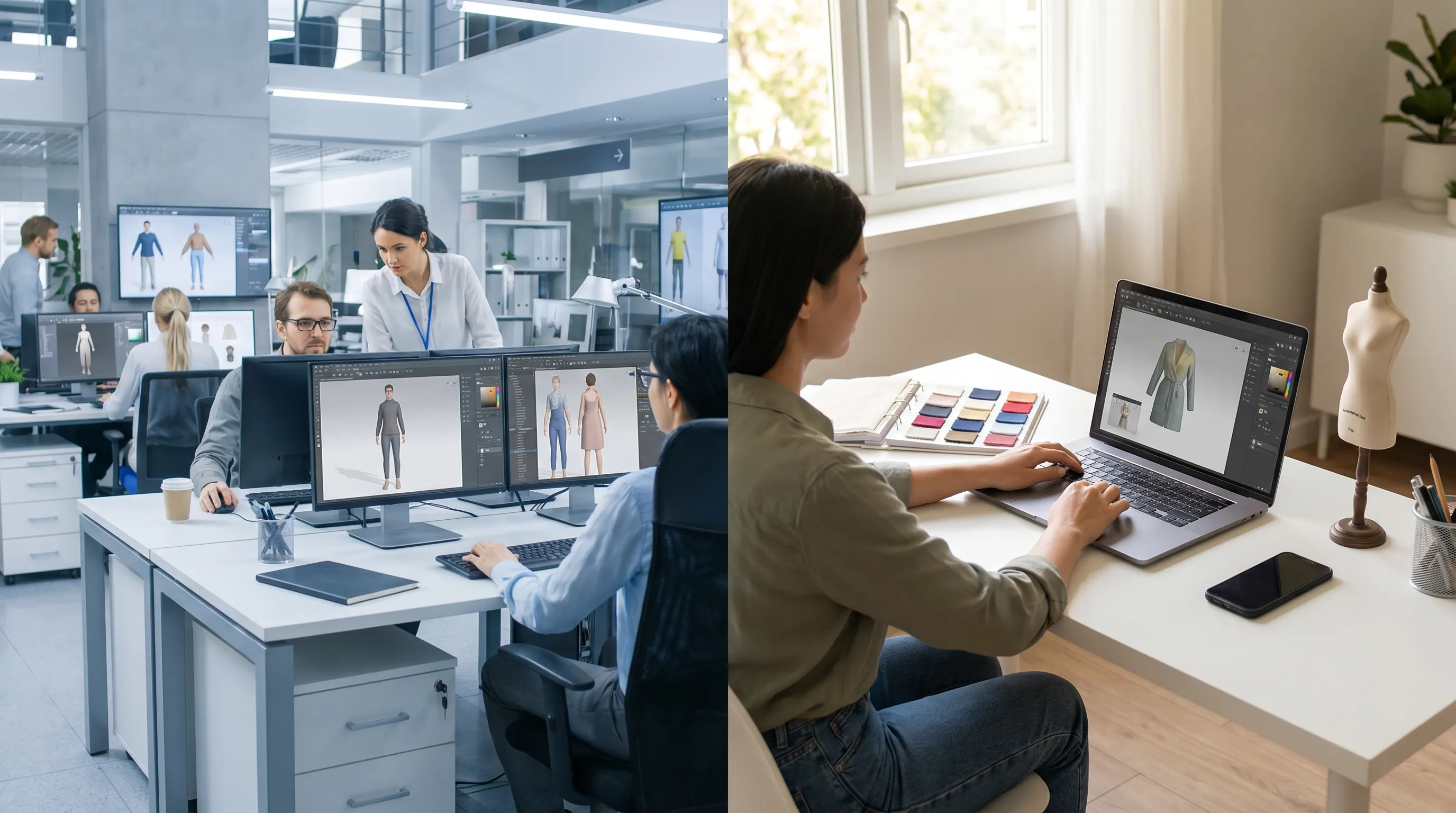
Raspberry AI and Adstronaut AI both take a fashion concept and turn it into photoreal renders and on-model marketing imagery — but they're priced and built for very different teams. Raspberry AI (raspberry.ai) is a generative design-to-campaign platform aimed at in-house creative teams at established brands: it turns sketches, CADs, and 3D avatars from CLO3D or Browzwear into photoreal renders, then applies prints, materials, and recolors at scale, and generates lifestyle photography, backgrounds, and video for campaigns. It sells per-seat subscriptions from $49/month (Individual) up to $298/month (Professional, teams under 10), with Enterprise quote-only (Raspberry AI pricing).
Adstronaut takes a deliberately more accessible path. Its AI Designer starts from a moodboard, returns four illustration variations plus a photoreal render on a dress form for about $2 in credits, and hands that exact design to an on-model photoshoot studio and a factory-ready tech pack generator without re-uploading. Choose Raspberry AI if you're a larger brand with a creative team that already works in CAD and 3D and needs a campaign engine. Choose Adstronaut if you're an indie founder or small brand who wants one accessible, per-credit tool that takes a concept all the way to a product page. The rest of this page is the evidence.
Raspberry AI vs Adstronaut AI, side by side
| Factor | Raspberry AI | Adstronaut AI |
|---|---|---|
| Price | Per seat: Individual $49/mo ($588/yr), Basic $198/mo ($2,376/yr), Professional $298/mo ($3,576/yr); Enterprise custom quote | Plans from $29/mo (125 credits); a concept is 10 credits — about $2; outputs priced per credit |
| Pricing model | Per-seat subscription, credit allotment per tier (120 / 500 / 750 cr/mo) | Subscription plan; every output priced in credits, no per-seat fee |
| Lowest entry point | $49/mo Individual (120 credits, 7-day history) | Free plan, 25 credits, watermarked previews — first concept free, no card |
| Starting input | Sketch, CAD, or 3D avatar (CLO3D / Browzwear) | Moodboard of up to 14 inspiration images + one-line text direction |
| What you get per generation | A photoreal render from your sketch/CAD/3D source | Four illustration variations, then one 2K photoreal render on a dress form |
| Design editing | Batch recolor, material swaps, targeted alterations, seamless prints, graphic creation | Per-zone Pantone recolor (2,300+ TCX), fabric swaps (custom uploads), text edits, variations |
| On-model imagery | On-body visualization / virtual try-on on AI models, in-platform | Dedicated studio: 22 named models, 8 poses, 12 scenes, ~$1 per image |
| Campaign / marketing | Lifestyle photography, background generator, motion video | Lifestyle workflow: 36 Instagram-style scene presets for social creative |
| Tech packs / production specs | Not a documented feature — design-and-campaign focused | Separate generator: structured BOM, graded POMs with tolerances, print-ready PDF (25 cr) |
| Product classes | Apparel, jewelry, leather goods/handbags, footwear, luggage, beauty | Apparel, bags, footwear, accessories — each with its own render path |
| Best for | In-house creative teams at established brands working in CAD/3D | Indie founders and small brands wanting accessible, all-in-one, per-credit work |
Pricing per Raspberry AI's published 2026 pricing page and Adstronaut's pricing page. Raspberry tiers are per seat with monthly credit allotments; Enterprise is quote-only.
Choose Adstronaut if… / Choose Raspberry AI if…
Choose Adstronaut AI if…
- ✓You're a solo founder or small brand and a $49–$298/mo per-seat plan is more tool than your output justifies — Adstronaut starts free and prices per output.
- ✓You can't draw, model in CAD, or run CLO3D — Adstronaut starts from a moodboard of reference images, not a sketch or a 3D avatar.
- ✓You want four directions from one moodboard to react to, with a coherent silhouette, color story, and material feel across all four.
- ✓You need to take the design all the way to production — factory-ready tech packs with a line-itemized BOM and graded POMs, which Raspberry does not document.
- ✓You want on-model imagery from named models in real scenes (AI Photoshoots: 22 models, 8 poses, 12 scenes at ~$1 an image) without an enterprise contract.
Choose Raspberry AI if…
- ✓You're an established brand with an in-house creative team that already works in CAD and 3D and wants those assets to drive renders.
- ✓Your designers build in CLO3D or Browzwear and you want to turn those 3D avatars into photoreal campaign imagery in one step.
- ✓You need an enterprise campaign engine — lifestyle photography, background swaps, and motion video at scale across many SKUs.
- ✓You want team features — shared libraries, multi-image generation, team management, and unified billing across seats on the higher tiers.
- ✓You can justify per-seat pricing and a custom Enterprise quote with the volume of a full creative department.
Different team sizes, not strictly better and worse: Raspberry is an enterprise creative suite; Adstronaut is an accessible per-credit studio.
The entry-cost math, visualized
How much does each actually cost?
Raspberry AI prices per seat, by team size. Its published 2026 plans are Individual at $49/month ($588/year, 120 credits, 7-day history), Basic at $198/month ($2,376/year, 500 credits, for teams under five, adding a shared library, high-res exports, and multi-image generation), and Professional at $298/month ($3,576/year, 750 credits, for teams under ten, adding faster generation, a priority queue, team management, and unified billing). Above that, Enterprise is quote-only — custom AI training, SSO, API access, trends reports, and a dedicated success manager (Raspberry AI pricing). There's a free trial with no card charged until day eight. It's a coherent ladder for a creative department; the cost simply scales with how many designers you're putting on it.
Adstronaut prices per output on a single plan, with no per-seat fee. A complete AI Designer concept is 10 credits — five to generate the four-illustration grid, five to render your pick — about $2 on the Standard plan ($29/month, 125 credits). The free plan includes 25 credits and watermarked previews, so your first concept is free with no card. The honest framing: for a working team of several designers, Raspberry's per-seat model can be the better fit and the credit allotments are generous. For one founder or a two-person brand, Adstronaut's floor is dramatically lower — a $29 plan or a free start versus a $49 minimum seat — and you pay only for the renders, photoshoots, and packs you actually generate. The pricing page lays out the full credit-to-dollar math across Standard, Pro, and Studio.
Design input and control: how each generates
Raspberry AI is built around assets a professional design team already produces. Its core flow is sketch-, CAD-, and 3D-avatar-to-render: it turns hand sketches, technical CADs, and 3D models from CLO3D or Browzwear into photoreal renders, then lets you apply or edit prints, trims, and materials in a click, batch-recolor large design sets, generate seamless repeating prints, and create placement graphics (Raspberry AI product overview). That's enormous leverage — if your team already works in those formats. The assumption baked into the workflow is that a sketch or a 3D source exists.
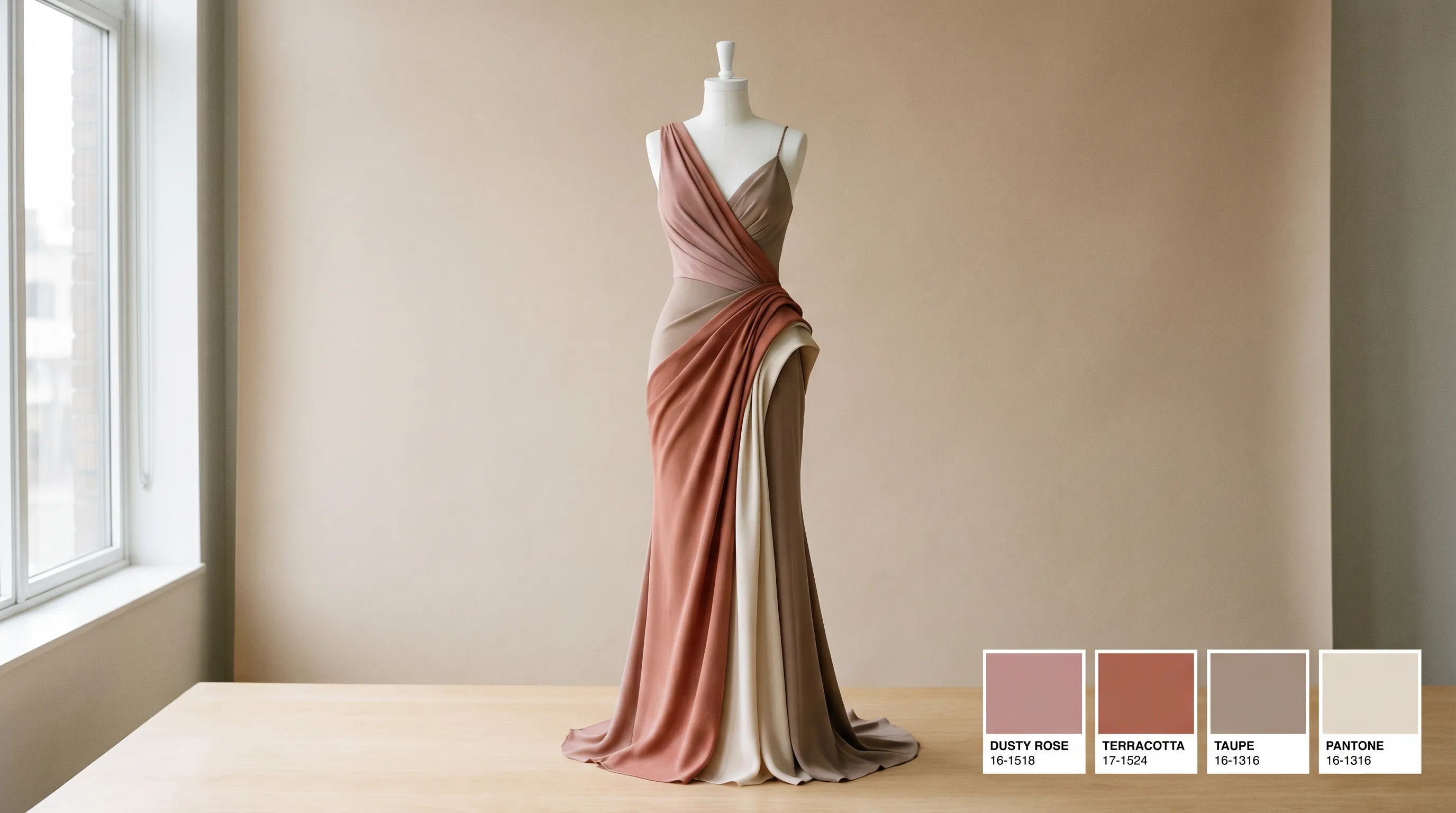
Adstronaut assumes the opposite: that you can't draw and don't run CAD. You build a moodboard of up to 14 inspiration images, add a one-line direction, and the AI extracts the common thread — color story, silhouette family, material feel — then returns four distinct illustration variations so you react to options rather than starting from a blank canvas. You pick the winner and render it at 2K on a dress form, with an auto-extracted 5-color Pantone palette. The moodboard-to-render workflow walks the full flow. The two tools meet in the middle on editing — both recolor, swap materials, and alter designs — but they start from opposite ends of the skill ladder.
Campaign imagery: on-body try-on and marketing assets
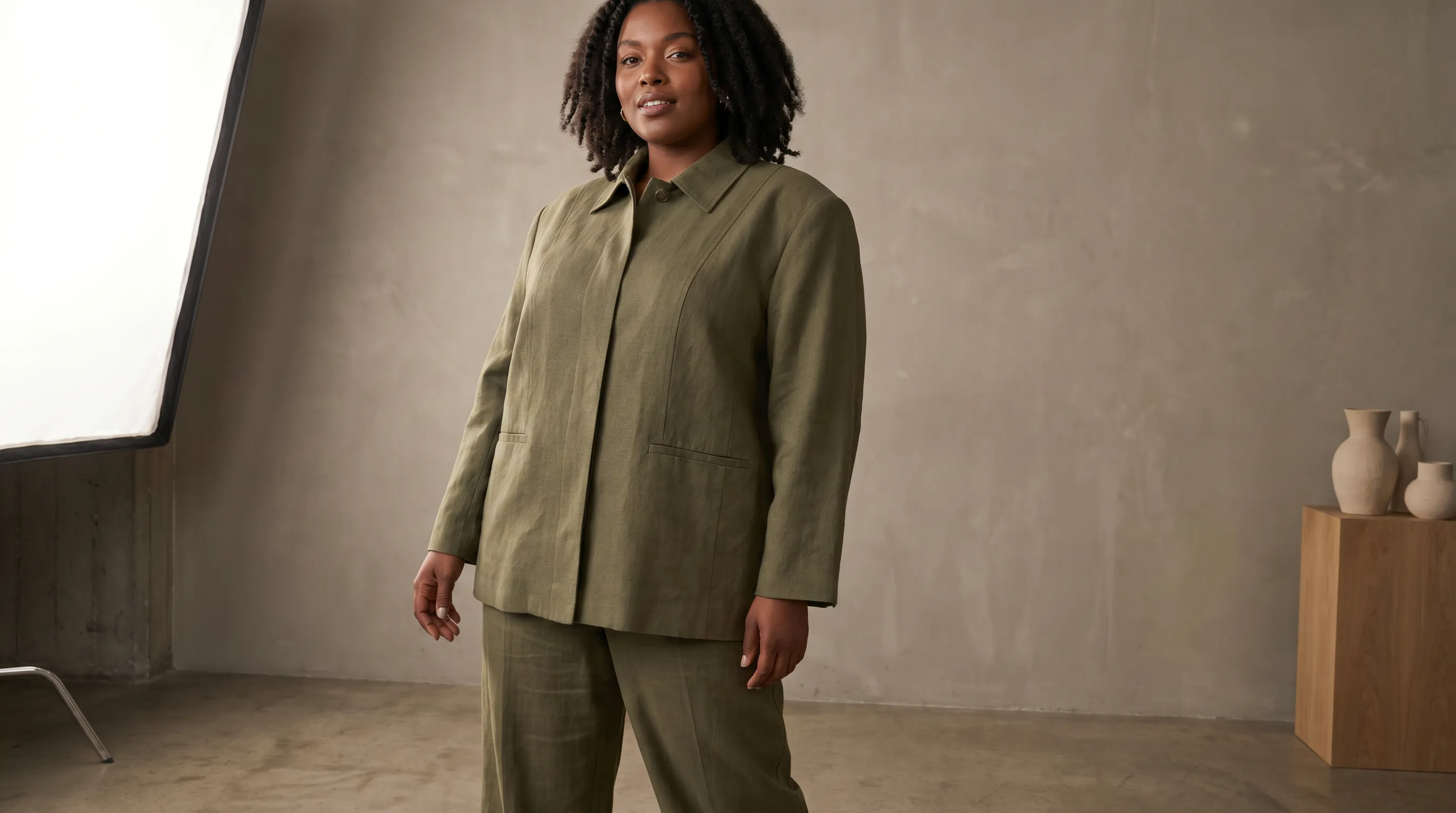
This is Raspberry AI's clearest strength. Its on-body visualization styles garments on AI-generated models for virtual try-on, and its marketing suite generates lifestyle photography, swaps backgrounds to any room or destination for geo-targeted creative, and produces motion video — a genuine design-to-campaign pipeline built so a brand can market a style the day it's created (Raspberry AI product overview). For a creative department running campaigns across many SKUs and channels, that breadth is the point.
Adstronaut covers the same on-model and lifestyle ground but packages it as a dedicated, per-image studio rather than an enterprise suite. The AI Photoshoots feature puts your design on 22 named models across 8 poses and 12 named scenes at about $1 an image, with a separate Lifestyle workflow offering 36 Instagram-style scene presets for social creative. The deliberate split is that the AI Designer renders on a dress form so the garment reads cleanly for production, then Photoshoots handles the sales catalog — the same two jobs Raspberry blends into one platform, priced so a solo brand can run them one image at a time. For the cost comparison against traditional shoots, the fashion photoshoot cost breakdown does the math.
Does it reach the factory? Tech packs and production specs
Here the tools diverge on more than price. Raspberry AI is a design-and-campaign platform — its documented capabilities run from render to marketing asset, and tech packs, a line-itemized bill of materials, and graded points of measure are not part of its published feature set (aitools.inc Raspberry AI listing). A brand using Raspberry to design and market a style still produces its production specs elsewhere, typically in CAD or a dedicated PLM tool. For an enterprise that already has a technical-design team and a PLM stack, that separation is fine.
Adstronaut keeps design and production on one accessible platform. The AI Tech Pack Generator takes the same design and produces a structured BOM, graded POMs with tolerances, construction notes, and a print-ready PDF in 3–5 minutes, across apparel, footwear, leather goods, knitwear, and bodywear — 25 credits, about $3–6 per pack (what factory-grade actually means). For a small brand without a technical designer, that's the difference between a render you still have to hand off and a document a factory can quote from. The honest caveat: the AI drafts from what it can see, so your mill's exact GSM or a hidden interior pocket gets added in a ten-minute review.
When Raspberry AI is the better choice
Adstronaut isn't the right tool for every team, and pretending otherwise would cost this page its credibility. Raspberry AI wins for established brands with in-house creative teams that already work in CAD and 3D. If your designers build in CLO3D or Browzwear, Raspberry's 3D-avatar-to-photorealism flow turns those existing assets directly into campaign imagery — leverage Adstronaut's moodboard-first approach simply doesn't offer, because Adstronaut assumes you have no 3D source. For a brand that has already invested in 3D design, that's a real fit.
Raspberry is also the stronger choice when you need an enterprise campaign engine and team infrastructure: batch recoloring across large design sets, background swaps for geo-targeted creative, motion video, shared libraries, team management, unified billing, and on the Enterprise tier, custom AI training, SSO, API access, and a dedicated success manager. That's a creative-department platform, and per-seat pricing makes sense when you're seating a department on it. The honest line: if you're a larger brand with a CAD/3D workflow and a creative team, evaluate Raspberry seriously; reach for Adstronaut when you want one accessible tool a solo founder or small brand can run end to end. If you're weighing the wider field, the best AI tools for fashion design roundup scores CLO 3D, Midjourney, Resleeve, and The New Black on the same axis.
Taking a concept from idea to product in Adstronaut: the 4-step workflow
No CAD model, no 3D avatar, no per-seat contract — start from reference images and run the winner through this flow when it's ready to ship.
- 1
Build a moodboard
Drop up to 14 inspiration images into the AI Designer and add a one-line direction. This replaces the sketch or 3D source Raspberry expects with a board of references that steers the aesthetic. - 2
Generate four directions, render the winner
Get four illustration variations (5 credits), pick the strongest, and render it at 2K on a dress form (5 credits). Total about $2, with an auto-extracted 5-color Pantone palette. - 3
Shoot it on real-looking models
Send the render to AI Photoshoots for on-model catalog imagery — 22 named models, 8 poses, 12 scenes, about $1 per image — plus 36 lifestyle presets for social creative. - 4
Turn the render into a factory pack and list it
Send the design to the Tech Pack Generator for a structured BOM, graded POMs with tolerances, and a print-ready PDF (25 credits, $3–6), recolor it across Pantone variations, and you have everything a product page needs.
Which should you choose?
Established brands with in-house creative teams get the most from Raspberry AI — if your designers already work in CAD and 3D, the per-seat plans, the CLO3D/Browzwear-to-render flow, and the enterprise campaign engine (background swaps, motion video, team libraries, custom AI training) are built for exactly that scale. The credit allotments are generous and the workflow assumes professional input you already produce.
Indie founders and small brands get more from Adstronaut: it assumes you can't draw or model in CAD, starts from a moodboard for about $2 a concept, and carries the design into on-model photoshoots and factory-ready tech packs on a single per-credit plan that starts free — no $49 per-seat minimum and no enterprise quote. Design consultants and small studios often want exactly that accessibility: a tool a one- or two-person team can run end to end. For the wider field beyond these two, the best AI tools for fashion design comparison scores the category, the The New Black vs Adstronaut comparison covers the cheap-design-generator option, and the Midjourney vs Adstronaut comparison covers the prompt-only route.
Frequently asked questions
How much does Raspberry AI cost?
Raspberry AI prices per seat. Its published 2026 plans are Individual at $49/month ($588/year, 120 credits), Basic at $198/month ($2,376/year, 500 credits, teams under five), and Professional at $298/month ($3,576/year, 750 credits, teams under ten). Enterprise is custom quote-only, adding custom AI training, SSO, API access, and a dedicated success manager. There's a free trial with no card charged until day eight.
Is Adstronaut cheaper than Raspberry AI?
For a solo founder or small brand, yes — and the floor is the difference. Raspberry's lowest paid plan is $49/month per seat; Adstronaut starts with a free plan (25 credits, watermarked previews) and a $29/month Standard plan, with a finished concept costing about $2 in credits and no per-seat fee. For a full creative team, Raspberry's per-seat tiers and generous credit allotments can work out better; the gap favors Adstronaut most for individuals and very small teams.
Why do people switch from Raspberry AI to Adstronaut?
Three reasons come up. First, the entry point: Raspberry's $49/month per-seat minimum and quote-only Enterprise tier are built for teams, where a solo founder wants a free start and per-credit pricing. Second, the input: Raspberry's workflow expects a sketch, CAD, or 3D avatar, while Adstronaut starts from a moodboard of reference images for users who can't draw or model. Third, production reach: Adstronaut produces factory-ready tech packs with a BOM and graded POMs, which Raspberry does not document as a feature.
What does Raspberry AI do that Adstronaut doesn't?
Raspberry AI converts 3D avatars from CLO3D and Browzwear directly into photoreal renders — leverage Adstronaut doesn't offer, since Adstronaut starts from a moodboard rather than a 3D source. Raspberry also bundles an enterprise campaign engine: batch recoloring across large design sets, background swaps for geo-targeted marketing, motion video, shared team libraries, unified billing, and on Enterprise, custom AI model training and SSO. It's built for an in-house creative department working in professional CAD and 3D formats.
Does Raspberry AI make tech packs?
Tech packs, a line-itemized bill of materials, and graded points of measure are not part of Raspberry AI's published feature set — it's a design-and-campaign platform focused on renders and marketing assets. Brands using Raspberry produce their production specs elsewhere, typically in CAD or PLM. Adstronaut's separate Tech Pack Generator produces a structured BOM, graded POMs with tolerances, and a print-ready PDF in 3–5 minutes for 25 credits ($3–6).
Can Adstronaut put my design on a model like Raspberry's on-body visualization?
Yes, but as a dedicated studio rather than an in-platform try-on. The AI Designer renders your concept on a clean dress form so the garment reads clearly for production, and the separate AI Photoshoots feature puts the design on 22 named models across 8 poses and 12 scenes at about $1 per image, plus 36 lifestyle presets for social creative. That's a fuller catalog than an inline virtual try-on, priced one image at a time.
What does Adstronaut's AI Designer cost per concept?
Ten credits — five to generate the four-illustration grid and five to render your chosen illustration into a 2K photoreal image on a dress form — which is about $2 on the Standard plan ($29/month, 125 credits). The first concept is free with no credit card. Each render ships with an auto-extracted 5-color Pantone palette that flows into the Color Changer and listing tools.
Which product types does each tool support?
Raspberry AI covers apparel, jewelry, leather goods and handbags, footwear, luggage, and beauty products. Adstronaut covers apparel, bags, footwear, and accessories, each with its own render path, and carries the same color and material DNA across a capsule so the pieces read as one collection. Adstronaut additionally produces class-specific tech packs for apparel, footwear, leather goods, knitwear, and bodywear.
Does Raspberry AI require a subscription?
Yes — Raspberry AI's core model is a per-seat monthly or annual subscription, from $49/month (Individual) up to $298/month (Professional), with Enterprise on a custom quote. A free trial is available with no card charged until day eight. Adstronaut is also subscription-based (plans from $29/month) but prices every output in credits with no per-seat fee, and offers a free plan with watermarked previews before you pay.
Does Adstronaut render on a real model or a mannequin?
The AI Designer renders on a clean mannequin or dress form, which keeps the garment legible for production briefs, line sheets, and tech-pack handoff. On-model photography is a deliberately separate feature — AI Photoshoots — so you get a full studio (named models, poses, scenes) when you want a sales catalog, rather than a single inline try-on bolted onto the design step.
Can I use both tools together?
Yes. A larger brand might design and run campaigns in Raspberry AI, then use Adstronaut's Tech Pack Generator to produce the factory-ready production document Raspberry doesn't make. A smaller team that finds Raspberry's per-seat pricing too heavy can run the whole concept-to-listing flow in Adstronaut for per-credit costs. The tools overlap on rendering and on-model imagery but split cleanly on team size and production depth.
Render your first concept free
No CAD model, no 3D avatar, no per-seat contract. Drop in a moodboard, add a one-line direction, and Adstronaut returns four illustration variations plus a photoreal render with an auto-extracted Pantone palette — then carries it into on-model photoshoots and factory-ready tech packs. First concept free, then about $2 each in credits.
Try the AI DesignerKeep comparing
Sources and further reading
- Raspberry AI — pricing and plans — Per-seat tiers: Individual $49/mo ($588/yr, 120cr), Basic $198/mo ($2,376/yr, 500cr), Professional $298/mo ($3,576/yr, 750cr); Enterprise custom quote; free trial, no card until day 8 (2026)
- Raspberry AI — product overview — Sketch/CAD/3D-avatar-to-render (CLO3D, Browzwear), batch recolor, material/print application, on-body visualization, lifestyle photography, background generator, motion video
- aitools.inc — Raspberry AI listing — Confirms design-visualization positioning, unlimited generations/exports, commercial license; no tech pack, bill of materials, or graded measurements listed
- Adstronaut AI Designer — Moodboard (up to 14 images) to four illustrations + 2K photoreal render on a dress form; 10 credits (~$2); auto-extracted 5-color Pantone palette
- Adstronaut AI Photoshoots — 22 named models, 8 poses, 12 named scenes, 36 lifestyle presets; ~$1 per on-model image (5 credits)
- Adstronaut AI Tech Pack Generator — Structured BOM, graded POMs with tolerances, print-ready PDF in 3–5 min; 25 credits ($3–6)