
Techpacker vs Adstronaut AI for tech packs
Updated June 10, 2026
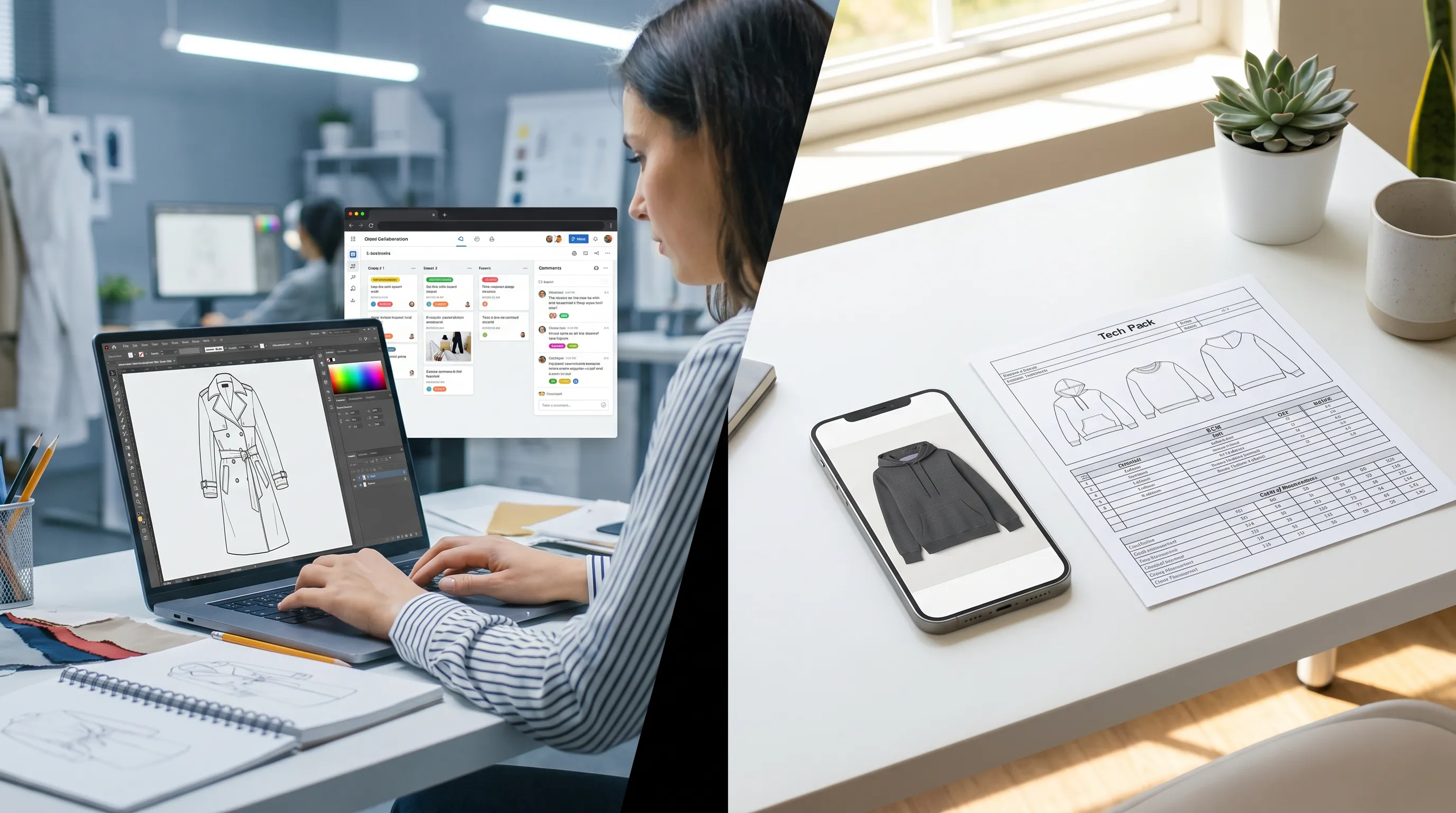
Techpacker is a cloud collaboration and PLM platform that organizes, versions, and shares tech packs at $35–$125 per user per month — but you still draw the flat sketch yourself in Adobe Illustrator and upload it. Adstronaut AI generates the flat sketch, bill of materials, and graded measurements from one garment photo in 3–5 minutes for $3–6 per pack in credits, on plans from $29/month. Techpacker manages the document; Adstronaut produces its hardest parts.
Techpacker vs Adstronaut AI: the quick verdict
Techpacker and Adstronaut AI both end at the same place — a factory-ready tech pack — but they occupy different stages of the workflow. Techpacker is a well-liked cloud platform for organizing, versioning, and collaborating on tech packs, with a modular card system, shared component libraries, and factory portals. The catch is structural: Techpacker does not generate the flat sketch. You draw it in Adobe Illustrator and upload it through Techpacker's Illustrator plugin, then build the BOM, grading, and measurements around it (Techpacker's own Illustrator workflow guide). It prices per seat: $35–$125 per user per month billed annually, plus optional onboarding from $100 to $3,000 (Techpacker pricing).
Adstronaut AI inverts the starting point. You upload one product photo and the AI Tech Pack Generator returns annotated flat sketches, a structured bill of materials, graded measurements, and construction notes as an editable draft in three to five minutes, for $3–6 per pack in credits. Choose Techpacker if you have an Illustrator user and a multi-person team that lives in shared approvals. Choose Adstronaut if nobody on your team draws flats and you need the document produced, not just filed. The rest of this page is the evidence.
Techpacker vs Adstronaut AI, side by side
| Factor | Techpacker | Adstronaut AI |
|---|---|---|
| Price | Builder $35/user/mo; PLM Pro $95; PLM Premium $125 (annual billing) + $100–$3,000 onboarding | Plans from $29/mo (125 credits); a tech pack is 25 credits — $3–6 per pack |
| What it is | Cloud collaboration / PLM platform for organizing tech packs | AI generator that produces the tech pack from a photo |
| Flat sketches | You draw them in Illustrator and upload; Techpacker stores and annotates | Generated automatically, front and back, annotated |
| Bill of materials | Built by hand; BOM libraries speed reuse on the PLM tiers | Generated as a structured BOM with supplier and price fields |
| Graded measurements (POMs) | Typed in; grading-rule tables on Professional and Premium | Auto-generated and graded across the size run, with tolerances |
| Skills required | Illustrator/CAD proficiency to produce the flat | None — upload a front-facing photo |
| Time to a first pack | Hours — drawing the flat is still manual before organizing | 3–5 minutes to generate, 10–15 minutes to review |
| Pricing model | Per user, per month, billed annually + onboarding fees | Per output (credits); no per-seat charge |
| Garment classes | Anything you can draw and template yourself | Apparel, footwear, leather goods, knitwear, bodywear — class-specific sections |
| Collaboration | Strong: version history, comments, shared libraries, factory portals | PDF/Excel export; built around solo and small-team speed, not approval trails |
| Best for | Multi-user teams with existing flats and a collaboration need | Founders and small brands without an Illustrator/CAD user |
Techpacker pricing per its published 2026 plans (per-user, annual billing; about half the monthly rate, plus optional onboarding). Adstronaut per its pricing page (25 credits/pack, plans from $29/mo).
Choose Adstronaut if… / Choose Techpacker if…
Choose Adstronaut AI if…
- ✓Nobody on your team draws flats — the Illustrator dependency is the real blocker, and the AI generates the flat from your photo, the one step Techpacker leaves to you.
- ✓You're a solo founder or two-person brand where $35–$125/user/month plus onboarding outpaces your style volume.
- ✓You want per-output pricing — five packs is about $29 of credits, not a recurring seat regardless of how many styles ship.
- ✓You produce footwear, leather goods, knitwear, or bodywear and want class-correct sections without templating each convention yourself.
- ✓Your real goal is speed to factory: photo to print-ready PDF in under 30 minutes, no Illustrator and no onboarding project.
Choose Techpacker if…
- ✓Your flats already exist (or someone drives Illustrator) and the value you need is organization, not generation.
- ✓You run a multi-user team that lives in shared libraries, comments, version history, and approval trails.
- ✓Your factories use the Techpacker portal and the collaboration loop is already working well.
- ✓You want PLM-tier features — grading-rule libraries, BOM libraries, white-label documents, T&A coordination.
- ✓The $420–$1,500/user/year cost is justified by the team-coordination time it saves across many styles.
A pairing also works: generate the flat and first-draft pack in Adstronaut, then upload into Techpacker for shared approvals.
Where the flat sketch comes from, in each workflow
How much does each actually cost?
Techpacker prices per seat, billed annually, in three tiers: Techpack Builder at $35/user/month ($420/year), PLM Professional at $95/user/month ($1,140/year), and PLM Premium at $125/user/month ($1,500/year) — the annual rate runs about half the month-to-month price. On top of the subscription sit one-time onboarding fees of $100, $500, or $3,000 by tier, and a 7-day trial with a 60-day money-back guarantee when onboarding is bundled with an annual plan (Techpacker pricing). For a solo founder that is recurring overhead independent of output; for a five-person team on Professional it is $5,700/year before a single sketch is drawn — and the sketches still cost Illustrator time on top.
Adstronaut prices per output. A tech pack costs 25 credits: on the Standard plan ($29/month, 125 credits) that is five packs a month at $5.80 each; on Pro ($69/month, 375 credits) $4.60; on annual Studio it falls to about $3.10. Call it $3–6 per pack. The free plan includes 25 credits — your first pack free as a watermarked preview before you pay anything, with no per-seat charge and no onboarding project. For a 20-style collection the spread is roughly $60–$120 in credits versus $420+ per seat per year plus onboarding — and unlike Techpacker, that figure includes producing the flat. The full method comparison lives in our tech pack cost guide.
What each tool actually does — generation vs organization
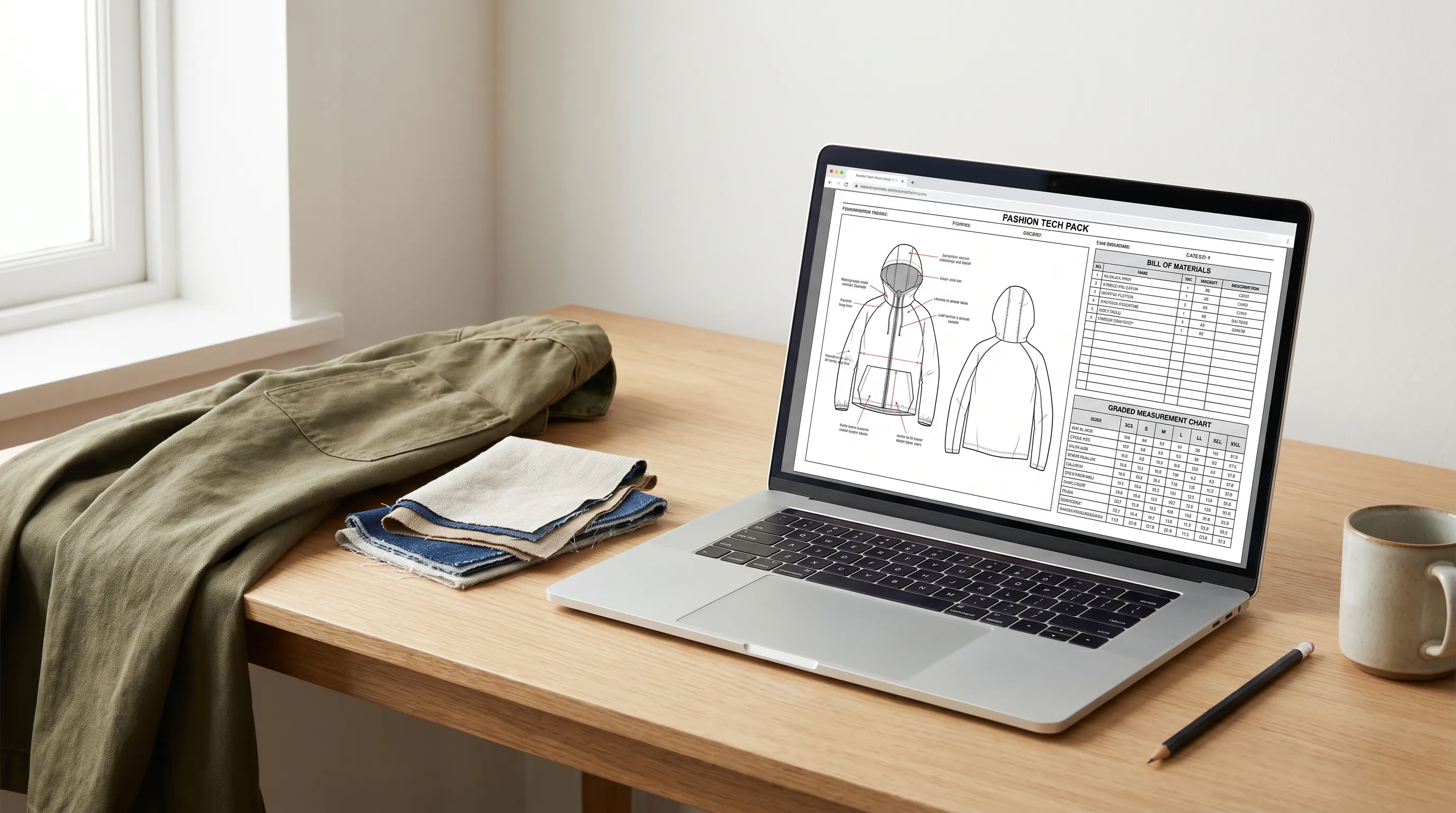
This is the comparison that matters, because the two tools are strong at opposite things. Techpacker is an organizer and PLM layer. Its card-based interface, version history, shared BOM and grading-rule libraries, factory portals, and approval comments are genuinely good — Capterra rates it 4.5/5 across 28 reviews, with consistent praise for support, and it self-reports a large brand base. What it does not do is make the content: the technical flat sketch is drawn in Illustrator and uploaded through Techpacker's plugin, and the BOM and points of measure are typed in (libraries speed reuse but don't author the first one). It accelerates collaboration after the specs exist; it does not shorten the hours of producing them.
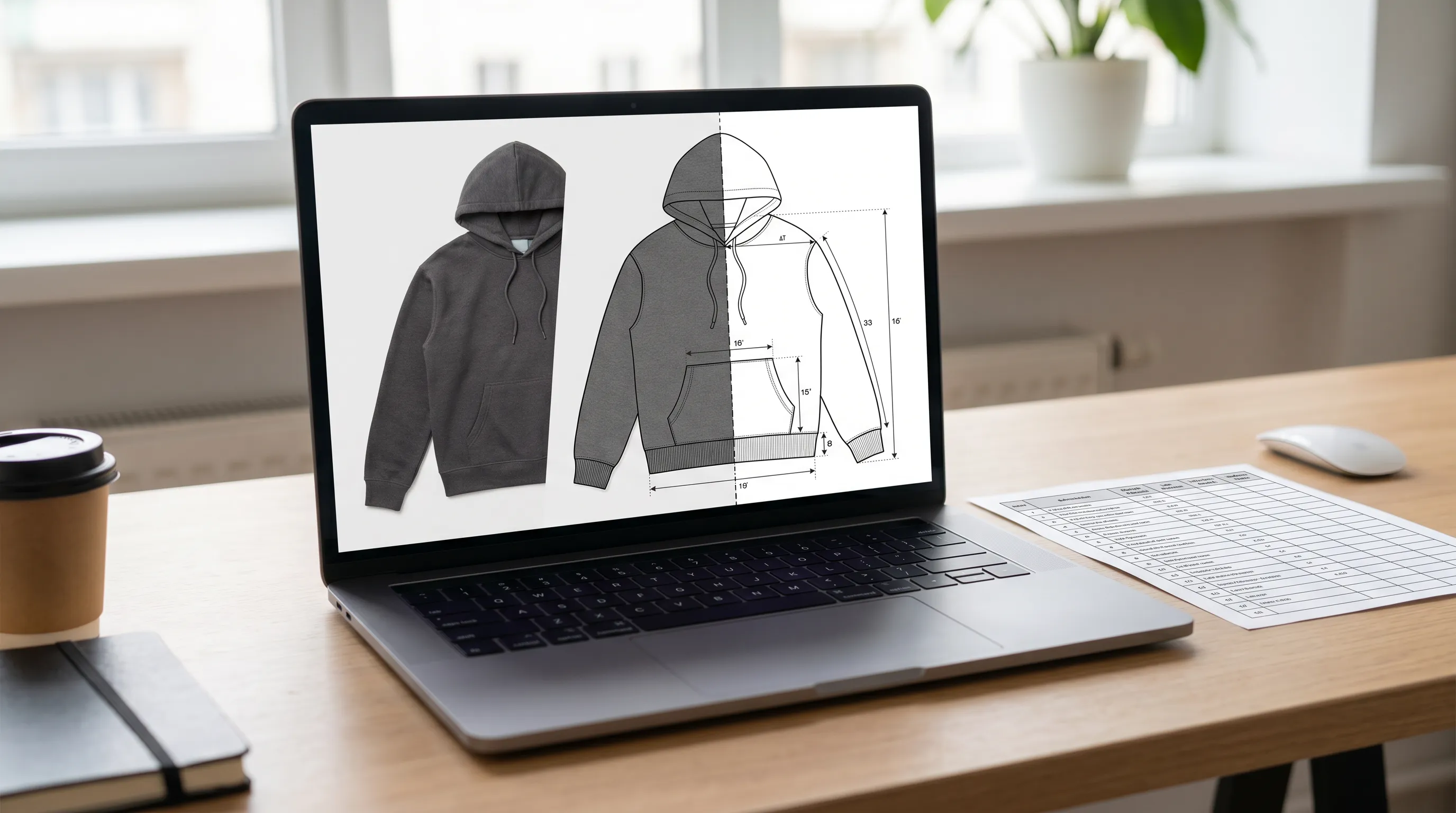
Adstronaut is a generator. The model detects the garment class from your photo, draws annotated front and back flats, fills a structured BOM with supplier and per-unit price fields, and grades the points of measure with tolerances — across apparel, footwear, leather goods, knitwear, and bodywear, with class-correct sections (sole units and upper materials for footwear; yarn and gauge for knitwear; panel and hardware callouts for leather goods). Measurements grade against the relevant ASTM body-measurement tables where one applies. The honest caveat: the AI drafts from what it can see, so details only you know — your mill's exact GSM, a hidden interior pocket, real supplier names — get added in a 10–15 minute review. The two products answer different questions: who organizes my packs versus who makes them.
What about quality? What factories actually check
Speed and convenience are irrelevant if the factory rejects the document, so judge both tools against what manufacturers check: complete flats with construction callouts, a line-itemized BOM, graded POMs with tolerances, and unambiguous stitch and seam specs (what makes a tech pack factory-grade). A Techpacker-assembled pack and an Adstronaut-generated pack can both carry every one of those sections — the difference is who produced them and how long it took. A clean Techpacker pack is only as complete as the Illustrator flat and the typed specs you fed it; the platform organizes the work, it doesn't supply the construction knowledge.
Adstronaut encodes the conventions per garment class and grades measurements against ASTM tables where one applies (D5585 for women's sizing; stitch classes per ASTM D6193). Production teams that switched to AI-generated packs report first-sample revision rounds dropping from roughly three per style to about one — consistent with the industry finding that unclear specs are the leading cause of first-sample failure (WFX Tech Pack 101). Neither tool removes your review step; both depend on a human confirming the details only the brand knows.
When Techpacker is the better choice
Adstronaut does not replace Techpacker for everything, and pretending otherwise would cost this page its credibility. Techpacker is the better choice for multi-user teams whose flats already exist and whose real bottleneck is coordination — version history, shared component libraries, comment threads, and factory approval portals are things a single export PDF doesn't provide. If you run a product-development team of five, your designers already drive Illustrator, and your factories live inside the Techpacker portal, that workflow is working and switching tools would solve a problem you don't have.
The PLM tiers add real depth for larger operations: grading-rule libraries, BOM libraries reused across styles, white-label documents, and time-and-action coordination. None of that is Adstronaut's job. The pattern many brands land on is hybrid: generate the flat sketch and first-draft pack in Adstronaut, then upload into Techpacker for shared libraries and factory approvals — covering Techpacker's one structural gap while keeping the collaboration layer a team values. If you're weighing the whole field rather than just these two, the Techpacker alternatives roundup scores CLO 3D, Illustrator + Excel, and free templates on the same criteria, and the three-way comparison adds Illustrator to the matchup.
Switching from Techpacker: the 4-step workflow
There's no migration project — your existing Techpacker packs stay valid, and the new workflow runs per style.
- 1
Export your current packs
Download the PDFs and Excel files of live styles from Techpacker. They remain your factory's reference, so nothing breaks during the transition. - 2
Regenerate one style from a photo
Upload a clear garment photo to the AI Tech Pack Generator (first pack free as a watermarked preview) and compare its flats, BOM, and graded chart against your Techpacker version. - 3
Move your component knowledge into review
The 10–15 minute review is where your real supplier names, exact sample measurements, and preferred trims go — the same knowledge that lived in your Techpacker libraries. - 4
Decide the collaboration layer
Solo founders usually need none — the PDF is the deliverable. Teams that miss shared approvals keep a light Techpacker seat or a shared drive alongside, paired with Adstronaut for generation.
Which should you choose?
Indie founders and first-time designers without a CAD background get the most from Adstronaut — it removes the single biggest barrier (drawing the technical flat) that Techpacker leaves in place, and the first pack is free to preview. Small DTC brands shipping 10–50 styles a year save on both freelance flat fees and recurring per-seat costs: $60–$120 in credits against $420+ per user per year plus onboarding. Production leads at solo or small operations use it to get first drafts to factories days earlier without an Illustrator dependency.
Multi-user product teams with existing flats and a genuine collaboration need are better served by Techpacker — or by running the hybrid, generating in Adstronaut and approving in Techpacker. For the wider field beyond these two, see the best tech pack software roundup and the five ways to create a tech pack without Illustrator.
Frequently asked questions
Can Adstronaut AI replace Techpacker?
For solo founders and small brands without an Illustrator user, usually yes — Adstronaut generates the flat sketch, BOM, and graded measurements from one photo, which is the exact step Techpacker leaves to you. But the two tools do different jobs: Techpacker organizes and collaborates on packs, Adstronaut produces them. Multi-user teams that rely on shared libraries and factory approval portals may keep Techpacker, or pair the two — generate in Adstronaut, manage approvals in Techpacker.
Why do people switch from Techpacker to an AI tech pack generator?
Two patterns dominate. First, the flat-sketch dependency: Techpacker doesn't draw flats, so if nobody on your team drives Illustrator, a great organizer still leaves you with a document you can't actually produce. Second, per-seat economics: a solo founder pays $420–$1,500 per user per year plus $100–$3,000 onboarding regardless of how many styles ship. Brands that switch mostly needed generation, not management.
Is Techpacker cheaper than Adstronaut?
Not for small brands. Techpacker runs $35–$125 per user per month billed annually ($420–$1,500/year) plus optional onboarding of $100–$3,000, and you still spend Illustrator time drawing each flat. Adstronaut charges per output: a tech pack is 25 credits — $5.80 on the $29/month Standard plan, down to about $3.10 on annual Studio — with the first pack free as a watermarked preview and no per-seat charge. A 20-style collection costs $60–$120 in credits.
Does Techpacker generate flat sketches?
No — this is its defining limitation versus an AI generator. Techpacker renders, organizes, and version-controls tech packs, but the technical flat must be drawn in Adobe Illustrator (or similar) and uploaded through its Illustrator plugin; you can then annotate callouts on the uploaded sketch. Adstronaut generates the flat itself from a garment photo, removing the Illustrator dependency entirely.
How much does Techpacker cost in 2026?
Per its published pricing: Techpack Builder $35/user/month, PLM Professional $95/user/month, and PLM Premium $125/user/month — all billed annually, with the annual rate running about half the monthly price — plus optional professional onboarding at $100, $500, or $3,000 by tier. It offers a 7-day trial and a 60-day money-back guarantee when onboarding is bundled with an annual plan. There is no free tier.
How long does a tech pack take in each tool?
In Techpacker, the organizing is fast but the flat sketch is still a manual 2–4 hour Illustrator job before you upload and type the specs, so a first pack runs hours end to end. Adstronaut generates the draft — flats, BOM, graded POMs, construction notes — in 3–5 minutes; with a 10–15 minute review you finish in under 30 minutes per style.
Do factories accept AI-generated tech packs?
Yes. Factories judge the document's completeness and accuracy, not the software that made it. Adstronaut outputs the sections manufacturers check — annotated flats, line-itemized BOM, graded points of measure with tolerances, construction notes, Pantone callouts — as a print-ready PDF, in the same structure a Techpacker-assembled pack would carry. Teams that switched report first-sample revision rounds dropping from about three per style to one.
Can I keep Techpacker and still use Adstronaut?
Yes, and many teams do exactly that. Generate the flat sketch and first-draft pack in Adstronaut, then upload into Techpacker for shared libraries, comments, and factory approvals. The pairing covers Techpacker's one structural gap — producing the flat — while keeping the collaboration layer a multi-user team values.
Do I need design or CAD skills to use Adstronaut?
No. You upload a front-facing garment photo — flat-lay, mannequin, mockup, or clean sketch — and the AI handles the flats, measurements, and BOM. This is the core difference from Techpacker, which presumes you (or a teammate) can already produce the Illustrator flat before the platform's organizing tools become useful.
What garment types does each tool support?
Techpacker can hold any pack you template and draw yourself. Adstronaut generates class-specific packs for apparel, footwear, leather goods, knitwear, and bodywear — footwear gets upper materials and sole-unit sections, knitwear gets yarn and gauge specs, leather goods get panel and hardware callouts, bodywear gets elastic and hardware callouts — without you needing to know what belongs where.
Generate the flat sketch Techpacker can't
Skip the Illustrator step and the per-seat subscription. Upload one garment photo and get a factory-ready tech pack — flats, BOM, graded measurements — in minutes. First pack free, then $3–6 each in credits.
Try the AI Tech Pack GeneratorKeep comparing
Sources and further reading
- Techpacker — pricing and plans — Builder $35, PLM Pro $95, PLM Premium $125 per user/mo annual; onboarding $100–$3,000; 7-day trial, no free tier (2026)
- Techpacker — Illustrator workflow — confirms flats are drawn in Illustrator and uploaded; you annotate callouts on the uploaded sketch
- Techpacker — Adobe Illustrator plugin — plugin syncs Illustrator flats into Techpacker cards and libraries
- Capterra — Techpacker reviews — 4.5/5 across 28 reviews; support praised, speed/glitch complaints
- World Fashion Exchange — Tech Pack 101 — unclear specifications as the leading cause of first-sample failure
- Successful Fashion Designer — drawing flats in Illustrator — 2–4 hrs per flat for most designers; the manual step Techpacker still requires