What is a fit sample?
Updated June 10, 2026
A fit sample is a garment sample sewn in the brand's base size to evaluate how a design fits the body — measurements, proportions, and balance — before bulk production. It comes after the proto sample and before the pre-production (PP) sample, is checked against the spec sheet on a fit model or dress form, and usually goes through one to three fit rounds before approval.
What is a fit sample?
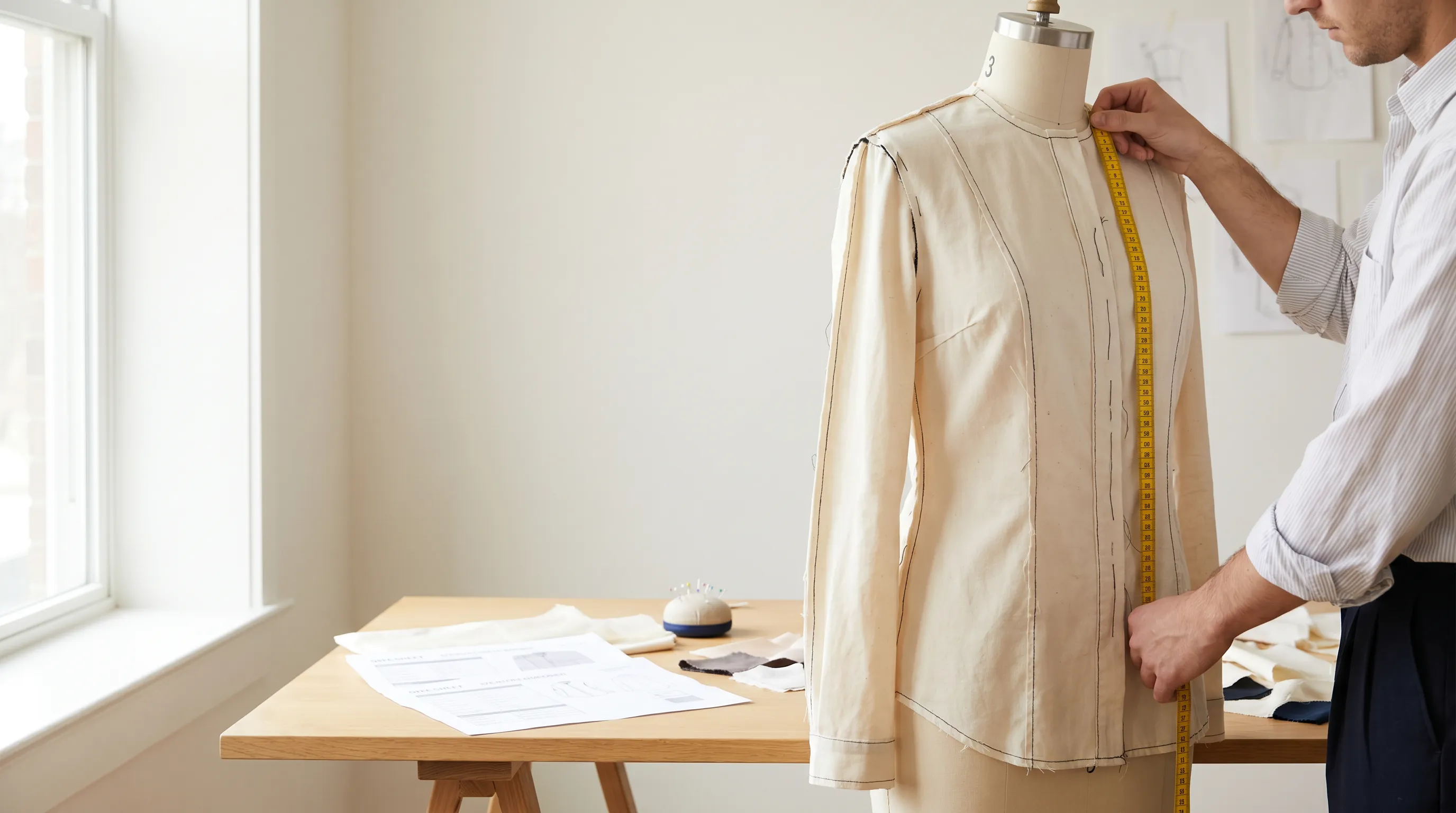
A fit sample is a physical garment sewn specifically to evaluate how a design fits the body — its measurements, proportions, balance, and ease — before a factory commits to bulk production. It is usually made in the brand's base size (commonly a Medium or the primary size the range is graded from) and, ideally, in the intended production fabric, because how a cloth drapes, stretches, and recovers changes the fit (Fabrikn).
The fit sample is one stage in a sequence of samples. It comes after the proto sample — the first rough prototype that proves the design can be assembled at all, often in substitute fabric — and before the pre-production (PP) sample, the production dress rehearsal in final materials and trims (Ninghow Apparel). Where proto answers "can we build it?", the fit sample answers "does it fit?" — and it typically drives the most pattern revisions of any stage.
The nuance worth holding onto: a fit sample is not a beauty shot or a sales sample. It can look unfinished — raw edges, contrast thread, a placeholder zipper — and still be a perfect fit sample, because its only job is to test fit against the spec sheet.
Worked example: one fit round, end to end
From sample bag to corrected pattern in five moves
A factory ships the fit sample for a women's shirt, sewn in the size-M base. (1) The technical designer lays it flat and measures every point of measure — chest, waist, sleeve length, armhole, neck drop — and writes each next to the target on the spec. (2) Chest reads 102 cm against a 100 cm spec: a +2 cm deviation, outside the ±1 cm tolerance, so it's flagged. (3) The sample goes on a size-M fit model (or a calibrated dress form), and the designer notes that the shoulder breaks 1 cm off-neck and the back drags. (4) Those become fit comments — "Reduce chest 2 cm to spec; raise shoulder seam 1 cm; add 0.5 cm back length" — with annotated photos. (5) The pattern maker revises the pattern and the factory sews the next fit round. That loop repeats until the measurements land inside tolerance and the garment hangs clean — usually after one to three rounds.
Where the fit sample sits: proto → fit → PP → TOP
Brands sample in stages, each answering a different question. The fit sample is stage two — the one that locks measurements.
| Stage | Question it answers | Fabric used | Made in |
|---|---|---|---|
| Proto (prototype) | Can this design be built at all? | Often substitute / available fabric | Any convenient size |
| Fit sample | Does it fit the body to spec? | Intended production fabric (ideally) | Base / target size |
| PP (pre-production) | Is it correct in real materials & method? | Actual production fabric, trims, methods | Base size, then size set |
| TOP (top of production) | Does the live run match the approved PP? | Production fabric, pulled from the line | Sizes from the actual run |
The four core sampling stages, per Ninghow Apparel and BOMME Studio. Salesman samples and size sets can run alongside; the fit sample is the measurement-locking stage.

What gets checked in a fit sample
A fit review is a structured comparison, not a vibe check. The technical designer works through three layers:
Measurements against spec. Every point of measure on the garment is measured and written next to its target value on the spec sheet. Anything outside the agreed tolerance (often ±0.5–1 cm on a knit top, tighter on tailoring) is flagged for correction (Apex Fashion Lab).
Fit on the body. The sample is assessed on a live fit model in the base size, or on a calibrated dress form, to judge what flat measurements can't — drape, balance, how the shoulder sits, where it pulls or gapes, and how it moves (The Successful Fashion Designer). A fit model gives the truest read for final approval; a dress form is faster and cheaper for early rounds.
Construction and proportion. Seam placement, dart position, collar roll, and overall proportion are reviewed — not the finish quality (that's PP's job), but anything that affects how the garment reads on the body.
Fit comments: how feedback travels back to the factory
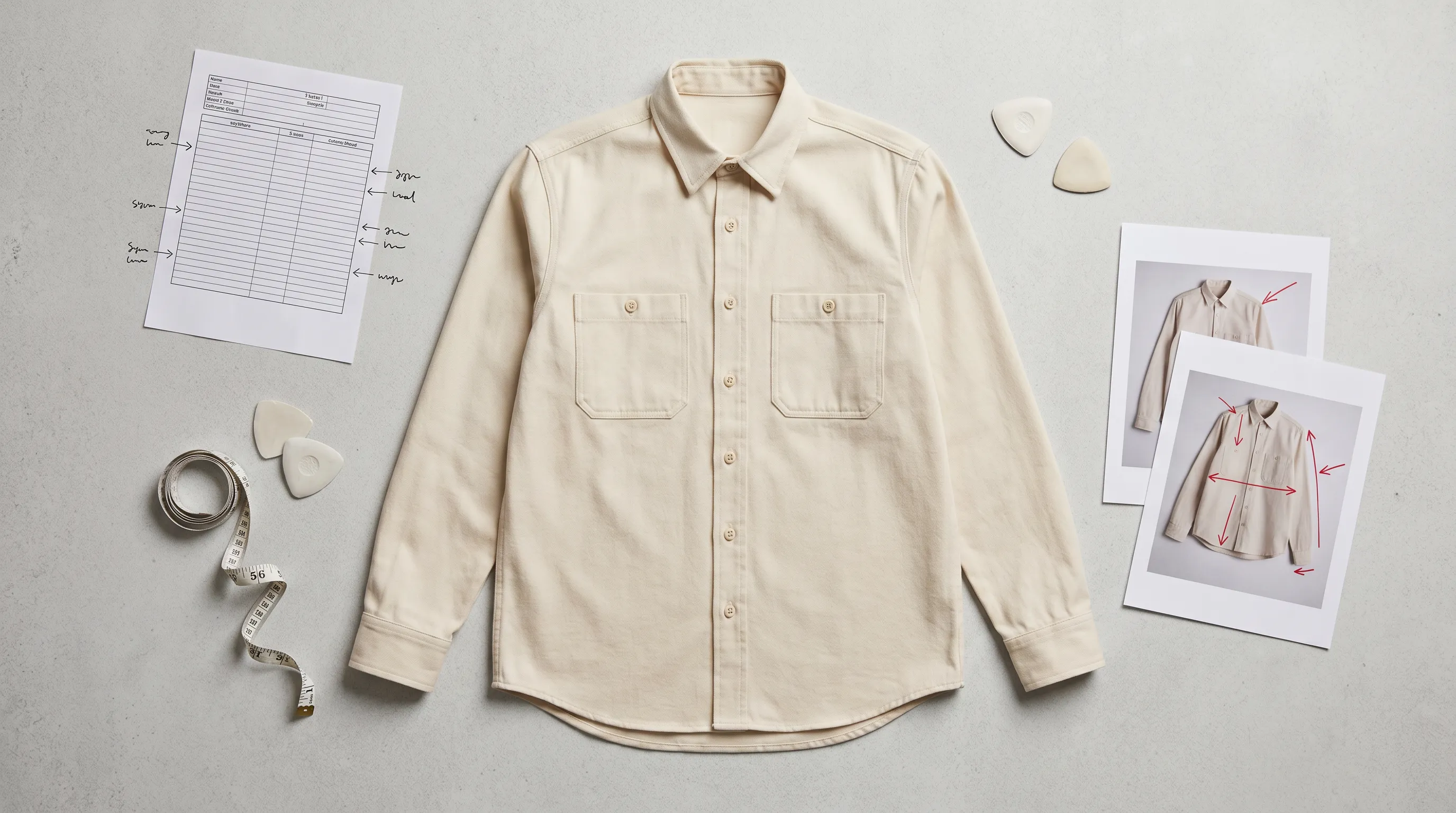
The output of a fit review is a set of fit comments — written, numbered instructions paired with annotated photos that tell the factory exactly what to change (The Fashion Business Coach). Good fit comments are specific and measurable: not "the chest is too big" but "reduce chest 2 cm to 100 cm spec." Each comment ties back to a point of measure or a named area of the garment, so nothing is left to interpretation across a language and time-zone gap.
The pattern maker updates the pattern from these comments, the factory sews the next sample, and the loop closes. The clarity of the underlying tech pack and spec sheet largely determines how many times that loop has to run — which is the difference between a style that approves in one fit round and one that drags through four.
This is where the upstream document quality pays off. A complete, unambiguous tech pack — every measurement, tolerance, and construction note stated before the first stitch — gives the factory fewer reasons to guess, and fewer guesses means fewer fit rounds. Adstronaut's AI tech pack generator builds that spec and points-of-measure scaffold from a single garment image, so the fit sample is judged against numbers that were complete from round one rather than filled in by the factory.
How many fit rounds to expect — and what they cost
What a fit sample costs
A single physical garment sample typically costs $200–$350 for a simple item like a t-shirt and $600–$1,500 for a complex one like a tailored blazer or lined outerwear, depending on garment complexity and factory location (Adstronaut — fashion sampling costs). On top of the sample itself, technical-designer review time runs roughly $100–$300 per fit round.
Because most garments need 2–5 total sampling rounds — simple tees around two, tailored pieces three to five — the real cost of fit isn't one sample; it's the stack of samples, shipping, review fees, and 1–3 weeks of lead time per round. That's why the lever that matters is round count, not unit price: cutting a single avoidable fit round removes a whole sample charge, a review fee, and weeks off the calendar.
The most common reason for an extra fit round is a spec that was incomplete or ambiguous when the factory sewed the first sample. Digital sampling and clearer specs both attack the problem the same way — by resolving more of the design on screen before fabric is cut.
Common fit-sample mistakes (and what it is NOT)
Judging finish instead of fit. A fit sample can have raw edges and a placeholder zipper and still be perfect. Quality of construction is reviewed at the PP sample, not here — rejecting a fit sample for unfinished seams wastes a round.
Fitting in the wrong fabric. A fit dialed in on a stiff substitute falls apart in soft production jersey. Whenever possible the fit sample uses the intended fabric, because drape and stretch change the read entirely.
Vague fit comments. "Make it bigger" forces the factory to guess and guarantees another round. Every comment should name a point of measure and a number.
Confusing it with other samples. A fit sample is not a proto (concept/construction proof), not a salesman/SMS sample (a pretty piece for selling the line), and not a PP sample (final production standard). It's the measurement-and-balance stage, full stop.
Skipping it to save money. Cutting the fit stage to save a sample charge usually surfaces the fit problem in bulk instead — the most expensive place to find it.
Frequently asked questions
What is a fit sample?
A fit sample is a garment sewn to evaluate how a design fits the body — measurements, proportions, and balance — before bulk production. It's made in the brand's base size, ideally in the intended fabric, and checked against the spec sheet on a fit model or dress form. It sits after the proto sample and before the pre-production (PP) sample.
What is the difference between a proto sample and a fit sample?
A proto (prototype) sample is the first rough garment that proves the design can be built at all, often in substitute fabric. A fit sample comes next and exists to dial in measurements and fit on the body, ideally in the intended production fabric and the base size. Proto answers 'can we build it?'; fit answers 'does it fit?'
Where does the fit sample sit in the sampling process?
In the standard sequence proto → fit → PP → TOP, the fit sample is stage two. Proto proves construction, the fit sample locks measurements and fit, the PP (pre-production) sample confirms everything in real production materials and methods, and the TOP (top of production) sample verifies the live run matches the approved PP.
What is checked in a fit sample?
Three things: every point of measure is measured and compared to the spec sheet (flagging anything outside tolerance), the garment is assessed on a fit model or dress form for drape and balance, and seam placement and proportion are reviewed. It's a structured spec comparison, not a finish-quality check — that comes at the PP sample.
What are fit comments?
Fit comments are the written, numbered instructions plus annotated photos that a technical designer sends back to the factory after a fit review. Good ones are specific and measurable — 'reduce chest 2 cm to spec,' not 'too big' — each tied to a point of measure, so the pattern maker can act without guessing.
How many fit rounds does a garment need?
Usually one to three fit rounds, depending on complexity and how precise the first pattern was. A simple tee may approve in one or two; a tailored blazer or lined dress can take more. End to end, most garments run 2–5 total sampling rounds before production approval.
How much does a fit sample cost?
A single sample runs about $200–$350 for a simple item like a t-shirt and $600–$1,500 for a complex one like a tailored blazer, plus roughly $100–$300 per round in designer review time. Because most styles need 2–5 rounds, the real cost is the stack of samples, shipping, fees, and 1–3 weeks of lead time per round.
Is a fit sample tested on a model or a dress form?
Both are used. A live fit model in the base size gives the truest read of drape, balance, and movement and is preferred for final approval. A calibrated dress form is faster and cheaper, so brands often use it for early rounds and bring in a fit model to confirm before sign-off.
How do you reduce the number of fit rounds?
The biggest lever is a complete, unambiguous spec before the first sample is sewn — every measurement, tolerance, and construction note stated up front so the factory doesn't guess. Clear tech packs, fitting in the intended fabric, and specific measurable fit comments all cut rounds. Each round avoided saves a sample charge, a review fee, and weeks of lead time.
Is a fit sample the same as a PP sample?
No. The fit sample tests measurements and fit, often before finish and trims are final. The pre-production (PP) sample is the production dress rehearsal — made in actual production fabric, trims, and sewing methods, and approved as the standard the bulk run must match. Fit comes first; PP confirms.
Walk into the fit room with a complete spec
Most extra fit rounds come from a spec the factory had to guess at. Upload one garment photo and get a factory-ready tech pack — spec sheet and points of measure complete from round one. First pack free, then $3–6.
Try the AI Tech Pack GeneratorRelated reading
Sources and further reading
- Fabrikn — what is a garment fit sample — definition, base size, intended-fabric guidance
- Ninghow Apparel — 4 stages of sampling — proto → fit → PP → TOP sequence and roles
- Apex Fashion Lab — fit sample glossary — spec comparison, tolerance, fit-on-body assessment
- The Fashion Business Coach — sample comments — writing specific, measurable fit comments to the factory
- The Successful Fashion Designer — how to fit a garment sample — fit model vs dress form, what to assess on the body
- Adstronaut — fashion sampling costs — per-sample cost ranges, rounds, review time, lead time